Elephant and Obelisk: Bernini’s Baroque Monument in Rome
Site at a Glance
- Rating
- 4.7
- Popularity
- Medium
- Country
- Italy
- Primary era
- Early Modern
- Eras represented
- Iron Age, Early Modern
- Civilizations
- Egyptian, Papal States
- Site type
- Civic
- Remains
- Monument
On this page11 sections
History
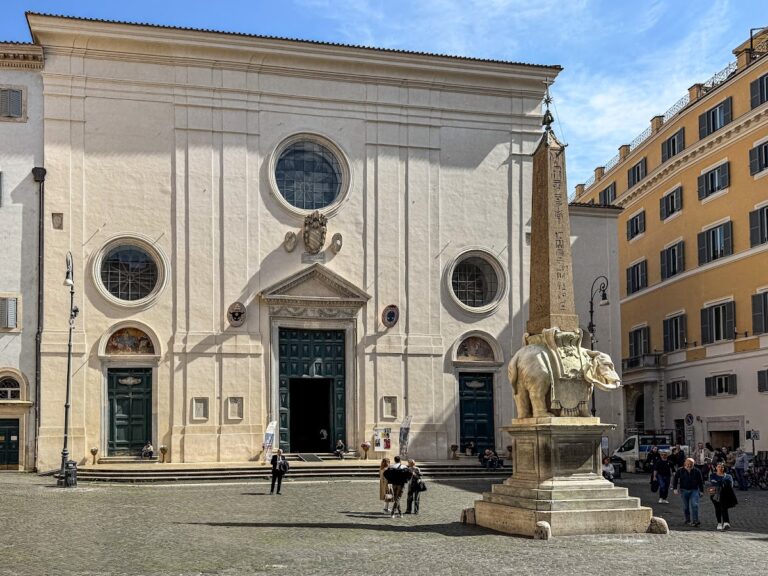
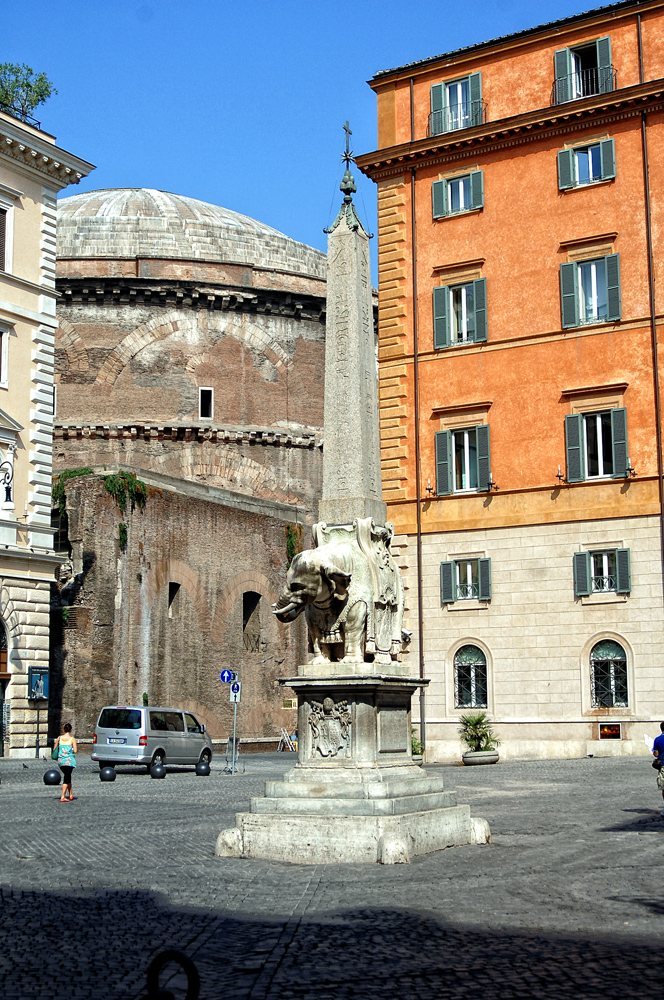
Elephant and Obelisk is a Baroque monument in Rome, Italy, designed by the Italian artist Gian Lorenzo Bernini and unveiled in 1667 in Piazza della Minerva beside Santa Maria sopra Minerva. It combines an ancient Egyptian obelisk with a marble elephant, expressing ideas of wisdom, strength, and papal patronage.
The Egyptian obelisk in Rome
The red-granite obelisk was first erected at Sais, the capital of Egypt, by Pharaoh Apries of the Twenty-sixth Dynasty, around 580 BC. The Twenty-sixth Dynasty ruled Egypt during the Saite period of the sixth century BC. The monument was probably brought to Rome during the first century AD for a temple dedicated to Isis, an ancient Egyptian goddess whose worship had spread into the Roman world.
During the medieval period, the obelisk disappeared from view. It was rediscovered in 1665 during excavations near Santa Maria sopra Minerva, after lying partly buried for centuries in the monastery cloister. Its recovery led to plans for a new setting in the piazza beside the church.
Alexander VII and Bernini
Pope Alexander VII, born Fabio Chigi, commissioned Bernini to design the monument after the obelisk’s discovery. Bernini was a leading Italian Baroque sculptor, architect, and designer whose work joined sculpture, architecture, theatrical presentation, and symbolism. The commission revived an idea he had explored in the 1630s, when Cardinal Francesco Barberini considered placing an Egyptian obelisk before the Palazzo Barberini. That earlier project was never completed.
Bernini prepared several alternative designs for the new commission, apparently giving the patron a choice among different concepts. Some included figures of Time, Hercules, and other allegorical figures supporting the obelisk. A later design developed the elephant idea with a larger base, a different orientation, and a more friendly expression. The finished monument became Alexander VII’s final commission from Bernini. The pope died in May 1667 and was succeeded by Pope Clement IX.
The composition was probably inspired by the 1499 work Hypnerotomachia Poliphili, which describes an obelisk carried by an elephant. Its 1505 Venetian edition included an image of an elephant bearing an obelisk. The monument’s imagery was understood as divine or Egyptian wisdom supported by the elephant, whose qualities included strength and wisdom. Its position in Piazza della Minerva also evoked Minerva, the Roman goddess of wisdom. The Chigi emblems connected this ideal of wise strength specifically with Alexander VII.
Damage in the modern period
During the night before 15 November 2016, vandals broke the monument’s left tusk. Rome’s authorities announced that they would assess the damage and determine how the detached fragment could be reattached.
Remains
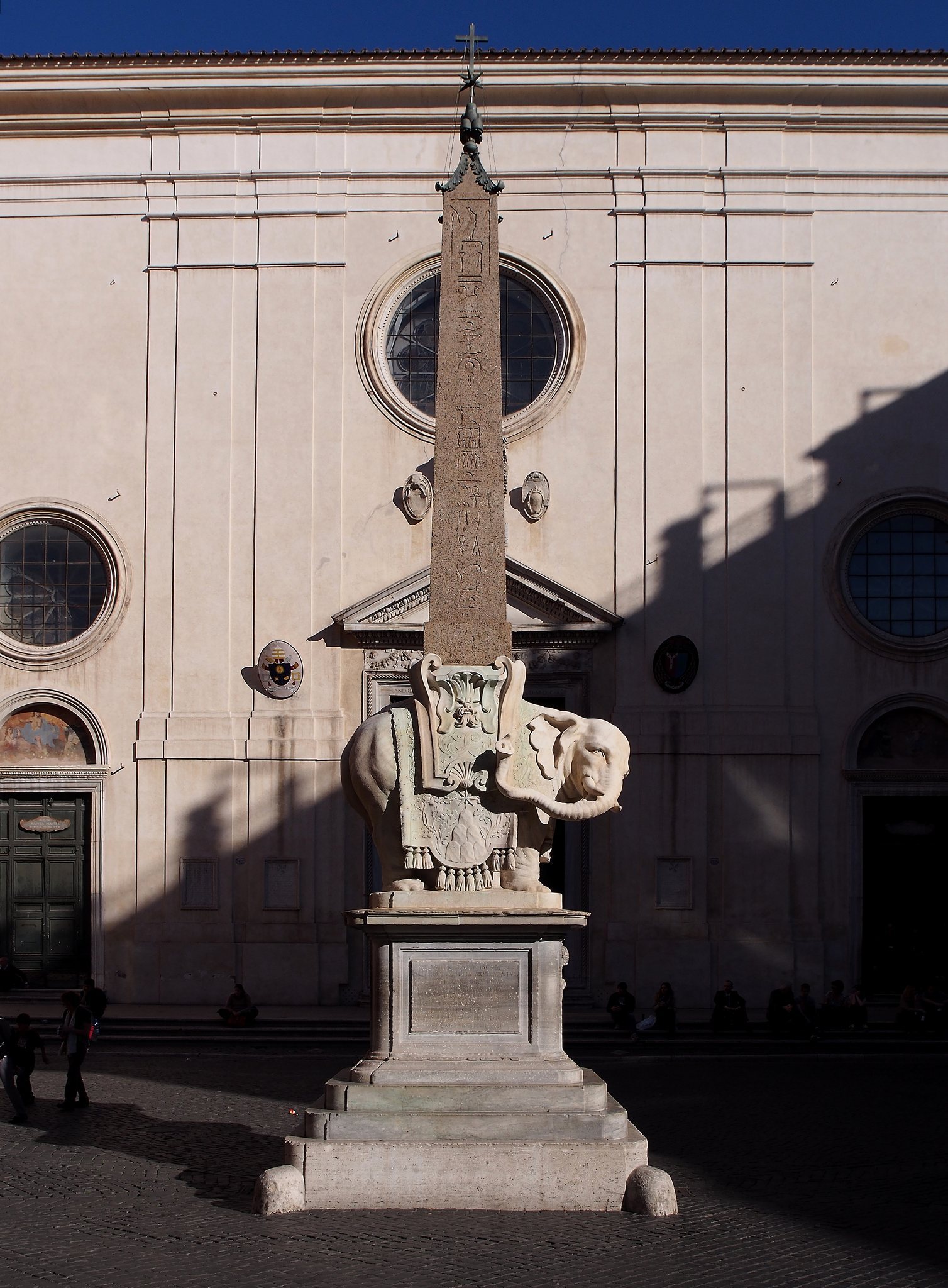
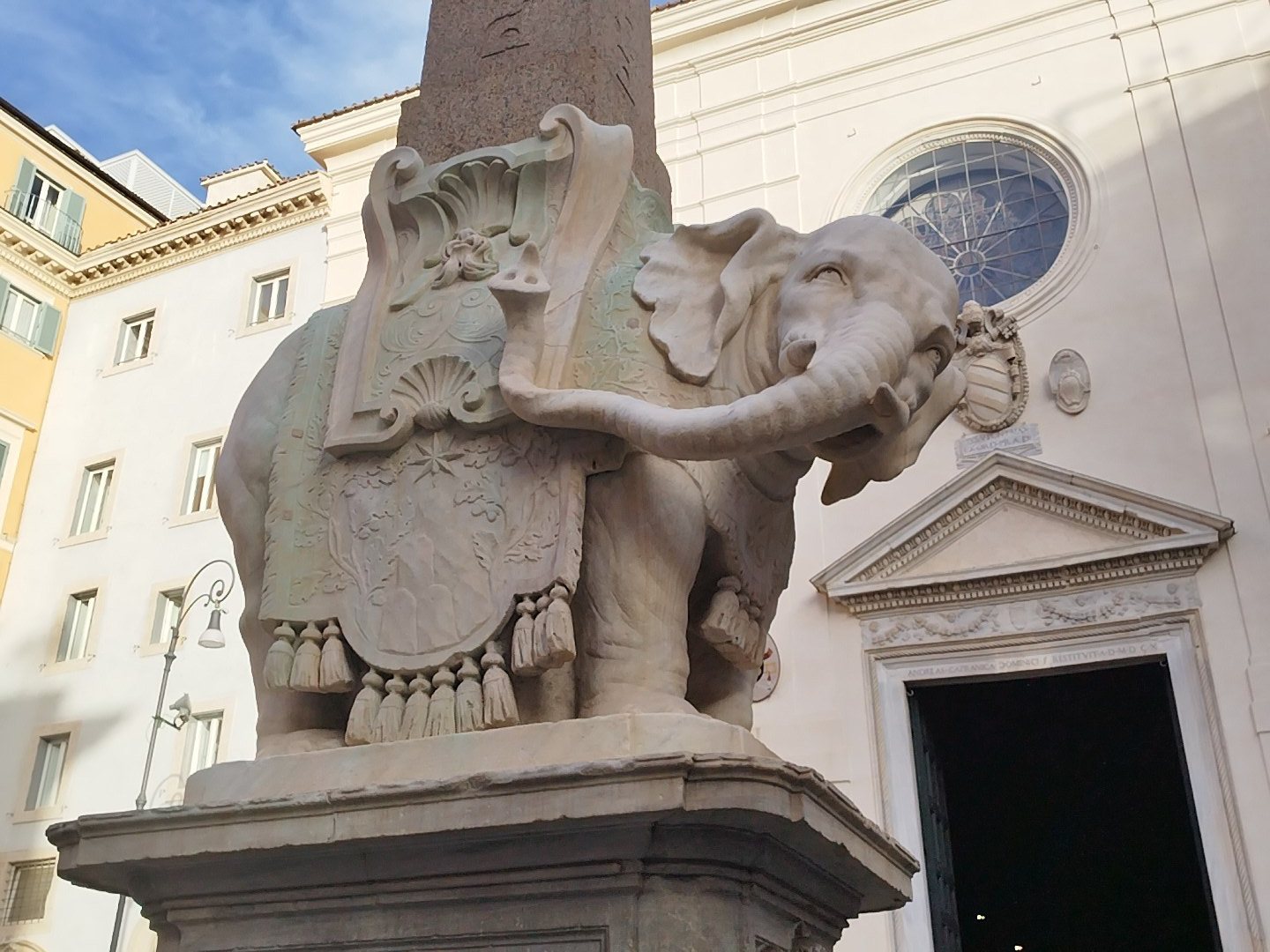
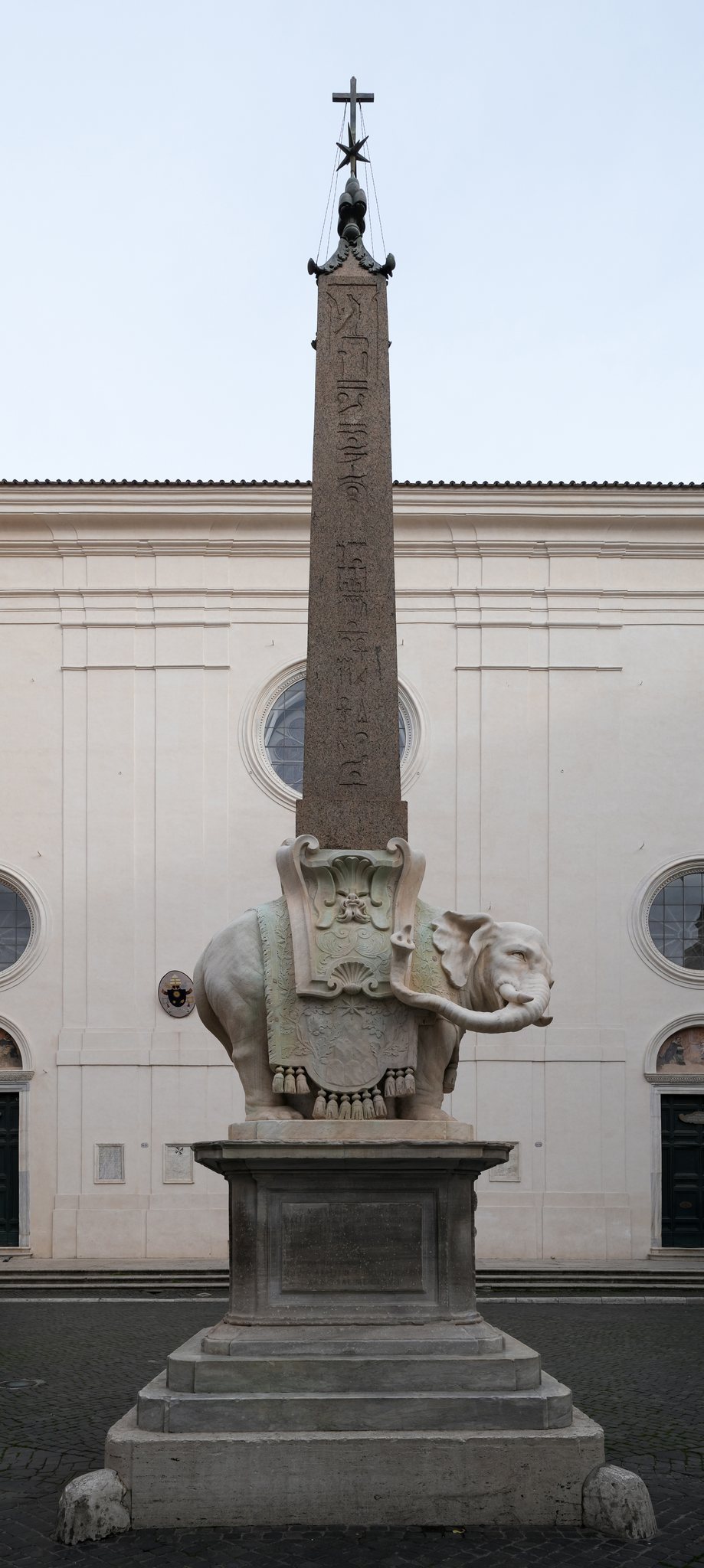
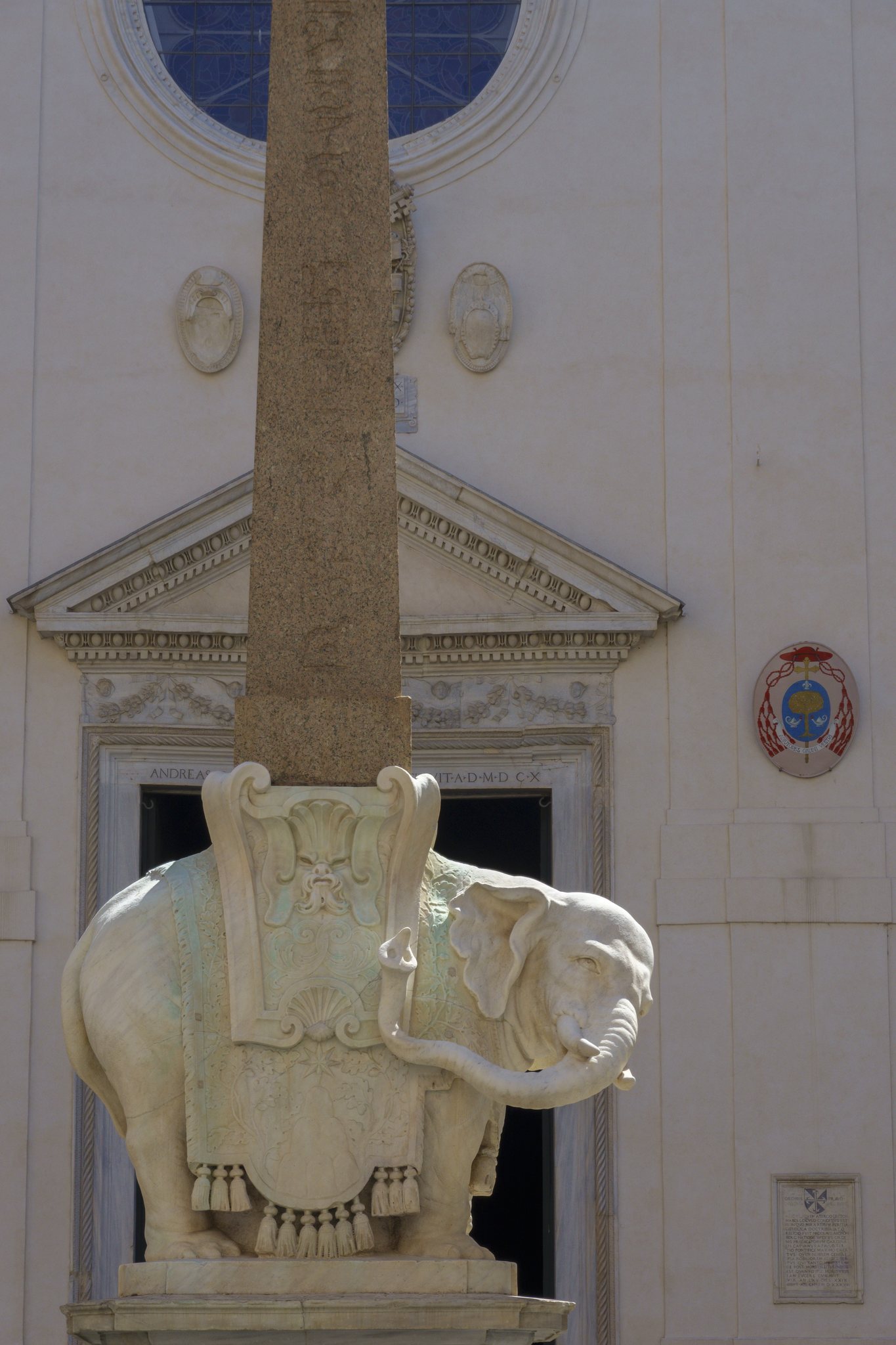
The monument consists of a marble elephant carrying a red-granite obelisk on its back. Its physical design joins the ancient Egyptian stone with a seventeenth-century Baroque sculpture, while heraldic and symbolic details connect the composition to its papal patron. The elephant was probably carved by Bernini’s assistant Ercole Ferrata.
The elephant and obelisk
The marble elephant
The elephant forms the sculptural support for the ancient stone. Its final design gives the animal a friendly rather than ferocious expression, contributing to the monument’s presentation of strength guided by wisdom. A saddlecloth covers its back and bears a relief of the Chigi arms.
The ancient obelisk
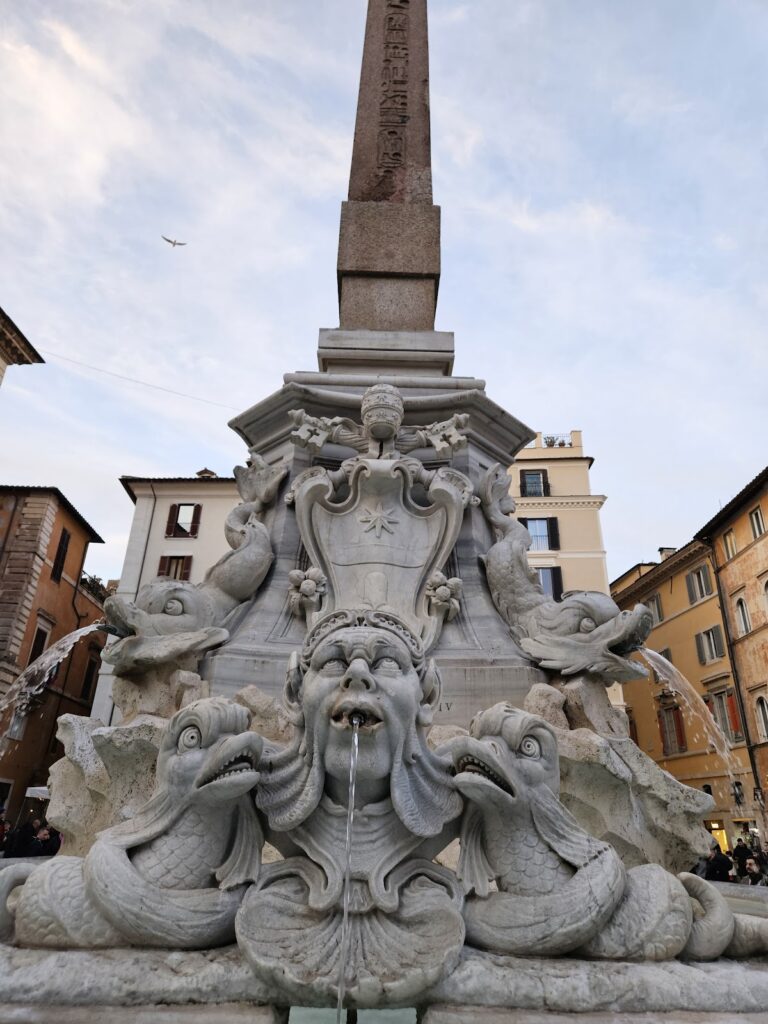
The red-granite obelisk rises 5.47 metres above the elephant. It is regarded as one of a pair, whose other member is located in Urbino. With the elephant and pedestal included, the complete monument reaches 12.69 metres. The obelisk’s Egyptian hieroglyphic inscriptions were associated in early modern interpretation with ancient and partly inaccessible wisdom.
Pedestal and heraldic elements
The stepped base
The obelisk stands on a pedestal with a stepped base. At its summit, a metal cross rests on six hills, the emblem of Alexander VII’s Chigi family. This arrangement places the papal symbol above the ancient Egyptian stone and completes the monument’s combination of religious, political, and symbolic elements.
The pedestal inscription
A Latin inscription on one side of the pedestal tells viewers to recognize, through the Egyptian wisdom carved on the obelisk and carried by the strongest of beasts, that a strong mind is needed to support solid wisdom.