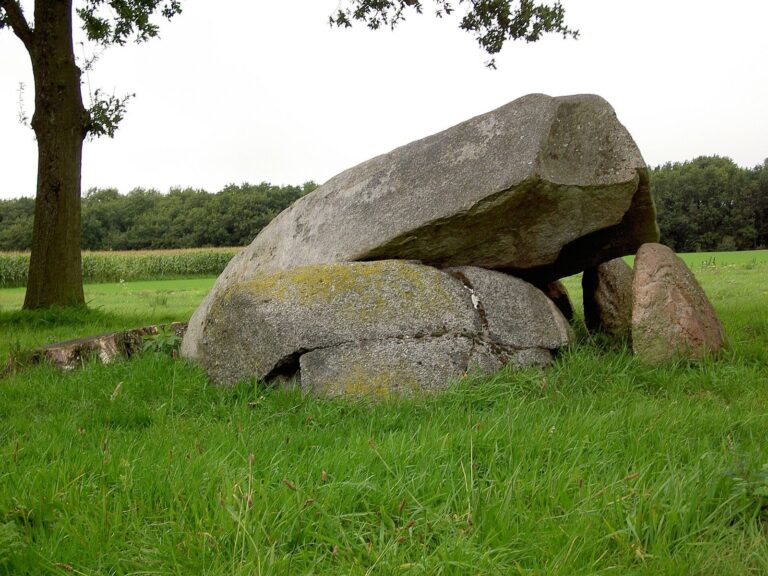
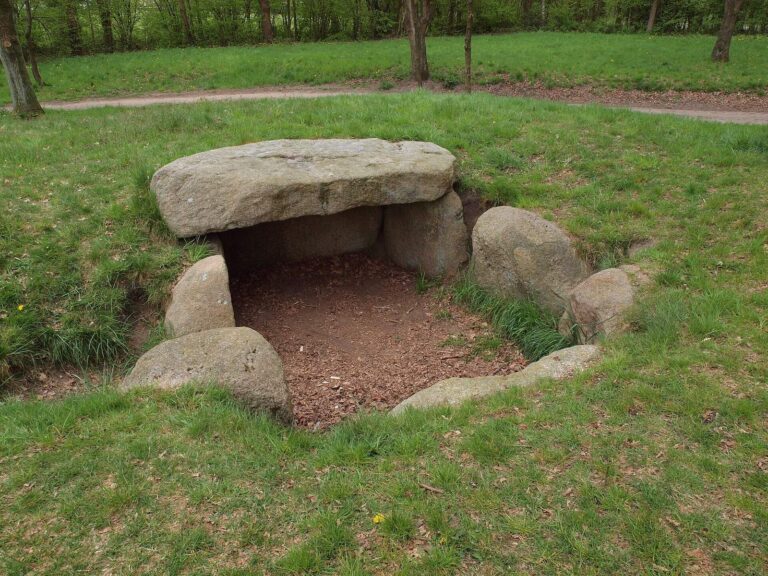
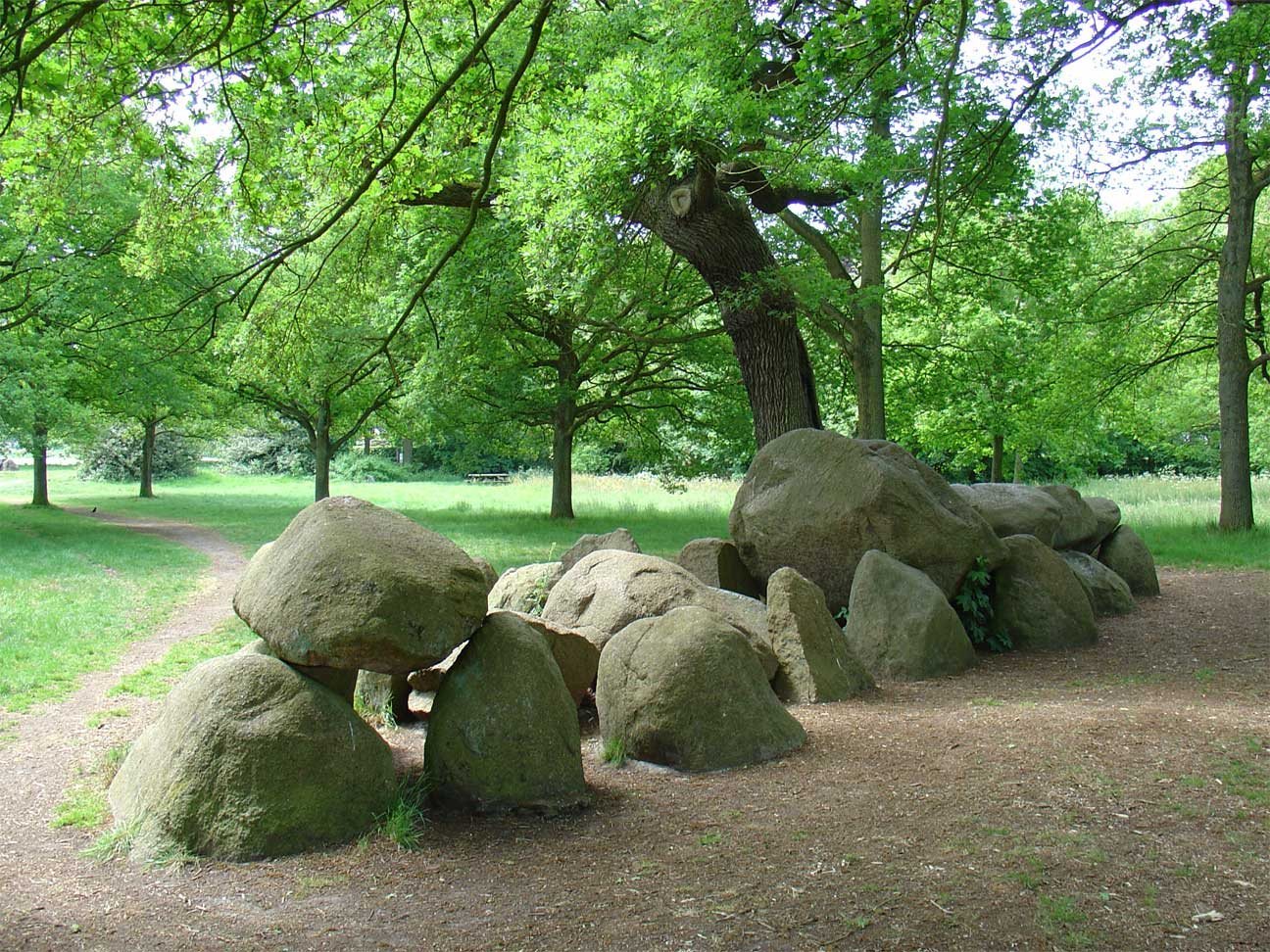
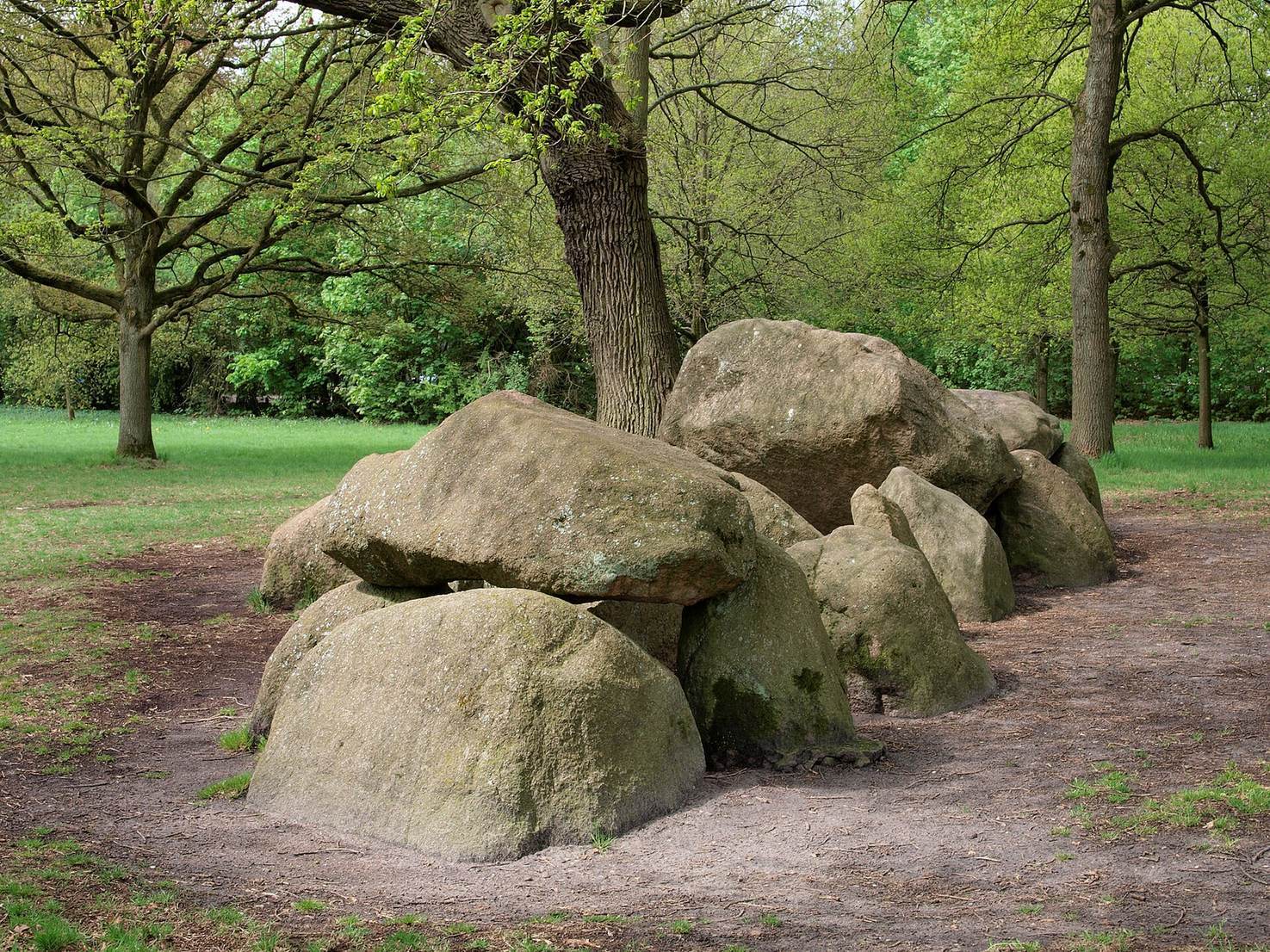
D17: A Funnel Beaker Dolmen near Rolde, Netherlands
Site at a Glance
- Popularity
- Low
- Country
- Netherlands
- Primary era
- Stone Age
- Eras represented
- Stone Age
- Civilizations
- Unclassified
- Site type
- Burial
- Remains
- Tomb
On this page7 sections
History
D17 is a prehistoric dolmen, or tomb built from large stones, northeast of Rolde in the Netherlands. The Funnel Beaker culture, a Neolithic archaeological culture named for its distinctive funnel-shaped pottery, built it between 3400 and 3200 BC.
Early references
A monk’s description from 1547 may be the earliest written reference to D17, although it may instead concern D18 or D10. The monk described “Pillars of Hercules” at Rolde, with an offering stone above a narrow passage, and claimed that sacrifices took place there before Boniface arrived. Boniface was an Anglo-Saxon missionary bishop active in continental Europe during the eighth century. The description also says that people, preferably strangers, were made to crawl beneath altar stones while being pelted with manure. It calls the complex “the Devil’s Arse.”
Nineteenth-century records and ownership
An 1856 painting by Alkmaar artist Bernardus Gerardus ten Berge, titled On a Cemetery: A Reminiscence of Drenthe, was exhibited in Groningen at the Exhibition of Living Masters. In the following decades, D17 and nearby D18 became state property. After mediation by Rolde mayor Alexander Carel Jan Frederik Bouwmeester, the local farmers’ association sold the two dolmens together for 150 guilders. A proposed public sale drew a protest from the Provincial Executive of Drenthe; following advice from the Ministry of the Interior, they were sold to the state. D17 was transferred in 1872 and D18 in 1873.
Concern in Britain that Dutch restoration work was changing the original appearance of dolmens prompted the Society of Antiquaries in London, a learned society concerned with antiquities, to commission records of the monuments. In July 1878, William Collings Lukis and Sir Henry Dryden surveyed 40 dolmens on the Hondsrug, a glacial ridge in Drenthe, including D17. Their work remained unpublished until archaeologist Wijnand van der Sanden brought it out in 2015 with an introduction and a review of developments in dolmen archaeology. Van der Sanden judged the 1878 records to be of high quality.
Public image and restoration
By 1905, D17 and D18 appeared on many postcards, perhaps more often than any other Dutch dolmens. D17 underwent restoration between 1957 and 1965.
Remains
Stone arrangement
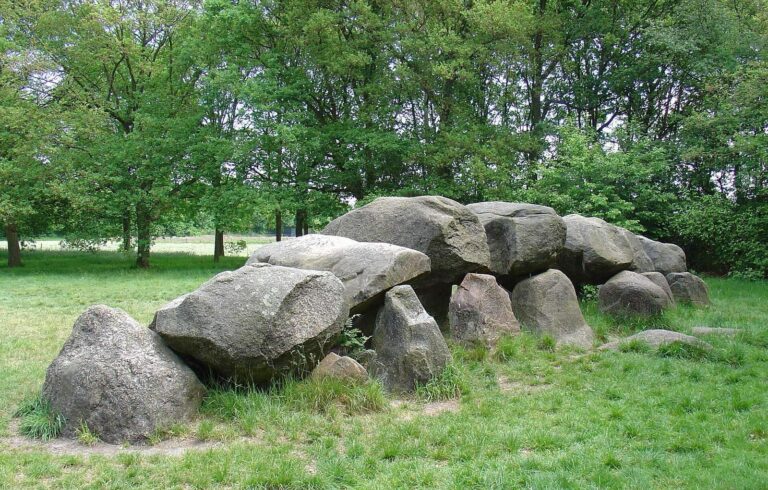
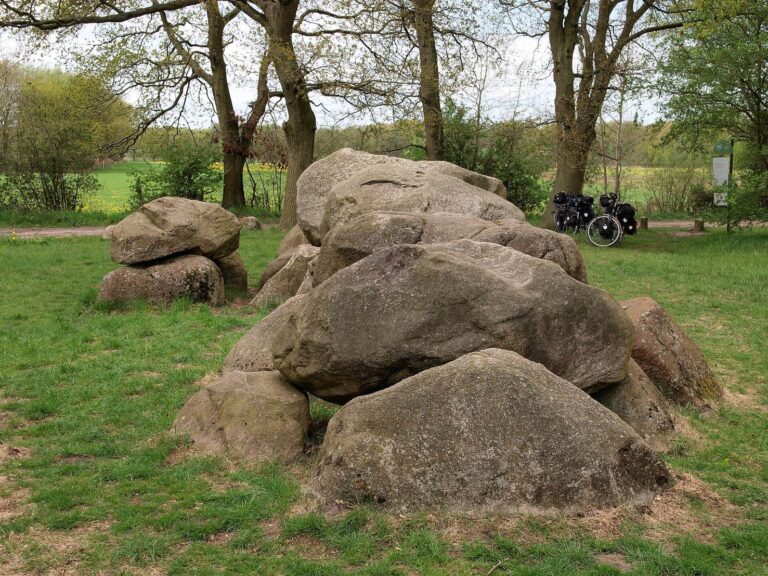
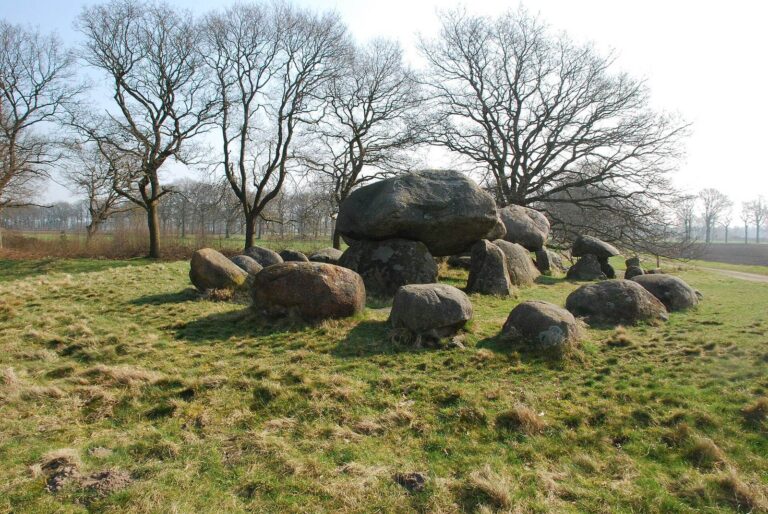
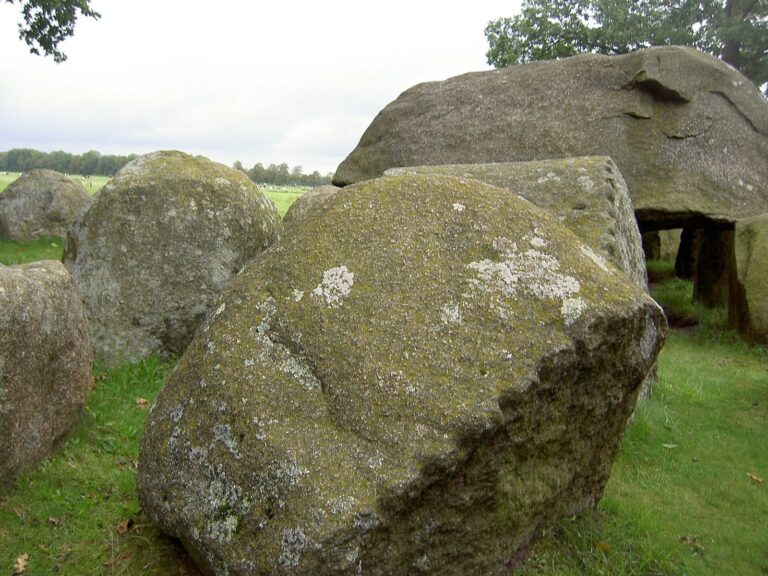
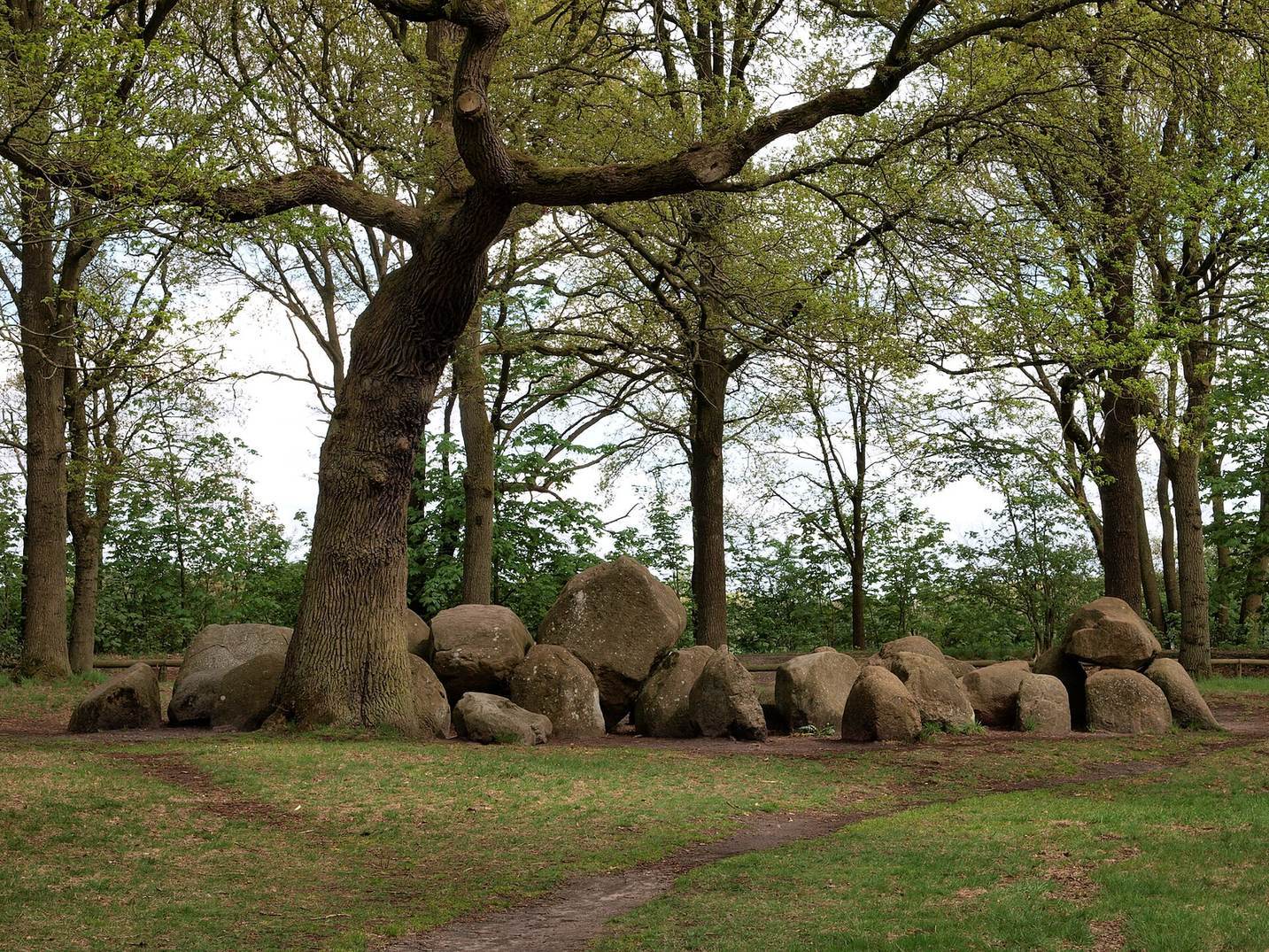
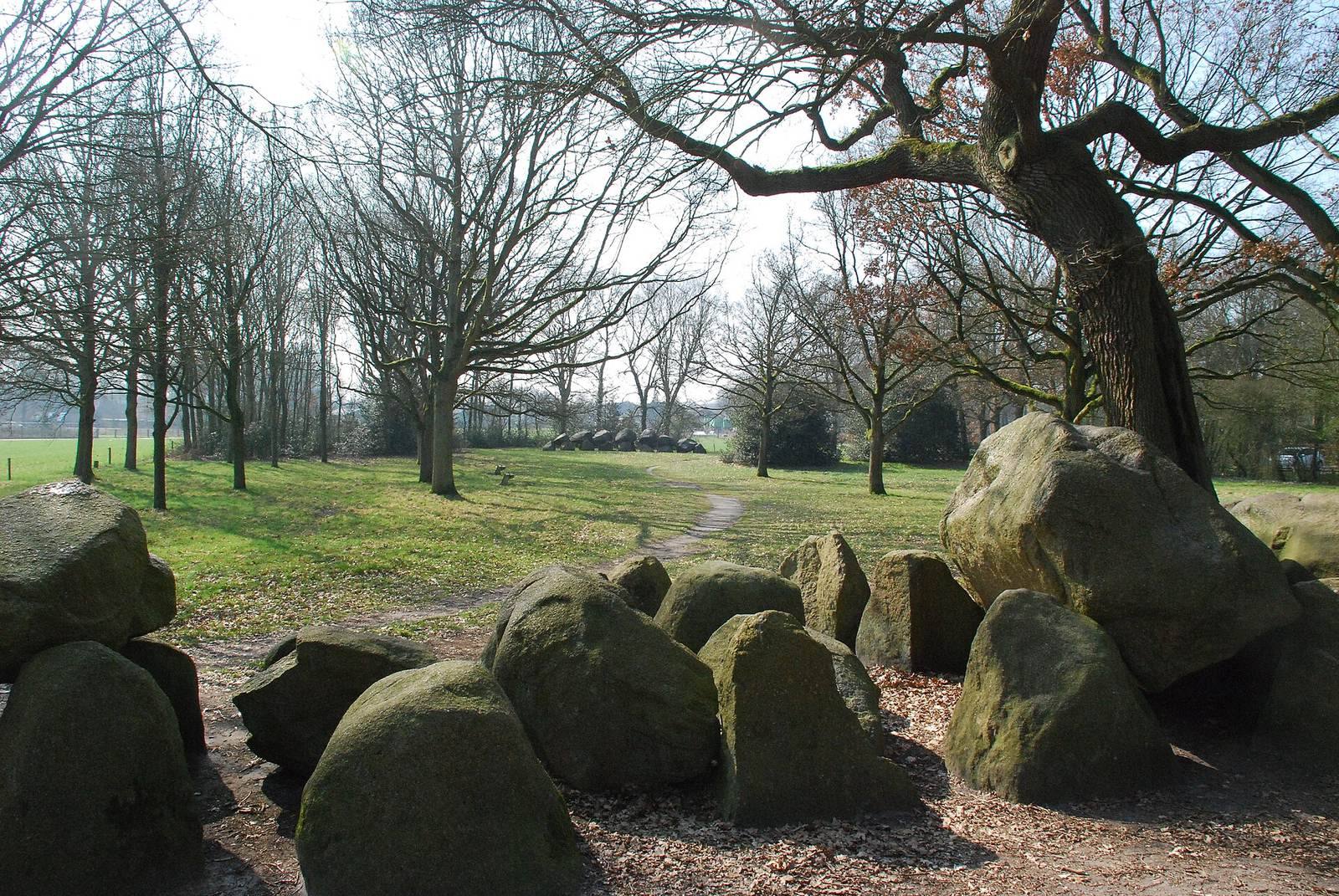
D17 stands on cultivated land near the cemetery and St James’s Church. It measures 13.9 metres across and 3.8 metres long. The structure has eight large roof stones, 15 supporting stones, two end stones, and two stones beside the entrance, which faces south. Some roof stones are no longer in their original positions. Lukis and Dryden’s 1878 plan showed seven roof stones and 17 supports, and noted damage from an oak. D17 is more ruinous in appearance than nearby D18, which is neater following restoration.
Find from the 1706 examination
When S. Hofstede and Kymmell examined D17 in 1706, they found a blue pot decorated with gilded stripes.