Tomb of Hunting and Fishing: An Etruscan Painted Tomb at Tarquinia
Site at a Glance
- Popularity
- Medium
- Country
- Italy
- Primary era
- Iron Age
- Eras represented
- Iron Age
- Civilizations
- Etruscan
- Site type
- Burial
- Remains
- Tomb
On this page9 sections
History
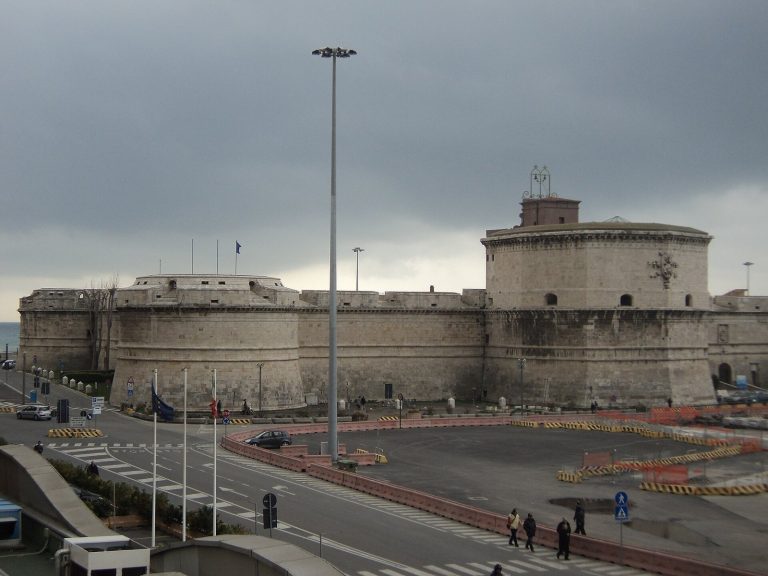
The Tomb of Hunting and Fishing is an Etruscan painted tomb in the Monterozzi cemetery near Tarquinia, Italy. The Etruscans were an ancient people of central Italy whose civilization flourished before Roman rule. The tomb dates broadly to the late sixth century BC, and its paintings represent a major development in ancient art. It was discovered in 1873 and was formerly called the Tomb of the Hunter. It is one of about 200 painted tombs in a cemetery containing approximately 6,000 burials.
Images and funerary meaning
Small human figures set within expansive natural scenes give the paintings a distinctive character. This approach was regarded as having no precedent in Greek art or in earlier Etruscan art. Hunting and banqueting were activities associated with Etruscan aristocrats, and their presence in the tomb may have expressed the status of the people buried there. The reclining man and woman may represent the deceased, while the two young women may be their daughters.
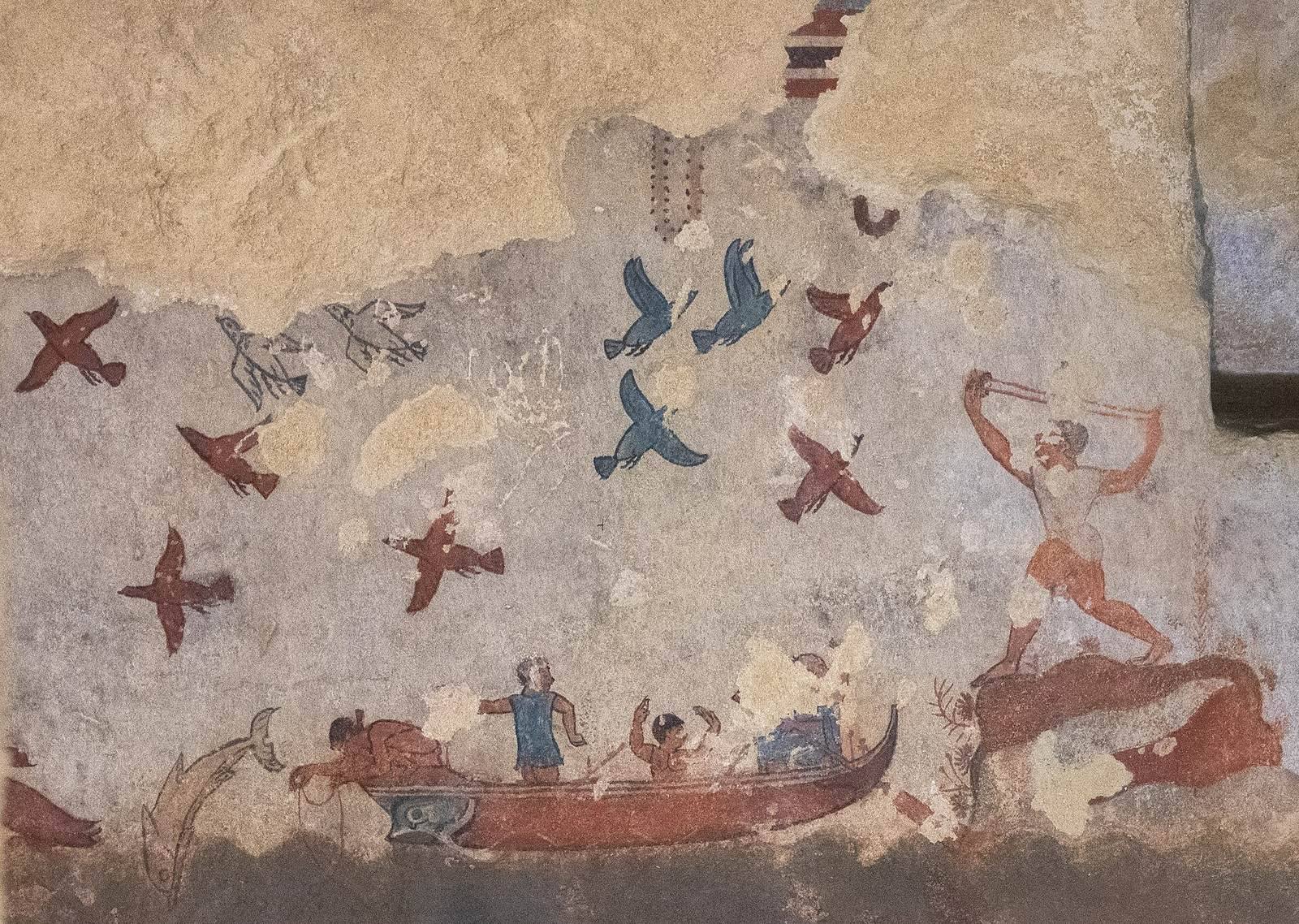
The sea views have been understood both as images of the coast near Tarquinia and as references to a journey after death. In this reading, the diver may signify passage from the living world to the underworld, while the large hunter with a sling may be a death demon. The dancing scenes also carry funerary associations with Dionysus, the Greek god of wine and vegetation; imagery connected with him could evoke death and resurrection.
Tarquinia’s illusionistic tradition
Around 525 BC, painters at Tarquinia developed a distinctive tradition that created the impression of viewing a funeral pavilion and its ceremonies from within the imagined structure. The deceased’s shades, or spirits, could thus be understood as watching and sharing in rites performed in their honor. For this tomb, the painted sea has been interpreted as a distant view from such a pavilion. From Monterozzi’s elevated ground, the Tyrrhenian Sea lies to the west, and the banquet figures appear to look toward the sea. The entrance-room dances fit this interpretation as scenes of funeral celebration. The paintings were probably made by the same workshop responsible for the Tomb of the Lotus Flower and Tomb 3098.
Later influence and decline
A diver appears about thirty years later in the Tomb of the Diver at Poseidonia, an ancient Greek city later known as Paestum. Its paintings are thought to have drawn on earlier Etruscan designs, challenging the former view that Etruscans only borrowed from Greek art and did not influence it. A panoramic pavilion view also appears later in the Tomb of the Ship, but the motif was subsequently abandoned. Tarquinia’s illusionistic tomb painting fell out of use after the fifth century BC. The approach reappeared in Roman art more than four centuries later.
Remains
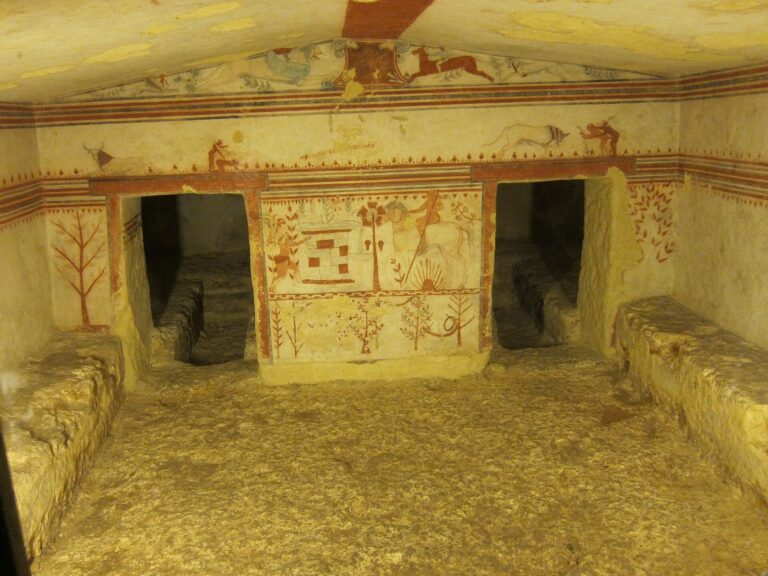
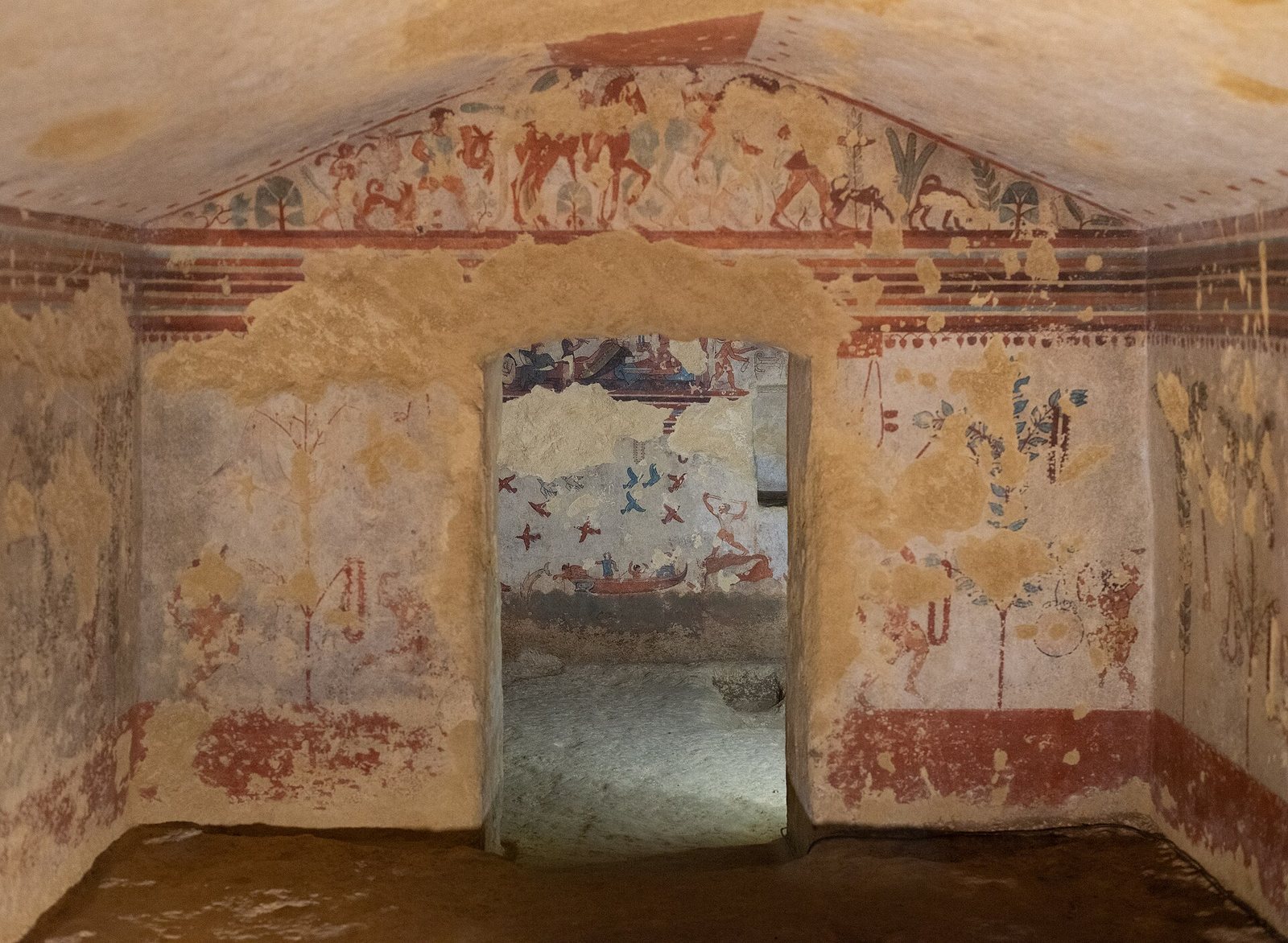
The tomb has an entrance leading into an entrance chamber, with a doorway opposite connecting it to the main burial chamber behind. Both chambers have painted walls. A niche in the rear wall of the main chamber was intended for a cremation burial. The lively paintings survive in poor condition.
Painted chambers
Entrance chamber
Trees and dancers cover the chamber’s walls, with ritual dances shown on both side walls. Broad colored bands divide the wall decoration into three horizontal zones, and a red beam is painted across the ceiling. The dancers, nearly unclothed, move among ribbons, wreaths, mirrors, and containers. In the entry-wall gable, the triangular upper part of the wall, reclining satyrs hold drinking vessels. The opposite gable shows hunters and dogs bringing back game through lush, almost tropical scenery. Elsewhere on the back wall, intoxicated dancers and outdoor games appear among shrubs decorated with ribbons.
Banquet scene
In the main chamber’s back-wall gable, a well-dressed man and woman recline on couches above a seascape. Two unclothed cupbearers attend them, while an instrumentalist plays an ancient double-pipe instrument. Drinking vessels, wreaths, and birds fill out the scene, alongside two young women making wreaths.
Seascapes and coastal scenes
Painted views below the main chamber’s gables include cliffs, small boats with eyes believed to ward off harm, fishermen using harpoons and nets, hunters with slings, water birds, and leaping dolphins. One nude youth dives headfirst from a cliff toward the water, while another climbs toward the rock; the cliff is rendered in a stylized, twisted form. A hunter on shore aims a sling at birds. A dolphin swims in the sea, and birds appear across the chamber walls. Throughout the tomb, small figures stand out against broad natural settings. A similar small-figure scale appears in the bull paintings above the doorways of the Tomb of the Bulls, though there it is confined to a more limited area.