Tannenhausen Megalithic Tombs: Early Funnel Beaker Burial Chambers in Germany
Site at a Glance
- Popularity
- Medium
- Country
- Germany
- Primary era
- Stone Age
- Eras represented
- Stone Age
- Civilizations
- Unclassified
- Site type
- Burial
- Remains
- Tomb
On this page10 sections
History
The Tannenhausen Megalithic Tombs are two neighboring burial chambers near Tannenhausen, 4.3 km north of Aurich in East Frisia, Germany. They were probably built around 3500 BC by communities of the early western group of the Funnel Beaker culture, an early farming society in northern Central Europe that followed Mesolithic hunter-gatherers. The tombs belong to a broad cultural period dated to 3500–2800 BC and are among the region’s earliest monuments of this kind. They are also popularly known as “Butter, Bread and Cheese.”
Early tombs in East Frisia
East Frisia has many Funnel Beaker find locations, but only two other confirmed sites of former megalithic tombs, at Brinkum and Utarp, and both have been destroyed. Finds at Westerhammrich near Leer point to a possible further tomb. The original nature of the Stapelstein near Etzel and the site called the megalithic tomb at Dunum remains disputed. Many tombs in the region are thought to have been lost during Christianization and church construction, as well as later harbor and dike building.
Investigation and reconstruction
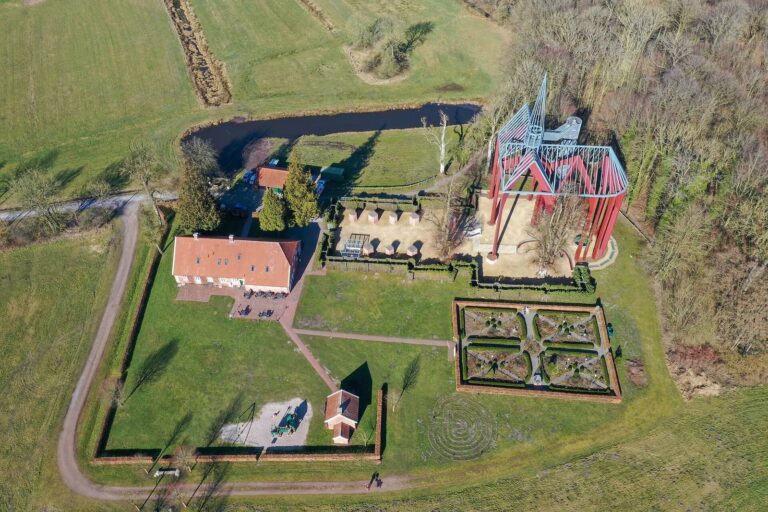
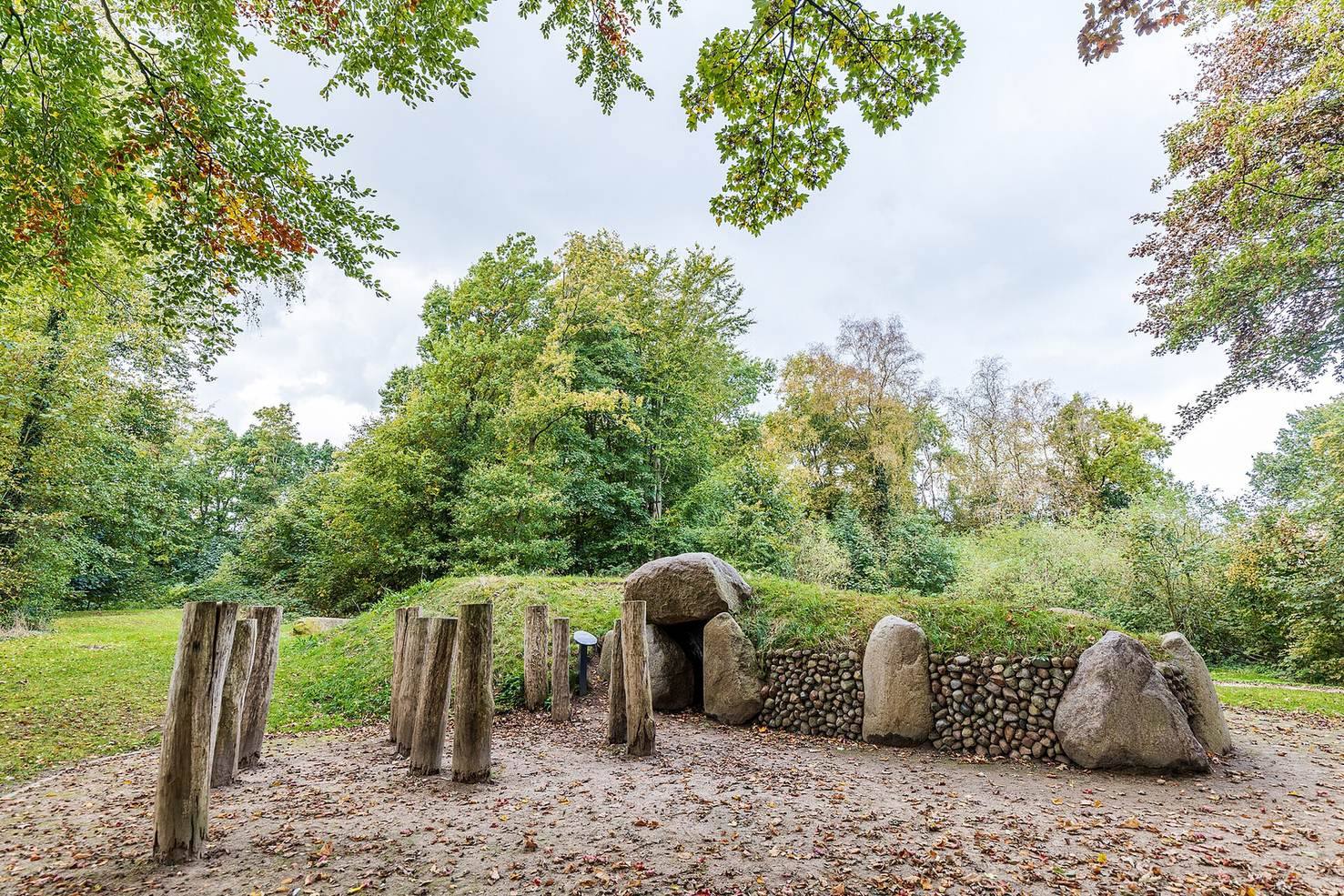
The Ostfriesische Landschaft, a regional cultural organization, directed investigations in 1962 and 1963. These established that a second chamber stood beside the tomb previously recognized at the site. In 2014, the city of Aurich had the eastern chamber reconstructed with the organization’s support.
Remains
The burial chambers
Western chamber
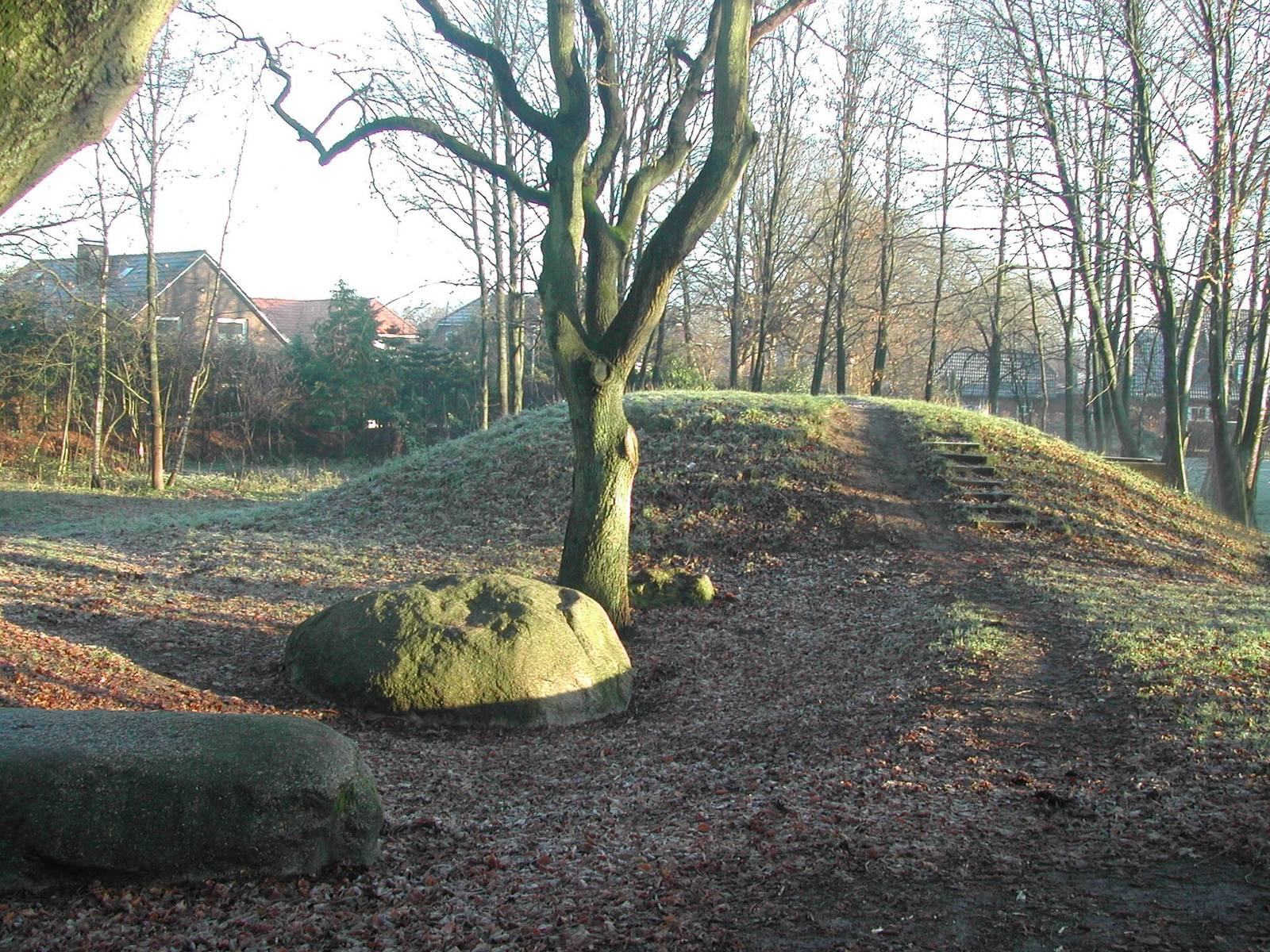
The western chamber is about 12 m long, 2.2–2.8 m wide, and 1.3 m high. Around 20 large boulders formed the original structure. Two capstones and one supporting stone survive; excavations also identified the ground pits where other supporting stones had stood.
Eastern chamber
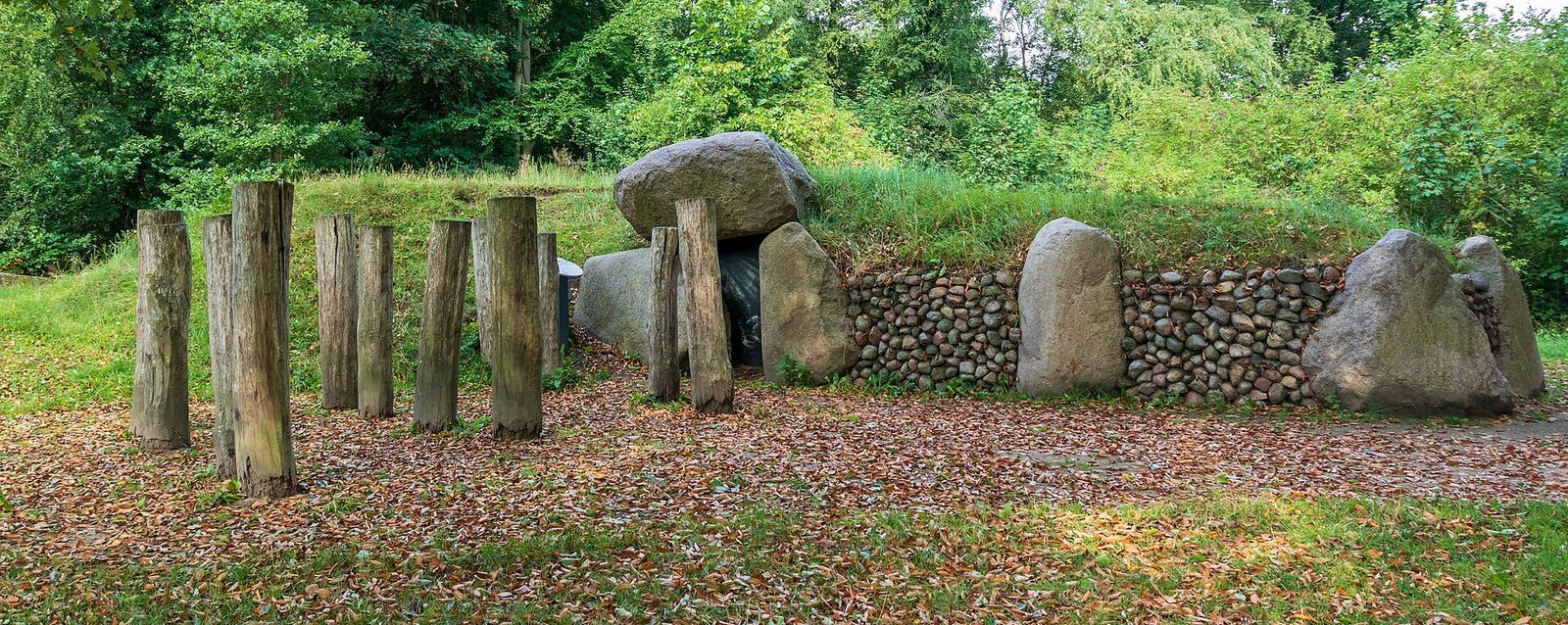
The eastern chamber measures about 11.2 m long and 2.2–3.2 m wide. Its reconstruction uses seven human-height boulders, each weighing about five tonnes and purchased in Mecklenburg-Western Pomerania. Three of these stones form the entrance. Both chambers had oval covering mounds, and their roofs were probably made from five or six large capstones.
The chambers are long, with entrances on their southern sides. Wooden posts, rather than stone blocks, formed the entrances. They are portal graves: tombs entered from a long side without a stone-built passage. A passage grave, by contrast, has a chamber approached through such a passage.
Finds and landscape evidence
Burial finds
Excavated pottery includes bowls, funnel beakers, shoulder vessels, and collared bottles, among them one with a double spout. Other finds include deeply incised pottery fragments, amber beads, stone tools, and axes made from flint and other rock. Finds from the tombs are displayed at the Historical Museum in Aurich and the Heimatmuseum in Leer.
Soil and trackways
Below the tomb complex, excavators recorded a sequence including a heath horizon, bleached sand, a hardened iron pan, and oak-birch woodland. The soil profile suggests that heath formed early, probably after woodland clearance. Surveys around Tannenhausen also identified a plank trackway and a sandy trackway, both now covered by peat. Pollen analysis was used to determine their age.