Day House Lane Stone Circle: A Prehistoric Monument near Swindon
Site at a Glance
- Popularity
- Low
- Country
- United Kingdom
- Primary era
- Stone Age
- Eras represented
- Stone Age, Bronze Age
- Civilizations
- Unclassified
- Site type
- Civic
- Remains
- Megalithic Monument
On this page10 sections
History
Day House Lane Stone Circle is a prehistoric stone circle near Swindon in the United Kingdom, associated with the Late Neolithic and Early Bronze Age tradition of stone-circle building that spread across Britain, Ireland and Brittany between about 3300 and 900 BCE. These terms refer to the later part of the Neolithic and the early part of the Bronze Age. The circle’s purpose is unknown; one interpretation proposes that its stones represented supernatural beings.
Prehistoric origins
The circle was one of at least seven known to have stood south of Swindon. It lies about two kilometres northeast of the now-destroyed Fir Clump Stone Circle.
Early records and investigation
In about 1867, the English writer and naturalist Richard Jefferies described the circle. He suggested it might have been built by Druids, religious specialists associated with ancient Celtic societies, while acknowledging that this attribution could not be established. Jefferies also reported that a stone beside the lane had been blown up and removed a few years earlier to improve the road.
The antiquarian A. D. Passmore, a researcher of historical remains, began investigating the circle after encountering it in January 1893 and wrote about his work in 1894. His observations and interpretations helped preserve information about the stones and the surrounding area.
Protection and development pressures
In the late 2000s, plans for 1,800 homes and a university campus near Coate Water raised concerns about damage to the area’s archaeology, including the circle. A campaign to make the affected landscape a conservation area did not succeed, and the authorities supported the development. The circle is a Scheduled Monument, a legally protected archaeological or historic site, under the Ancient Monuments and Archaeological Areas Act 1979.
Remains
The ring and its setting
The circle stands immediately northeast of Day House Farm, in front of the farmhouse, on a flat clay plain at the foot of a chalk escarpment. It would have been in sight of several prehistoric monuments on the Ridgeway, an ancient route along the southern English chalk downs. The site is about a quarter of a mile from the former village of Coate, two miles southeast of Swindon town centre and nine miles northeast of Avebury stone circle.
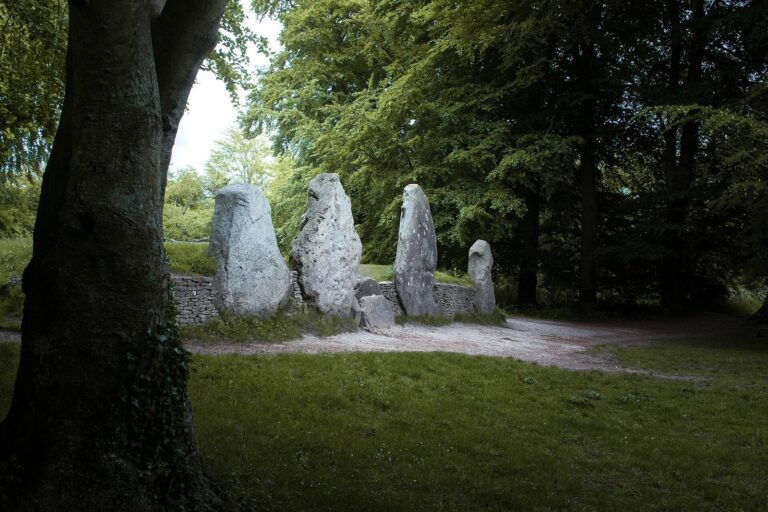
The ring was built from sarsen, a hard sandstone that occurs naturally as large boulders in parts of southern England. Its original diameter was probably about 69 metres, and it may have held more than thirty stones. Passmore considered its outline slightly irregular, with measurements varying around the ring, and recorded individual stones up to three metres long.
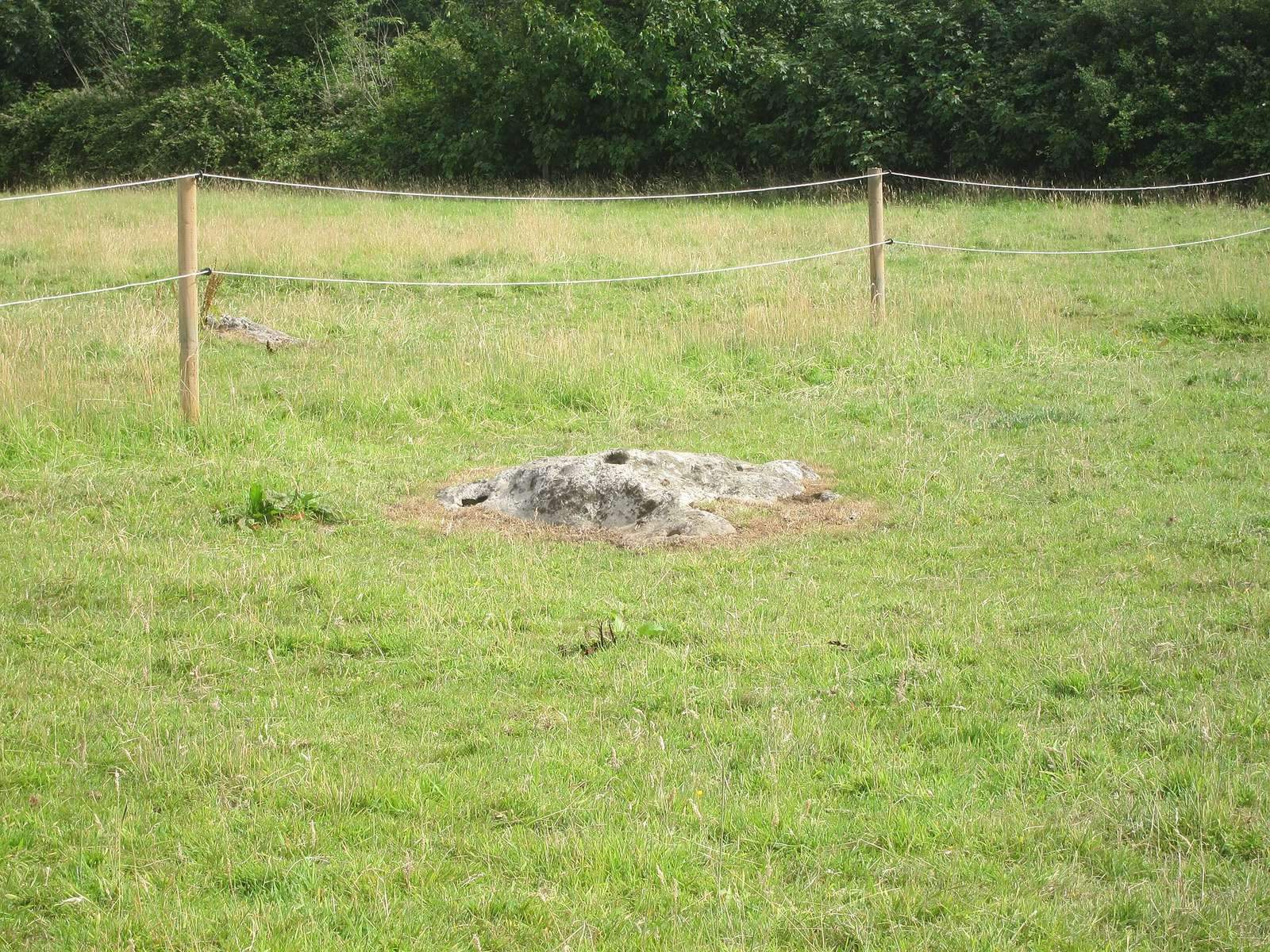
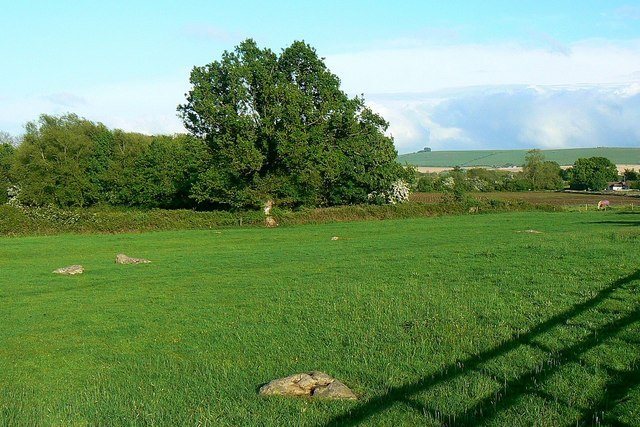
Five partly buried stones remain. In the 1890s, Passmore counted nine stones, all lying flat and mostly covered by soil, with none projecting more than 18 inches above the grass. Jefferies had earlier described five stones arranged in a semicircle, with the lane running along the straight edge or just touching the arc. Passmore thought the western part of the ring might have lost stones through breakage or removal, as cattle and haystack yards occupied that area. The circle was described as almost completely overgrown in 1980 and again in 2000, although Historic England characterized it as comparatively well preserved for its type.
Associated stones and finds
Roadside stones
A row of five stones once stood beside the road near the farm. One was on the road’s eastern side, while four were on its western side or in an adjoining ditch. Passmore noted that some were large and that several were evenly spaced. He proposed that the line had been deliberately arranged as a prehistoric avenue leading toward the circle’s northern side, rather than being stones moved casually by farmers. An elderly local resident remembered other stones being broken up in a nearby field and believed a complete circle had once stood there, but Passmore considered that recollection insufficient proof. The roadside row had disappeared by the early 21st century. In March 2009, highway work also revealed two large sarsen boulders opposite Day House Farm.
Field boulders and finds
Jefferies noted three further sarsen stones in an adjacent field, one much larger than the other two. Passmore described three large boulders southwest of the farmhouse. One lay on its side and measured at least 0.91 by 2.1 metres; the other two were smaller. He found flint tools and crude pottery in the field near these boulders.
Ring fragments and excavation
Passmore also observed large sarsen fragments and an area of paving made from sarsen around the circle. He thought the paving might have used stones removed from the ring. When he excavated between two numbered circle stones, he found a piece of burnt sarsen and a patch of white ash.