Hunte 1: A Neolithic Wetland Settlement in Germany
Site at a Glance
- Popularity
- Low
- Country
- Germany
- Primary era
- Stone Age
- Eras represented
- Stone Age
- Civilizations
- Unclassified
- Site type
- Domestic
- Remains
- House
On this page16 sections
History
Hunte 1 is a Neolithic wetland settlement beside the Hunte, north of Lake Dümmer in Germany. People of the Funnel Beaker culture established it around 3200 BC. The Neolithic was the later Stone Age, when farming and herding became established, and occupation at Hunte 1 continued into the Early Bronze Age. Across roughly 1,300 years, different communities used the settlement, with intervals when it was abandoned.
Prehistoric occupation
The cultural sequence is identified largely through pottery styles. Around 2800 BC, people of the Single Grave culture, part of the wider Corded Ware cultural complex, lived at the site. Communities associated with the Bell Beaker culture followed from about 2500 BC. Use continued until approximately 2000 BC.
The settlement lay among a lake, a reed-lined shore, river channels and swamp forest. These surroundings offered varied food sources: people could fish from dugout canoes in the lake and rivers, hunt in nearby woods, and take waterfowl from the wetlands. Changing environmental conditions brought periods of disuse, and flooding is considered the likely cause of the settlement’s eventual abandonment. Other prehistoric sites along the Hunte are known as Hunte 2, Hunte 3 and Hunte 4; they have been investigated to different extents.
Discovery and prewar excavations
Workers dredging the Hunte to straighten its course came across the site in 1932. Rather than report the objects they found, some sold them. In 1934 a surveyor recovered pottery fragments and animal bones and alerted a local heritage officer, who feared that planned river works would damage the remains. The officer contacted the Lower Saxony State Museum in Hanover. The following year, the officer bought many objects from the workers, including an antler pick that a women’s organization in the Diepholz district sent to Adolf Hitler as a harvest-festival present.
In 1936 Kai Michaelsen, director of Oldenburg’s Museum of Natural History and Prehistory, proposed an excavation to Karl Hermann Jacob-Friesen, director of the Hanover museum. The settlement stood in Hanoverian territory near the border with Oldenburg, so the Hanover museum would have been responsible for work there. Jacob-Friesen declined, citing more urgent excavations. The next year Michaelsen enlisted Hans Reinerth, a prehistorian whose work was closely linked to Nazi racial ideology. Reinerth sought to investigate settlements near Lake Dümmer within a racialized account of German prehistory.
Michaelsen and Reinerth began surveying in 1938, but police intervened because Michaelsen had entered Hanoverian territory without permission and seized the initial finds. Before excavation began, senior Nazi officials Alfred Rosenberg and Heinrich Himmler became embroiled in a dispute. Rosenberg suspected that Himmler’s SS research organization, Ahnenerbe, intended to excavate at the site, although work under Rosenberg’s authority was already underway.
Reinerth led three campaigns between 1938 and 1940, excavating almost the entire settlement over an area of 4,900 square metres. Narrow-gauge rail wagons carried soil away, while motor pumps drained groundwater. At times, about 50 people worked on the excavation, including students, academic assistants, laborers, volunteers, school groups and boys from the Landjahr, a Nazi-era rural youth service. French prisoners of war were also employed in 1940. Finds were not recorded by individual soil layers, although the surviving excavation records were unusually comprehensive for their time.
Reinerth’s interpretations reflected the racial assumptions of the period. In 1939 he presented house remains at Dümmer and Federsee as examples of a supposed ancient Germanic rectangular house type, which he claimed had influenced buildings at Troy and Greek temples. The discovery of a prehistoric well was also treated as important. Zoologist Richard Vogel argued that animal bones showed Icelandic horse breeding was already practiced and outweighed cattle breeding in importance; this fed a contemporary claim that the region was the original home of European horse breeding. Excavators of the time also explained the settlement’s abandonment as the result of a catastrophic flood.
War and later research
Reinerth’s planned publication of the excavation results did not appear because of the Second World War. Evacuations and other wartime movements scattered the records and finds among several locations, and some material was lost. Objects sent to the Lower Saxony State Museum remained available to Reinerth until 1975, but he did not finish his study; other finds stayed in his private possession.
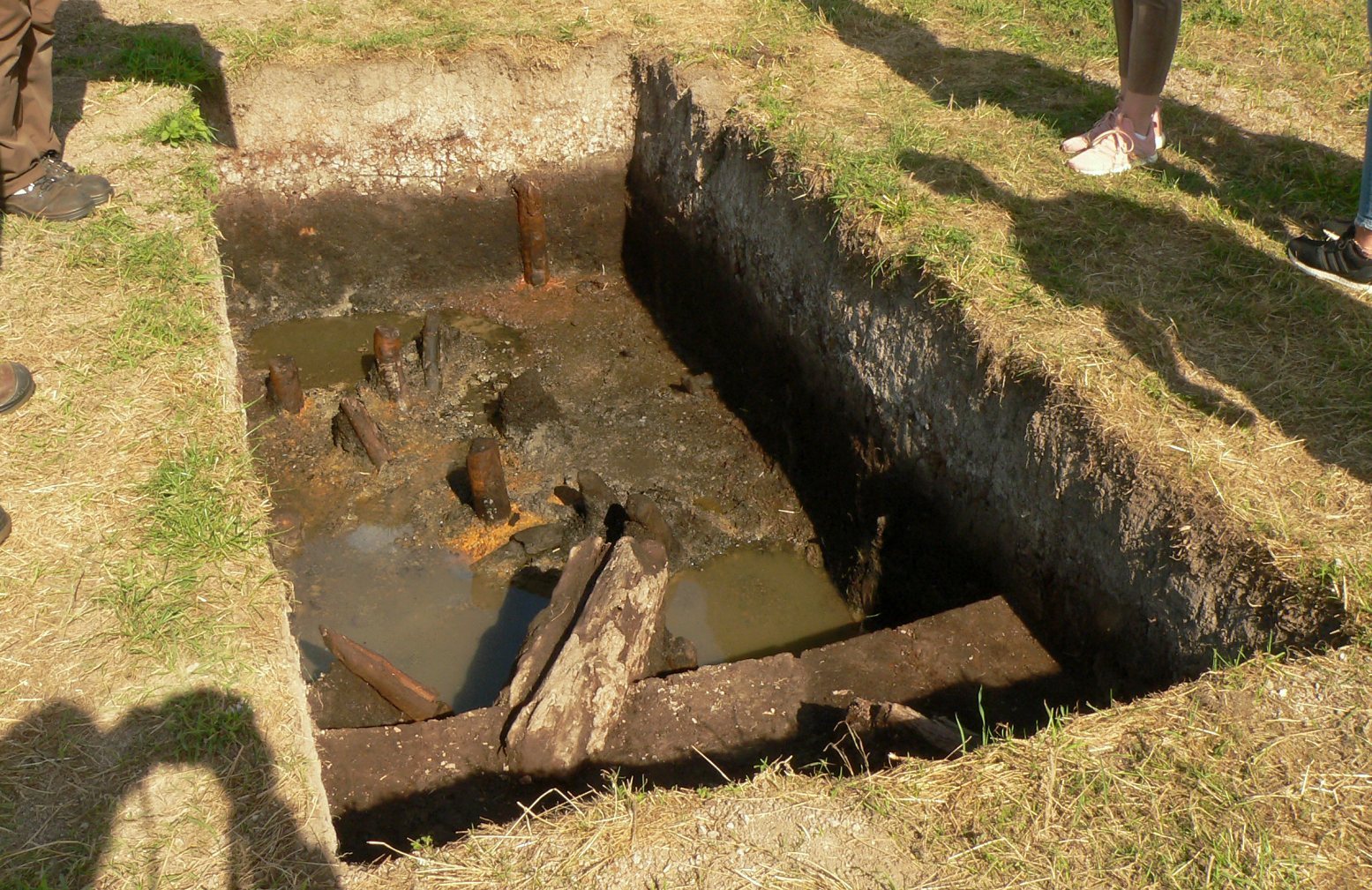
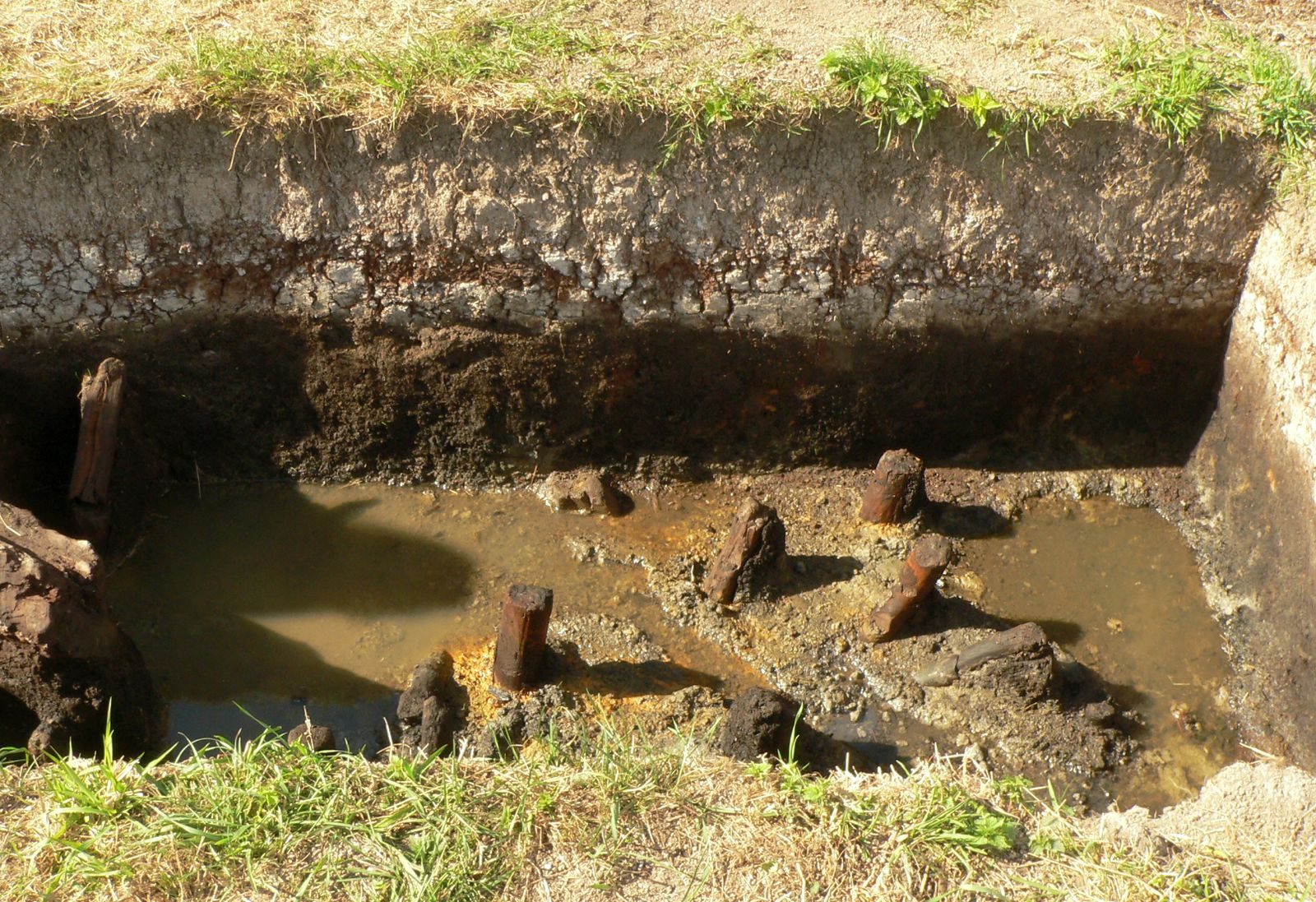
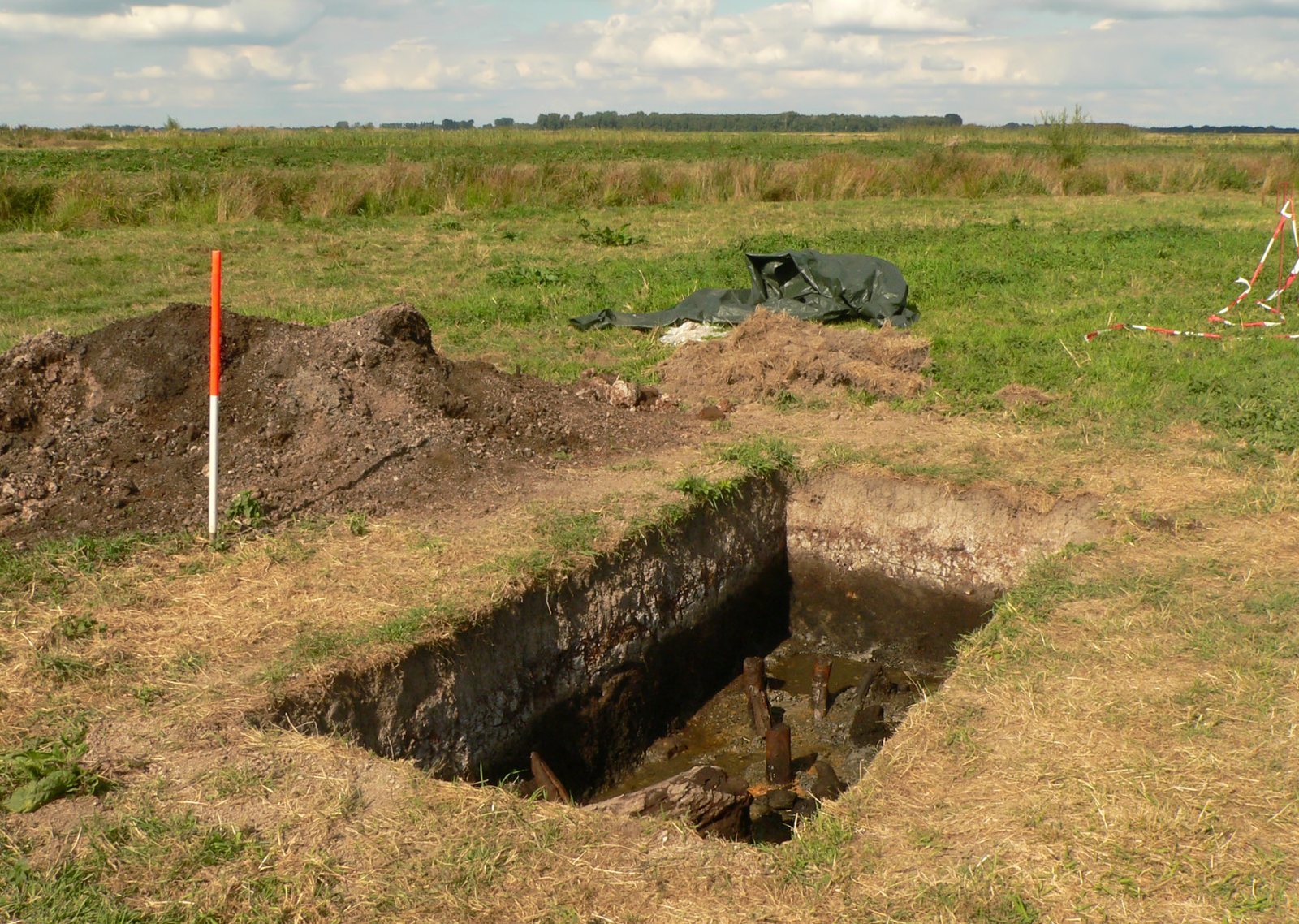
From 2000 to 2002, the Lower Saxony State Museum undertook a project to reassess the earlier excavations. It brought scattered records and finds together, including material from Reinerth’s estate, and convened researchers to examine them. The results appeared in a monograph in 2007. In 2022, the Lower Saxony State Office for the Preservation of Monuments and the University of Kiel carried out a joint research excavation to investigate the inhabitants and their environment through interdisciplinary study. Because the original survey records from the prewar excavations had been lost, the team first opened small trenches to relocate the settlement.
Remains
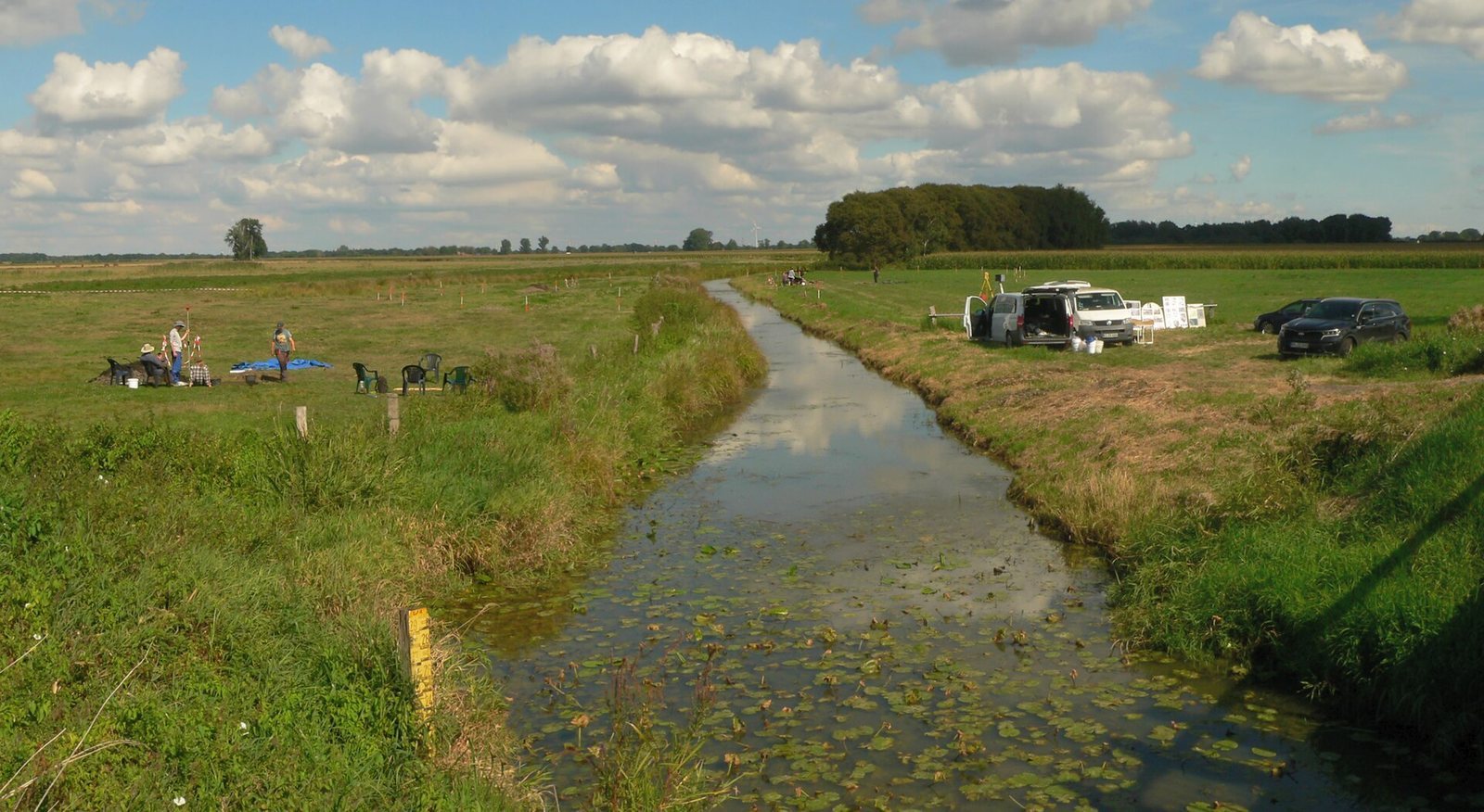
Hunte 1 occupied a small rise on the northern side of Lake Dümmer, beside the Hunte, in what is now a wet meadow. The rise may once have been an island or a peninsula extending into the river. The settlement covered about 120 by 75 metres. The river channel, altered during works in the 1930s, now passes through the site, which lies about 800 metres from the lake’s present northern shore.
Setting and enclosures
Main settlement enclosure
An oval arrangement of upright posts enclosed the settlement, with openings that served as gates and structures attached to the enclosure. Tree-ring dating places the palisade timbers at around 2800 BC. The enclosure may have reached into the Hunte and formed a harbor, though this interpretation remains uncertain.
Possible second ring
During the 2022 excavation, posts belonging to the main enclosure were still in place in the ground. Farther outside the settlement, excavators found additional wooden posts that may represent a second enclosing ring. Earlier ground-penetrating radar had indicated buried features in this area, and the new evidence raised the possibility that the settlement extended beyond its previously understood limits. Finds from the 2022 work included pottery fragments, some decorated, animal bones and a grinding stone.
Buildings and ground features
Wooden buildings
Excavators identified the ground plans of 24 wooden buildings. Most occupied between 12 and 25 square metres. One measured 11 by 4.5 metres, nearly 50 square metres, while two others each covered 41 square metres. Almost every building had at least one hearth set into the ground. Some building plans overlapped, indicating that the structures were not all in use at the same time. Their timbers produced dates similar to those of the palisade.
Pits and well
Ten pits lay within the occupied area. Excavators also uncovered a prehistoric well, which attracted particular attention at the time of its discovery.
Deposits and finds
Wetland deposits
Valley and river-deposited sands lie below about 1.8 metres depth. Above them are roughly 50 centimetres of lime-rich lake sediment from Dümmer, followed by about 20 centimetres of peat mud. Swamp-forest peat begins at approximately one metre below the surface and formed the ground on which the settlement stood. Waterlogged conditions helped preserve organic materials. The wet location also limited agricultural use and helped protect the site.
Artifacts
The 1938–1940 excavations recovered nearly 40,000 objects. About 25,000 were flint artifacts and roughly 7,000 were animal bones. Other finds included several thousand pottery fragments and several hundred objects made of antler, amber and wood. The assemblage also contained flint axes, ground-stone axes and grinding stones.
Human remains
Thirty human skeletal remains were found, including 14 skull fragments. One skull shows an opening made by scraping, a form of trepanation, or deliberate alteration of the skull; the person probably survived the procedure. On two other skulls, the face had been separated from the rest of the skull, perhaps so that the skulls could be used as masks.
Modern reconstruction
A reconstructed Neolithic house was built beside the Dümmer Museum in Lembruch in 2021. It draws on evidence from Hunte 1 and uses building techniques considered typical of about 5,000 years ago. The house is outside the settlement and is a modern reconstruction, not one of the buildings uncovered during excavation.