Praia das Maçãs Prehistoric Monument: A Neolithic and Chalcolithic Burial Site
Site at a Glance
- Popularity
- Medium
- Country
- Portugal
- Primary era
- Stone Age
- Eras represented
- Stone Age
- Civilizations
- Unclassified
- Site type
- Burial
- Remains
- Tomb
On this page8 sections
History
Neolithic and Chalcolithic burials
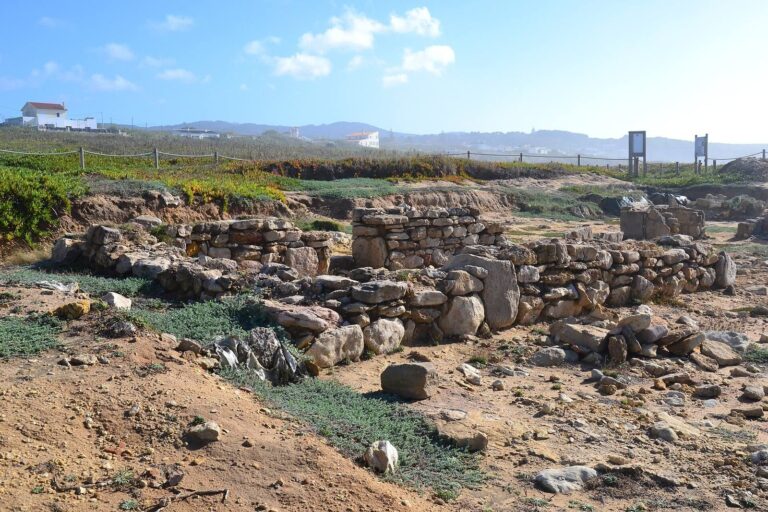
The Praia das Maçãs Prehistoric Monument is a funerary complex in Colares, Portugal, with an artificial cave from the Neolithic, or later Stone Age, and a later Chalcolithic, or Copper Age, tholos (a tomb with a circular chamber and domed roof).
The cave was probably cut into the rock during the second half of the fourth millennium BC or early in the third millennium BC. A tholos was added during the later period, bringing funerary practices from two eras together at the same place.
Discovery, investigation, and protection
An agricultural worker discovered the site in 1927. The National Museum of Archaeology and Ethnology carried out limited excavations. More extensive work began in 1969, when Vera Leisner, Georges Zbyszewski, and Octávio da Veiga Ferreira excavated the burial ground after examining objects found by a private collector in the 1930s. Sintra Council undertook further work in 1981.
The monument was designated a national monument in 1974. Housing surrounds the site, which is also within a special protection zone where construction is prohibited.
Remains
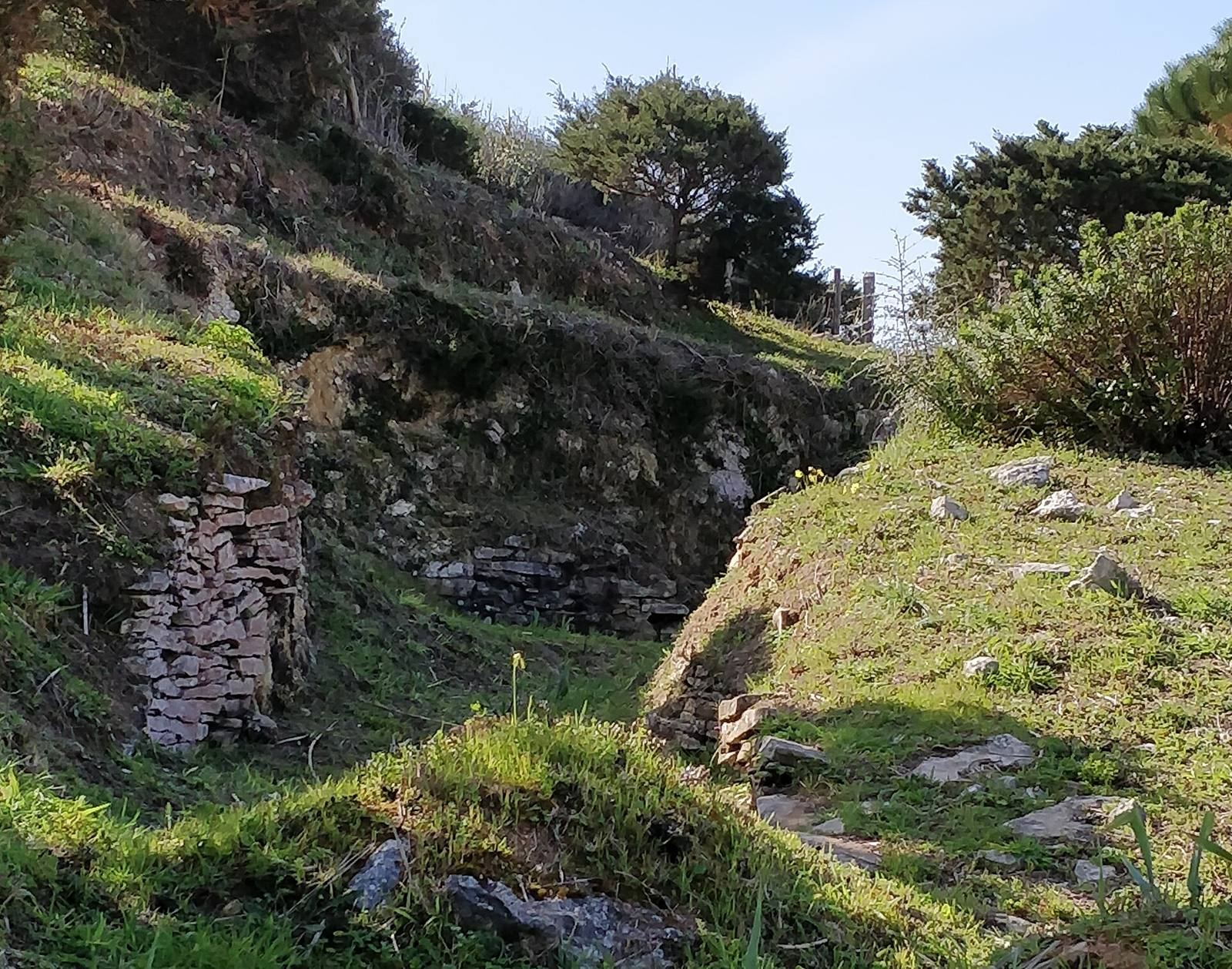
Near Praia das Maçãs beach, the complex combines an artificial cave with a circular tomb approached through an entrance corridor and atrium. A protective layer of sand covers the site, leaving little of it visible today.
Funerary structures
Artificial cave
The cave measures about 2 m in diameter and was originally covered with stone slabs.
Tholos tomb
The tomb’s circular chamber measures about 5.5 m across. Its walls are formed from horizontally laid limestone slabs, and a central pillar supported the dome. A corridor about 3.5 m long connects the chamber to an atrium 2 m wide.
Finds
Objects from the site include small geometric stone tools, arrowheads, polished axes, and cylindrical idols. They are held at the National Museum of Archaeology and Ethnology in Lisbon and the Regional Museum of Sintra.