Archaeological Site of Alto da Vigia: A Roman Sanctuary and Later Settlement
Site at a Glance
- Popularity
- Low
- Country
- Portugal
- Primary era
- Classical
- Eras represented
- Classical, Medieval, Early Modern
- Civilizations
- Almoravid, Portuguese, Roman
- Site type
- Religious
- Remains
- Sanctuary
On this page12 sections
History
The Archaeological Site of Alto da Vigia is a Roman sanctuary and later settlement site in Colares, Portugal, above Praia das Maçãs. The Romans established the sanctuary in the 2nd or 3rd century CE, dedicating the coastal land to the Sun, Moon, and imperial cult, rites connected with the emperor and imperial authority. It served people holding senior imperial offices in the territory.
Roman Sanctuary and Imperial Cult
Inscriptions wishing the emperor good health and the empire a long life point to dedications commissioned through the Senate of Olissipo, the Roman name for Lisbon. Such offerings were not usually associated with individual worshippers or local and provincial elites. Those responsible may instead have included governors of Lusitania, the Roman province in the western Iberian Peninsula, or imperial legates, senior representatives of the emperor.
Sextus Tigidius Perennis, governor of Lusitania, dedicated an inscription to the Sun and Moon in 185 CE. Caius Julius Celsus, a procurator, or Roman administrative official, in Lusitania made another dedication in the late 2nd century. Between 200 and 209 CE, governor Junius Celanius dedicated an inscription to the Eternal Sun and Moon.
Muslim Settlement
A Muslim settlement occupied Alto da Vigia in the 12th century. After it disappeared, the area was abandoned, and local people reused much of its stonework in homes and public buildings.
Rediscovery and Archaeological Work
Valentim Fernandes rediscovered the ruins in 1505. Around 1541, Francisco de Holanda recorded observations and drawings of the structures and identified them as a Roman sanctuary. His identification is considered Portugal’s first archaeological discovery. The site drew visitors during the Renaissance, including King Manuel I and Prince Luís, brother of King John III. Although people continued to remember a Roman sanctuary on the Sintra coast, the ruins’ location was later forgotten.
Later studies and fieldwork identified the site on a hilltop escarpment overlooking Praia das Maçãs. In 2008, a team from the Archaeological Museum of São Miguel de Odrinhas began excavations and uncovered a monumental Roman sanctuary. In 2021, Portugal’s Ministry of Culture classified the site as a Place of Public Interest.
Remains
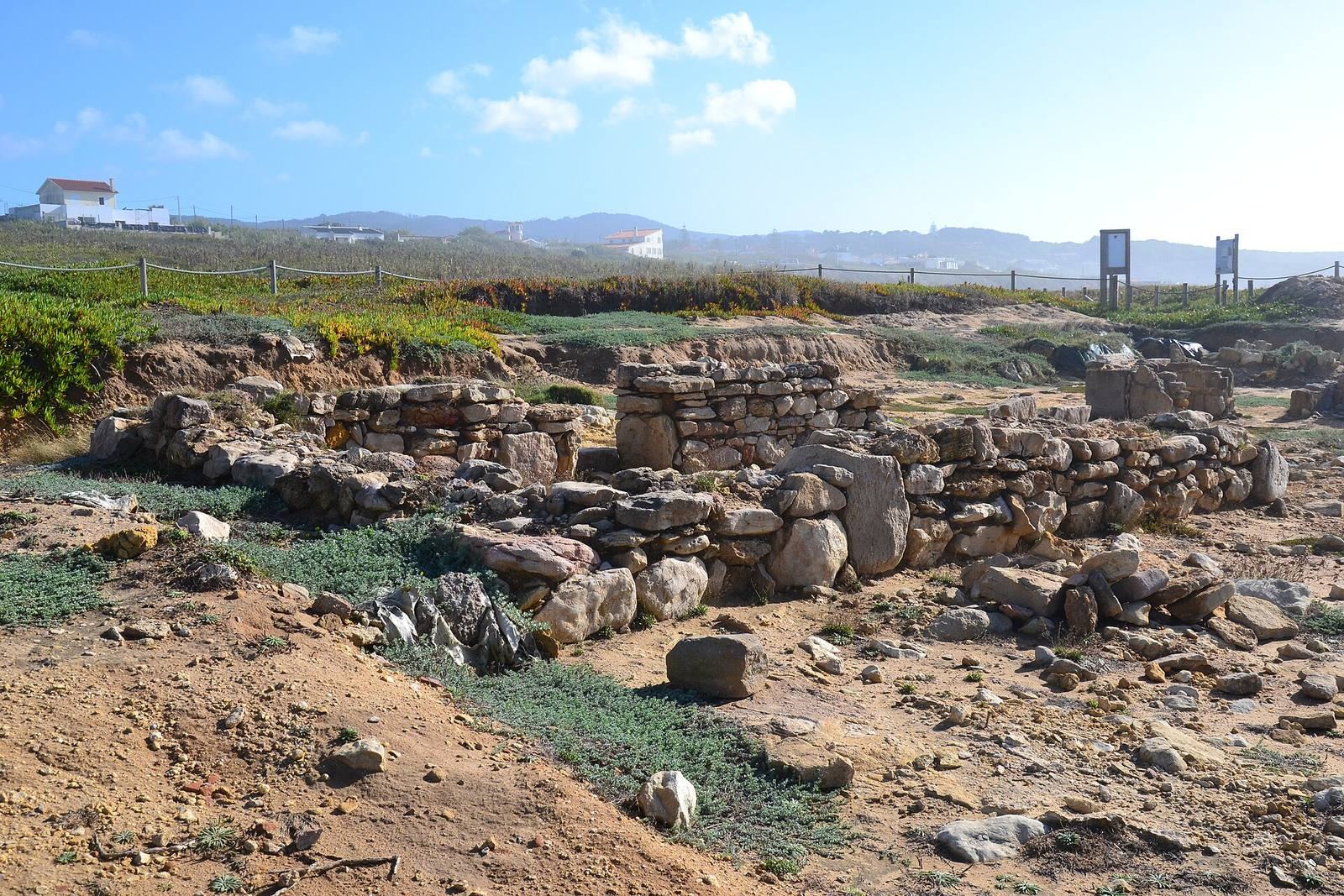
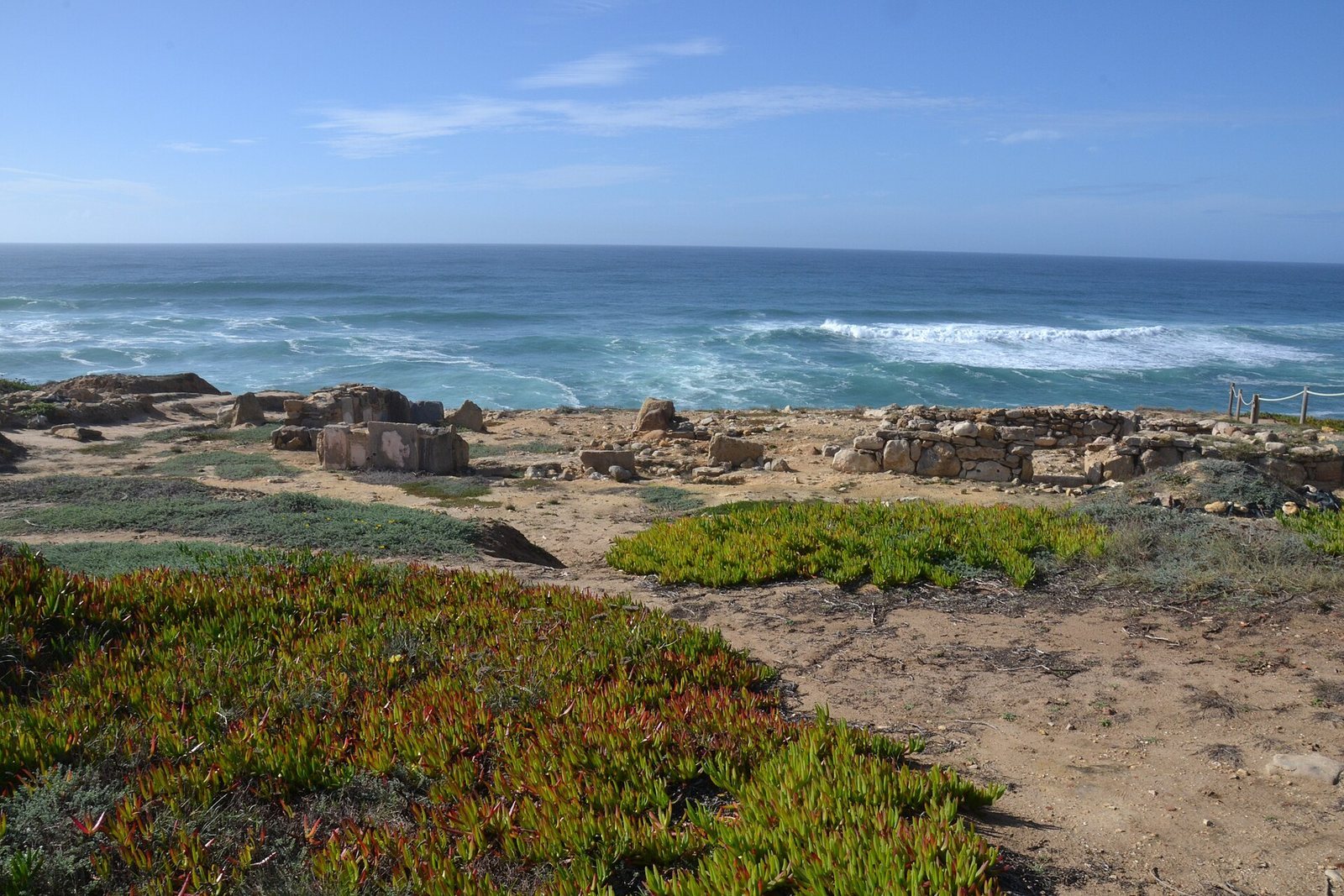
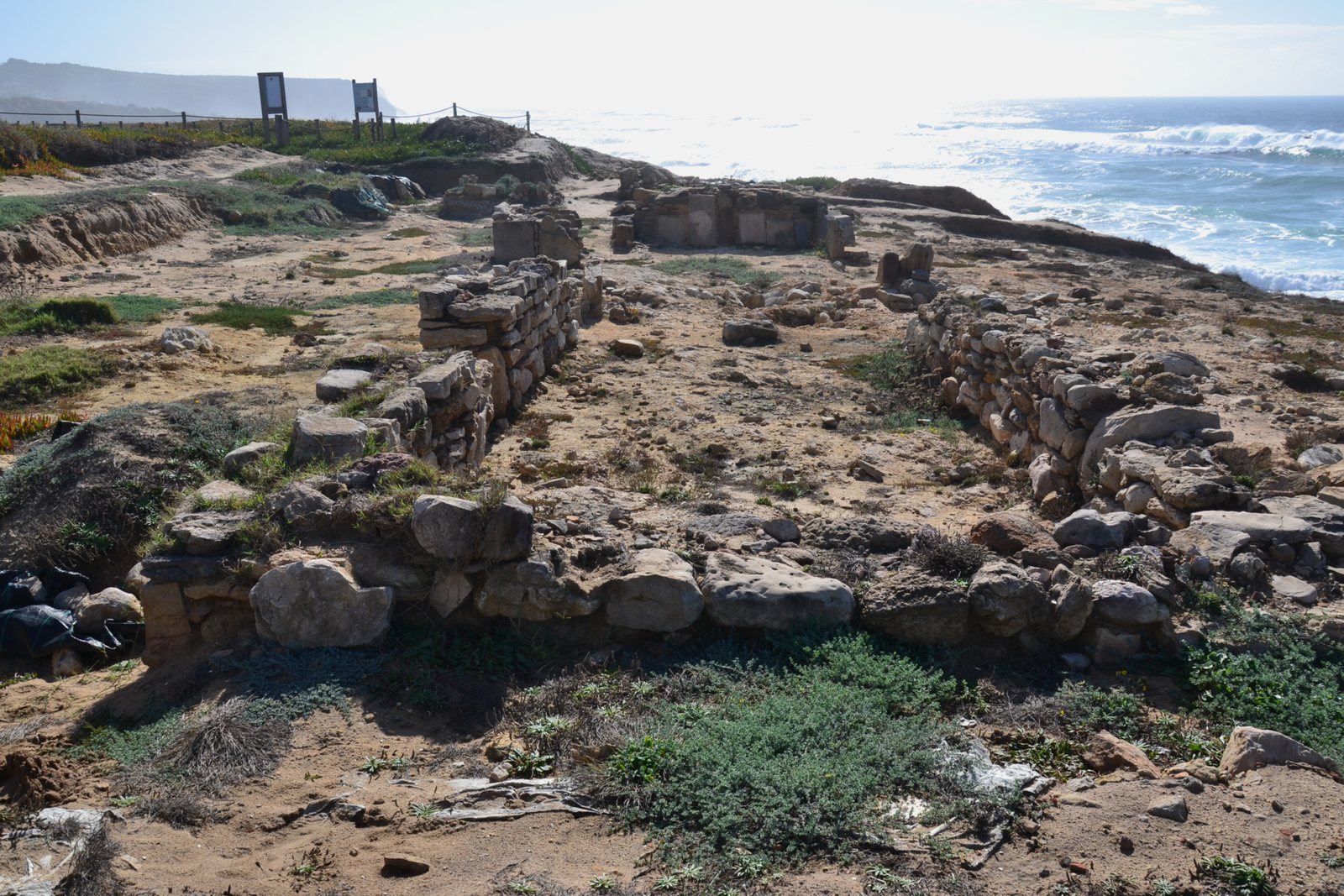
The remains occupy a barren hilltop escarpment above cliffs overlooking Praia das Maçãs, about 20 m above sea level. The site’s recorded dimensions are 19.25 m long and 22.5 m wide. Its remains include a Roman sacred precinct, structures from the later settlement, and a tower dating to the 16th century. Much of the site’s architecture lay buried beneath sand by the 16th century.
Roman Sanctuary
Sacred Precinct
The Roman sanctuary included a circular temenos (an open-air sacred precinct). Its architectural remains form part of the complex later occupied by the Muslim settlement.
Roman Finds
Roman finds include votive inscriptions, an altar, a funerary inscription, pottery vessels, column fragments, pieces of additional altars, and large construction blocks. One recovered inscription records a procurator’s dedication to the Sun and the Ocean.
Islamic Settlement
Ribat
The settlement’s remains include a ribat (an Islamic religious establishment) with several halls. Its mihrab (a niche indicating the direction of prayer toward Mecca) faces southeast. The building reused architectural elements from the earlier Roman period, some of which can be identified through inscriptions.
Other Remains
An area of graves was identified at the site. Other surviving material includes 12th-century ceramics, probably associated with the settlement’s final occupation phase, as well as shells and evidence of fires. These remains have been interpreted as suggesting a connection between coastal activity and food.
Sixteenth-Century Tower
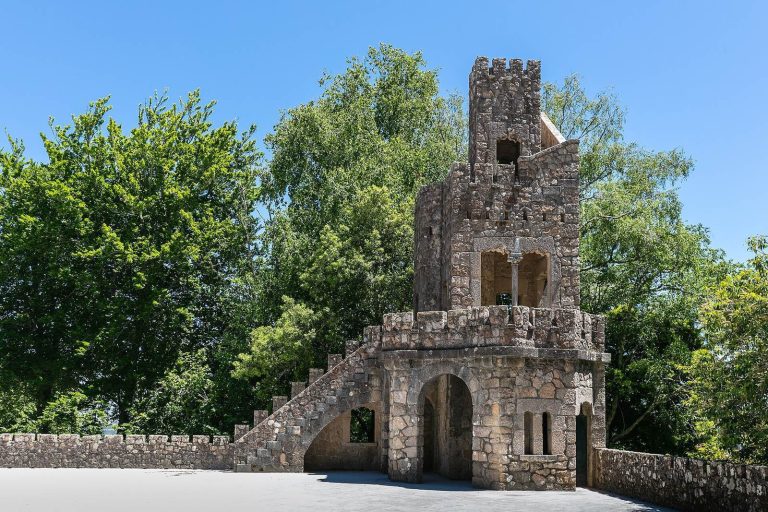
A tower dating to the 16th century also forms part of the complex.