Sørup: A Manor House and Estate in Denmark
Site at a Glance
- Popularity
- Very Low
- Country
- Denmark
- Primary era
- Modern
- Eras represented
- Modern
- Civilizations
- Danish
- Site type
- Domestic
- Remains
- Manor House
On this page6 sections
History
Sørup is a manor house and estate in Denmark, about six kilometres south of Ringsted. It was probably established in the 13th century on land once belonging to the small village of Siøthorp.
Early manor and the Basse family
The earliest known owner, Jacob Nielsen, appears in records from 1381 and 1388. In 1398, Peder Jensen Sparre sold Sørup to Torben Pedersen. Karl Nielsen held the estate in 1419, and by 1425 it belonged to Jacob Jep Jensen. After his death, his sons Jens and Per Ibsen Jepsen inherited it.
Christoffer Jensen Basse acquired Sørup in 1456, beginning a long period of ownership by the Basse family. Basse Christoffersen held it from 1494 to 1560, followed by Christoffer Basse, Erik Basse, and Peder Basse, who owned it from 1582 until 1639. Peder married Sophie Nielsdatter Parsberg in 1584 and received several fiefs, grants of land or revenue, in Denmark and Norway from 1598.
During the Kalmar War of 1611–1613, a conflict between Denmark-Norway and Sweden, Peder served as a cavalry captain while also managing Sørup. He secured King Christian IV’s permission to dissolve the village that remained there and incorporate its land into the manor. Peder died in 1639 as the last male member of the Basse family, and his daughters inherited the estate.
Anne Steensen and Kjøn Jochum Grabow
Anne Steensen, wife of Kjøn Jochum Grabow, inherited a share of Sørup from her mother, Margrethe Basse. By 1642, Grabow had acquired most of the estate’s shares. He served in the Danish-Norwegian navy during the Torstenson War of 1643–1645, another conflict with Sweden, and the First and Second Dano-Swedish Wars. At first, he commanded a full squadron. After his death in 1667, Anne held Sørup until it was sold in 1672.
Luxdorph and Knuth ownership
Bolle Luxdorph bought Sørup in 1672 and acquired the remaining shares. His career in central government continued after the fall from power of Danish statesman Peder Griffenfeld, and Luxdorph was ennobled in 1679. After losing favour at King Christian V’s court, he was dismissed from all his offices in 1690. The estate later passed to Amalie Adeler, who held it from 1698 to 1712, then to Hedevig Ulrikke Luxdorph for 1712–1713, and to Luxdorph’s son-in-law Adam Christopher Knuth from 1713 to 1736.
In 1714, Knuth brought his estates together in the countship of Knuthenborg. In 1743, he and his second wife, Ida Margrethe, established the Barony of Conradsborg for their youngest son, Conrad Ditlev Knuth. Its Zealand properties included Sørup, Sandbygaard, and Rosengaard. Conrad held Sørup from 1743 to 1797.
Later owners and rebuilding
In 1797, Conrad received royal permission to dissolve the barony and replace it with a family trust intended to keep property within the family. Sørup was then sold at public auction to Jens Dahl, who improved its management. Dahl sold it to Heinrich Callisen in 1813. Callisen retained the estate through an agricultural crisis that bankrupted many other landowners. Thor Muus acquired Sørup in 1828; his son W.H. Muus, who had managed it since 1869, inherited it in 1881.
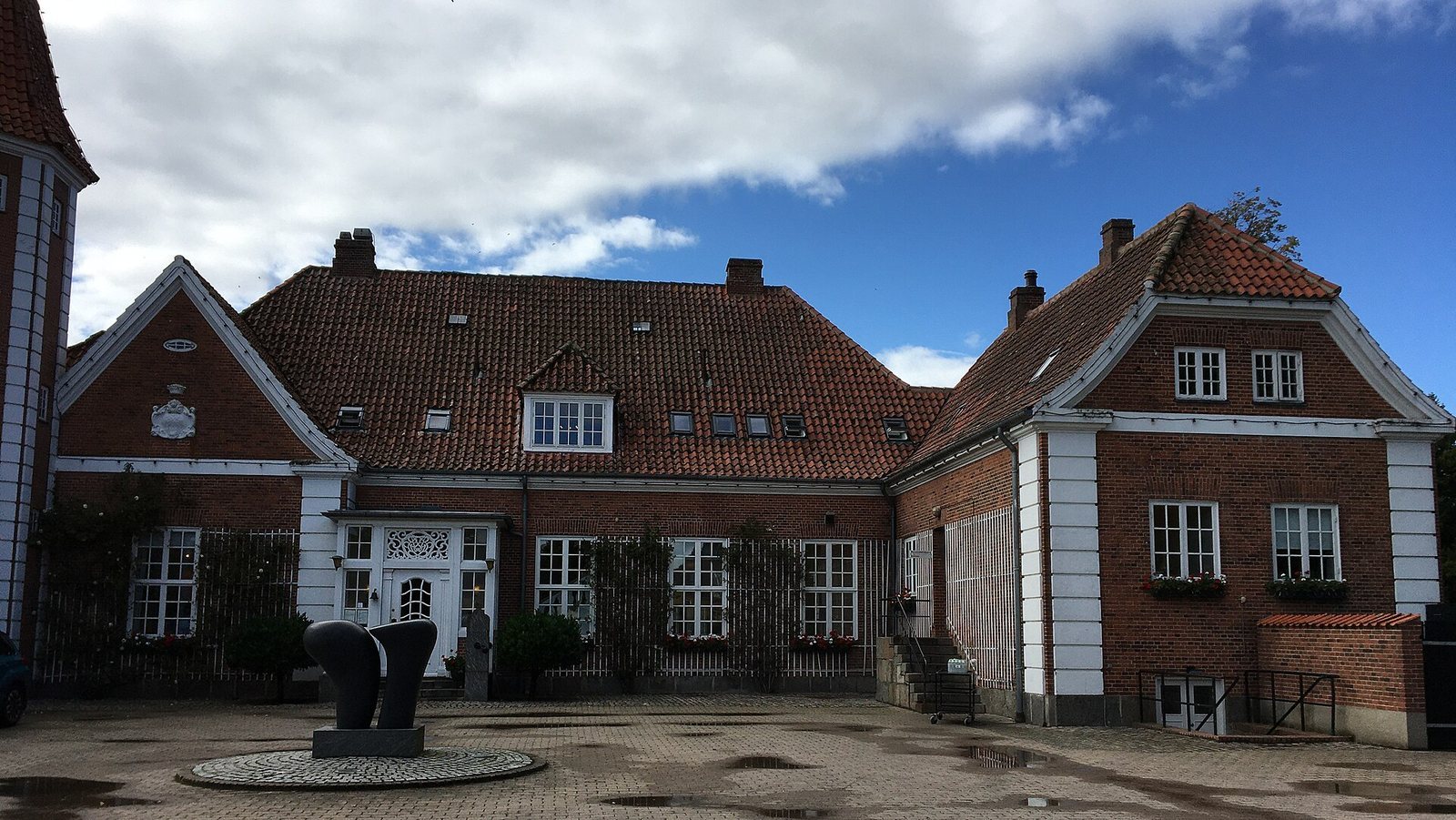
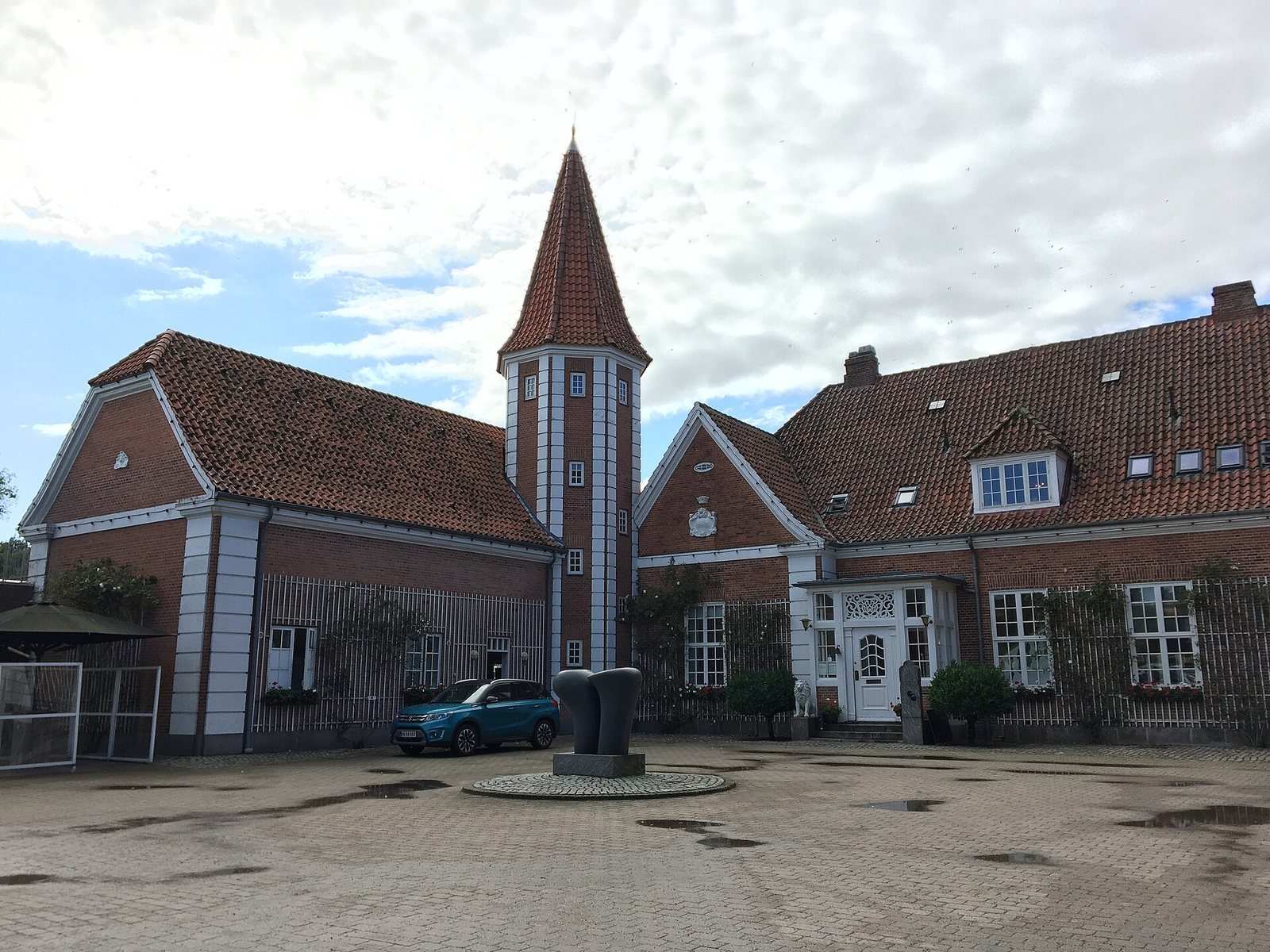
W.H. Muus’s widow sold Sørup to Count Frederik Brockenhuus-Schack in 1907. A fire destroyed the main building in 1909, and a replacement was subsequently built. Brockenhuus-Schack sold the estate to P. Madelung in 1918, who sold it to Justus Ulrich later that year. Later owners included W. Harrsen from 1923, Harrsen’s estate from 1947 to 1949, A/S Sørup from 1949 to 1981, and Sørup Avlsgård A/S thereafter. As of 2020, Lene Christiansen owned Sørup through that company. The main building operates as a hotel and conference centre.
Remains
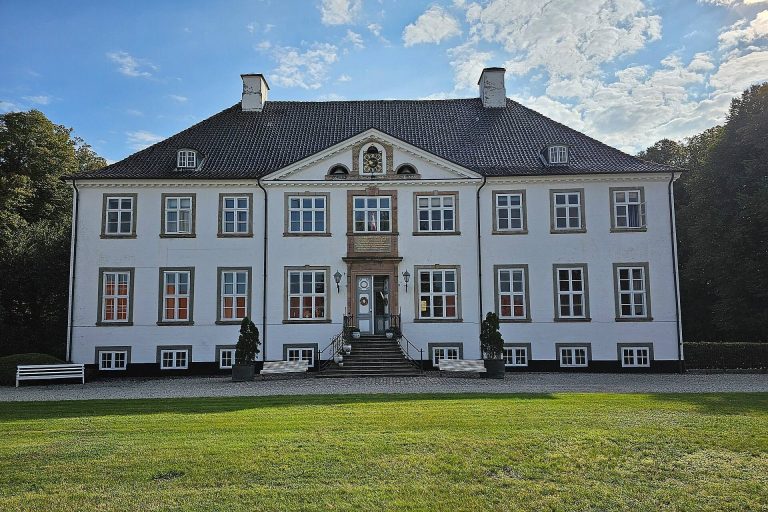
The present main building was constructed after the 1909 fire in the Historicist style, which draws on architectural styles from earlier periods. It replaced the building destroyed in the fire.