Megalithic Tombs near Wersen: Neolithic Burial Sites in Germany
Site at a Glance
- Popularity
- Very Low
- Country
- Germany
- Primary era
- Stone Age
- Eras represented
- Stone Age
- Civilizations
- Unclassified
- Site type
- Burial
- Remains
- Necropolis
On this page6 sections
History
The Megalithic Tombs near Wersen are a group of Neolithic tombs in Lotte, North Rhine-Westphalia, Germany. They were built around 3250–2860 BC by the Funnel Beaker culture, a northern European Neolithic culture named for its funnel-shaped pottery.
Two of the three tombs survive. The third was destroyed during the nineteenth century. Modern investigations remeasured the Große Sloopsteine in 2014, rediscovered remains of the destroyed tomb in 2017, and carried out a follow-up excavation at the Kleine Sloopsteine in 2020.
Remains
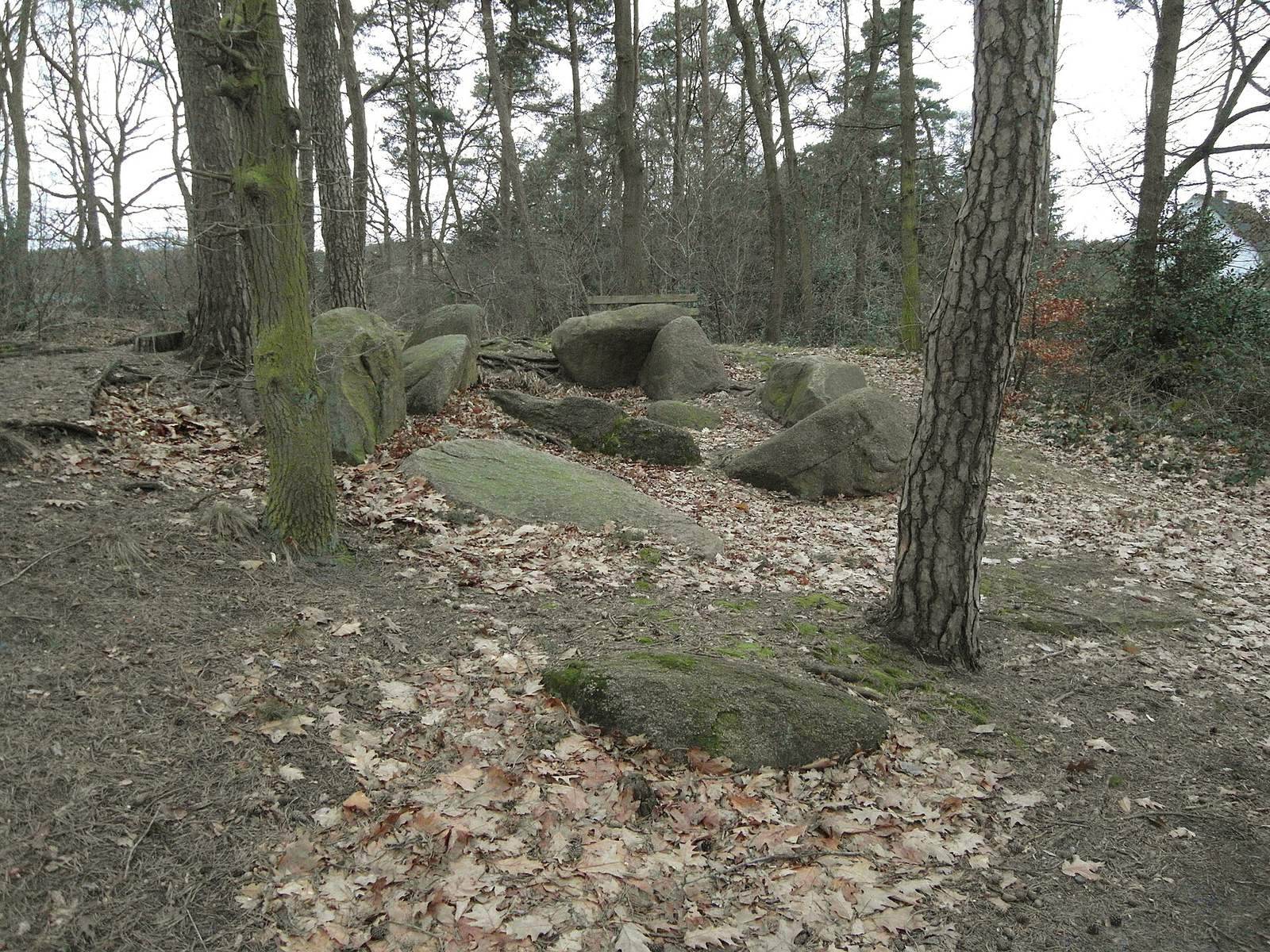
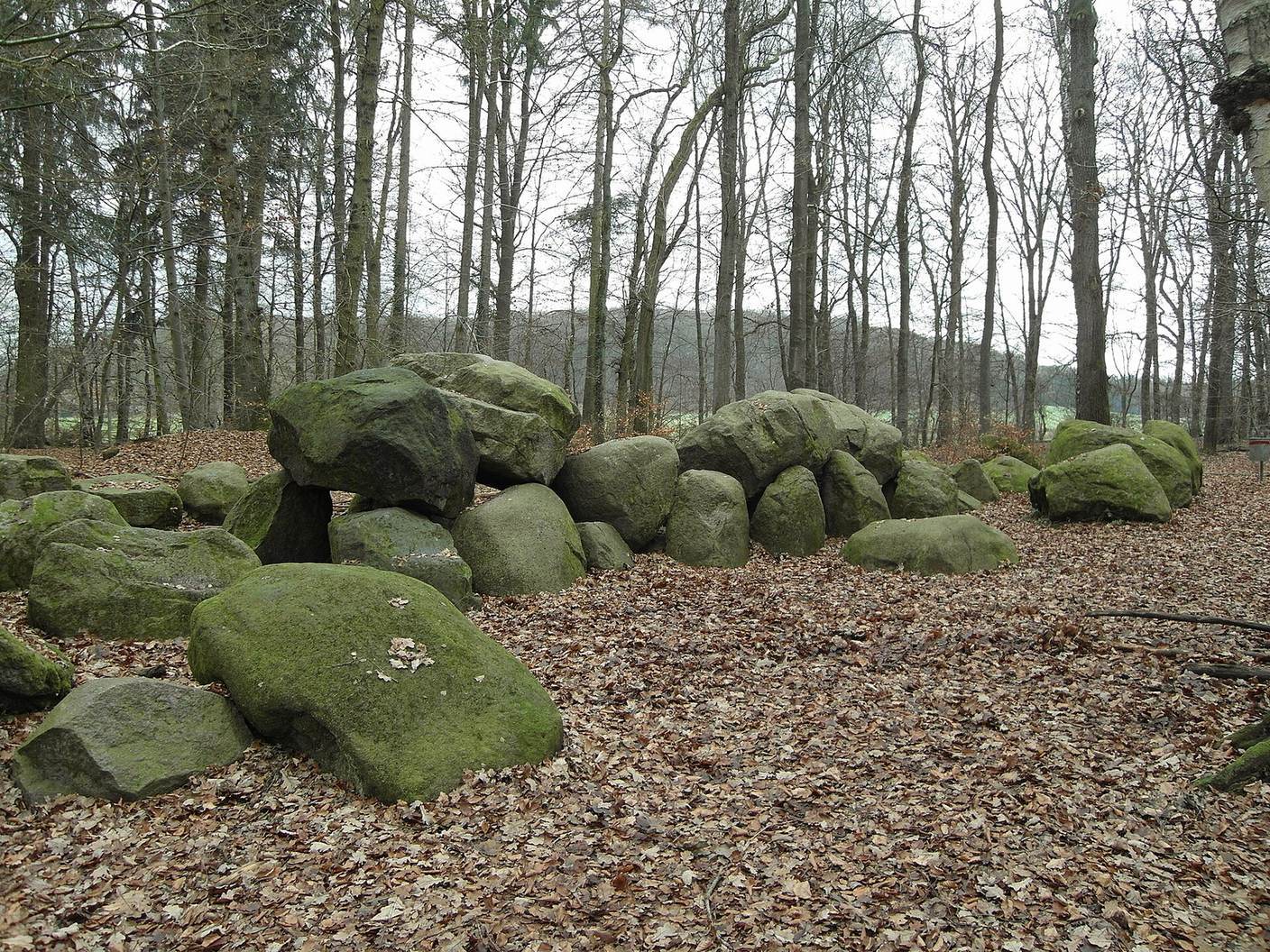
The surviving tombs have different layouts. The Kleine Sloopsteine has an elongated mound over an east–west chamber, while the chamber of the Große Sloopsteine is enclosed by a close-set stone boundary. The Kleine Sloopsteine lies about 1 km northwest of Halen, and the Große Sloopsteine about 2 km north-northwest of Wersen. The destroyed tomb stood about 500 m southwest of the Große Sloopsteine; the Osterbeck megalithic tomb is about 500 m northwest of it.
Tomb layouts
Kleine Sloopsteine
The elongated mound runs approximately east–west. A single stone at its western end may be part of an enclosure. Its chamber measures 7 m long and 1.5 m wide. Nine wall stones survive, one at each short end, four along the north side and three along the south. Most remain in their original positions; one on the north side and the eastern end stone have shifted. The long sides probably originally had five pairs of wall stones. Capstones lie partly outside the chamber and partly fallen into it.
Große Sloopsteine
The chamber, probably a passage grave (a megalithic burial chamber reached through a passage), measures 18.5 m long and 1.8 m wide at its middle. Ten wall stones remain along the north side, eight in their original positions. Thirteen survive on the south side: seven in place, five tipped into the chamber and one fallen outward. Of eleven surviving capstones, two remain in their original positions; the others have fallen inside or been carried away. A stone in front of the south side may be a capstone from the passage. Remnants of the surrounding enclosure measure 23.5 by 7.5 m.
Finds and dating
In 2015, two spoil mounds beside the Große Sloopsteine chamber were investigated. They contained material removed from the chamber, including Funnel Beaker pottery sherds, flint artifacts of uncertain type, and small sandstone and limestone slabs that formed part of the original chamber paving. Substantial quantities of human bone also survived. The pottery belongs to stages 4–6 of the Funnel Beaker culture’s Western Group sequence, dating to 3250–2860 BC. Radiocarbon dating of the bones yielded a range of 3350–2850 cal BC.