Fredericksburg and Spotsylvania National Military Park: Civil War Battlefields and Memorials
Site at a Glance
- Popularity
- High
- Country
- United States
- Primary era
- Modern
- Eras represented
- Modern
- Civilizations
- Unclassified
- Site type
- Military
On this page13 sections
History
Fredericksburg and Spotsylvania National Military Park is a battlefield and memorial park in the United States, established in 1927 to commemorate four battles of the American Civil War. Fought from 1861 to 1865, the war set the Union, or United States, against the Confederate states that had seceded from it. The park commemorates the battlefields of Fredericksburg, Chancellorsville, The Wilderness, and Spotsylvania.
The battles and their aftermath
At Fredericksburg, from December 11 to 15, 1862, Union general Ambrose Burnside tried to cross the Rappahannock River and advance toward Richmond, the Confederate capital. Delays in building temporary pontoon bridges gave Confederate general Robert E. Lee time to fortify the high ground. The fighting ended in a severe Union defeat.
At Chancellorsville, from May 1 to 3, 1863, Lee divided his forces and sent Confederate general Stonewall Jackson on a surprise flanking attack. Union commander Joseph Hooker lost the initiative and ordered his army to retreat.
The Wilderness, fought from May 5 to 7, 1864, was the first direct battle between Lee and Union general Ulysses S. Grant. Dense forest limited Grant’s advantage in troops, artillery, and cavalry. Both armies suffered heavy casualties, and neither secured a decisive victory. Grant withdrew to continue his campaign and seek another battle on more open ground.
At Spotsylvania, from May 8 to 21, 1864, Grant aimed to seize a strategic crossroads and keep his army between Lee and Richmond. Lee reached the position first. Heavy rain dampened the gunpowder and contributed to fierce hand-to-hand fighting.
Congress established Fredericksburg National Cemetery in July 1865 to honor Federal soldiers who died in the local battles or from disease. It accepted new burials until 1945 and also holds about 100 twentieth-century soldiers, some buried beside their spouses. Willis Cemetery on Marye’s Heights served local burial needs before the Civil War. The ridge was earlier called Willis Hill; press coverage of the 1863 battle helped establish Marye’s Heights as the name for the entire ridge.
Establishment and recognition of the park
The park was first established as Fredericksburg and Spotsylvania County Battlefields Memorial National Military Park. It transferred from the War Department in 1933. That formal name remains in use and is described as the longest name of any unit in the National Park System.
The park was added to the National Register of Historic Places in 1966, with a listed area of 4,601.1 acres, and designated a Virginia Historic Landmark in 1973.
Remains
The park covers about 8,400 acres, of which 7,369 are federally owned. Its preserved features include battlefield ground, a stone wall, historic buildings, the ruins of a mansion, cemeteries, and memorials.
Battlefield features and buildings
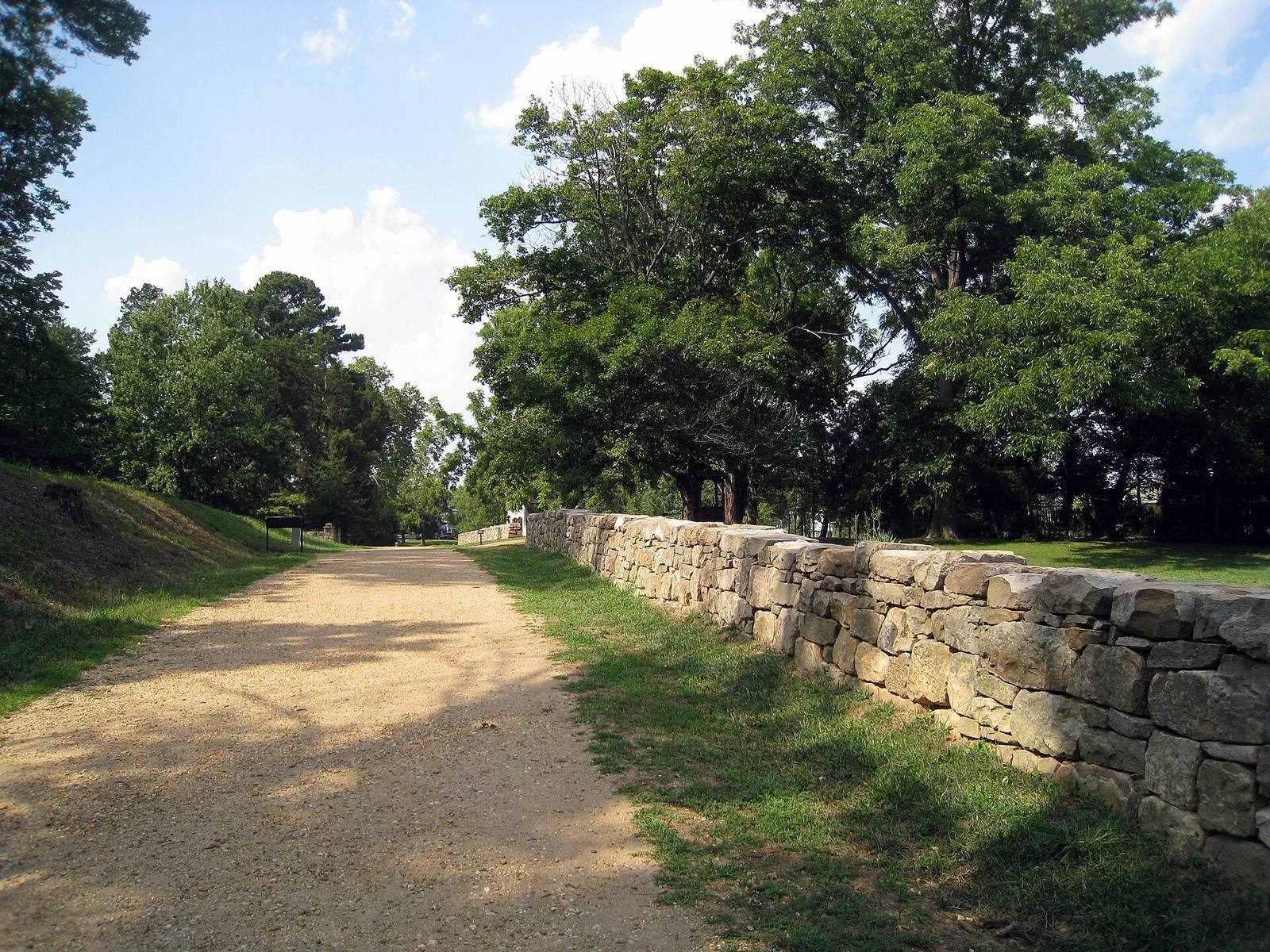
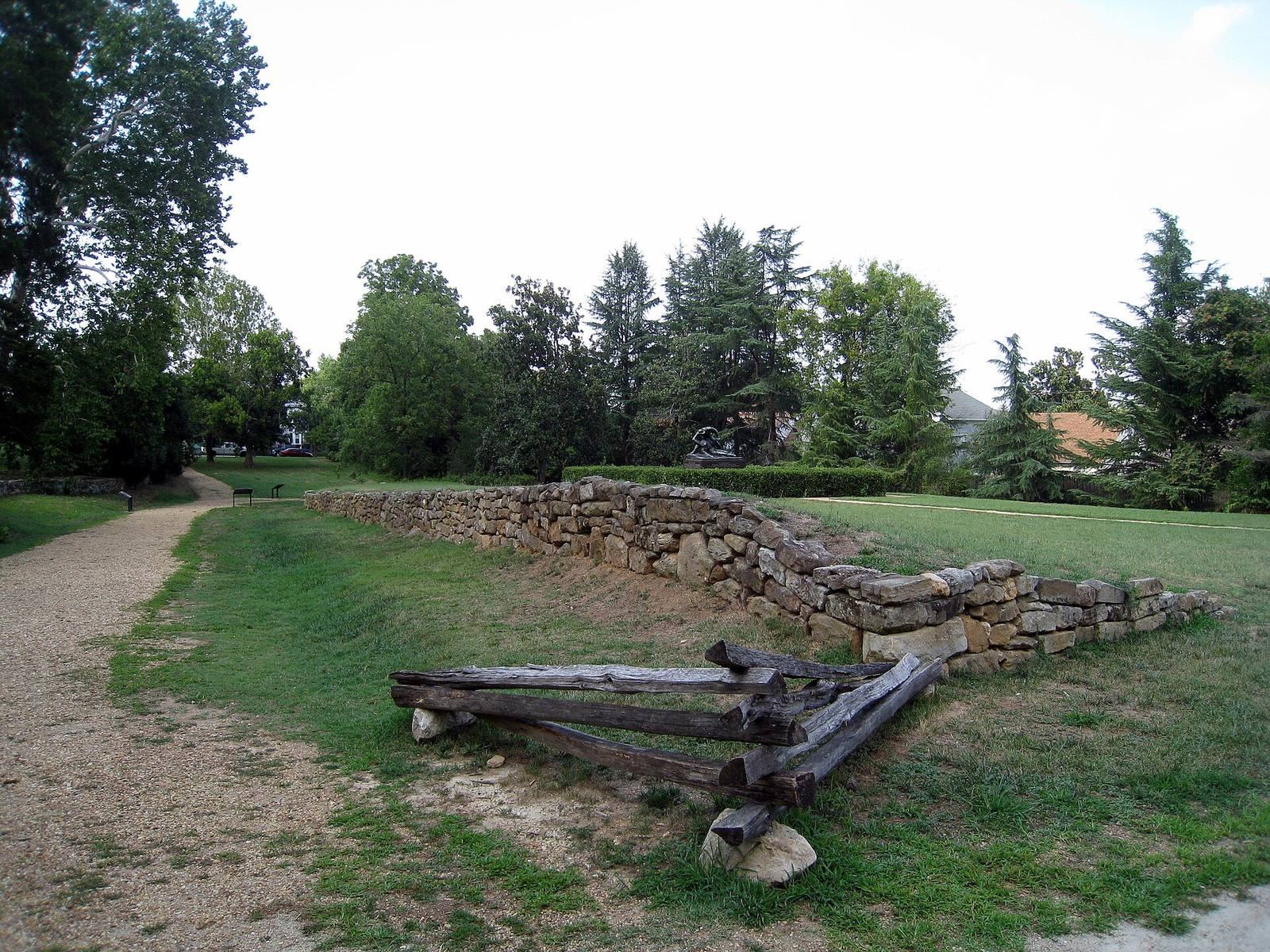
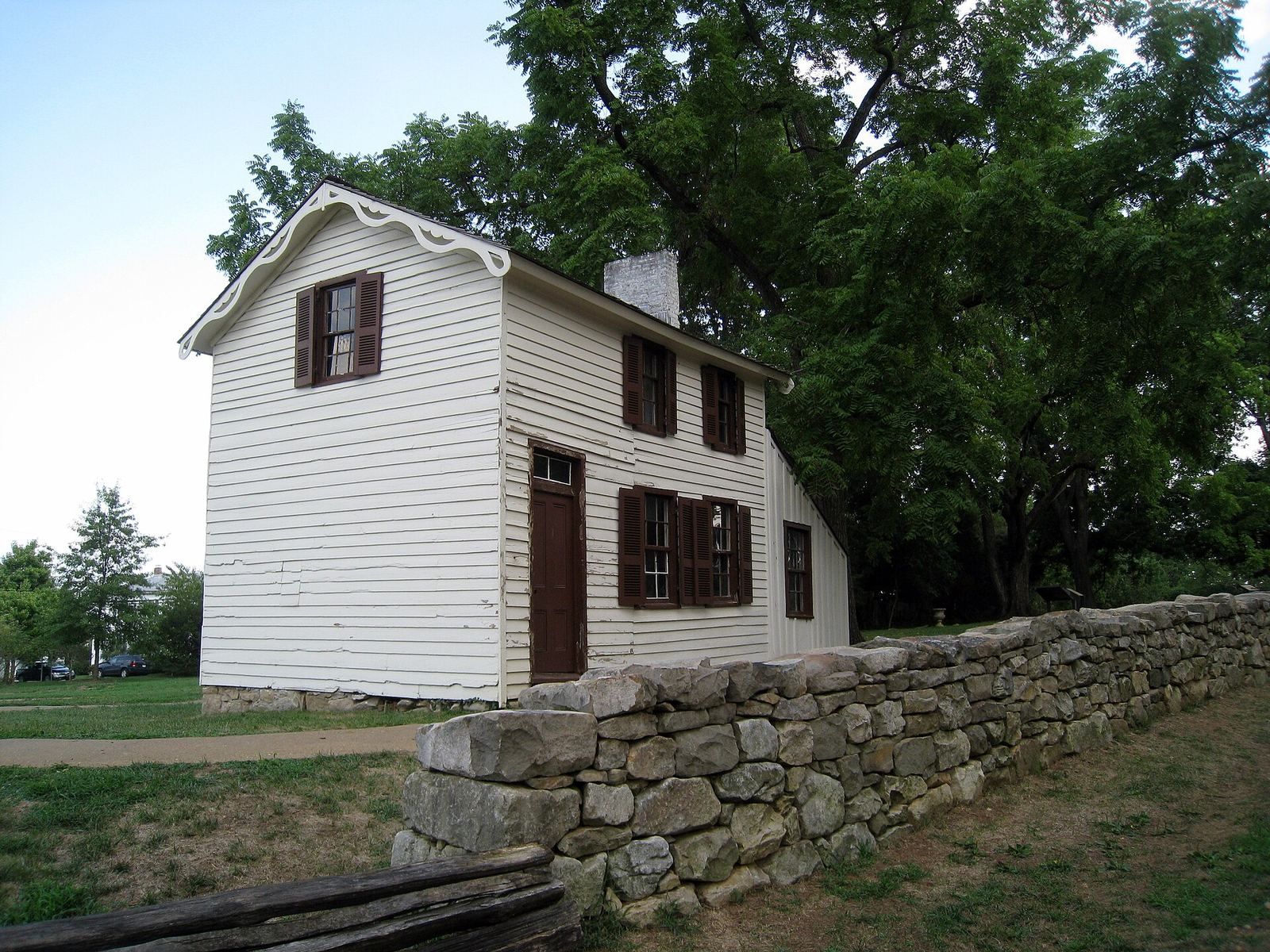
Sunken Road wall
A stone wall runs along Sunken Road in Fredericksburg.
Historic buildings
Four historic buildings associated with the battles are preserved in the park: Chatham Manor in Stafford County, Salem Church, Ellwood Manor, and the house where Stonewall Jackson died.
Chancellor mansion
The park also includes the ruins of the Chancellor family mansion.
Cemeteries and memorials
Fredericksburg National Cemetery
The cemetery lies on Marye’s Heights, a Confederate stronghold during the Battle of Fredericksburg. It contains 15,243 Civil War interments, of which 2,473 soldiers were identified. Rounded headstones mark identified soldiers and give their names and states. Markers for plots holding unidentified soldiers carry two figures: the upper number identifies the plot, while the lower gives the number of burials there.
Willis Cemetery
A brick wall separates Willis Cemetery from the Civil War burial grounds. The Willis family home, which burned before the war, stood across a dip in the ridge from Brompton, the Marye family home.
Poem plaques
Plaques near the 127th Pennsylvania Volunteer Monument and elsewhere in the cemetery commemorate American soldiers killed at the Battle of Buena Vista during the Mexican–American War. They display verses from Theodore O’Hara’s 1847 poem “The Bivouac of the Dead,” including its first two stanzas and the first half of its eleventh stanza.
Monuments and memorials
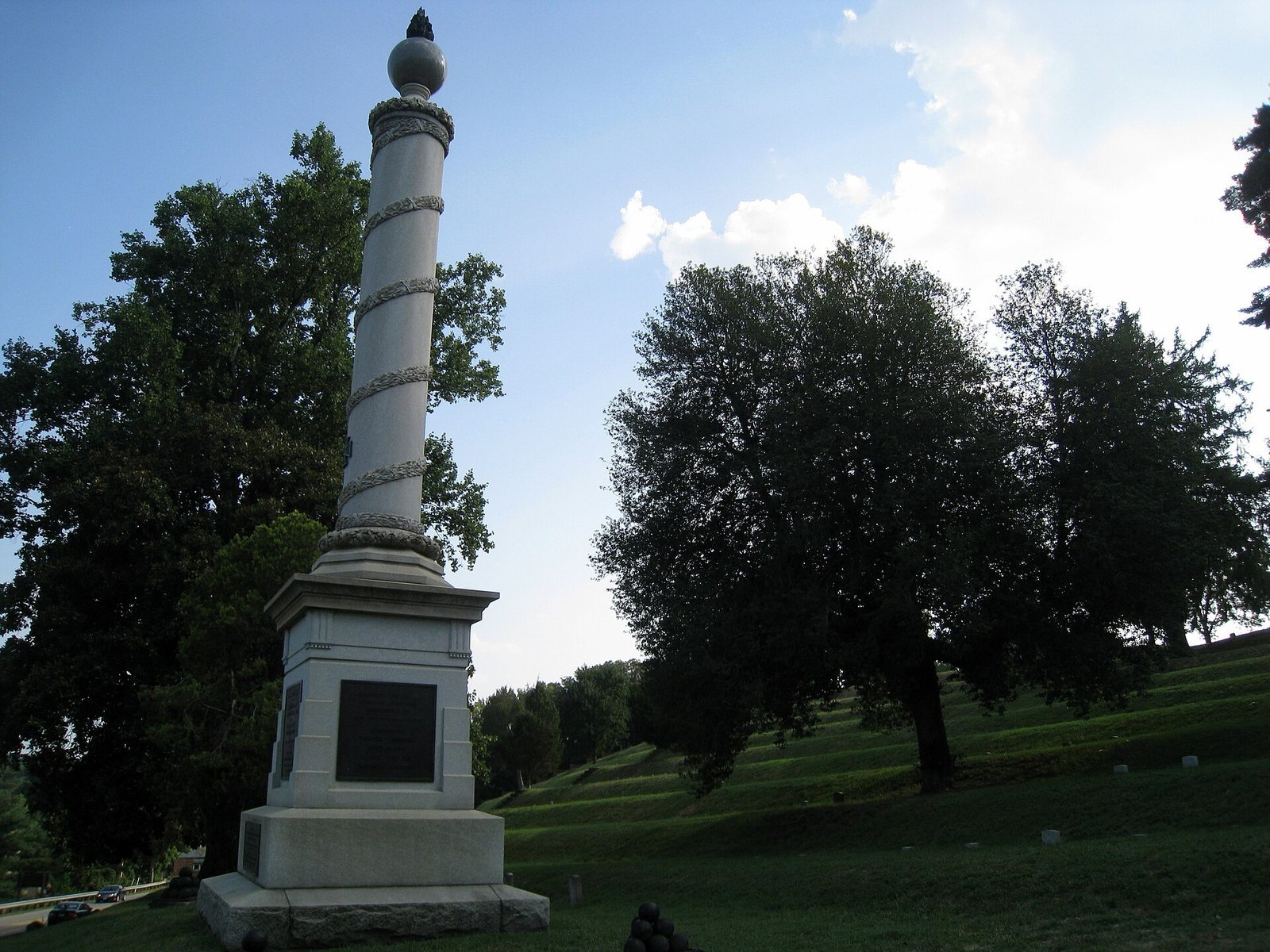
The cemetery’s memorials include the 127th Pennsylvania Volunteer Monument, the Fifth Corps Monument, dedicated in 1901, Humphreys’ Division Monument, the Moesch Monument, and Parker’s Battery Memorial. A corps was a large military formation, a division was a military formation, and a battery was an artillery unit.