Västerhaninge Church: A Medieval Parish Church in Sweden
Site at a Glance
- Popularity
- Low
- Country
- Sweden
- Primary era
- Medieval
- Eras represented
- Medieval, Early Modern, Modern
- Civilizations
- Swedish
- Site type
- Religious
- Remains
- Church
On this page12 sections
History
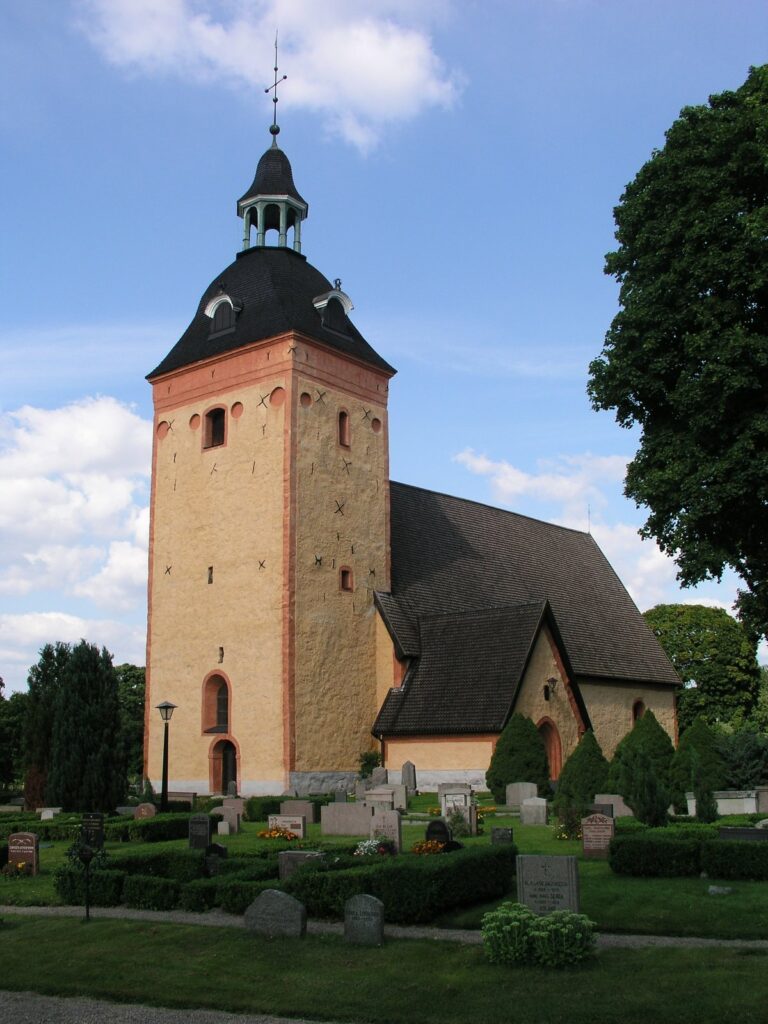
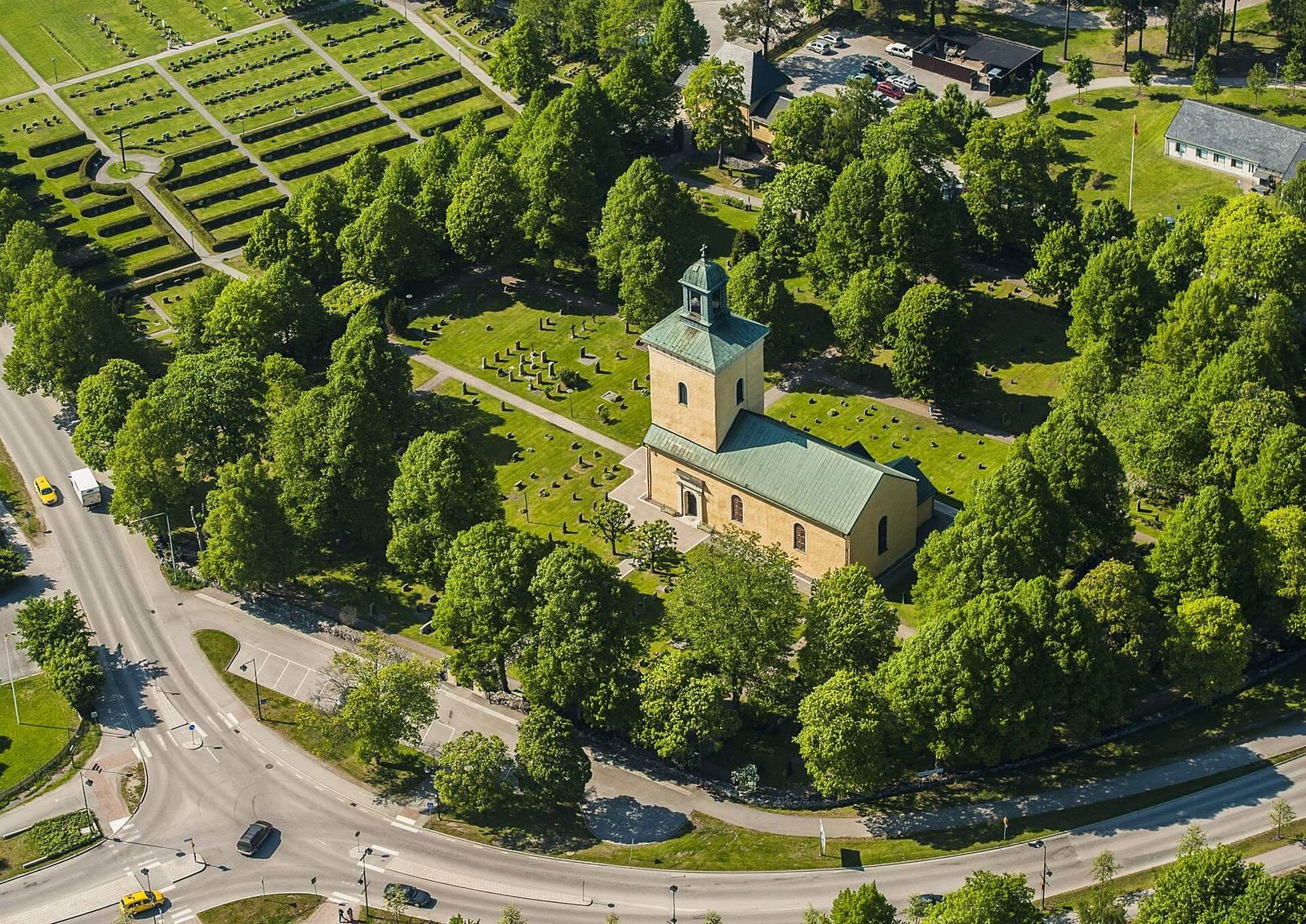
Västerhaninge Church is a medieval church in Västerhaninge, Sweden. Consecrated in the thirteenth century, it retains the tower and nave built in that period and later served as the parish church. Its present character also reflects repairs after a major fire in the nineteenth century, when rebuilding introduced features associated with the Swedish Karl Johan style, linked to the reign of Charles XIV John, which began in 1818.
Medieval church
The first church had a choir narrower than its nave. In the later Middle Ages, that choir was replaced by one as wide as the nave. A sacristy and a porch on the south side were added during the fifteenth century; the porch was later destroyed by fire. Brick star vaults were installed over the choir and the nave’s two bays in the early sixteenth century.
Fires and rebuilding
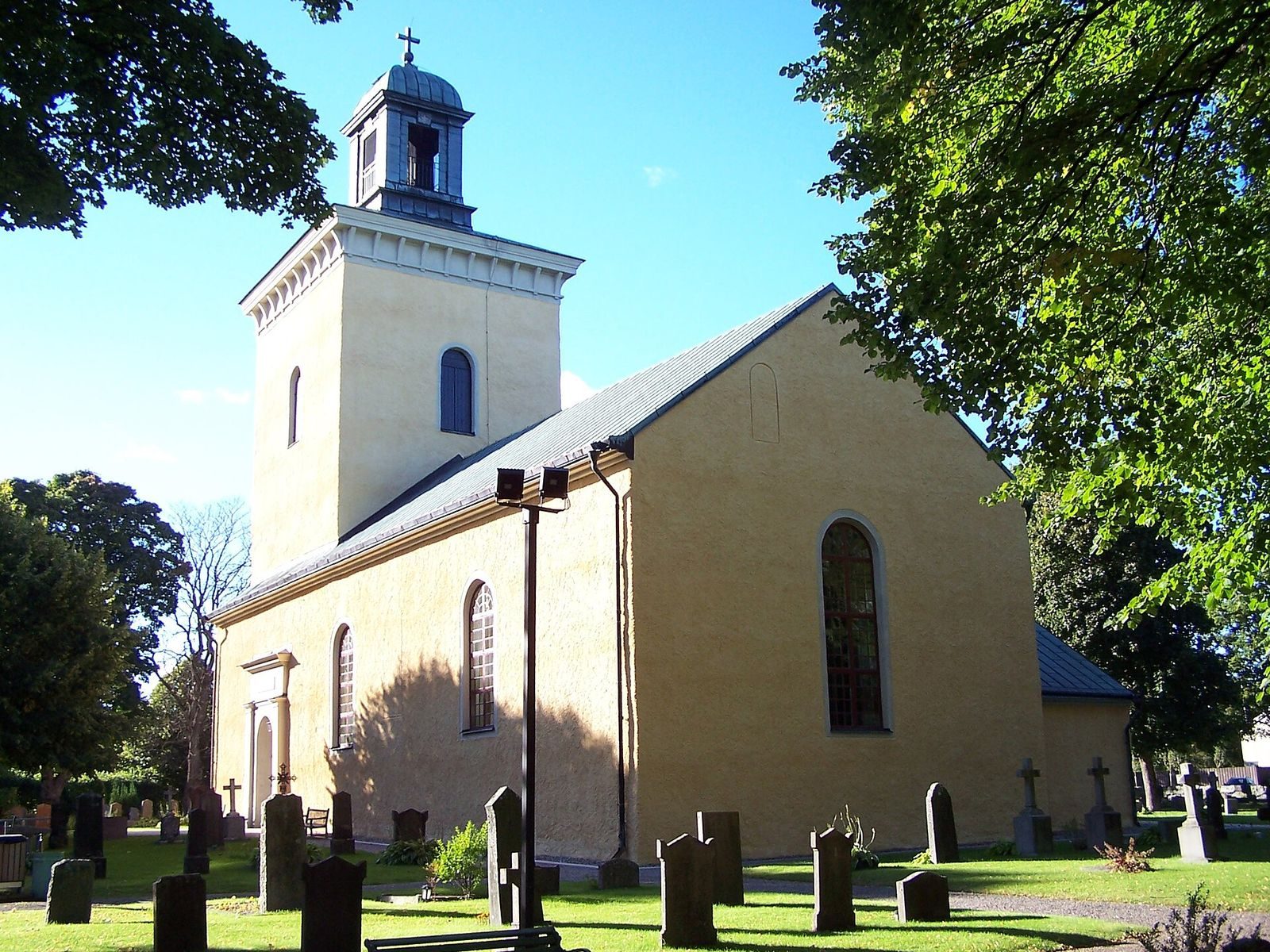
Fire damaged the church in 1641 and again in 1831. The later blaze began after lightning struck the tall tower spire. Repairs in the following years gave the church its Karl Johan character. The tower received a lantern, the south porch was removed, and the medieval south entrance was rebuilt as a tall doorway. The sixteenth-century vaults were reconstructed, and a west organ loft was added. Almost all the furnishings had to be replaced after the fire.
Organs
In 1750, the church acquired a four-stop organ from Katarina Church in Stockholm, given by official Johan Fredrik Flach. Stops select different ranks of pipes. An organ was sold to Trosa Town Church in 1829. Gustaf Andersson of Stockholm built a seven-stop instrument for Västerhaninge in 1846, and organ builder Anders Victor Lundahl restored it in 1891. E. A. Setterquist & Son built a main organ in 1921 with 16 stops, two manuals, or hand-operated keyboards, and a pedal played with the feet. Lindegren’s Organ Workshop rebuilt it in 1956, increasing the number of stops to 22 while retaining two manuals and a pedal.
A choir organ built by Klaus Becker Orgelbau in the 1960s was moved to Tungelsta Church in Västerhaninge in 1971. Becker’s firm made a replacement choir organ that year, and the present main organ was also built in 1971.
Modern changes and parish role
In 1928, a stained-glass composition by Agda Österberg was installed in the choir’s east window to serve as an altarpiece. A restoration in 1966 brought new benches and fitted out a bridal room and cloakroom on the tower’s ground floor. Between 2002 and 2005, a brick extension containing a waiting room and toilet was built beside the sacristy. The tower-ground-floor waiting room was removed, and taking out rear pews north of the central aisle created a gathering area.
Västerhaninge Church was formerly the church of Västerhaninge parish, a local congregation and administrative unit. After a parish merger in 2002, it became part of Västerhaninge-Muskö parish in the Stockholm Diocese, a regional jurisdiction of the Church of Sweden.
Remains
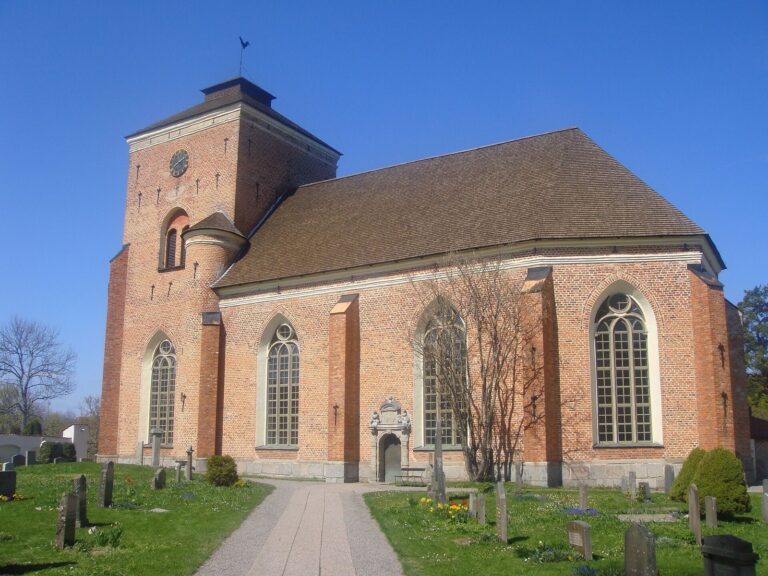
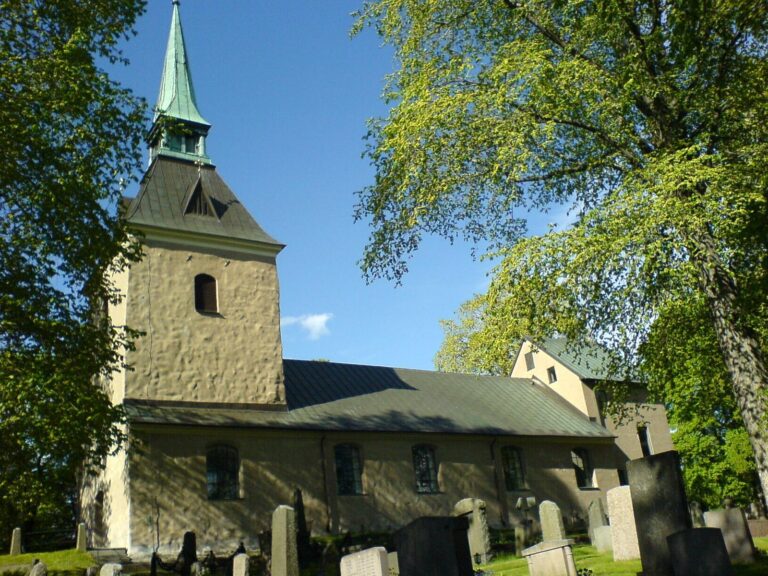
The church’s main block has a nave and choir of equal height and width, with a west tower and a sacristy on the north side. Grey-stone walls are coated in beige-yellow plaster, and a sheet-metal covering protects the gabled roof.
Structural features
Sloping shoulders broaden the lower part of the west tower to the width of the church. The tower was formerly almost twice its present height, and its room has a flat wooden ceiling. A lantern crowns the tower. The tall south entrance has a lintel above it. A brick extension stands on the west side of the sacristy and contains a waiting room and toilet.
Vaults and interior architecture
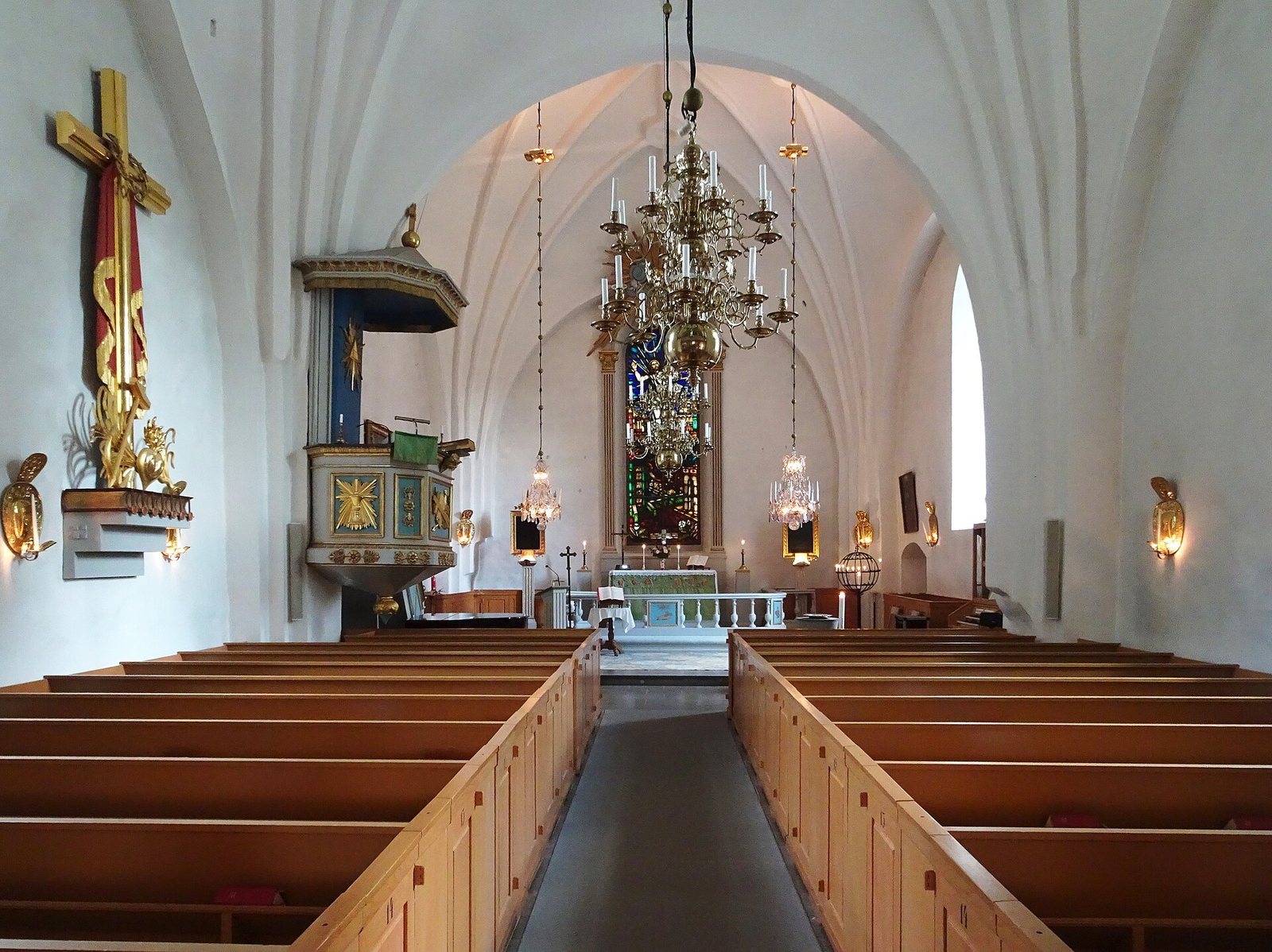
The choir and the nave’s two structural divisions have brick star vaults, whose ribs form star-like patterns. The sacristy also has a brick vault. A seating niche is built into one wall of the choir.
Art and furnishings
Choir and nave furnishings
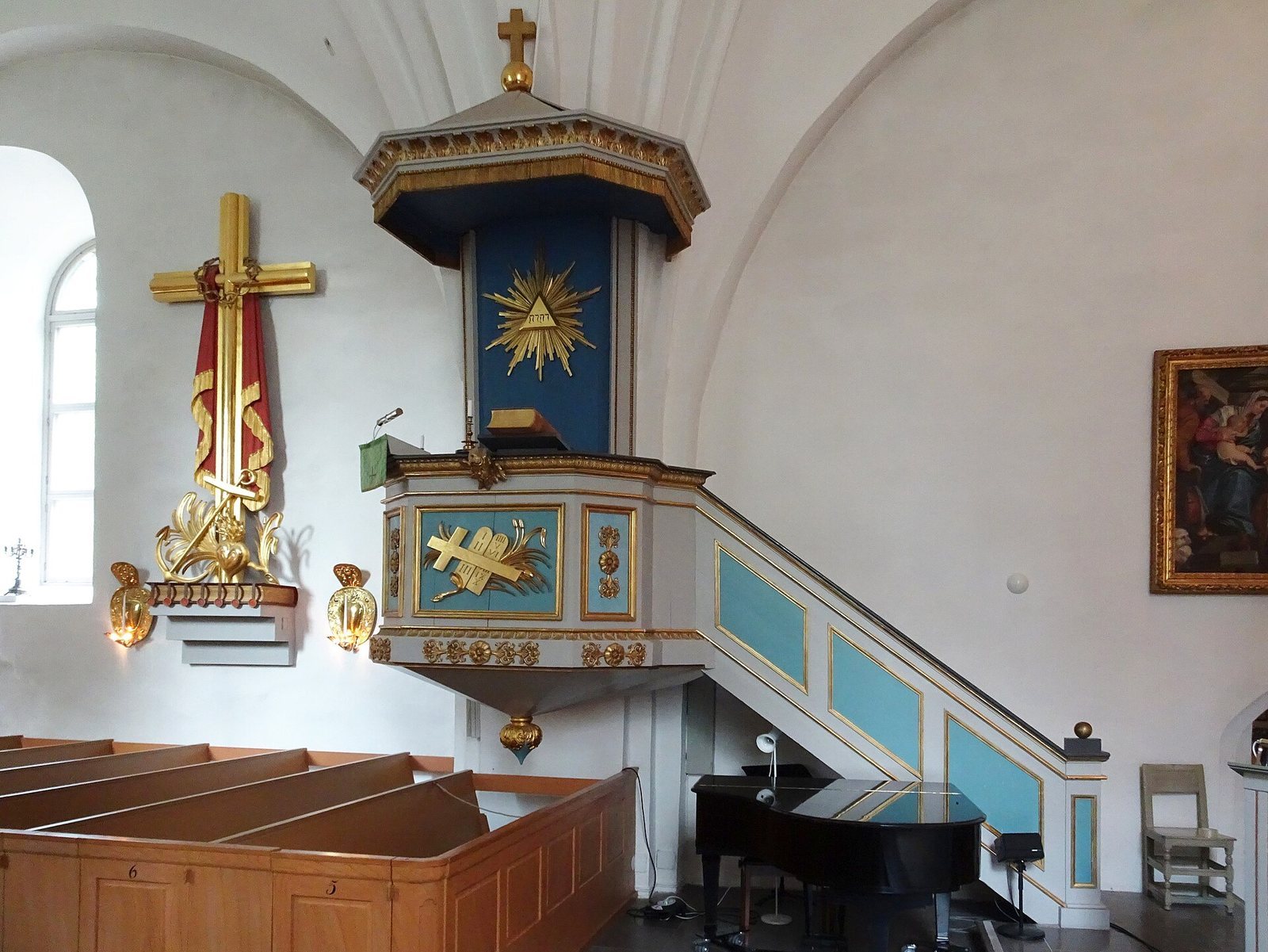
The stained-glass panel in the east window of the choir serves as the altarpiece and was composed by Agda Österberg. A gilded cross on the nave’s north wall is decorated with a crown of thorns and a purple mantle. O. L. Dahlman made it around the time he produced the pulpit, which dates to 1847 and was crafted by the carpenter in Västerås.
Sacristy objects
Above the sacristy entrance hangs a sixteenth-century oil painting of the Adoration of the Magi, made by an artist associated with the school of Paolo Veronese, a painter of the Venetian Renaissance. A medieval wooden relief is kept in the sacristy. The limestone baptismal table dates to 1966.
Organs
The present main organ is a mechanical instrument, with linkages operating its pipes, built by Olof Hammarberg of Gothenburg. Its stated compass, or range of notes, is 56/30, and its façade incorporates the front of the 1846 organ. The mechanical choir organ was built by Klaus Becker Orgelbau.