Old City Hall: Zagreb’s Civic and Assembly Complex
Site at a Glance
- Popularity
- Medium
- Country
- Croatia
- Primary era
- Modern
- Eras represented
- Modern
- Civilizations
- Austria-Hungary, Austrian Empire, Habsburg, Hungarian
- Site type
- Civic
- Remains
- Town Hall
On this page10 sections
History
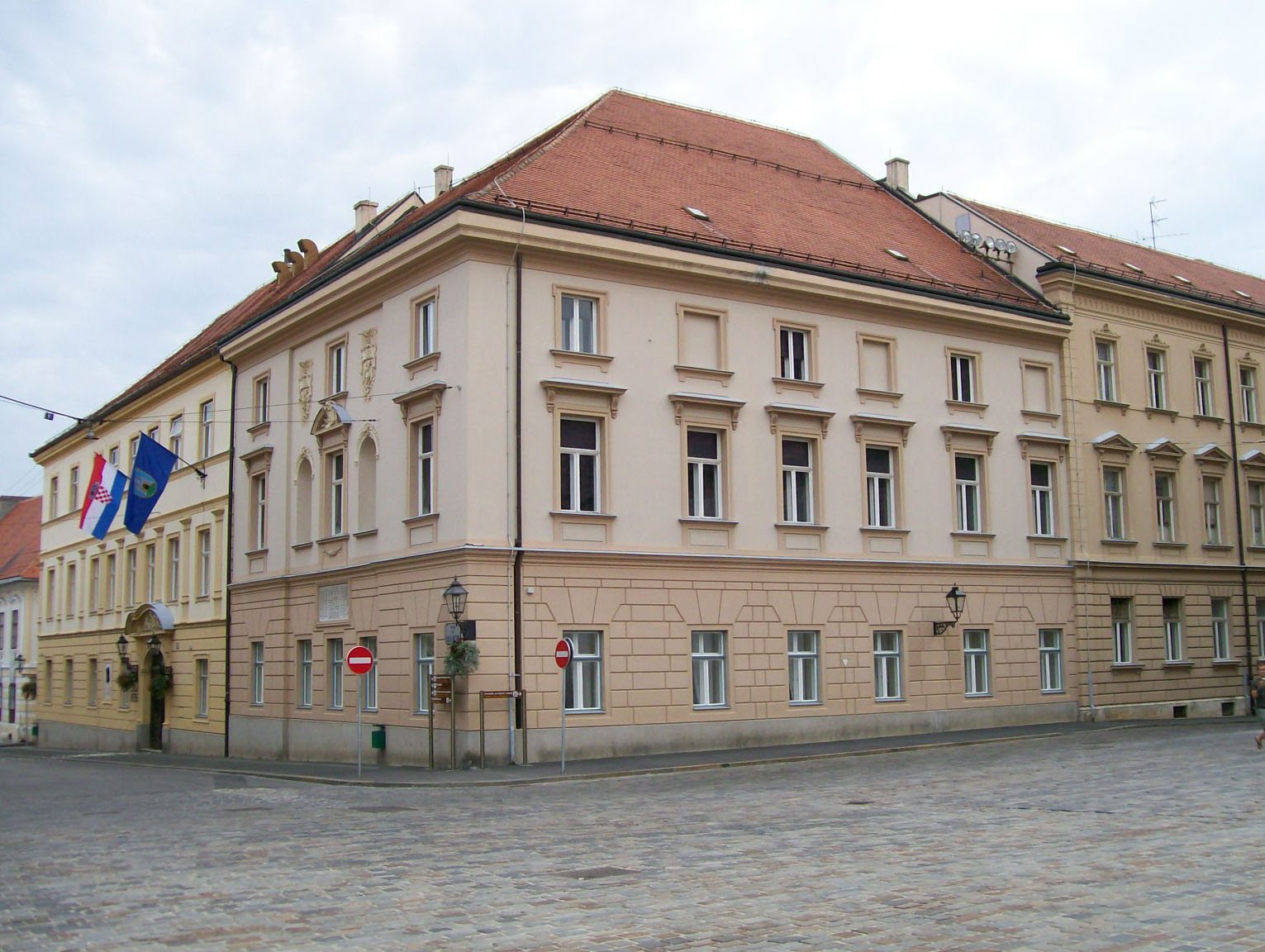
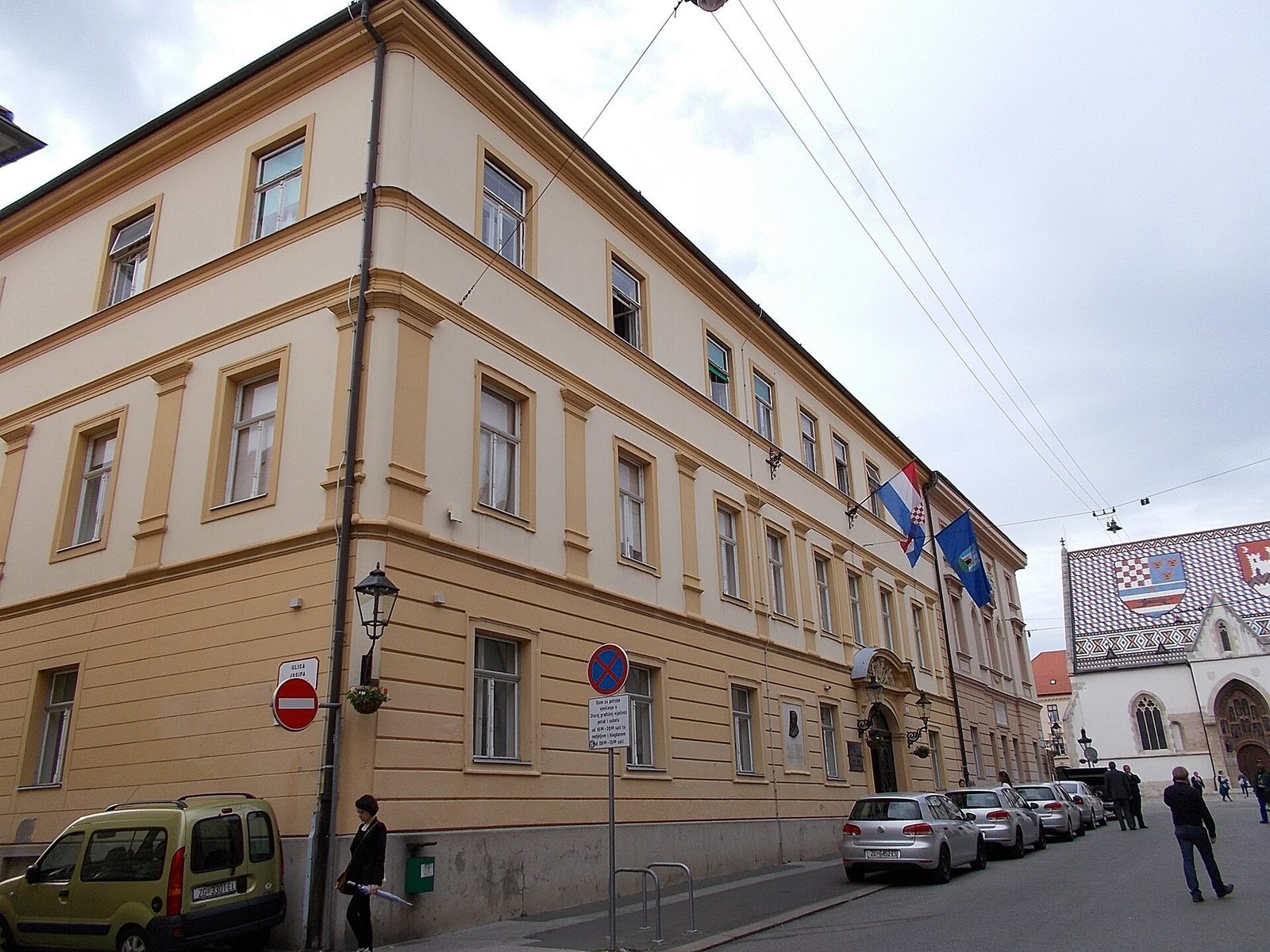
Old City Hall is a neoclassical civic complex in Gradec, a historic settlement that became part of Zagreb, Croatia. Its style draws on Greek and Roman architecture, and its history as a council house is first recorded in 1439.
From council house to theatre
In 1614, Gradec magistrate Jakov Gasparini, a municipal judicial and administrative official, arranged for the house to be adapted as a town hall. In 1803, municipal authorities bought an adjoining house from Count Adam Oršić to enlarge the premises.
Merchant and cultural patron Kristofor Stanković decided to invest his winnings from the main prize in the Vienna lottery in 1832 in a city theatre. The following year, officials added a storey to Oršić’s house, demolished the original town hall, and bought two nearby lots on what is now Freudenreichova Street. The theatre’s cornerstone was laid on 12 August 1833.
Theatre and parliamentary events
First called the City Theatre and later the People’s Theatre, the building became a venue for Croatian-language performance and public life. Croatian was heard there during an interval in a German play, when Ljudevit Gaj’s patriotic song “Croatia Has Not Yet Fallen” was performed. Gaj was a leading figure in the Croatian national revival, a cultural and political movement that promoted the Croatian language and national identity.
On 10 June 1840, the theatre staged the first play in Croatian, Ivan Kukuljević Sakcinski’s Juran and Sofia, or The Turks under Sisak: A Heroic Play in Three Acts. The first Croatian opera, Vatroslav Lisinski’s Love and Malice, followed on 28 March 1846.
The theatre’s ballroom also hosted important sessions of the Croatian Parliament. On 23 October 1847, parliament adopted Croatian as its language of proceedings, following a proposal from Kukuljević Sakcinski. In 1848, the first Croatian National Assembly met there under Ban Josip Jelačić, Croatia’s chief civil and military governor.
Civic use and later changes
On 24 May 1892, inventor and electrical engineer Nikola Tesla presented Zagreb’s city council with a plan for street lighting powered by a hydroelectric plant at Plitvice Lakes. Mayor Milan Amruš had invited him to make the proposal. The council rejected the plan and chose instead to build a power plant near Ozalj.
After a new theatre opened in Zagreb’s Lower Town in 1895, the city took over the former theatre and converted it in 1897. The town hall and theatre buildings were joined, and the ballroom became the setting for city assembly sessions. The complex has served as the assembly’s meeting place since then.
The city government moved to a new building at Stjepan Radić Square in 1958, but assembly sessions continued at Old City Hall. A major restoration and conservation campaign took place from 1968 to 1975. City assembly staff and municipal services returned in 1993, and the wedding halls were moved to the ground floor in 1998 as the second-floor Kaptol and Grič halls were established. The Zagreb Assembly, the elected legislative body of the city, continues to use the complex. Old City Hall entered Croatia’s Protected Cultural Heritage Registry in February 2003.
Remains
The complex comprises three adjoining buildings in Gradec, joined in the late nineteenth century. Its neoclassical design draws on Greek and Roman forms. Antun Cragnolini, Franjo Klein, and Janko Nikola Grahor are named as its architects.
Buildings and interior spaces
Town hall and Oršić property
A record from 1787 describes the town hall as having eight rooms, a kitchen, three jails, two shops, and a cellar. The house bought from Oršić in 1803 stood at the corner of Saints Cyril and Methodius Street and Kuševićeva Street.
Former theatre
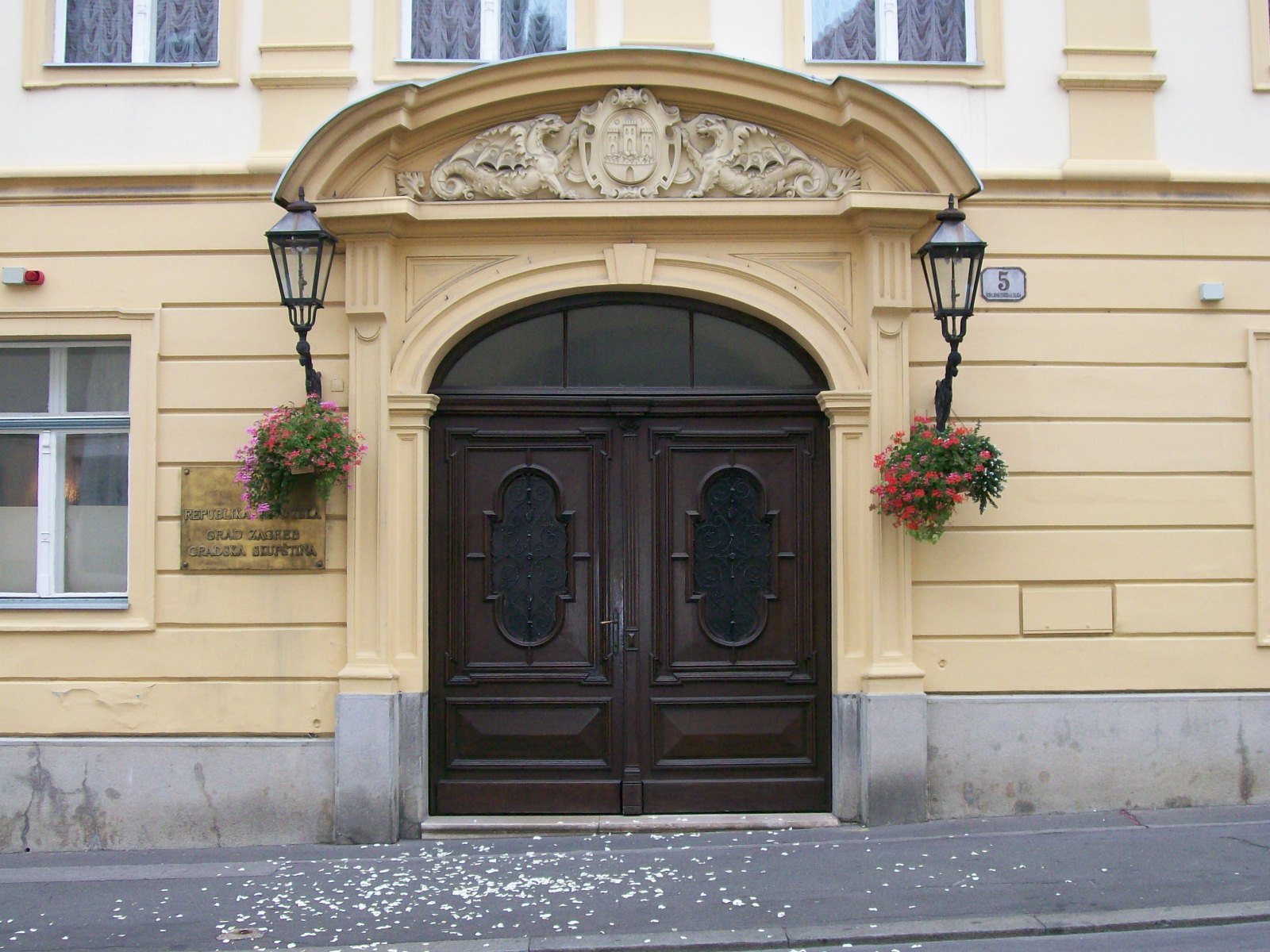
The theatre was a one-storey building with three entrance doors facing Saints Cyril and Methodius Street. Its ballroom and long gallery occupied the first floor. The ballroom now serves as the city assembly chamber.
Additions and present-day rooms
A two-storey addition was built on Kuševićeva Street in 1910–11, followed by an extension toward the courtyard in 1930. Attic rooms were converted to offices in 1941. The complex also contains a restored council hall, three smaller first-floor halls, wedding halls on the ground floor, and the second-floor halls Kaptol and Grič. The ground floor houses the Kristofor Stanković Art Gallery.
Commemorative plaques
Two plaques are fixed to the building’s walls. The Brethren of the Croatian Dragon, a cultural and heritage society, installed one in 1917; it lists notable events held at the site. The other bears a relief of Tesla and reproduces his statement of 24 May 1892, expressing his duty as a son of the country to help Zagreb through advice or action.