Church of Saint Anthony Abbot: A Renaissance Parish Church in Évora
Site at a Glance
- Popularity
- Medium
- Country
- Portugal
- Primary era
- Early Modern
- Eras represented
- Medieval, Early Modern, Modern
- Civilizations
- Portuguese
- Site type
- Religious
- Remains
- Church
On this page11 sections
History
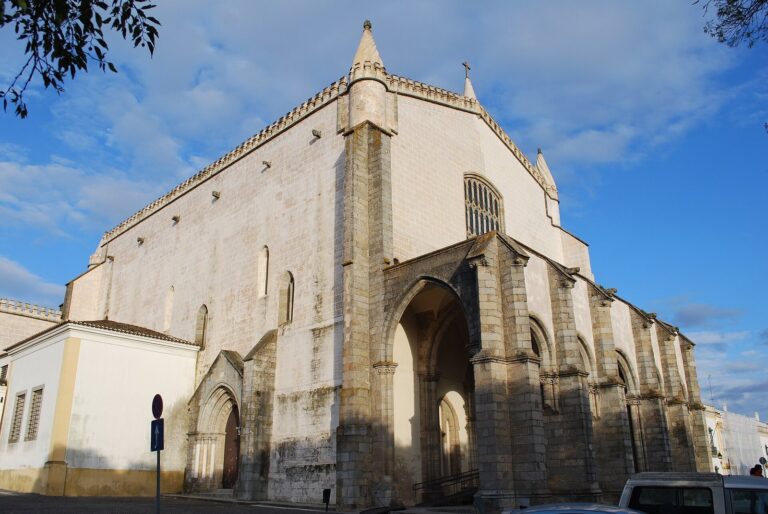
The Church of Saint Anthony Abbot is a Catholic parish church on Praça do Giraldo in Évora, Portugal, built between 1557 and 1563 in the Renaissance style, which revived forms and principles of classical antiquity. Cardinal Henrique, then Archbishop of Évora and later King Henry I of Portugal, initiated its construction. Its design has been attributed to either Afonso Álvares or Manuel Pires, though the architect is uncertain. The church was consecrated in 1563 and inaugurated during the episcopate of João de Melo.
Construction and rebuilding
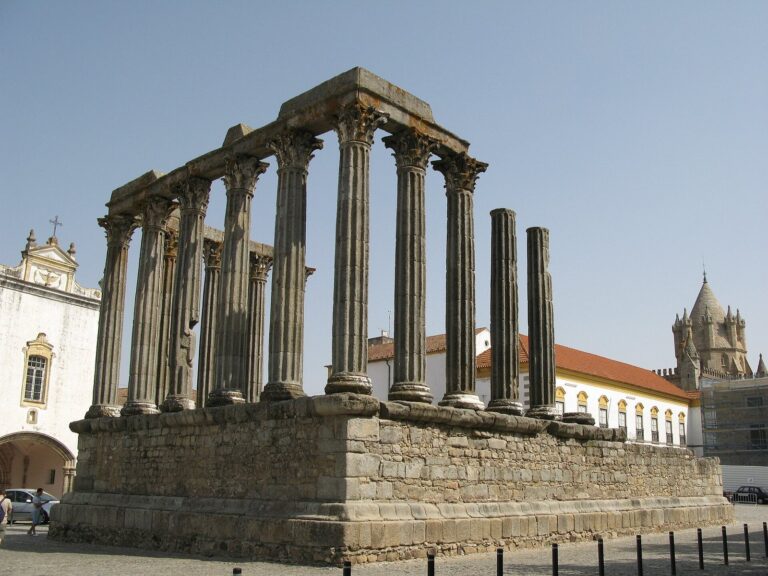
The enlarged building plot included the former Corpo de Deus hostel and its chapel, both dedicated to Saint Anthony Abbot. A medieval hermitage known as Santo Antoninho also stood on the site. A Roman triumphal arch was demolished to clear space for the church.
An earthquake destroyed the church’s vault in 1568. Francisco Varela directed its rebuilding in 1572 and installed organs. The building retained its Renaissance character through later changes.
Later use and alterations
The original oak entrance door was replaced with one made from Brazilian wood in 1648. Baroque altars were introduced during the seventeenth and eighteenth centuries. After extensive restoration, the church was reconsecrated on 22 April 1804.
For an extended period, the Inquisition used the forecourt for auto-da-fé ceremonies, public proceedings at which its tribunal announced judgments. The court gathered there to proclaim verdicts and transferred most convicted people to civil authorities, who carried out punishments. A grille around the forecourt was probably installed in 1809 by Archbishop Joaquim Xavier Botelho de Lima.
The church was classified as a Property of Public Interest in 1970 and remains a parish church within the Archdiocese of Évora. Its tower’s carillon, a set of bells played from a keyboard, began with eight bells installed around 1856. Two additional bells and a playing keyboard were added in the 1920s. By 2023, the carillon had been silent for many decades and was undergoing restoration to repair the instrument and revive manual bell-ringing.
Remains
Plan and exterior
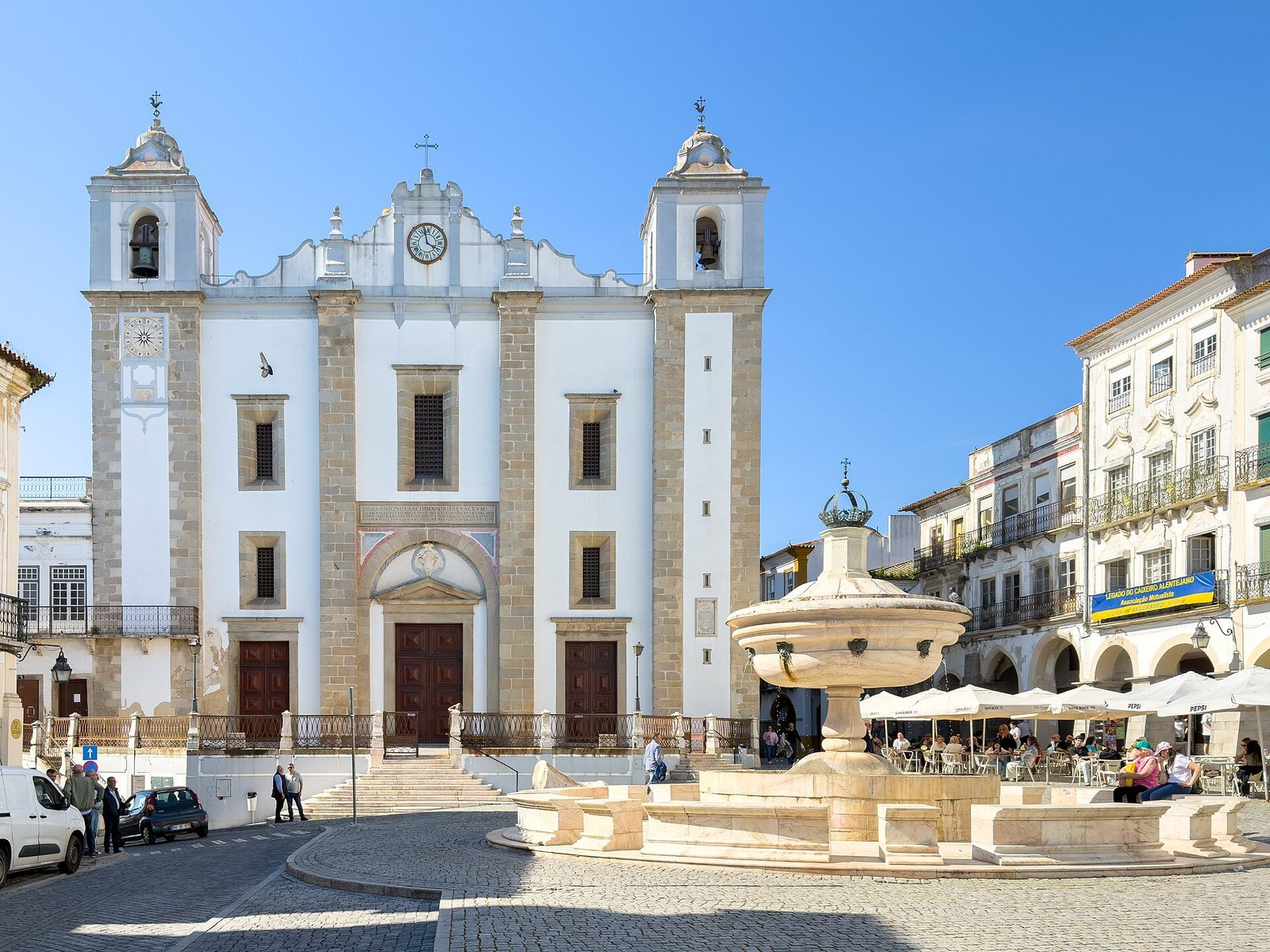
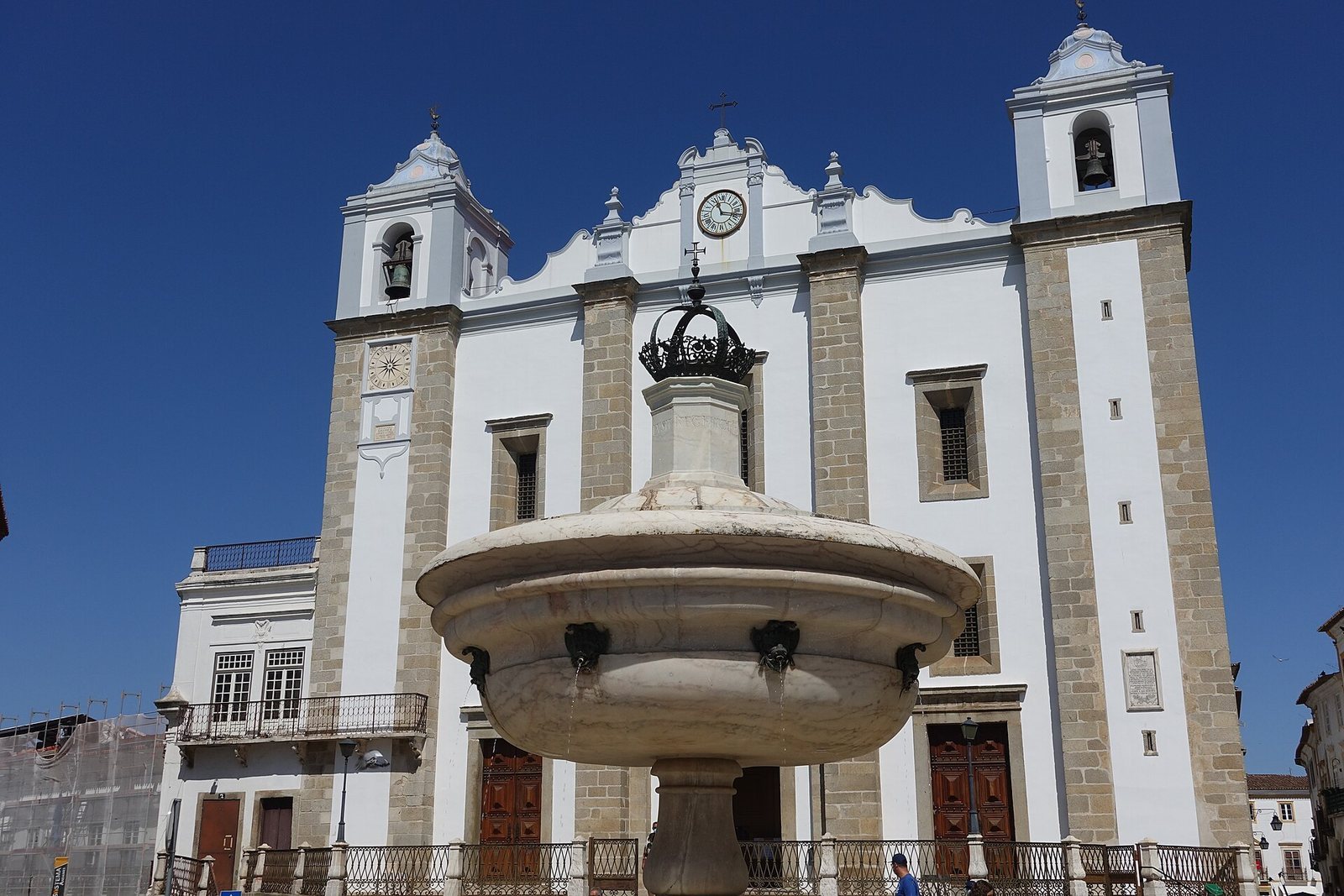
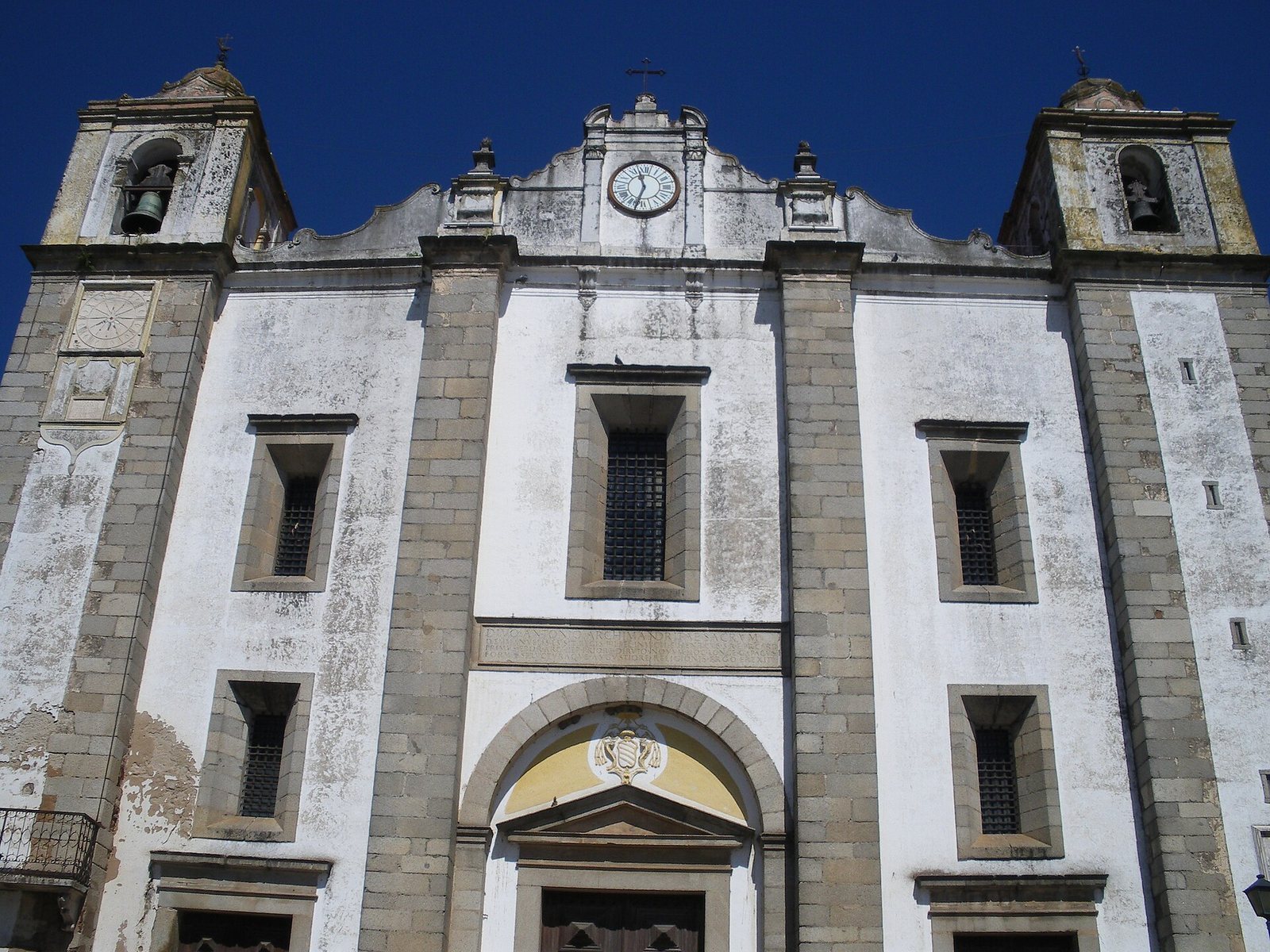
The rectangular church measures 33 by 7 metres and has three naves of equal height, divided by two rows of broad columns. Each nave ends in a chapel. The three-tiered façade is divided by two shallow masonry supports. Its central entrance has a triangular pediment within a semicircular frame, with a large rectangular window with angled sides above. Integrated towers at the outer ends rise to small bell towers; a clock occupies the central wall-like section between them. Each tower is separated from its adjacent support by a side entrance, with two angled-sided rectangular windows above. Steps lead to the forecourt, which is enclosed by a grille. A façade plaque commemorates the church’s foundation.
Interior
Altars and altar frontal
The interior retains its Renaissance character alongside the Baroque altars added in the seventeenth and eighteenth centuries. A rare fourteenth-century marble facing for the main altar depicts the Apostles. This altar frontal, a decorated panel attached to the front of an altar, came from the former hermitage of Santo Antoninho.
Painting
Near the sanctuary end, a side altar to the right holds Saint Michael and the Souls, a painting by Portuguese Renaissance artist Jerónimo Corte-Real.
Statue of Saint Anthony Abbot
A painted wooden statue of Saint Anthony Abbot, dating to the seventeenth century, stands in a niche. The saint wears a mantle marked with a T-shaped cross at the right shoulder and holds a staff in his left hand and a book in his right. A small bell hangs from his right sleeve, while a pig stands at his feet and a halo is set behind his head.
Organs
The church retains its organs, one of which remains functional.
Carillon
The tower’s carillon consists of ten bells and a playing keyboard.