Bridge of the Holes: Tournai’s Medieval Fortified River Gate
Site at a Glance
- Popularity
- High
- Country
- Belgium
- Primary era
- Medieval
- Eras represented
- Medieval, Modern
- Civilizations
- Belgian, French
- Site type
- Military
- Remains
- Fortified Bridge
On this page9 sections
History
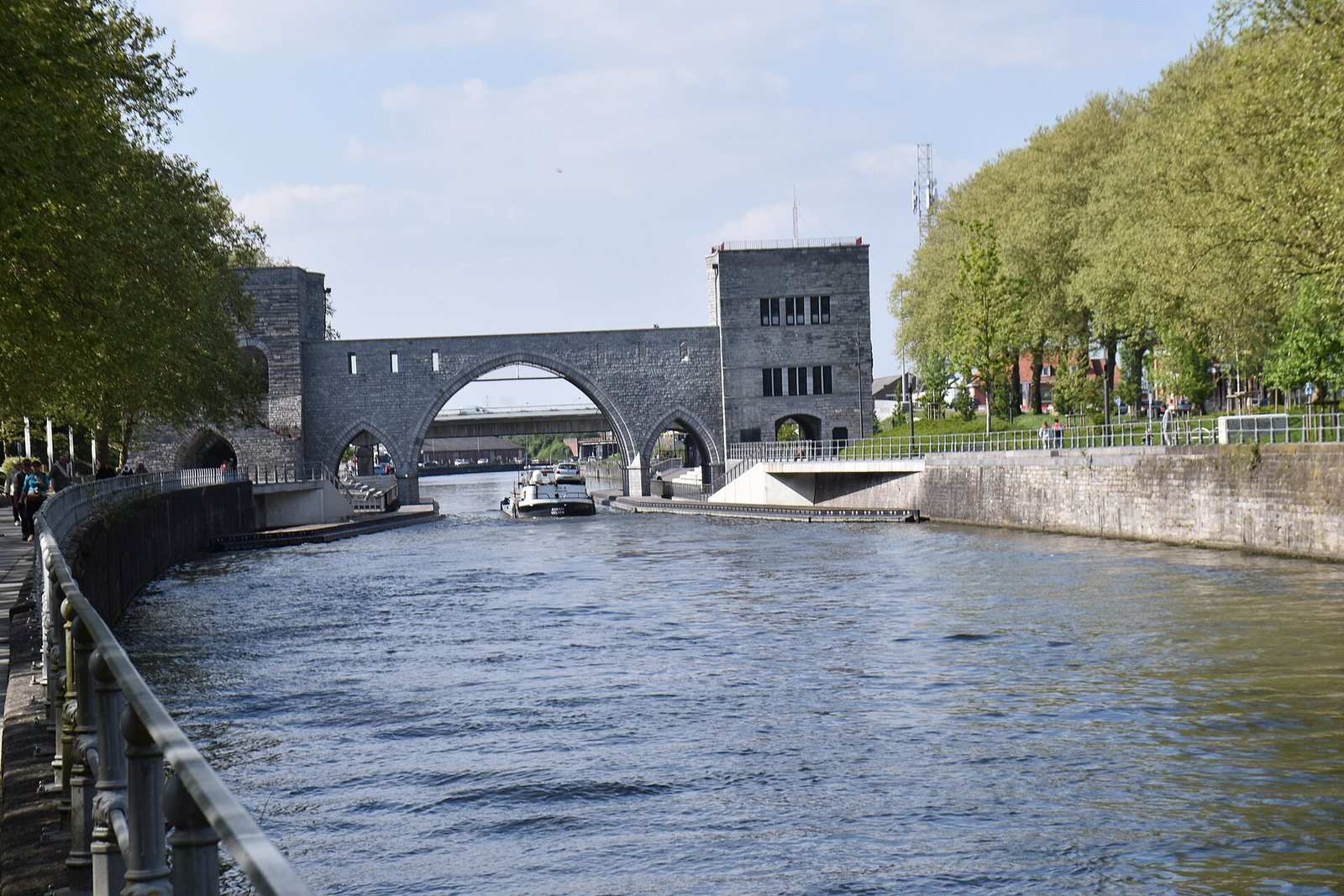
The Bridge of the Holes is a Gothic fortified water gate across the Scheldt in Tournai, Belgium. It defended the river passage through the city as part of Tournai’s third fortified enclosure, also called the second municipal enclosure. One of the city’s two water gates, it is a notable surviving work of medieval military architecture in Belgium and among Europe’s oldest surviving fortified water gates.
Construction and medieval defense
The bridge was built in stages. The Bourdiel Tower on the left bank dates to 1281; the Thieulerie Tower on the right bank was constructed between 1302 and 1304. The arches were completed around 1329. The crossing was first called Pont des Arcs, meaning Bridge of the Arches. From the eighteenth century it was known as Pont des Trous, or Bridge of the Holes, a name referring to a lock that once stood about 100 metres downstream.
Siege and later fortifications
During the 1340 siege of Tournai, part of the Hundred Years’ War between England and France, English forces led by Edward III and supported by Flemish troops tried to break through the water gate with ships. They failed. A local tradition attributed the defenders’ success to an apparition of the Virgin Mary leading angels through the smoke of battle. For centuries, a statue of the Virgin was kept in the Thieulerie Tower as a votive offering; it disappeared during restoration in 1847.
In 1515 the Thieulerie Tower was incorporated into fortifications built by Henry VIII, king of England from 1509 to 1547, in Tournai’s castle quarter. The Bourdiel Tower became part of the city’s artillery defenses.
Canalization and changing defenses
In 1683 the Scheldt was canalized between high quay walls. The work buried the bridge beneath about 2.5 to 2.8 metres of material, leaving the doors in its towers unusable. Toll charges on ships passing the bridge continued until 1832. In 1863 Tournai ceased to be a fortified city, and the bridge faced possible demolition alongside the other fortifications, but survived.
Restoration in 1847 altered the bridge, and in 1918 retreating German forces spared it at the request of city notables. It was the only bridge in Tournai they left intact. The bridge was first protected as a monument in 1936, then formally delisted before postwar restoration. Its protected status was renewed in 1991, as both a monument and a site, for its scientific and aesthetic value.
War damage and rebuilding
On 19 May 1940, retreating British troops dynamited Tournai’s bridges, including this one. The towers escaped serious damage, although the arches were affected. Reconstruction in 1947–48 adapted the crossing for larger vessels.
Navigation plans and reconstruction
A proposal in the 1970s to accommodate ships weighing up to 1,350 tonnes put the bridge at risk. Opposition in Tournai helped secure an alternative: river traffic would take turns passing in one direction, preserving both the bridge and the quays.
From 2013, the Walloon Region prioritized widening the Scheldt in connection with the Seine–Nord Europe project. The city administration argued that a wider waterway could encourage economic activity, while heritage advocates opposed irreversible changes. Options included widening or removing the central arch, or routing traffic around the bridge at greater cost. Budgetary reasons led to indefinite postponement of a partial-demolition plan in 2014.
In a 2015 public consultation about enlarging the central arch, 79% of voters favoured a stone design. Architect Olivier Bastin subsequently developed a more restrained modern proposal. The Walloon government abandoned it in early 2019 in favour of a traditional design. The city council approved changes to its municipal road plan on 28 January. On 19 March, the regional public-works minister announced that the section between the towers would be demolished the following winter, although no replacement design had yet been approved. The possible loss of European subsidies was cited as a reason to proceed, and a demolition and rebuilding permit was issued on 27 June.
In July 2018, Pierre-Emmanuel Lenfant alerted ICOMOS, the International Council on Monuments and Sites, to the risk that the project could jeopardize UNESCO recognition of Tournai’s belfry. The bridge was also discussed at the UNESCO World Heritage Committee’s 43rd session in July 2019; the recognition at issue concerned the belfry, not the bridge. All three arches were dismantled from August 2019, and reconstruction continued through early 2023 to increase navigable clearance. The rebuilt bridge was inaugurated in April 2023.
Remains
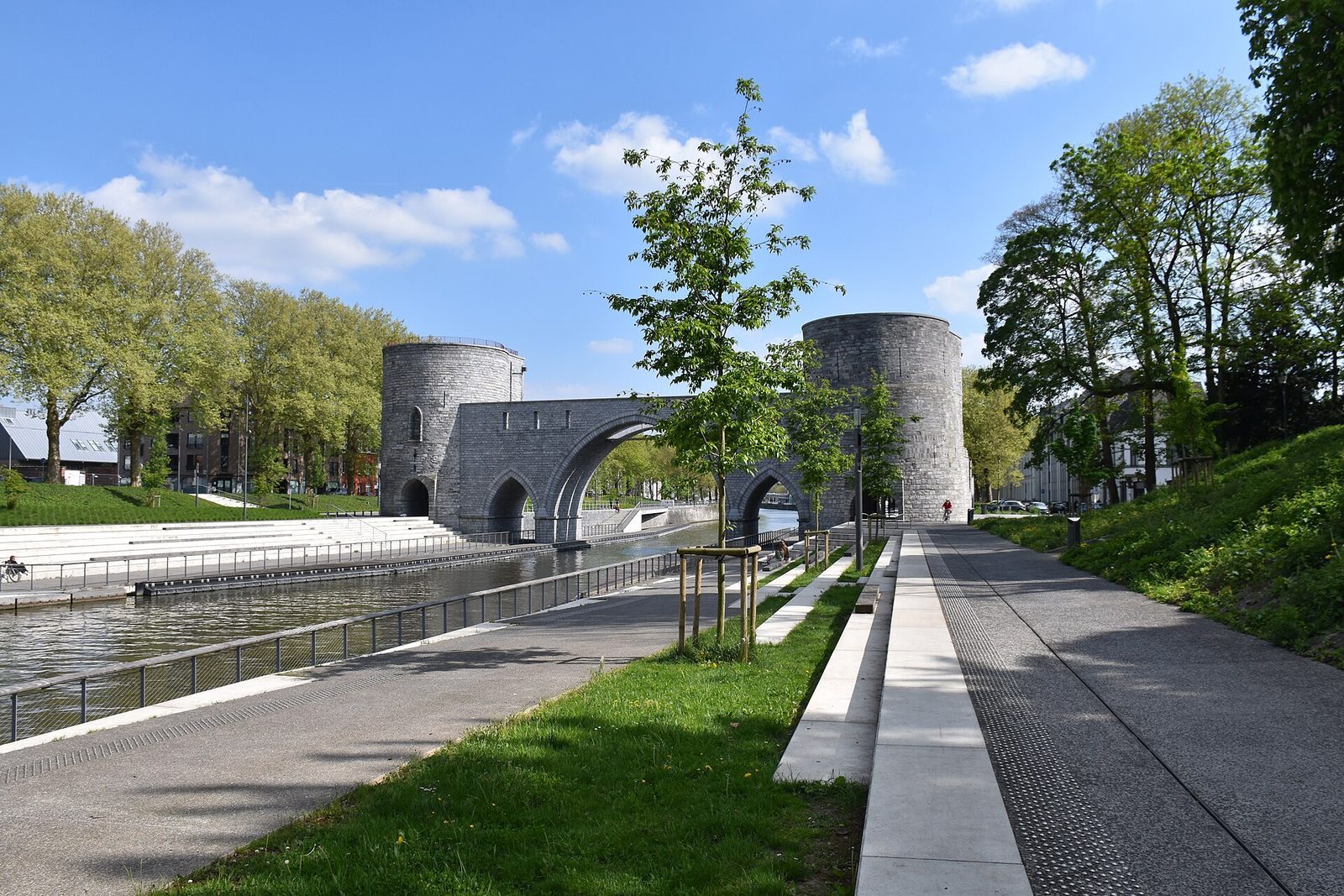
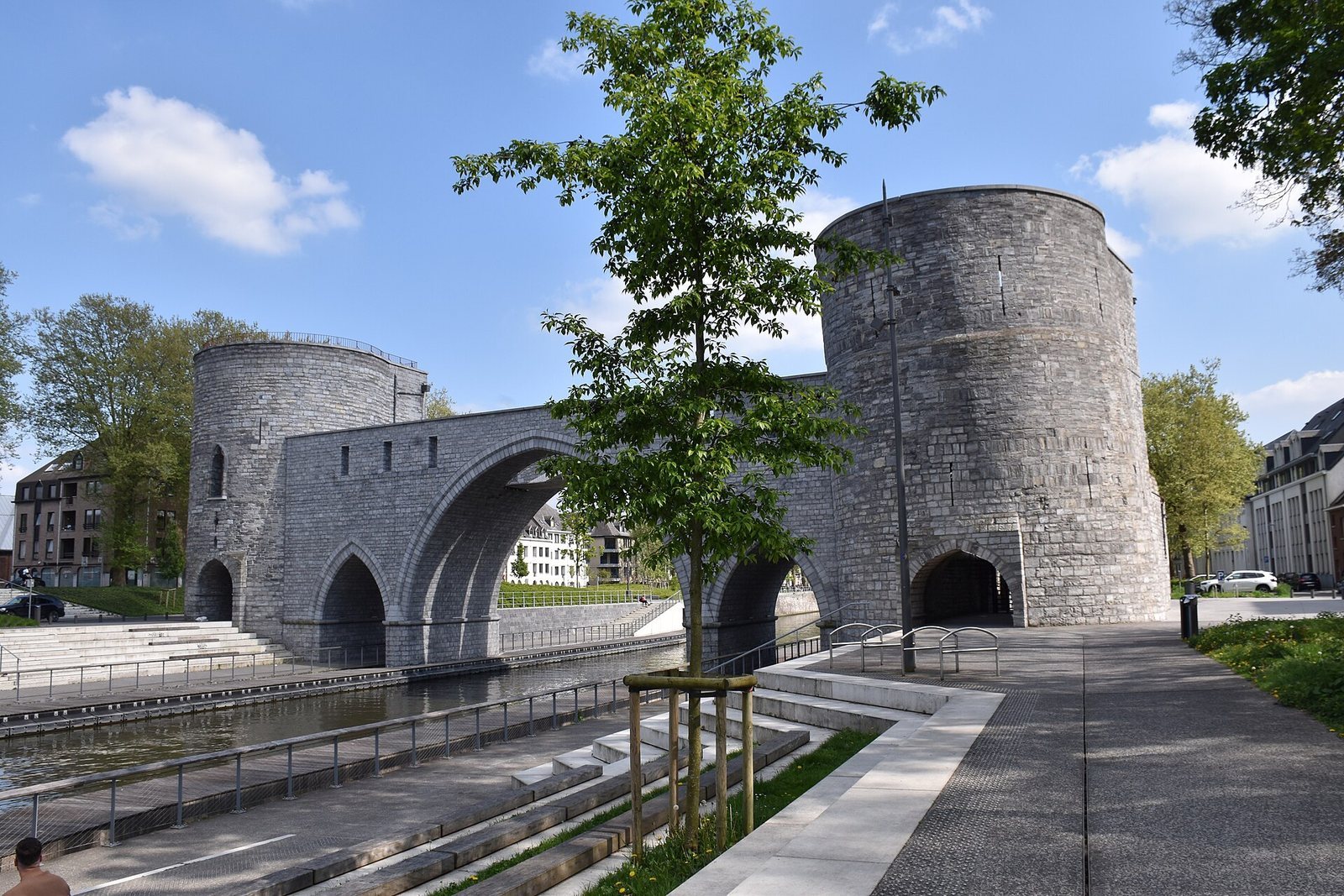
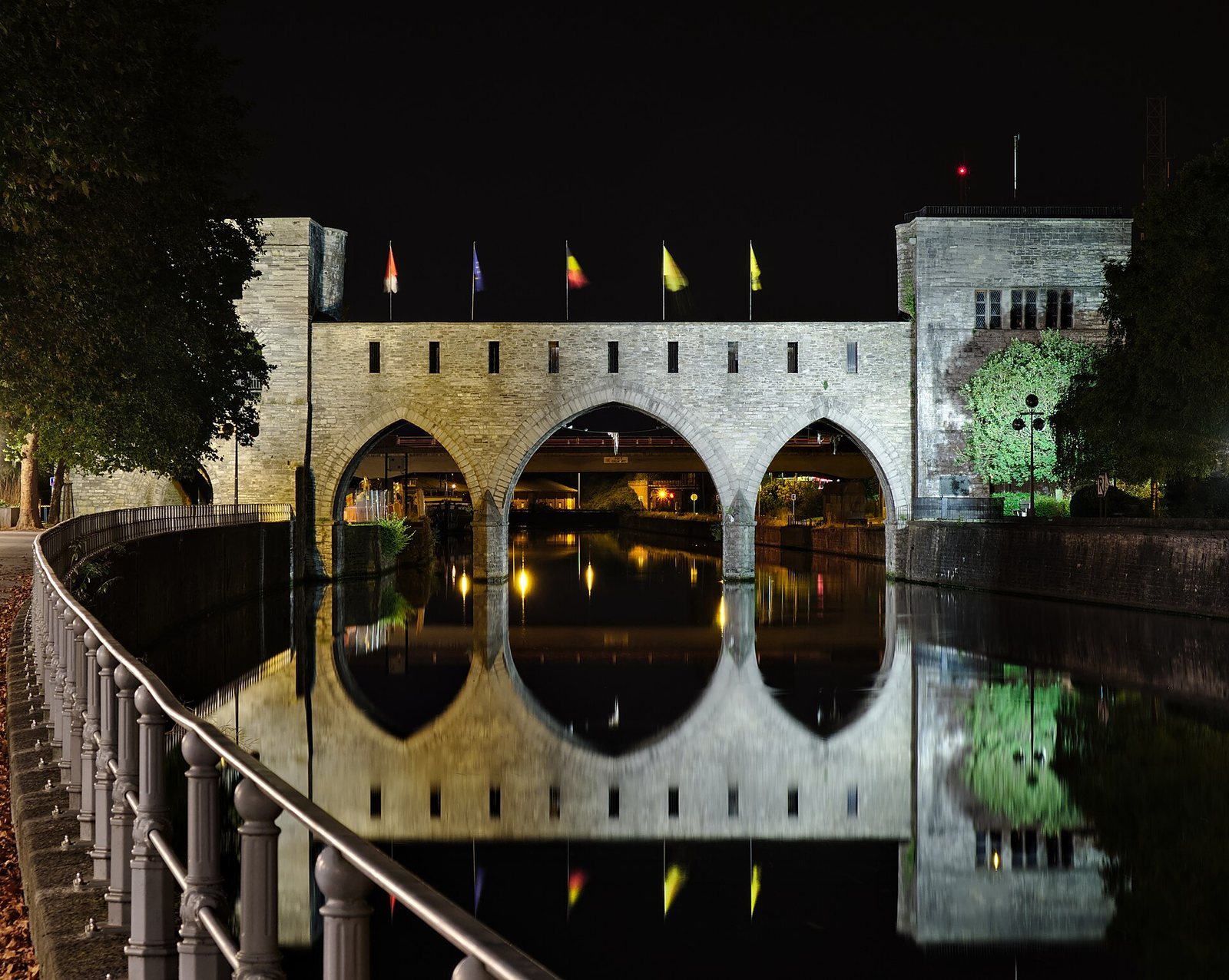
The bridge is a Gothic masonry crossing formed by three pointed arches between two towers on opposite banks of the Scheldt. Its arrangement combines a river crossing with a fortified gateway, and the arches were built to be closed by sliding portcullises, heavy gates that descend vertically to block a passage.
Arches and masonry
The postwar rebuilding raised the entire structure, including its towers, by 2.40 metres. It also widened the central arch by 2.40 metres, reducing the width of the two side arches. Before reuse, the original stones were numbered; some were incorporated into the rebuilt bridge, while most had deteriorated too much to be reused.
The latest reconstruction enlarged the central arch further at the expense of the side arches to improve clearance for navigation. It retained the three-arch, fortified water-gate form, though the arches were substantially changed.
Towers and surviving defenses
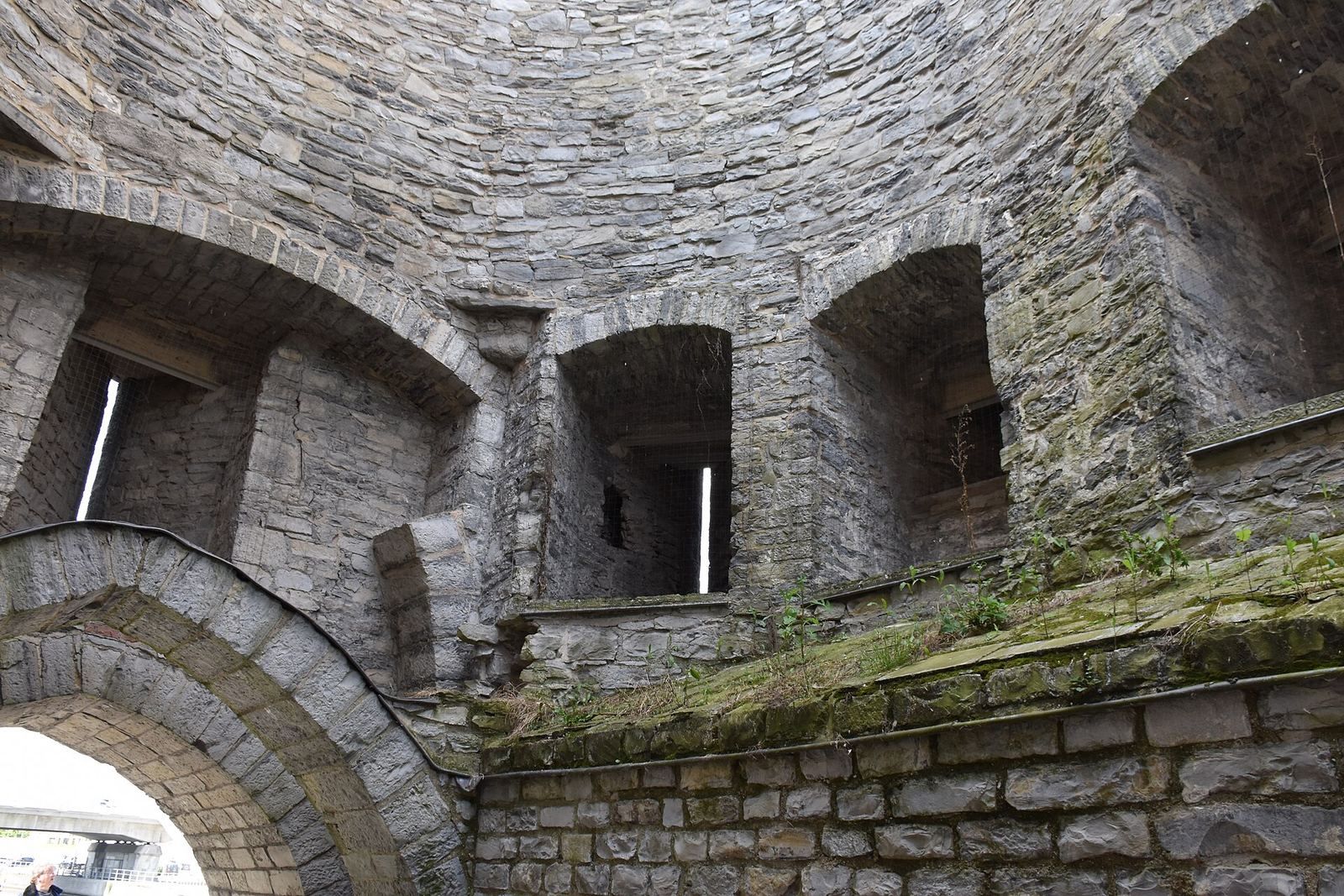
The left-bank Bourdiel Tower and right-bank Thieulerie Tower are flat on their city-facing sides and rounded toward the countryside, a shape intended to better resist cannonballs. A niche sits above the Thieulerie Tower’s doorway. The Bourdiel Tower’s former incorporation into the artillery defenses is reflected in surviving fortification remains in the Queen’s Garden.