Megalithic Tombs near Damerow: Neolithic Burial Monuments in Germany
Site at a Glance
- Popularity
- Very Low
- Country
- Germany
- Primary era
- Stone Age
- Eras represented
- Stone Age
- Civilizations
- Unclassified
- Site type
- Burial
- Remains
- Tomb
On this page8 sections
History
Construction and reuse
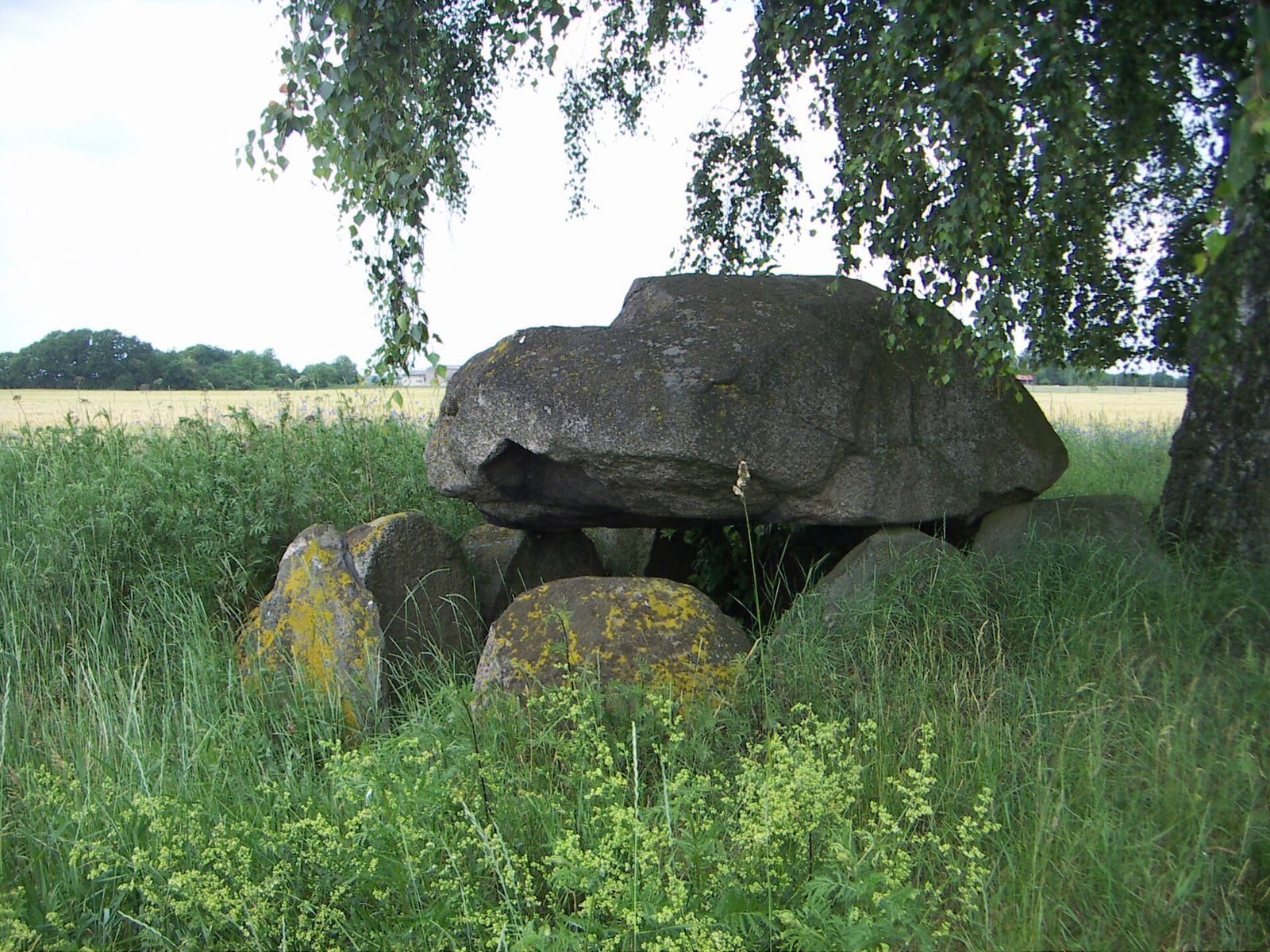
The Megalithic Tombs near Damerow are two Neolithic burial monuments in Sassen-Trantow, Germany, built between 3500 and 2800 BCE by the Funnel Beaker Culture as dolmens, tombs made from large stones supported beneath capstones. The Neolithic was the later part of the Stone Age, associated with the spread of farming. People of the Single Grave and Globular Amphora cultures, two other Neolithic traditions identified partly through their pottery and burial customs, later reused the tombs.
The monuments belong to a larger group of megalithic sites southwest of Greifswald, extending from Dargelin in the east to Düvier in the west.
Excavation and the third tomb
Ewald Schuldt excavated and restored the two surviving tombs in 1968. A third tomb was destroyed; its excavation is tentatively attributed to prehistorian Franz Klinghardt.
Remains
The surviving tombs
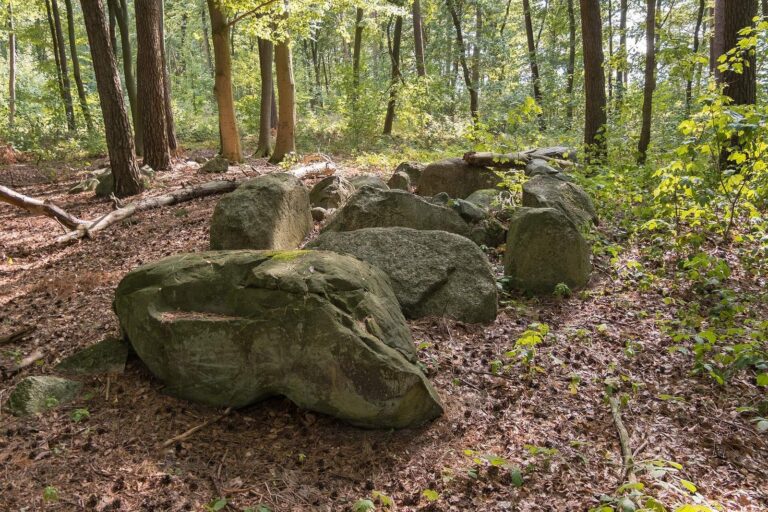
Both surviving chambers run roughly north to south and have entrances at their southern ends. Their forms and surrounding stone settings differ, and each has a floor of red sandstone slabs and a layer of clay.
The mound tomb
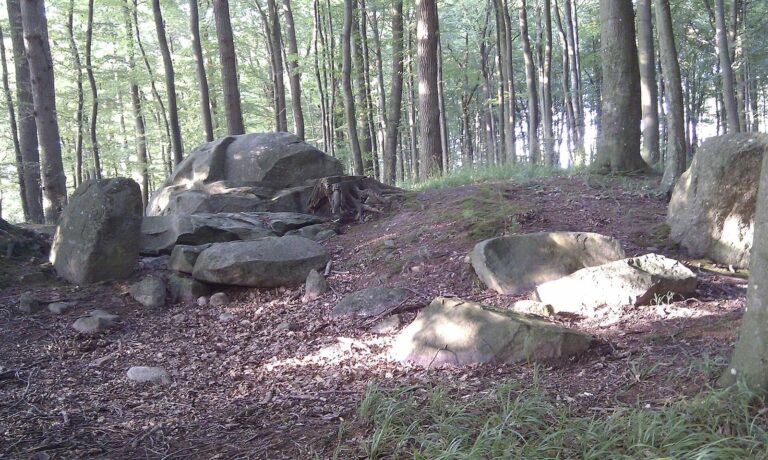
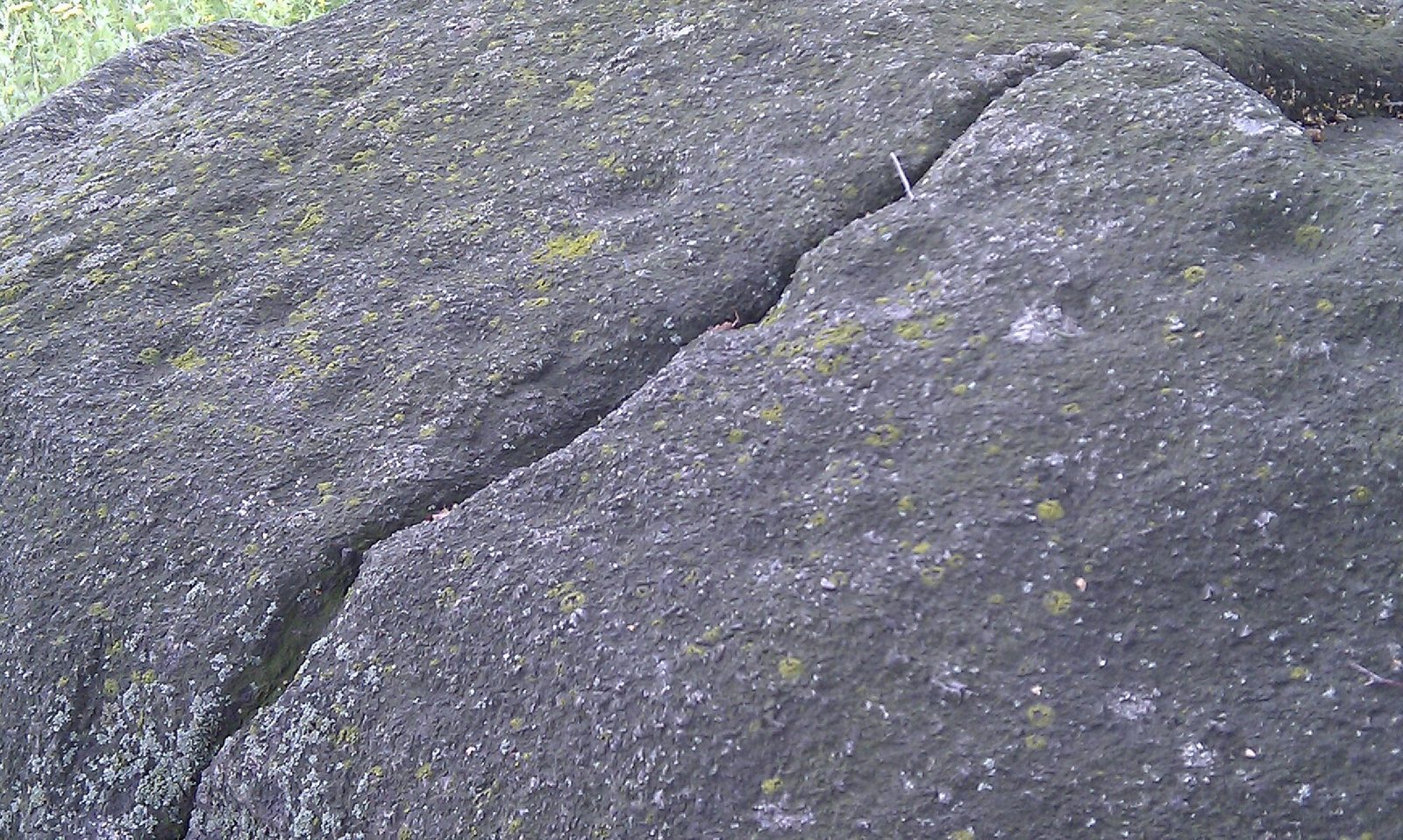
The first chamber lies within a mound of rounded stones. It measures 3.3 metres long and 1.4 metres high, with widths of 1.9 and 1.4 metres. It is largely preserved and has been covered again; several supporting stones, including the northern end stone, remain visible. Two capstones survive, one marked with 37 small, cup-shaped depressions known as cup marks. Finds from the tomb include charcoal, animal and human bones, two human skulls, and cremated human remains. Objects include two flat axes, two narrow chisels, two globular amphorae (round-bodied pottery vessels), two tall pots, a blade, a spherical bowl, another bowl, a spearhead, and a beaker associated with the Single Grave Culture.
The oval-setting tomb
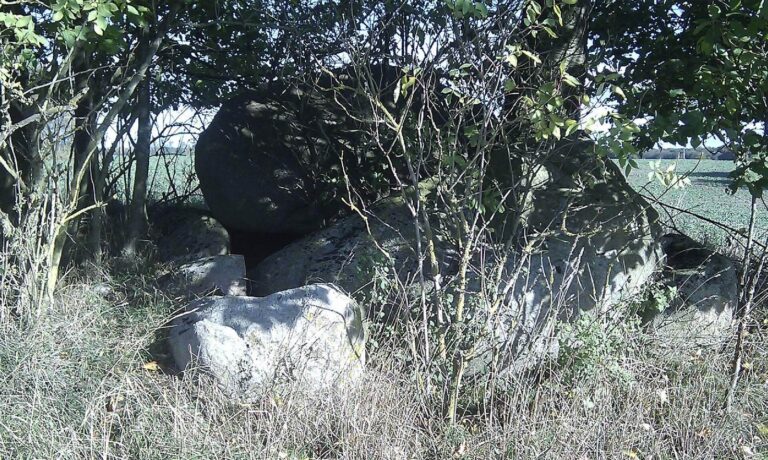
The second chamber is slightly curved and trapezoidal, measuring 5.2 metres long. Its height is given as 1.5 by 1.2 metres, and its width as 2.0 by 1.6 metres. A narrow, elongated oval ring of stones surrounded it; six stones survive. All nine chamber supports remain, as do the stones of the forechamber and the passage, which is about one metre long. One of the four capstones is split and bears cup marks. Finds include animal bones, cremated human remains, charcoal, four amber beads, three transverse arrowheads with cutting edges set across their points, a wide-mouthed pot, a curved point, and a blade.
Material from the third tomb
Six undecorated pottery fragments from the third tomb are held in the University of Greifswald collection.