Aquhorthies Stone Circle: A Neolithic Monument in Scotland
Site at a Glance
- Popularity
- Low
- Country
- United Kingdom
- Primary era
- Stone Age
- Eras represented
- Stone Age
- Civilizations
- Unclassified
- Site type
- Religious
- Remains
- Sanctuary
On this page13 sections
History
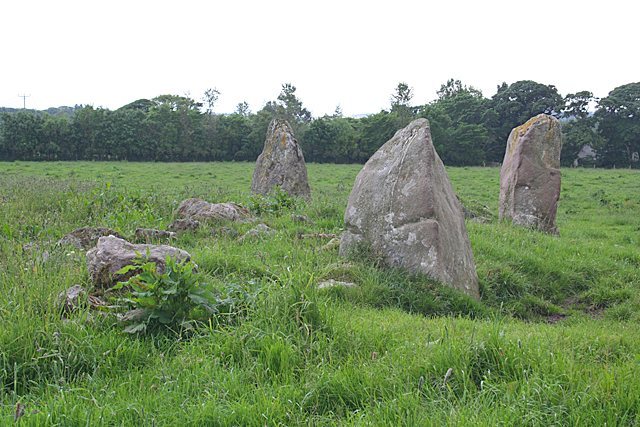
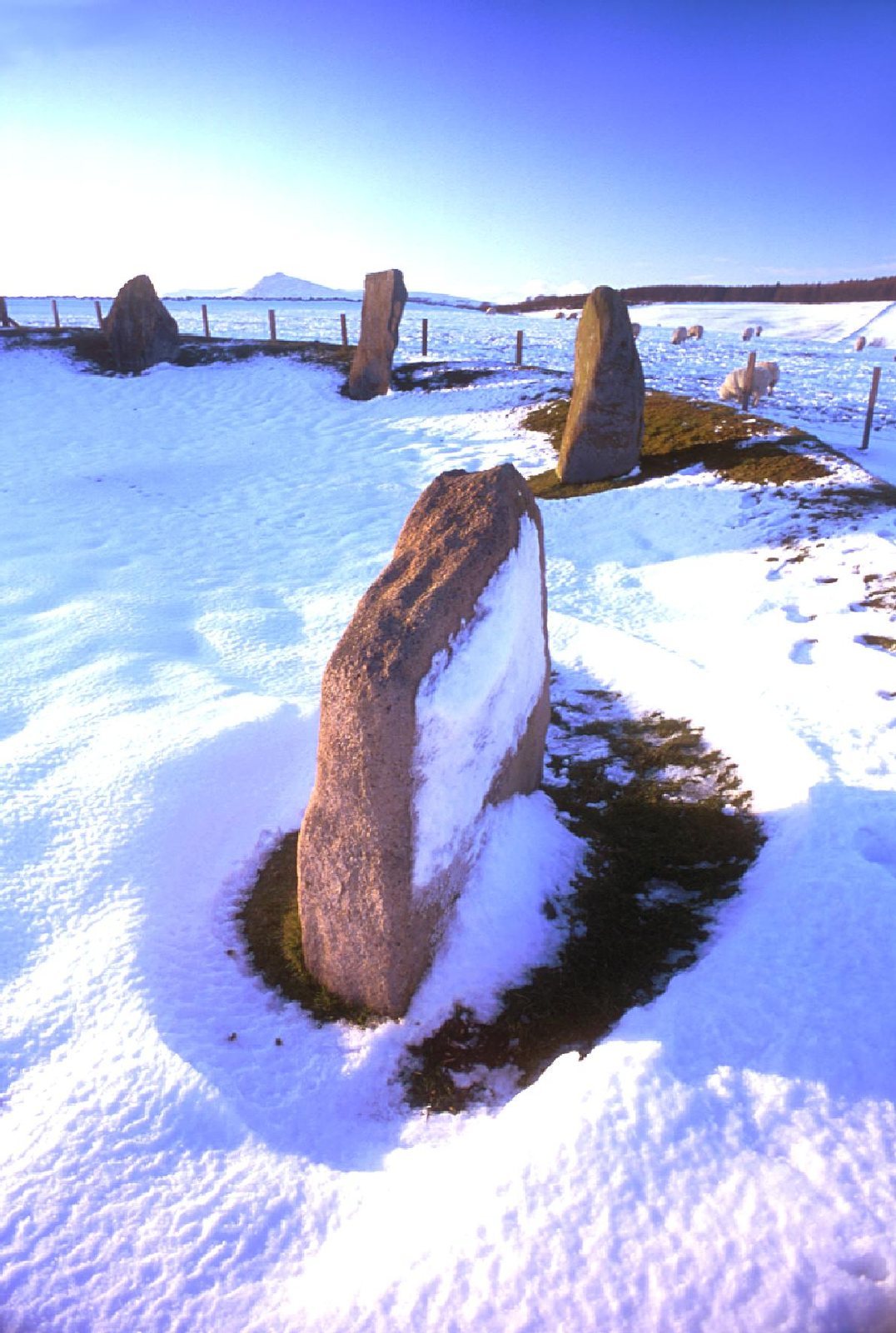
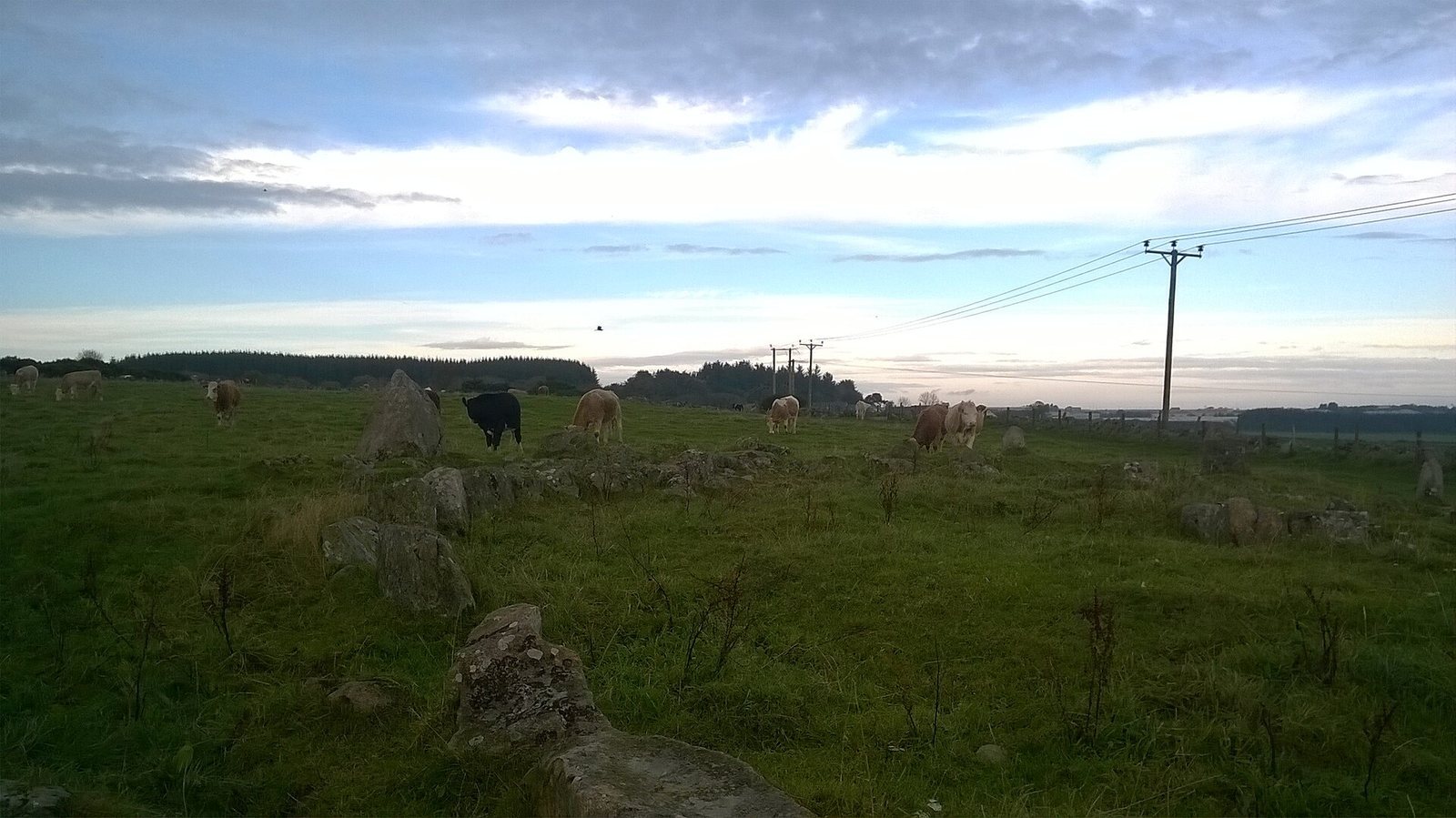
Aquhorthies stone circle is a Neolithic monument near Portlethen in Aberdeenshire, Scotland, United Kingdom. It is classified as a recumbent stone circle, a type characterized by a large horizontal stone usually accompanied by upright flankers. The type is generally associated with the early Bronze Age, but that broader association does not establish a construction date for Aquhorthies. The precise purpose of such circles is uncertain.
Early references and excavation
In 1692, James Garden prepared an account at the urging of John Aubrey, but confused Aquhorthies with Auld Bourtreebush stone circle in the next field. Aquhorthies was clearly mentioned in 1791. During the 1820s, James Skene and James Logan drew the circle, and Logan published a drawing in 1829.
A group including James Dyce Nicol, Charles Dalrymple, James Nicolson, Captain James Burnett, the Reverend Harry Stuart and Alexander Thomson excavated the site in 1858. The cairn had already been plundered. The excavators found burnt bone fragments and pottery sherds. Thomson reported charcoal, partly calcined bones, black oily soil and vase fragments from the inner circle, while noting that excavation beside the recumbent stone yielded no finds.
Later study and protection
Several investigators examined the circle in the late nineteenth century, including William Collings Lukis, Christian Maclagan, Robert Angus Smith, William Tomkin and Frederick Coles. Coles included it in an overview of Scottish stone circles published in 1899. Alexander Keiller commented on the site in 1934, Alexander Thom surveyed it in 1955, and Clive Ruggles investigated possible alignments with astronomical phenomena in 1981. A geological survey followed in 2006.
Aquhorthies has been a scheduled monument since 1925, a site protected by law as heritage. Its protected classification identifies it as a prehistoric ritual or funerary enclosure, ring cairn and stone circle.
Remains
The complex occupies a rounded, trapezoidal platform about 23 by 40 metres. Once interpreted as an artificial platform for levelling the ground, it is now described as a natural knoll whose edge is emphasized by stones. The layout comprises an outer circle, an inner circle and a central ring cairn. The site lies about one field from Auld Bourtreebush stone circle and near the Causey Mounth.
Platform and stone circles
Outer circle
The outer circle is about 24 metres across, with roughly twelve stones in place. Its stones are made of local reddish granite and vary in height, from about 2.4 metres in the southwest to 1.1 metres in the north. The ordering is especially clear among the ten largest stones. Across the circle, fourteen upright slabs (orthostats) remain, including two stumps; at least eighteen stones were originally present.
Inner circle
The mostly intact inner circle measures about 15.4 metres in diameter. Its close-set stones stand approximately 0.3 to 0.7 metres high and follow a height pattern similar to that of the outer circle. The ring is interrupted near the recumbent stone.
Recumbent stone and forecourt
Recumbent stone and flankers
The recumbent stone lies about three metres inside the outer circle’s circumference. It measures approximately 2.8 metres wide, 1.3 to 1.4 metres high and 0.8 metres thick. Frederick Coles estimated its weight at more than ten tonnes. Its outer face is smooth and worked. The western flanker stands about 1.7 metres high. Both it and the recumbent stone are grey granite with numerous quartz inclusions, an unusual shared material for these principal stones.
A stone about 1.8 metres long connects the western flanker to the inner ring. Coles’s 1899 plan depicts a similar connecting stone on the eastern side, forming a recess.
Forecourt
An atypical forecourt lies in front of the recumbent stone. Rows of small stones between the flankers and neighboring circle stones outline a trapezoidal space against the recumbent stone’s smooth face.
Central cairn and cist
Ring cairn
The damaged ring cairn has an intact stone edging, or kerb. At its centre is a mound about 3.2 metres in diameter. Five rectangular slabs, each about 0.7 metres high, survive from the inner stone ring around the mound.
Stone chamber
In 1791, a small stone-built chamber, or cist, measuring 0.9 by 0.45 metres was found on the eastern side between the outer circle and inner ring. An urn was found with it.