Wallingford Castle: A Norman Fortress and Royal Residence in England


Site at a Glance
- Rating
- 4.4
- Popularity
- Low
- Country
- United Kingdom
- Primary era
- Medieval
- External website
- Open
- Eras represented
- Medieval
- Civilizations
- Anglo-Saxon, Norman
- Site type
- Military
- Remains
- Castle
On this page15 sections
History
Wallingford Castle is a Norman fortress in Wallingford, United Kingdom, probably built between 1067 and 1071 during the years after the Norman Conquest. It occupied an important crossing of the River Thames and developed from an earlier Anglo-Saxon defensive town. The castle became a major stronghold during the Anarchy, the English civil war of 1139 to 1153 between King Stephen and the Empress Matilda over the succession to the throne. It later served as a royal residence, prison, aristocratic household, and Civil War fortress.
Anglo-Saxon town and Norman foundation
Before 1066, Wallingford was a prosperous Anglo-Saxon regional centre with its own mint and a fortified town wall. Its position at a crossing of the Thames gave it strategic value. Wigod of Wallingford, who controlled much of the surrounding land, supported William the Conqueror, the Norman duke who became king of England after the Conquest, and entertained him at Wallingford.
William established royal castles at Windsor and Wallingford, alongside the baronial castle at Oxford, to control the Thames Valley. Wallingford Castle was probably constructed by Robert D’Oyly between 1067 and 1071. D’Oyly had married Wigod’s daughter, Ealdgyth, and inherited much of Wigod’s land. The new fortress was built within the earlier Anglo-Saxon burgh, or fortified town, although parts of the existing defences had to be demolished to create its raised mound and enclosed outer area.
The first castle was a wooden motte-and-bailey, a design combining a raised earth mound with an enclosed area for buildings, people, and further defences. It appears to have been placed over high-status Anglo-Saxon housing, probably used by former housecarls, the elite retainers who served an Anglo-Saxon lord. Robert D’Oyly also founded St Nicholas College within the castle for sixteen priests.
FitzCount and the Anarchy
After Robert D’Oyly’s death, the castle passed to his son-in-law Miles Crispin. Following Crispin’s death, it came to Brien FitzCount, who had married D’Oyly’s daughter, Matilda. FitzCount was a powerful Anglo-Norman nobleman and an important supporter of Henry I. During the 1130s, he probably strengthened Wallingford in stone, adding a shell keep, a stone-walled enclosure on the motte, and a curtain wall, the defensive wall around the bailey. These works were combined with extensive earthworks.
Henry I died in 1135, beginning a succession crisis. FitzCount initially supported Stephen, but declared for the Empress Matilda when she arrived in England in 1139. Wallingford then became the easternmost stronghold of Matilda’s faction and an important base near London. Stephen attacked the town in 1139 but did not assault the castle. Its defences were considered impregnable, and its stores were believed sufficient to sustain a siege for several years. Instead, Stephen built counter-castles to contain it before continuing west. Forces supporting Matilda later destroyed one of those counter-castles.
After Oxford fell to Stephen in 1141, Matilda fled to Wallingford. Stephen made further attempts to take the castle in 1145 to 1146 and again in 1152. He established or rebuilt counter-castles at Crowmarsh Gifford and constructed others at Brightwell, South Moreton, Cholsey, and near Wallingford Bridge. None of these operations captured Wallingford Castle.
The siege of 1152 to 1153 brought severe food shortages inside the fortress. FitzCount continued the defence with the support of Roger of Hereford, but Roger eventually obtained permission from Stephen to leave with his followers. Henry, Matilda’s son and the future Henry II, then intervened against Stephen’s counter-castles. The confrontation outside Wallingford produced the Treaty of Wallingford in 1153, which led to the Treaty of Winchester, ended the civil war, and established that Henry would succeed Stephen.
FitzCount had no children. In 1153 he entered a monastery and surrendered Wallingford Castle to Henry. The fortress had therefore survived the Anarchy and its repeated sieges without being captured.
Royal ownership and the Earls of Cornwall
At the end of the twelfth century, Wallingford became closely associated with King John. Richard I granted John the town in 1189. John seized the castle during his revolt in 1191, was forced to return it, and recovered it after becoming king in 1199. During the First Barons’ War of 1215 to 1216, a conflict between John and rebel barons that brought pressure for limits on royal government, he used Wallingford regularly, strengthened its defences, and maintained a substantial garrison.
In 1231, Henry III granted the castle to his brother Richard, Earl of Cornwall, as his principal residence. Richard spent heavily on the property, adding a new great hall and more luxurious fittings and buildings. His election as King of the Romans in 1251 ended his regular use of Wallingford, but the castle remained a residence of the Earls of Cornwall for the rest of the thirteenth century. Later royal and aristocratic occupants continued to spend money on the property and its repairs.
Fourteenth-century royal use
During the Second Barons’ War in the 1260s, Simon de Montfort, the baronial leader who opposed Henry III, seized Wallingford after the battle of Lewes. Members of the royal family were temporarily imprisoned in the castle before being transferred to the more secure Kenilworth Castle. Henry III recovered Wallingford at the end of the war.
Edward II granted Wallingford first to his favourite, Piers Gaveston, and then to his wife, Isabella of France. The king also used the castle as a prison for enemies. After Isabella helped overthrow Edward in 1326, she used Wallingford as an early headquarters for her military operations in England. Edward III later assigned the castle to the Duke of Cornwall, a title traditionally held by a son of the king.
Wallingford continued to function as a county jail, despite repeated complaints about escapes. By the late fourteenth century, local rents and revenues no longer paid for its maintenance, so additional royal funding was required. Even so, the castle remained well fortified in 1399, when Richard II was deposed, and it was capable of sheltering the royal government after its flight from London.
Decline and Civil War fortress
Wallingford played little part in the Wars of the Roses. Henry VIII used it for the last time as a royal residence in 1518, after which its importance as a royal household declined. During the sixteenth century, the castle was separated from the Duchy of Cornwall and partially dismantled under Mary I. Lead and other building materials were recovered for use at Windsor Castle. It continued as a prison, although escapes remained frequent.
After passing through the hands of various nobles, the castle returned to the Crown under Charles I, who granted it to his wife, Queen Henrietta Maria. By this period, its principal economic value lay in the surrounding meadows and fisheries rather than in royal residence. Wallingford was a Royalist town during the English Civil War, the conflict between supporters of Charles I and Parliament from 1642 to 1651. A garrison was established there in 1642 to prevent a Parliamentary advance on Oxford. Colonel Thomas Blagge became governor, and Charles ordered the castle to be refortified in 1643.
Parliamentary forces unsuccessfully attacked Wallingford and its castle in 1645. General Thomas Fairfax then besieged the fortress for sixteen weeks in 1646. It surrendered in July, after Oxford had fallen, on generous terms for the defenders. Parliament ordered the castle to be slighted in 1652. Slighting meant deliberately damaging or demolishing a fortress so that it could not serve its military purpose again. The operation virtually destroyed Wallingford as a military stronghold.
Later buildings and archaeological investigation
A brick building within the castle continued to serve as a prison into the eighteenth century. A private house was built in the bailey in 1700, followed by a Gothic mansion on the same site in 1837. Rising costs led to the mansion’s abandonment, and it was demolished in 1972.
Wallingford Castle was later designated both a scheduled monument and a Grade I listed building. Leicester University carried out archaeological excavations between 2002 and 2010 to examine the transition from the Anglo-Saxon burgh to the Norman castle. Investigations by the Round Mounds Project in 2015 and 2016 confirmed the Norman origins of the motte. The castle grounds, known as Wallingford Castle Meadows, are managed by Earth Trust on behalf of South Oxfordshire District Council.
Remains
Wallingford Castle occupies the north-eastern corner of Wallingford beside the River Thames. Its motte was placed close to the river and overlooked the ford. The fortress reused the ramparts of the earlier Anglo-Saxon burgh, while substantial earthmoving created the Norman motte-and-bailey. The surviving site is formed principally by the motte, broad earthworks, limited sections of castle wall, and remains associated with St Nicholas College.
Motte and stone defences
The Norman motte
The motte is approximately 60 metres across and 13 metres high. Archaeological investigation identified its origins as Norman. It formed the raised centre of the original wooden motte-and-bailey castle and later supported a shell keep, a stone enclosure built on the mound. Its position near the Thames crossing gave the elevated structure a defensive relationship to the ford.
Shell keep, curtain wall, and earthworks
FitzCount’s strengthening during the 1130s probably introduced substantial stone defences. A shell keep occupied the motte, while a curtain wall enclosed the bailey. Together with the extensive earthworks, these structures created the powerful fortress that resisted Stephen’s repeated attempts during the Anarchy. Later reinforcement included work undertaken for military use by King John and the refortification ordered by Charles I in 1643. The Parliamentary slighting of 1652 left only limited sections of castle wall and the surrounding earthworks.
Religious and prison buildings
St Nicholas College
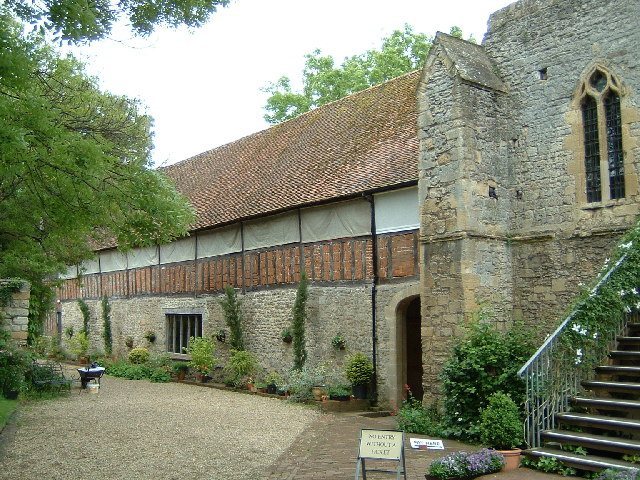
St Nicholas College was founded by Robert D’Oyly as a sixteen-priest institution within the castle. Parts of the college remain in the castle grounds. Its surviving fabric forms a physical reminder of the religious foundation established alongside the early Norman fortress.
Brien’s Close
Brien FitzCount established a prison within the castle known as Brien’s Close. It was used to extract money and resources from the surrounding region. William Martel, Stephen’s royal steward, was among its prominent prisoners. Contemporary reports described the cries of tortured prisoners disturbing the inhabitants of Wallingford.
Residential and later structures
Richard, Earl of Cornwall, transformed the castle into a high-status residence by constructing a new great hall and adding more luxurious fittings and buildings. These works complemented the fortress’s earlier defensive role and reflect the change from a primarily military stronghold to an aristocratic residence. A brick prison building later continued the site’s penal use into the eighteenth century.
The bailey also accommodated later domestic buildings. A private house erected there in 1700 was replaced on the same site by a Gothic mansion in 1837. That mansion was demolished in 1972. The grounds now retain the castle earthworks, the motte, two sections of castle wall, and the remains of St Nicholas College.