Dolmen du Rat: A Neolithic Stone Tomb in France
Site at a Glance
- Popularity
- Very Low
- Country
- France
- Primary era
- Stone Age
- Eras represented
- Stone Age
- Civilizations
- Unclassified
- Site type
- Burial
- Remains
- Tomb
On this page8 sections
History
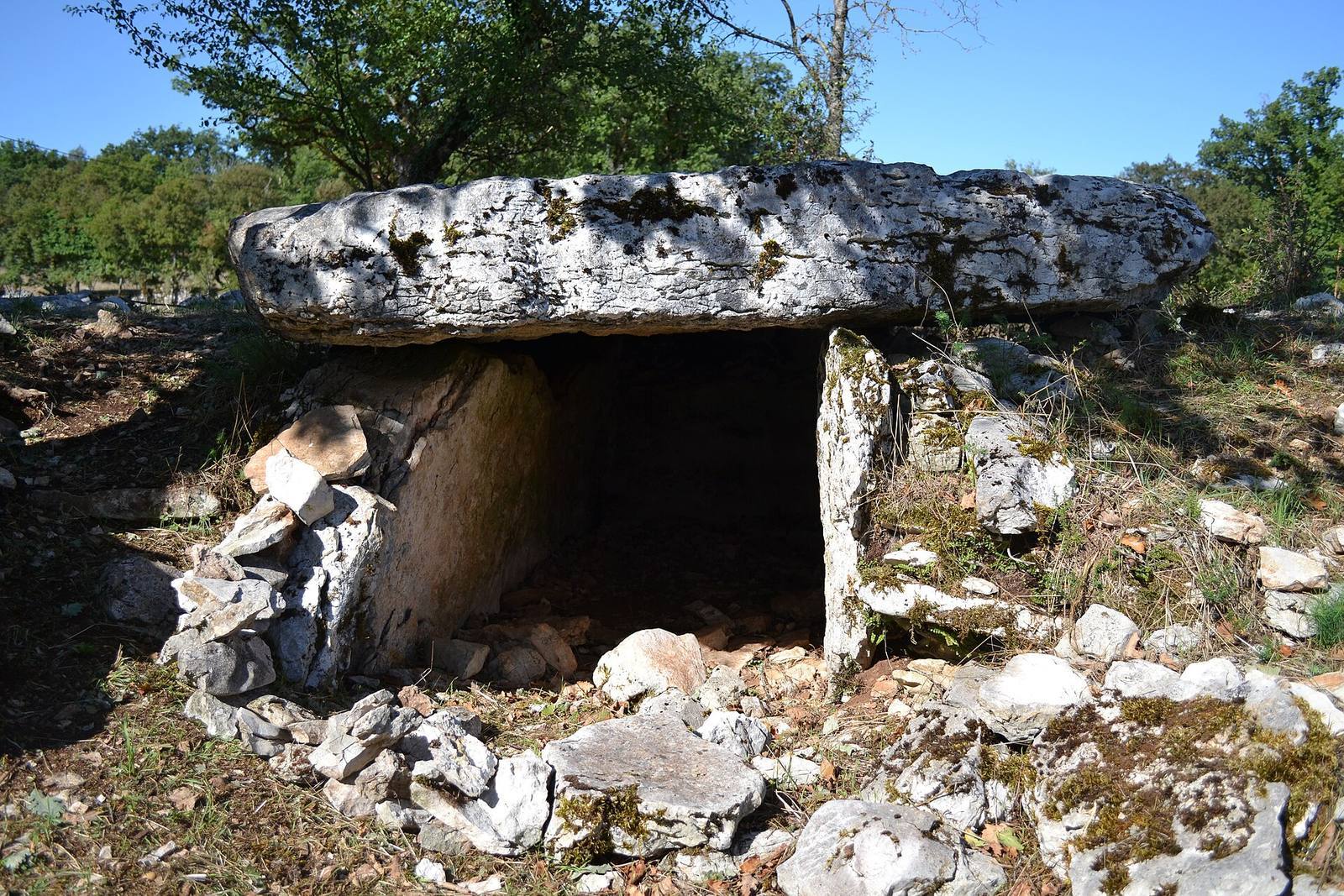
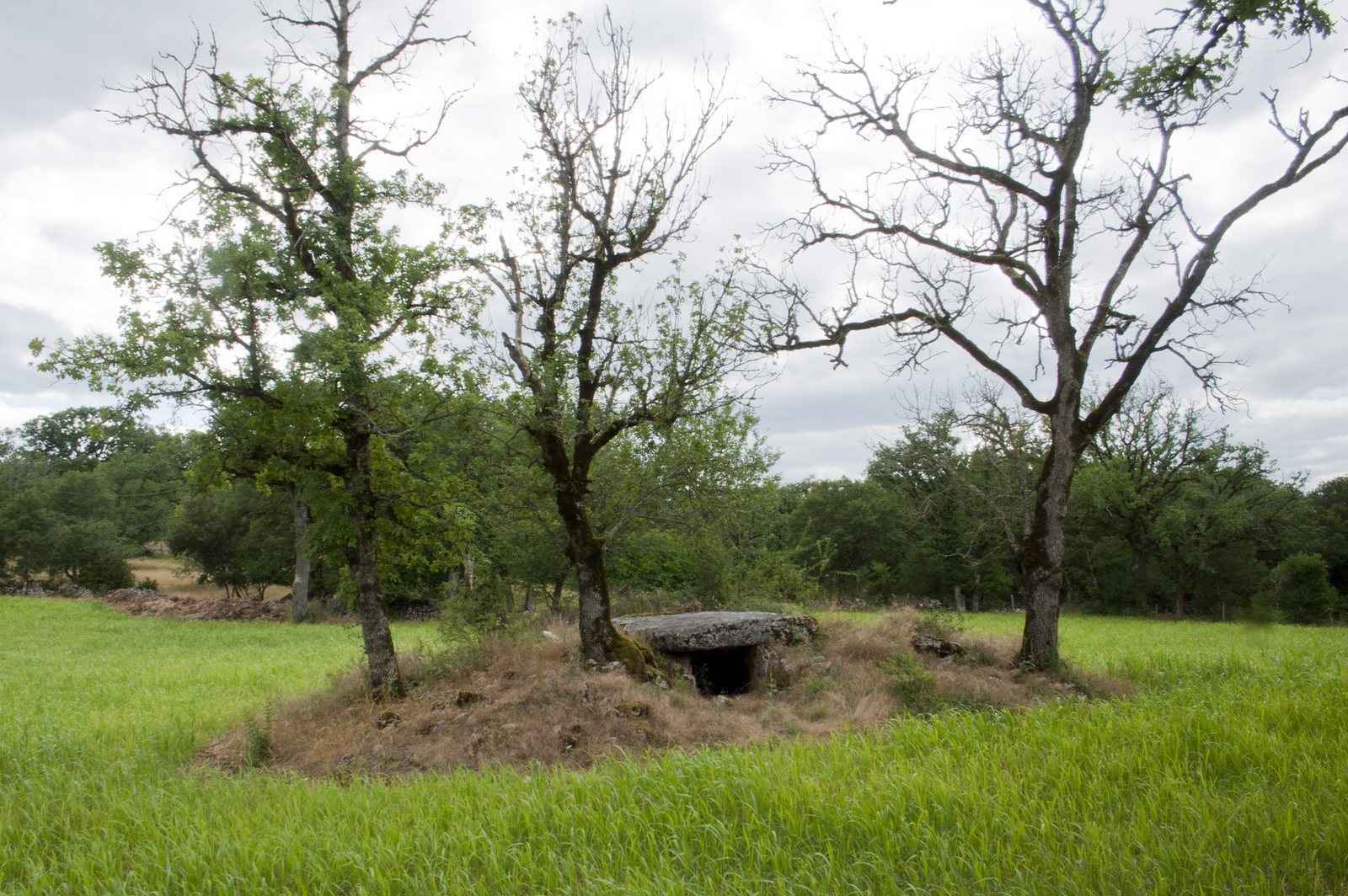
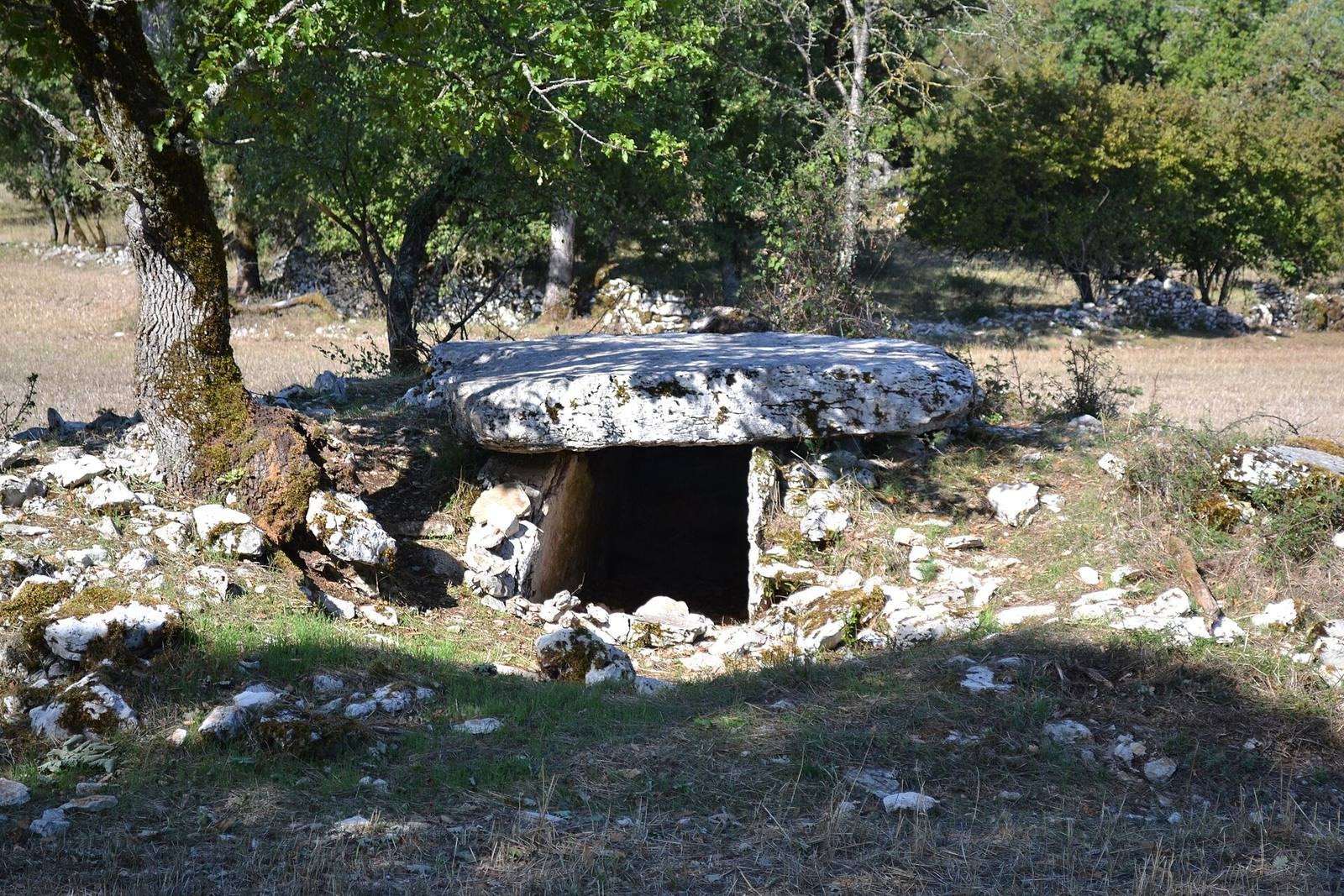
The Dolmen du Rat is a tomb built from large stones during the Neolithic, the later part of the Stone Age, near the hamlet of Le Rat in Saint-Sulpice, in France’s Lot department. Long before excavation, looters disturbed the burial, leaving only a few objects for recovery. The monument was listed as a historic monument in 2011.
Remains
Mound and retaining wall
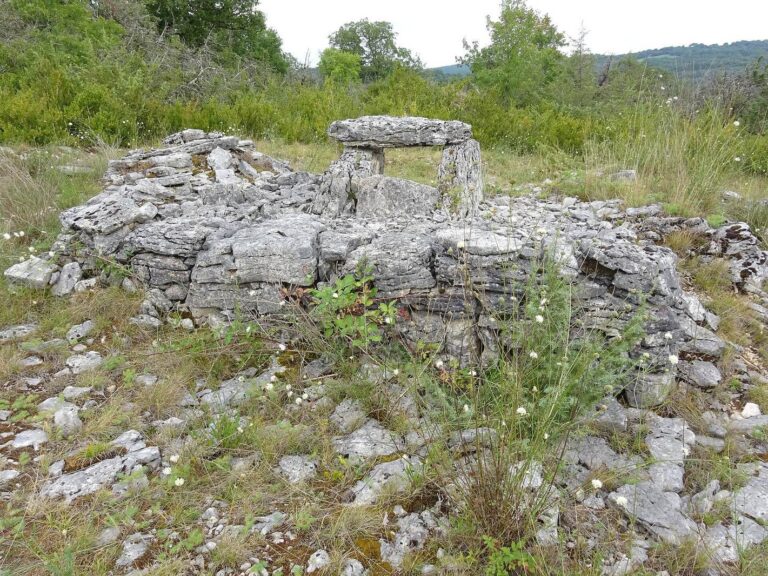
The dolmen retains a round mound about 13 m in diameter. It consists of large stones piled irregularly, with accumulated debris forming part of the mound. A low wall of flat stones, 0.85 to 0.90 m high, starts at the chamber’s northern upright slab and runs along most of the mound. Prehistorian Jean Clottes proposed that the wall helped hold the mound in place.
Burial chamber
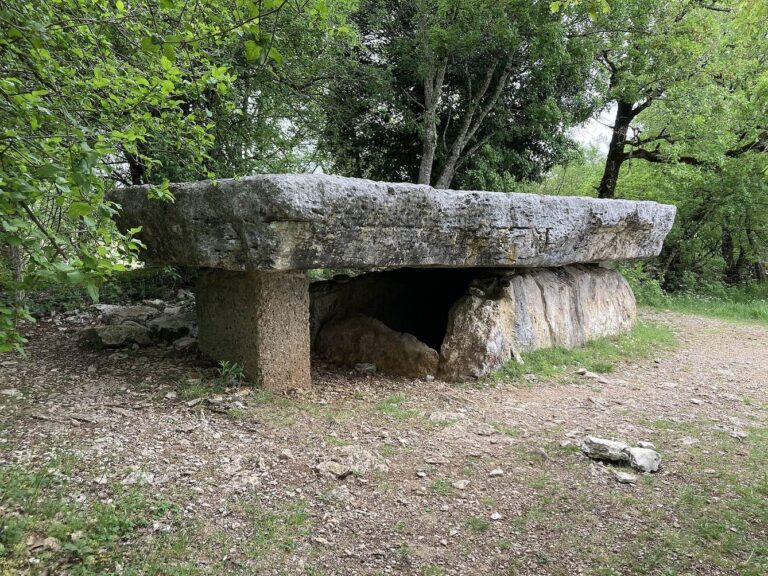
The rectangular chamber is aligned east to west, and its four large slabs extend about 0.2 m into the ground. The two side slabs measure approximately 3.3 by 1.1 by 0.15 m and 3.25 by 1.0 by 0.35 m. The end slab is about 1.15 by 0.8 by 0.1 m, while the roof slab measures about 4.0 by 2.8 by 0.22 m. A separate slab, about 1.30 by 0.90 by 0.10 m, was found on the mound. Its size matches the chamber opening, and it was probably the displaced closing slab.
Floor and threshold
The chamber floor combines paving made from irregular stones with a large slab measuring 1.95 by 1 m. Four stones, each about 0.50 by 0.20 by 0.25 m, form the threshold. The paving appears to run from the entrance toward the back of the chamber, with stones overlapping slightly like scales. Smaller stones reinforce the paving along the walls.
Upright stone
A triangular upright stone, about 0.80 by 0.38 by 0.13 m and without a figurative image, was found displaced inside the chamber, leaning against its left side slab. It was set on its point and wedged with small stones. Comparable stones occur at the Roucadour Dolmen at Thémines and the Pech d’Arsou Dolmen at Corn, but this type is rare.
Human remains and burial finds
Human remains included small bones such as kneecaps, finger and toe bones, and vertebrae, as well as teeth. Long bones were broken, possibly during the looting. Horse and sheep bones were also recovered, though they may relate to later human occupation rather than the burial. Finds attributed to the burial include 36 ring-shaped beads, three made of jet and 33 of calcite, and one barrel-shaped calcite bead. Pottery fragments were also found in the chamber, most dating to no later than the Middle Ages.
Pottery outside the chamber
About 100 small pottery fragments came from the mound and the area in front of the entrance. They belong to an earlier period and may have been offerings, although their poor condition makes that interpretation uncertain.