Dunstaffnage Castle: A Medieval Fortress in Western Scotland


Site at a Glance
- Rating
- 4.5
- Popularity
- Medium
- Country
- United Kingdom
- Primary era
- Medieval
- External website
- Open
- Eras represented
- Medieval, Early Modern, Modern
- Civilizations
- British, Kingdom of Scotland
- Site type
- Military
- Remains
- Castle
On this page16 sections
History
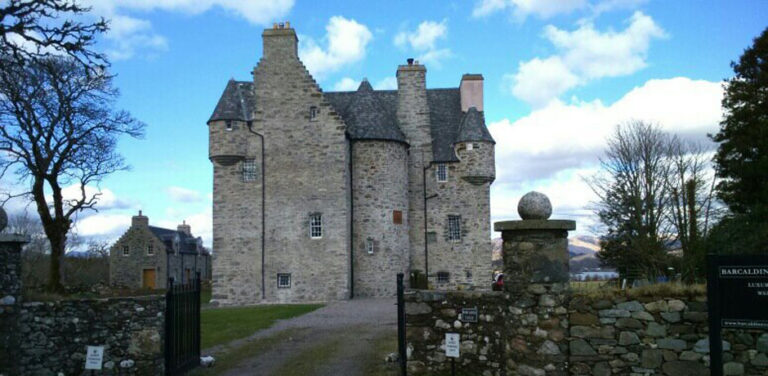
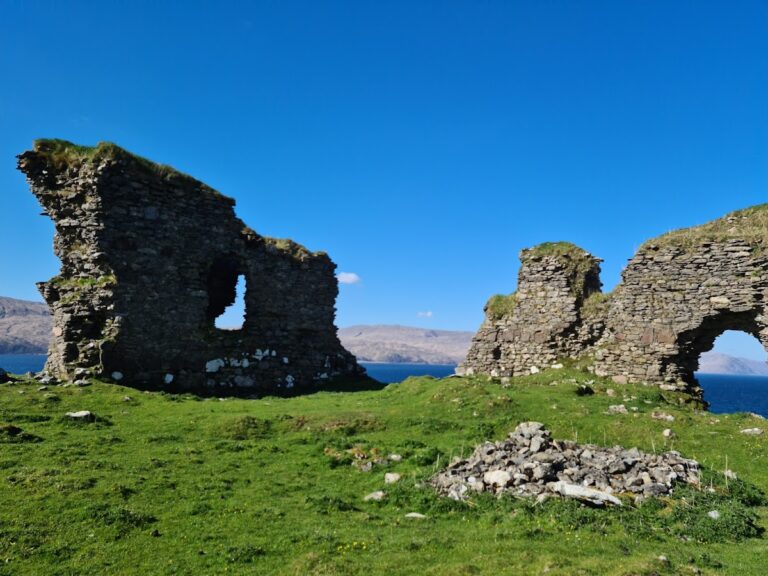
Dunstaffnage Castle is a partially ruined 13th-century medieval fortress in Scotland, United Kingdom, built in the 1220s by the MacDougalls, the powerful west-coast kindred who controlled Lorn. Positioned on a rocky promontory at the south-western entrance to Loch Etive, it guarded an important maritime approach and the route connected with the Pass of Brander.
MacDougall Foundation and Expansion
The castle was probably established as the seat of Duncan MacDougall, Lord of Lorn and grandson of Somerled, the 12th-century ruler of the Isles. Duncan travelled to Rome in 1237 and founded nearby Ardchattan Priory. His son Ewen inherited the lordship in the 1240s, extended MacDougall influence, and styled himself “King of the Isles,” although that title properly belonged to the MacDonalds.
Ewen probably enlarged the castle by adding its three round towers and building or extending the internal great hall. Before the medieval fortress was built, the promontory may have held a 7th-century stronghold of Dál Riata, a Gaelic kingdom whose territory included parts of western Scotland and northeastern Ireland. The proposed identification of this earlier place with Dun Monaidh remains uncertain because firm archaeological evidence for 7th-century occupation has not been found.
A tradition written down in 1612 states that the Stone of Destiny was kept at Dunstaffnage after being brought from Ireland and before its transfer to Scone Palace in 843. Scone Palace was the medieval Scottish royal centre associated with the stone. Iona and Dunadd, both important early medieval Gaelic political and religious centres, are considered more likely locations. The traditional identification of Evonium with Dunstaffnage has also been challenged by a proposed connection with Irvine in Ayrshire.
Royal Conquest and Crown Control
After Alexander III, king of Scots, had pushed back Norse influence in Argyll, the MacDougalls supported the Scottish monarchy for a time. In 1293, Ewen’s son Alexander became the first sheriff of Argyll, a Crown official responsible for local administration and justice. During the Wars of Scottish Independence, however, the family supported John Balliol against Robert Bruce.
Robert Bruce defeated the MacDougalls at the Battle of the Pass of Brander in 1308 or 1309 and captured Dunstaffnage after a brief siege. Rather than destroying the fortress, he retained it, appointed a constable, and supplied it for the defence of the surrounding countryside and seaways. The castle then became a Crown property controlled by successive keepers, who administered and defended it on behalf of the Scottish royal government.
James I seized Dunstaffnage in 1431 after the Battle of Inverlochy because enemies of the Crown were sheltering inside. In 1455, James Douglas, 9th Earl of Douglas, stayed there while travelling to negotiate with John MacDonald, Lord of the Isles. The conflict that followed between James II and the Douglases contributed to the Treaty of Westminster-Ardtornish.
John Stewart of Lorn, a later keeper and rival of Alan MacDougall, was attacked by his own supporters while travelling to his marriage at Dunstaffnage Chapel in 1463. He was stabbed but survived long enough to make his vows. Alan MacDougall temporarily seized the castle, but James III expelled him and granted Dunstaffnage to Colin Campbell, 1st Earl of Argyll, in 1470.
Campbell Stronghold and Military Use
The Earls of Argyll appointed captains to supervise the fortress and maintain its military readiness. The Campbells, a major Scottish clan whose chiefs held the earldom of Argyll, were loyal allies of the Scottish royal house. During the 15th and 16th centuries they used Dunstaffnage as a base for government expeditions against the MacDonald Lords of the Isles, the dominant ruling dynasty of the medieval Hebrides and western seaboard, and against other opponents. James IV visited the castle twice.
Dunstaffnage resisted the army of James Graham, Marquis of Montrose, during the Civil War in 1644. Royalist troops later burned the castle after the failure of the Earl of Argyll’s rising against the Catholic James VII in 1685. Government troops occupied it during the Jacobite risings of 1715 and 1745. The Jacobites supported the exiled Stuart dynasty and sought to restore Stuart rule in Britain. During the later rising, Flora MacDonald was briefly imprisoned at Dunstaffnage while being taken to imprisonment in London after helping Charles Edward Stuart escape from Scotland.
Decline, Restoration, and State Care
The Campbells built a new house over the old west range in 1725, while other parts of the fortress were already deteriorating. Tenants occupied this house within the castle until 1888. An accidental fire gutted the gatehouse in 1810, after which the captains stopped living in the castle and moved to Dunstaffnage House, about 2 kilometres to the south-east. Dunstaffnage House was later destroyed by fire in 1940.
The castle is considered to appear without being named in Tobias Smollett’s Humphry Clinker, published in 1771. W. Douglas Simpson regarded the description as a valuable picture of castle life in the third quarter of the 18th century.
The Duke of Argyll, then the owner, began restoration in 1903. In 1912, the Court of Session ruled that Angus Campbell, the 20th hereditary Captain, retained a right of residence despite the duke’s ownership. The First World War delayed the work, and the planned complete restoration was never finished. In 1958, the 21st Captain and the Duke of Argyll agreed to transfer Dunstaffnage into state care. Historic Environment Scotland now maintains the site. The castle and chapel are Scheduled Ancient Monuments and nationally important protected monuments, while the hereditary captaincy survives without military responsibilities or privileges. Its holder must spend three nights each year in the castle to retain the title.
Local tradition says that the castle is haunted by the Ell-maid of Dunstaffnage, a spirit described as a type of gruagach. Her appearances are associated with events in the lives of the hereditary keepers.
Remains
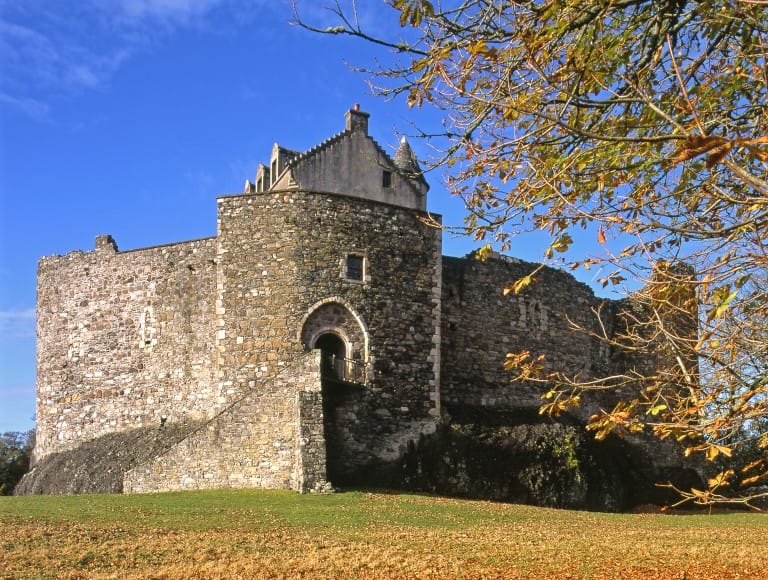
Dunstaffnage occupies a platform of conglomerate rock on a promontory with the sea on three sides. Its irregular quadrangular fortified enclosure measures approximately 35 by 30 metres and has a circumference of about 120 metres. The enclosing walls are built of coursed rubble with sandstone dressings. Including the bedrock platform, they rise to about 18 metres and reach up to 3 metres in thickness, forming the principal defensive barrier at the entrance to Loch Etive.
Enclosing Walls and Towers
Defensive Enclosure
The curtain wall, the main defensive wall enclosing a castle, once carried a parapet walk around the entire circuit. The original parapet has disappeared, although part of the wall walk has been restored with new stone flags. Arrow slits, later adapted as gunloops for firearms, are the only openings in the enclosing walls. Brass cannon recovered from ships wrecked during the Spanish Armada were formerly mounted along the walls.
North Tower
The north tower, or donjon, is the largest of the three round towers. A donjon was the chief residential and defensive tower of a medieval castle. The tower originally rose through three or four storeys and probably contained the lord’s private apartments. Archaeological excavations indicate that it may have been added early in the castle’s development.
West Tower
The west tower projects only slightly beyond the rounded corner of the curtain wall and could be entered only from the parapet walk. Its basement contains a pit prison reached from above, a feature that preserves part of the castle’s medieval defensive and custodial function.
East Tower and Gatehouse
The original east-corner tower was almost completely rebuilt in the late 15th century as the gatehouse. The resulting four-storey harled tower house has a roughcast coating over its masonry. Its entrance passage occupies half of the vaulted basement, while the other half contains guardrooms with arrow slits facing the gate. A stone stair now provides the approach, replacing an earlier drawbridge.
The gatehouse was remodelled in the 18th century with reception rooms and a private suite. During the 1903 restoration, upper dormer windows were fitted with pediments, shaped architectural gables, transferred from the 1725 house. The pediments carry a date, the Campbell arms, and the initials AEC and DLC, referring to Aeneas Campbell, the 11th Captain, and his wife, Dame Lilias.
Internal Ranges and Domestic Features
East Range
The principal east range stood between the north and east towers, but its foundations are now the main surviving evidence of the structure. It contained a large hall above vaulted cellars. The hall’s double lancet windows had carved decoration. They were later blocked, although their outlines remain visible in the east curtain wall.
North-West Range
A second range ran along the north-west wall and may have been linked to the hall range by the donjon. Its ground floor contained a kitchen. In 1725, the range was remodelled as a two-storey house reached by a stone stair, and its dormer windows were later incorporated into the gatehouse. The original well survives in front of the range, enclosed by a large stone surround added in the 19th century.
Private Chapel
Dunstaffnage Chapel
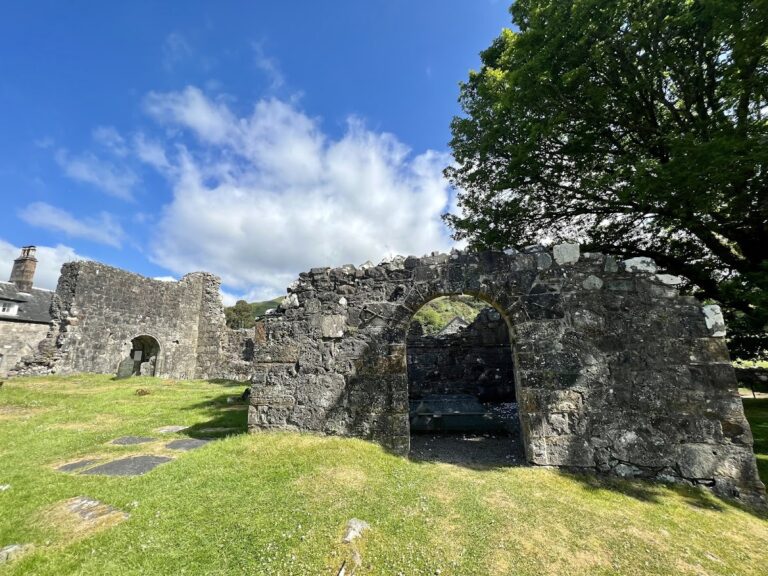
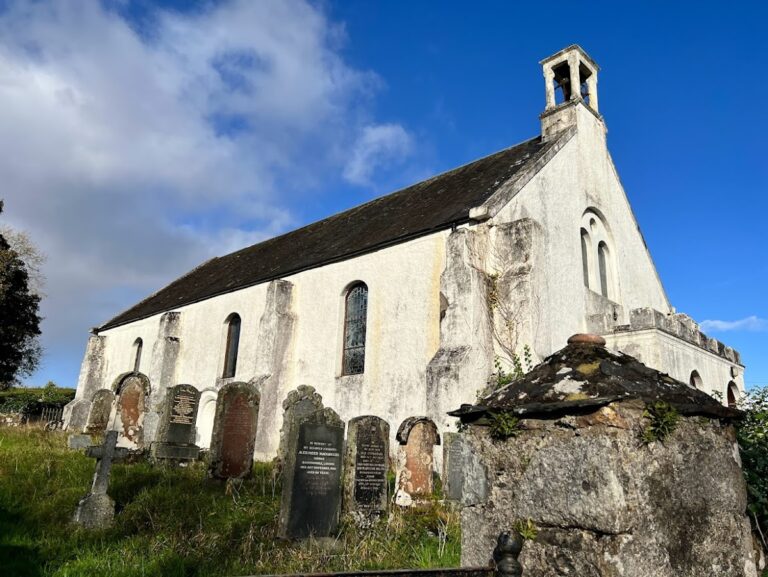
The ruined 13th-century private chapel stands about 150 metres south-west of the castle. Duncan MacDougall of Lorn built it with a timber roof, and the structure measures approximately 20 by 6 metres. Its finely worked stone includes lancet windows with dog-tooth carving, a repeated tooth-like medieval ornament, and broad internal arches that spread widely from the openings.
The chapel was already ruinous by 1740, when a burial aisle, an attached space used for burials, was added at its east end for the Campbells of Dunstaffnage and their families. The name Dunstaffnage combines the Gaelic element dun, meaning “fort,” with a Norse element meaning “headland of the staves.”