Torwoodlee Broch: An Iron Age Tower in the Scottish Borders
Site at a Glance
- Popularity
- Low
- Country
- United Kingdom
- Primary era
- Iron Age
- Eras represented
- Iron Age
- Civilizations
- Unclassified
- Site type
- Military
- Remains
- Tower
On this page7 sections
History
Torwoodlee Broch is a broch, a type of Iron Age Scottish tower built of stone without mortar, on a spur at Harrigalt Head near Galashiels, Scotland, United Kingdom. Its construction appears to date to around AD 100 or later, shortly after Roman forces withdrew from Scotland.
Earlier hillfort and construction
The broch was built on the site of an earlier hillfort, a defended enclosure on elevated ground. Torwoodlee is one of three surviving brochs identified in the Scottish Borders. Its place among fortified Iron Age settlements in the region has been interpreted as potentially helping people monitor movement through the surrounding valleys. The modern name comes from the place-name Torwoodlee, understood to mean a woodland clearing beside a rocky hill.
Dismantling and investigation
The broch was deliberately dismantled not long after it was built. Its destruction may have been connected with the Roman return to Scotland around AD 140 to 144, when Roman forces advanced toward the Antonine Wall, a Roman frontier barrier in Scotland. The connection is uncertain; one possibility is that a Roman expedition dismantled the tower in preparation for reoccupation.
James Curle cleared the broch in 1891, and Stuart Piggott carried out a systematic excavation in 1950.
Remains
Site setting and hillfort
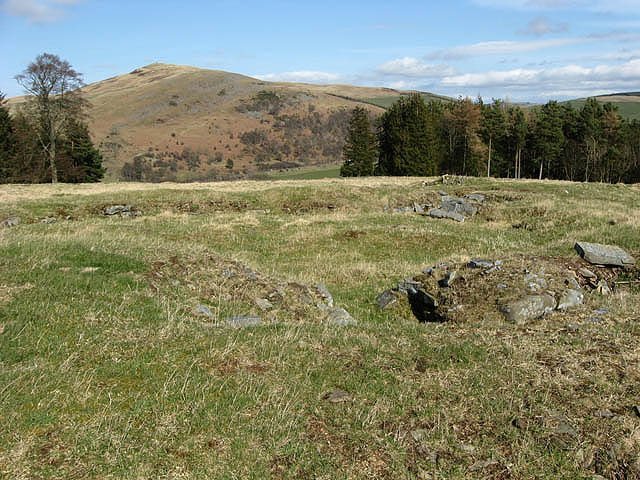
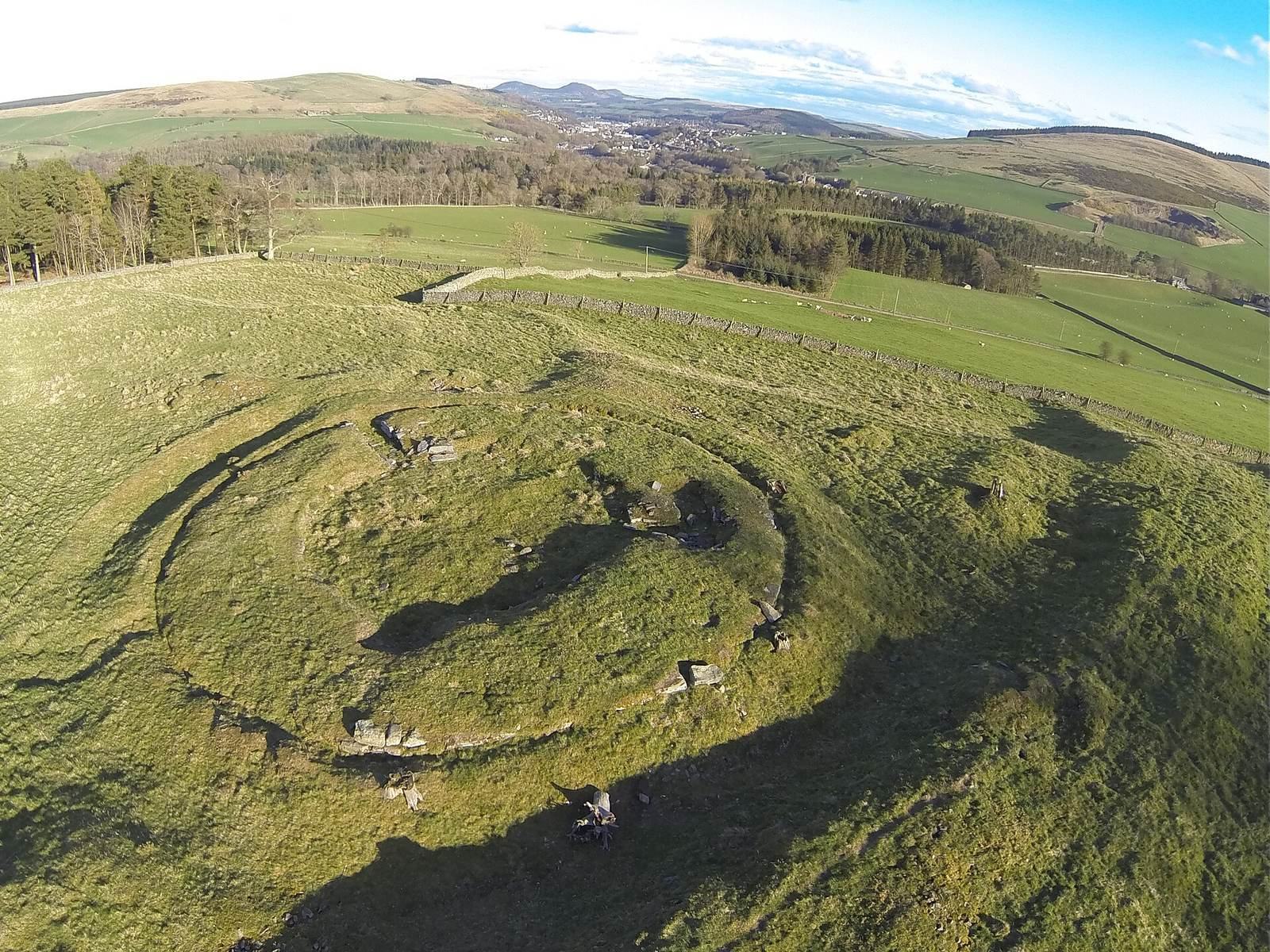
The site combines an irregular, oval hillfort with a circular drystone tower on its southwestern side. It occupies a spur at Harrigalt Head, roughly 300 metres high, within a loop of the Gala Water and about 3 kilometres west of Galashiels. Bow Castle Broch lies about 3 kilometres to the south. The hillfort measures approximately 137 by 136 metres, and its defensive banks are now barely recognizable. The broch partly overlies the hillfort’s defences and ditches that had been filled in.
Broch structure
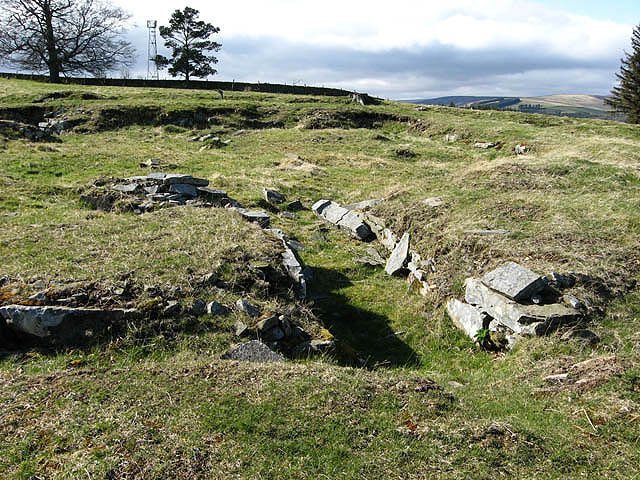
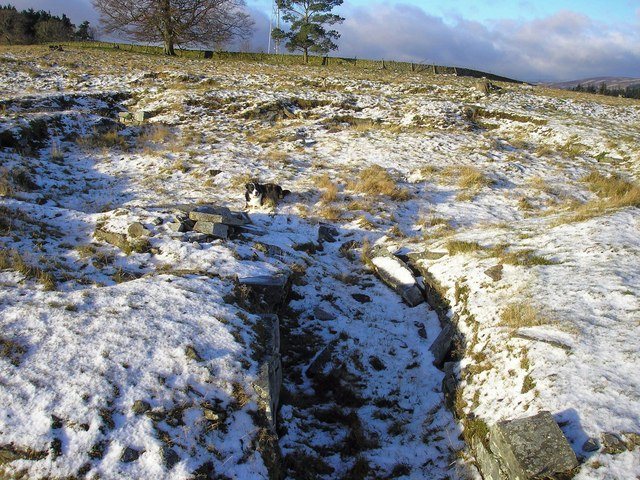
The tower measures about 23.2 metres across externally, with a central court roughly 12 metres wide. Its outer wall is about 5.2 metres thick at the base and consists of two concentric stone walls with a hollow space between them. Large local stones were laid without mortar. The wall thickness contains a stairway and a small chamber, while part of a guard chamber survives beside the entrance passage. A ledge in the stone-lined passage could hold a wooden door in place when barred. A separate wall and ditch enclosed the broch; the ditch was about 2.7 metres wide and 1.6 metres deep, and rubble from the tower’s dismantling filled it. The wall now stands less than a metre high, with collapsed masonry forming a low circular mound and foundations marking the tower’s footprint.
Finds
Roman pottery and glass came from the broch, including material found beneath its wall. A coin dating to the first century AD was recovered from inside the tower. The pottery and glass may have been loot from the nearby legionary fort at Newstead, associated with the Roman name Trimontium.