Baume Latrone Cave: A Decorated Upper Paleolithic Cave in France
Site at a Glance
- Popularity
- Medium
- Country
- France
- Primary era
- Stone Age
- Eras represented
- Stone Age
- Civilizations
- Unclassified
- Site type
- Civic
- Remains
- Rock Art
On this page6 sections
History
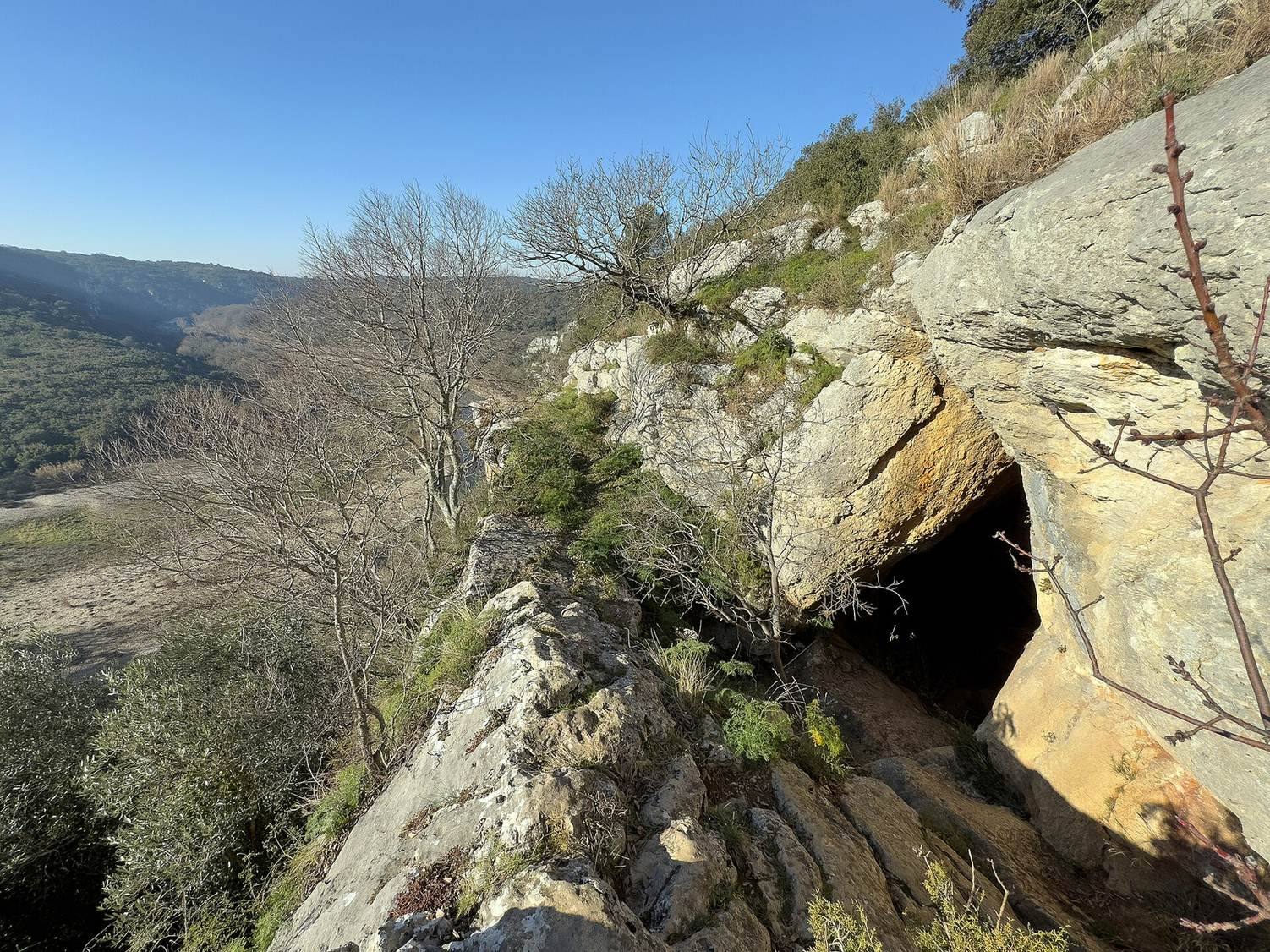
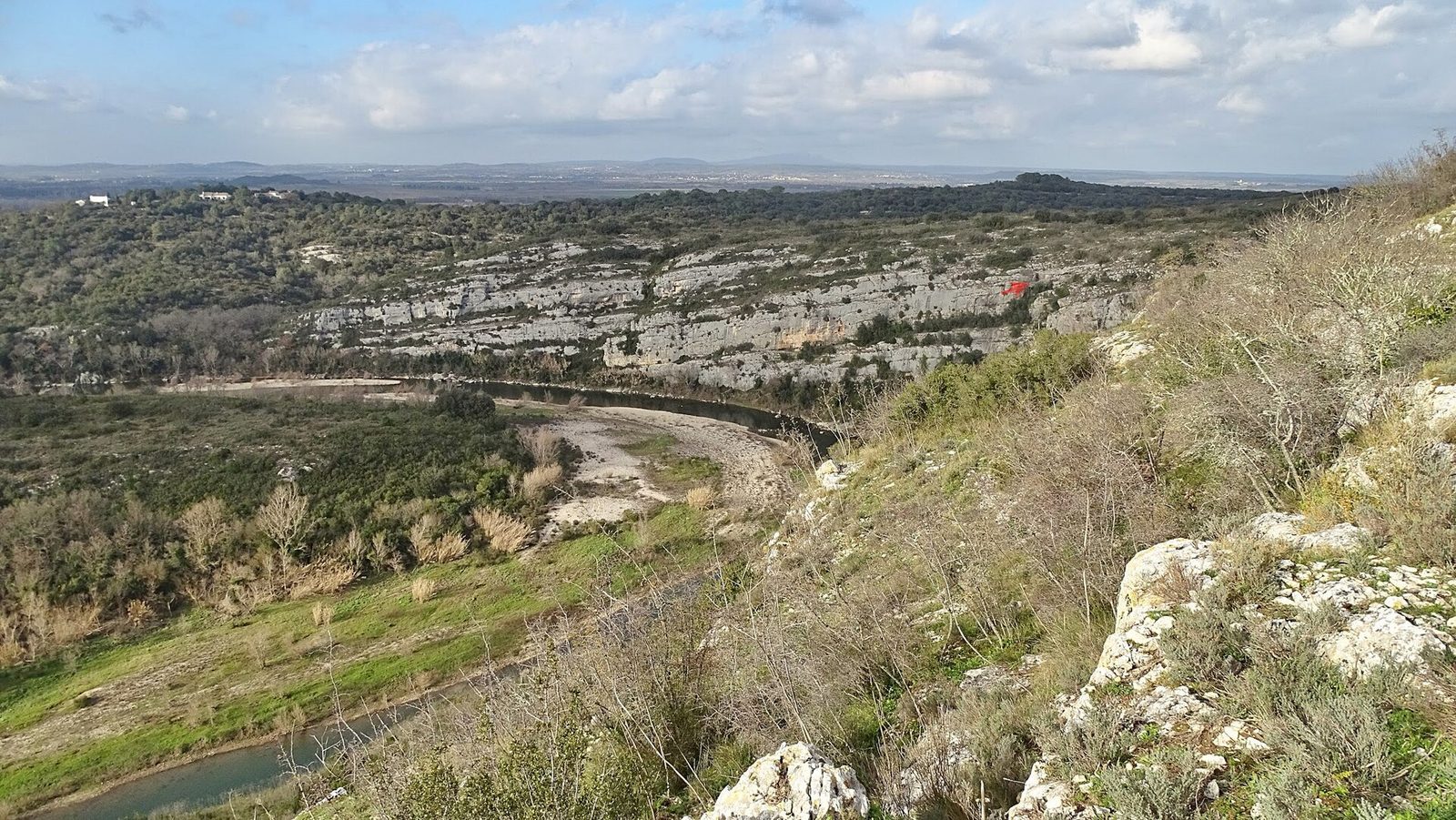
Baume Latrone Cave is a decorated cave in Sainte-Anastasie, France, in the Gardon Gorges. Its drawings belong to the Upper Paleolithic, the later part of the Old Stone Age, and are attributed to the Aurignacian, an archaeological tradition of that period. The cave’s art is considered among the oldest currently known in Europe, alongside the art of Chauvet Cave.
Early investigations and discovery
Archaeologists had long known of Baume Latrone. Excavations in its entrance porch in the late nineteenth century uncovered levels containing Neolithic material, from a later prehistoric period associated with farming and settled communities. In 1940, schoolchildren from Nîmes discovered drawings in a deep passage after an obstruction was cleared. Researchers subsequently examined the cave and its art.
Dating and interpretation
In 1941, Baume Latrone was classified as a French Historic Monument, a statutory heritage-protection designation. The drawings’ distinctive style made their age difficult to establish, and they were variously assigned to the Aurignacian, Gravettian, or Solutrean, traditions associated with the Upper Paleolithic.
A multidisciplinary study resumed in 2009 under French prehistorian Marc Azéma. It identified technical, stylistic, and thematic parallels with Aurignacian art at Chauvet Cave, supporting an Aurignacian attribution. Human occupation is placed at about 37,500 years before present. Charcoal collected at the foot of the drawings was dated in 2012 to 37,464 years before present on a calibrated timescale. This result supported the attribution, but dates the charcoal rather than the drawings themselves.
Remains
Baume Latrone has a known length of 1,118 metres, and its entrance is at an altitude of 94.7 metres. The Gardon is the cave’s associated watercourse. The drawings lie about 240 metres from the entrance, in a deep passage.
Animal drawings
The images include ten mammoths, a large feline, a bear, two ibex (wild mountain goats), two deer, and a bovine. Some mammoths are rendered as simple horseshoe-shaped outlines with a projection for the trunk; in another motif, the tusks extend to either side of the trunk. One scene has been interpreted as a feline attacking a group of mammoths. A figure once read as a horse is now considered probably a rhinoceros, based in part on comparisons between its ear and those of rhinoceros figures at Chauvet and Aldène caves. Artists drew by dragging two to four pigment-coated fingertips across the wall, making lines of different widths with brown, semi-liquid clay.
Engravings, finger marks, and handprints
The cave also contains engraved figures and finger marks made on soft wall surfaces without added pigment, as well as rough incisions. Five handprints were made by applying red clay to the wall.