Uniastate: A Frisian Noble Residence and Its Surviving Gateway
Site at a Glance
- Rating
- 4.3
- Popularity
- Very Low
- Country
- Netherlands
- Primary era
- Early Modern
- External website
- Open
- Eras represented
- Early Modern
- Civilizations
- Dutch, Habsburg, Holy Roman Empire
- Site type
- Domestic
- Remains
- Elite Residence
On this page7 sections
History
Uniastate is a former Frisian noble residence in Bears, Netherlands, held by Keimpe Unia by 1443. The estate belonged to a family whose members held local offices and led political factions in Friesland.
The Unia family and late-medieval conflict
Keimpe Unia was a nobleman and a leader of the Schieringers, one of two rival political factions in late-medieval Friesland. The Vetkopers of Leeuwarden tried unsuccessfully to capture his residence. His son Worp inherited Uniastate and also became a Schieringer leader and grietman, a local administrative official in Friesland. The Unias were a family of grietmen and other officers who owned several Frisian noble residences.
Around 1515, the Arumer Zwarte Hoop, a Frisian fighting group, burned Uniastate, possibly under the command of the rebel leader and military commander Grutte Pier. The residence was rebuilt between 1515 and 1520.
Later owners and demolition
Around 1530, Uniastate belonged to Tjerck van Unia and later passed to his son Jochem. Jochem and his wife, Trijn Epesdocher van Adama, are commemorated by inscriptions on bells at the Mariakerk in Beers. In 1616, the estate passed to Tjaerd Tyara, who commissioned the gateway that survives today. By 1700, the property was known as Nyenhuis or Nieuw Huistrastate; around 1705, Tiaerd Cathius lived there.
In 1756, Hobbe van Aylva, a general and governor at Maastricht, ordered the residence demolished, but the gateway was spared. Building materials were reused for a farm erected on the same site, and the Tyara–Buygers carved stone was placed above its doorway. In 1786, the farm belonged to jonker Hans Willem van Aylva, a Dutch honorific for a man of noble status who served as grietman of Het Bildt. The judge Meinte Sjoerds Meynsma occupied it. The farm was sold for demolition in 1879, while the gateway survived.
The gateway was restored in 1960, and Uniastate is designated a Dutch national monument. The site now functions as a museum.
Remains
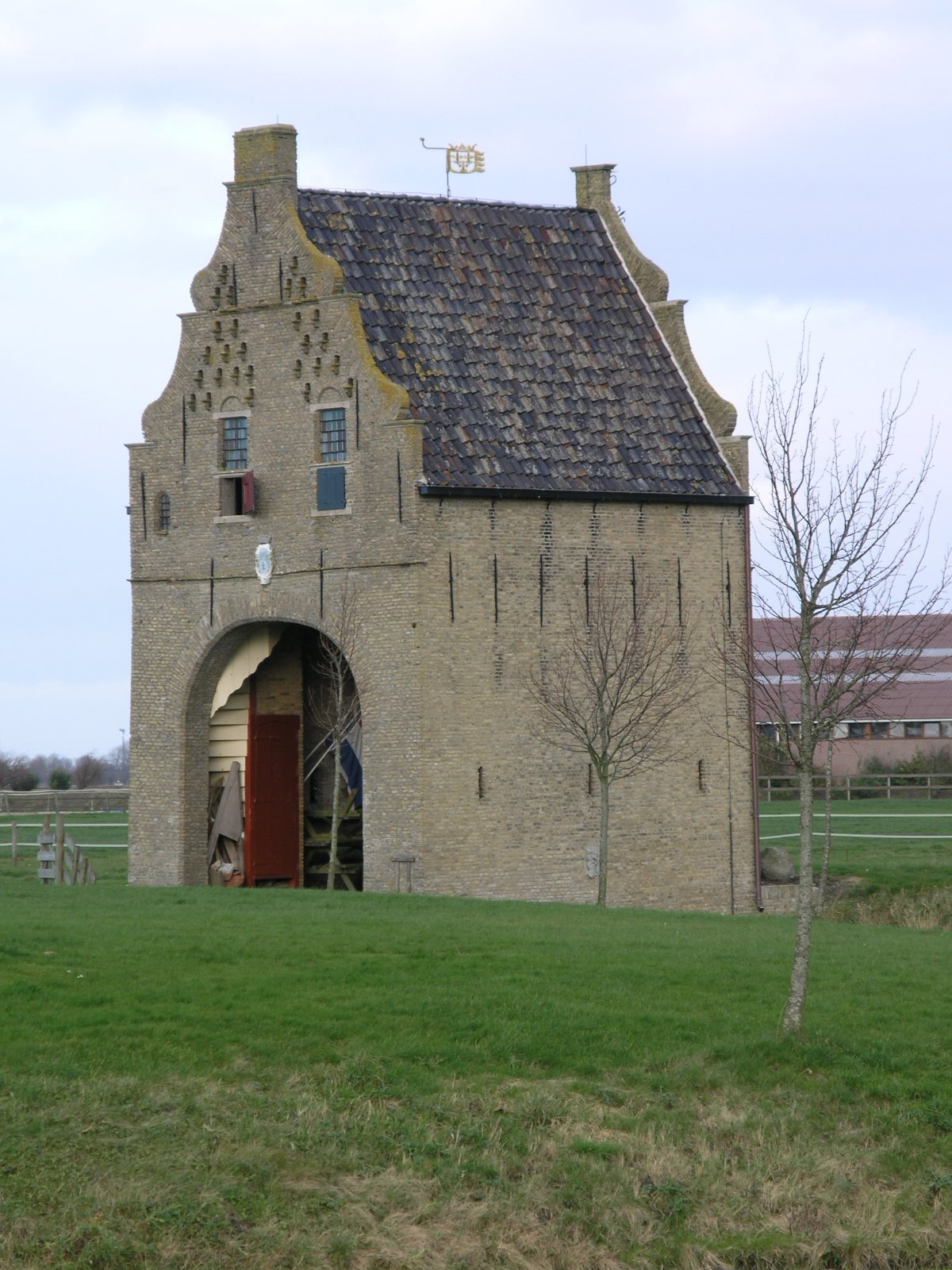
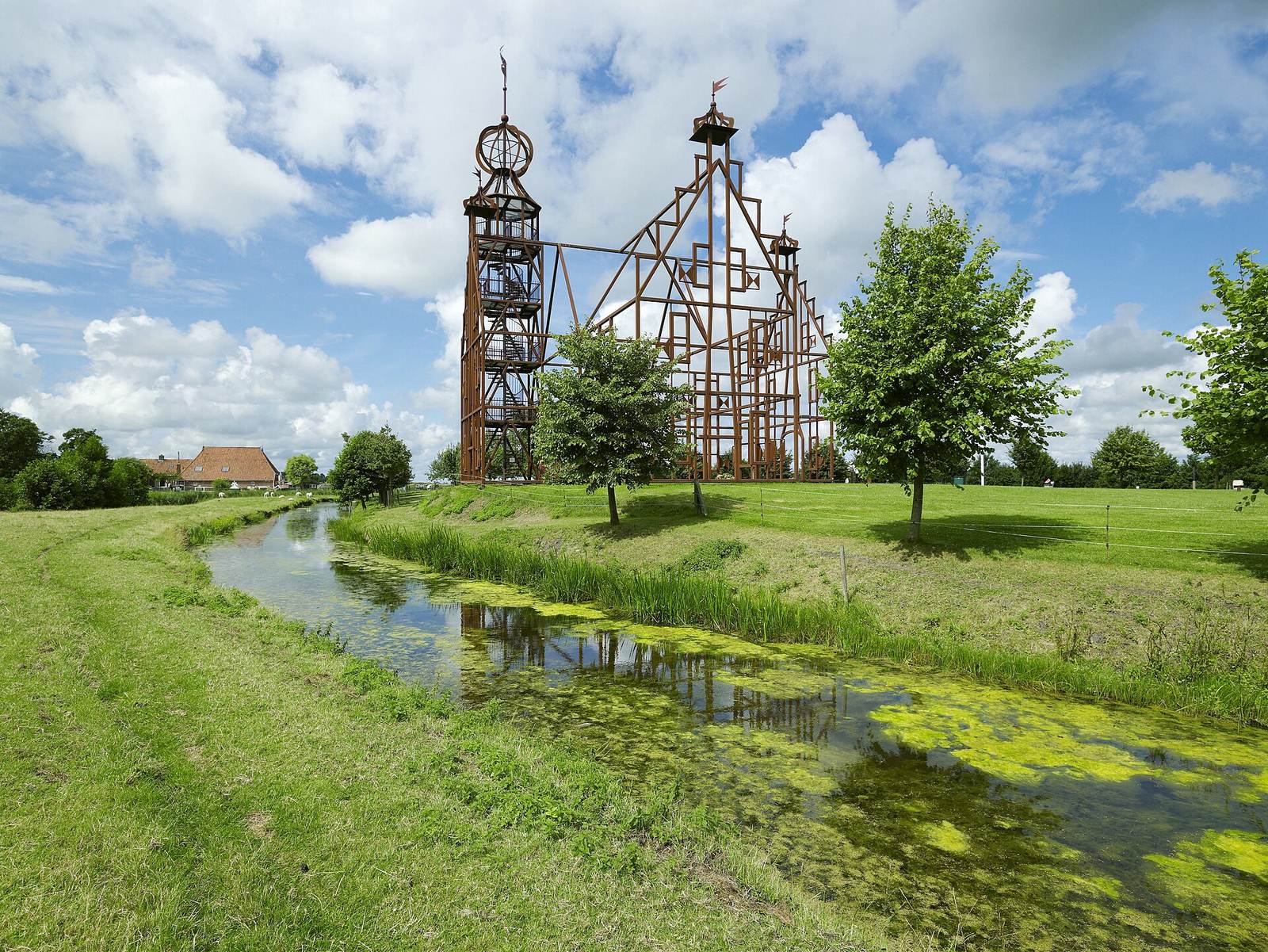
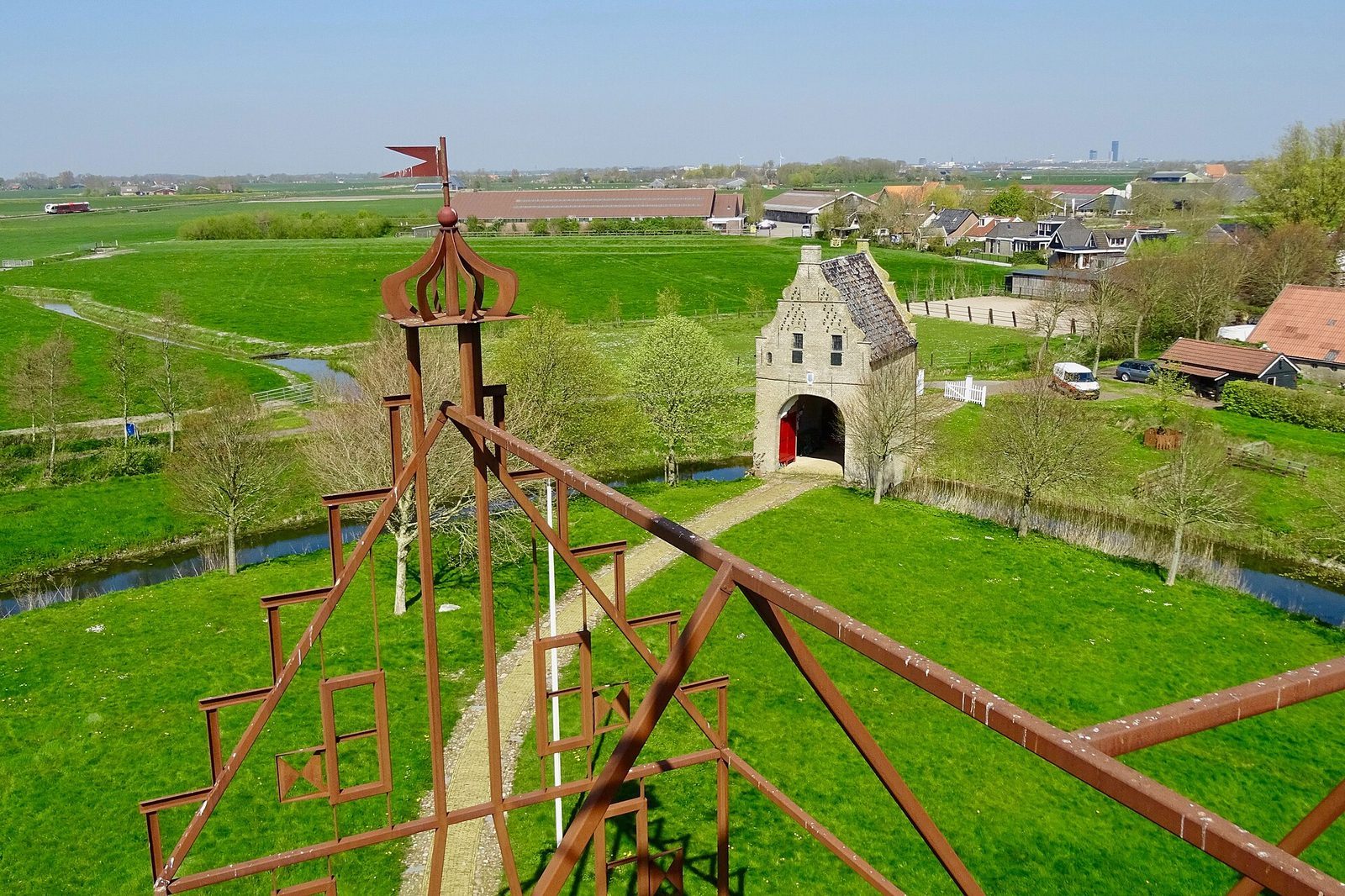
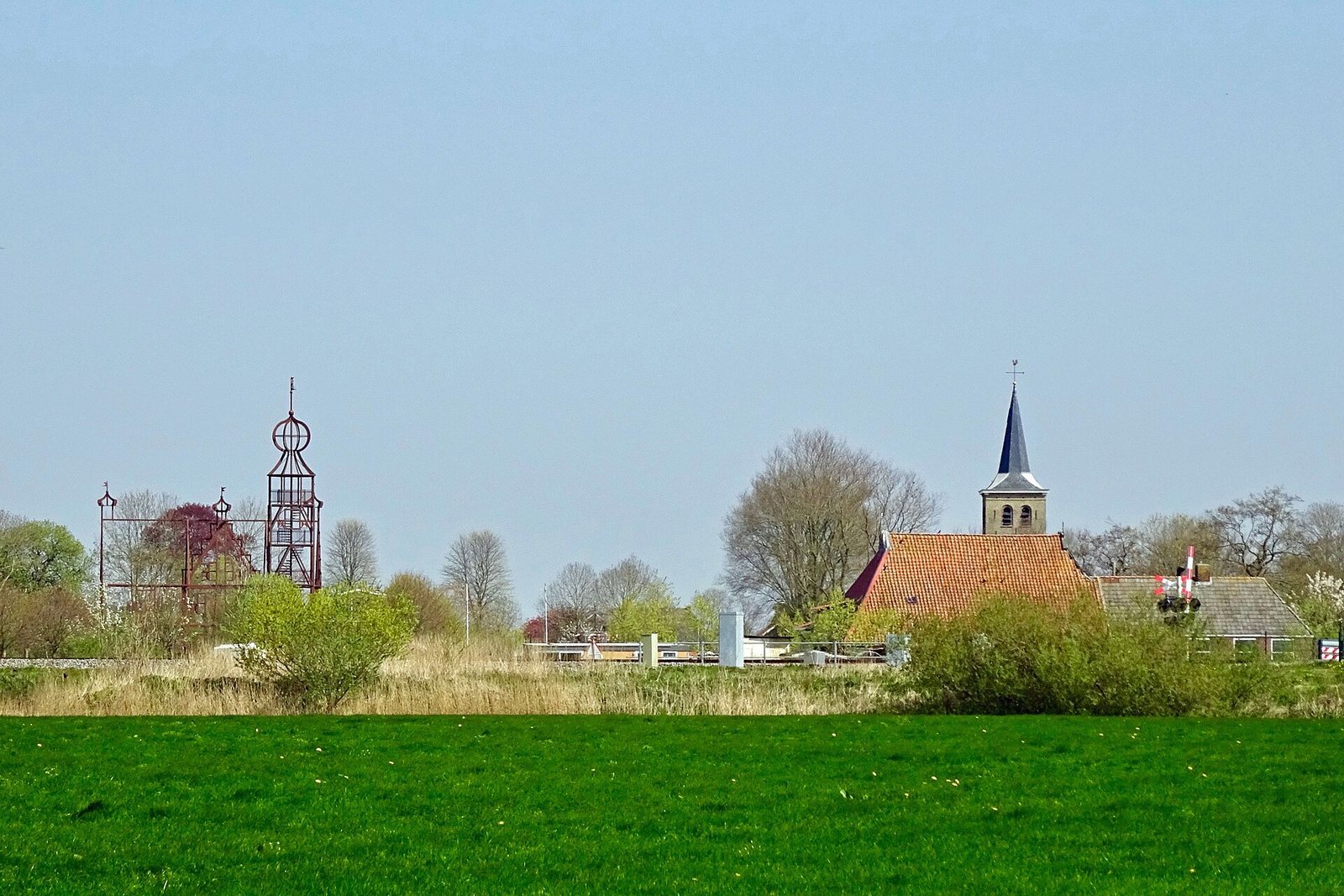
The former estate lies on the western side of the village and has a roughly rectangular plan surrounded by a double moat. The gateway stands at the northeastern corner, on a dam in the old moat. A full-scale steel replica of the residence demolished in 1756 occupies the southeastern part of the grounds. Frisian artist Beb Mulder designed the replica in 1998.
The gateway and its features
Exterior
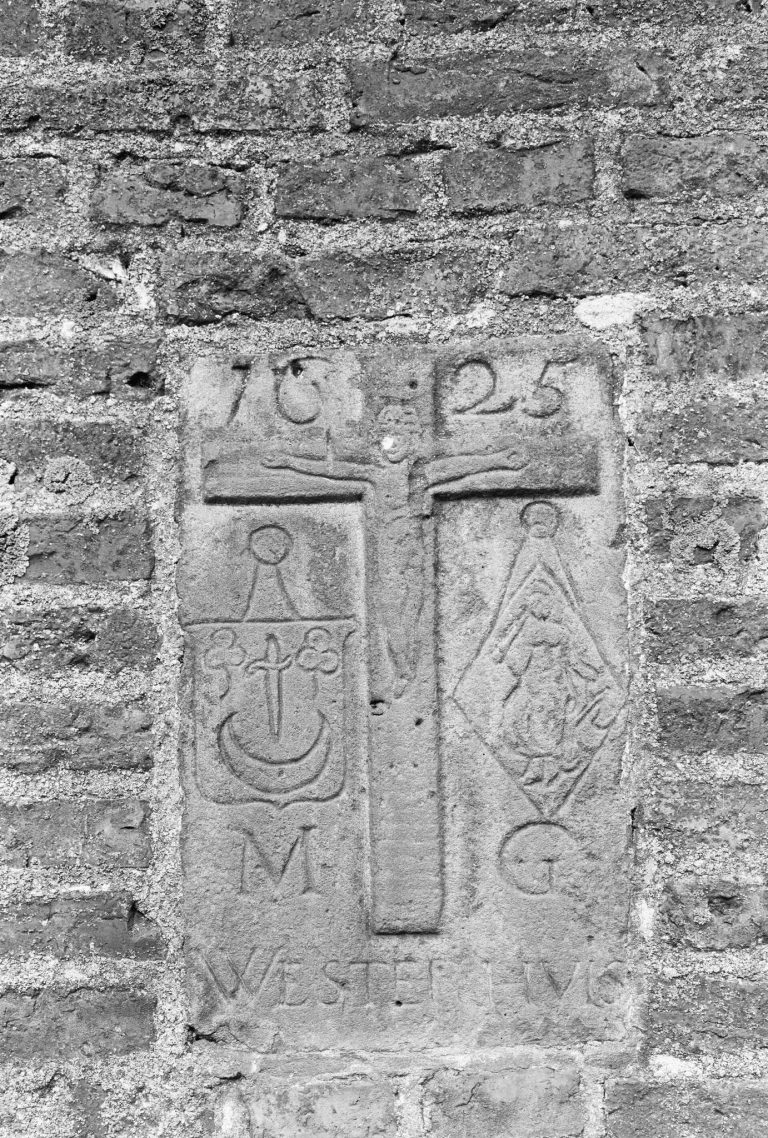
Built from small yellow bricks, the gateway has a Northern Mannerist design, a regional form of Mannerist architecture known for elaborate ornament. Its roof has a triangular end at each side, with a weather vane bearing the Meynsma coat of arms above it. Both ends have decorative scroll-shaped outlines. On the front, a carved stone bears the combined arms of Tjaerd Tyara and his wife, Ydt Buygers. Two windows sit above the stone, and two doors close the passage through the gateway.
Rear and pigeon loft
The rear end of the gateway contains 27 openings for pigeons, each with a small perch stone. Below them are two shuttered windows and one barred window. A carved stone bearing the Meynsma arms sits just above the passage. The gateway also served as a pigeon house, and stairs still lead to its loft. Some ornaments from the former residence remain inside, along with a table, chairs, and a hearth.