Sa Coveccada Dolmen: A Prehistoric Collective Tomb in Sardinia
Site at a Glance
- Popularity
- Medium
- Country
- Italy
- Primary era
- Stone Age
- Eras represented
- Stone Age
- Civilizations
- Unclassified
- Site type
- Burial
- Remains
- Tomb
On this page7 sections
History
Prehistoric funerary development
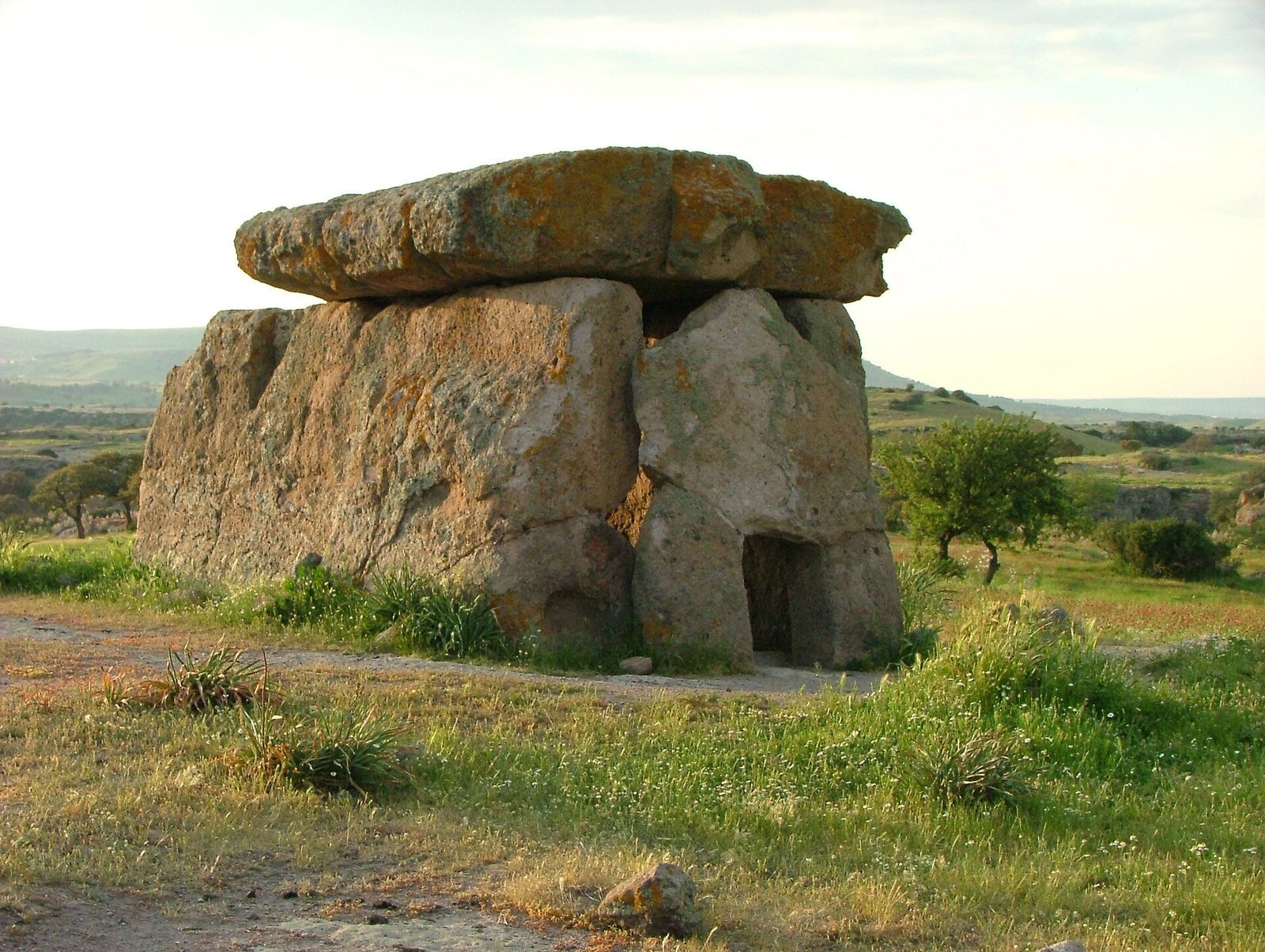
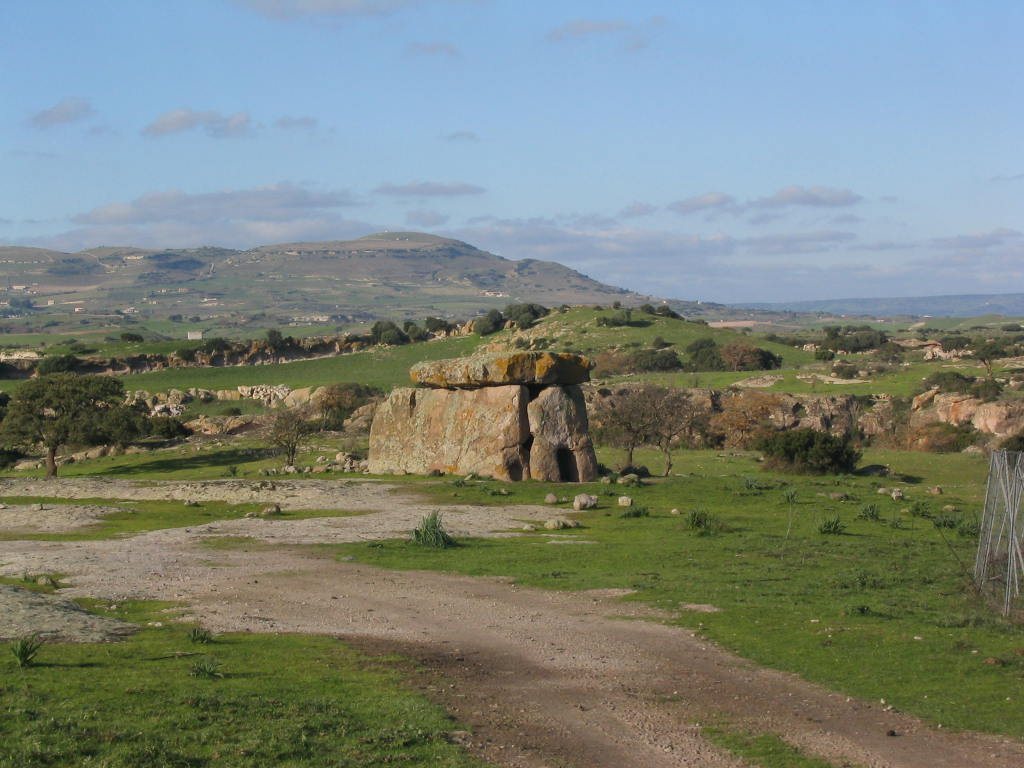
The Sa Coveccada Dolmen is a prehistoric collective tomb in Mores, Sardinia, Italy, on a broad plateau of volcanic rock. Its construction date is uncertain: comparisons with other monuments and a small number of pottery finds do not establish a precise chronology. It belongs to a gradual shift from underground domus de janas, or rock-cut tombs, to above-ground burial structures such as dolmens and covered-gallery tombs. Later Sardinian tombs of giants developed with features including a front stele and an exedra, a semicircular forecourt.
The dolmen served as a collective burial place. The dead were placed in the chamber after their flesh had been removed from their bones. Its size and place in the development of Sardinian prehistoric funerary architecture make it an important monument; it is the largest dolmen in Sardinia. Its name is understood to mean what is covered.
Modern study and conservation
In 1995, researchers Edoardo Proverbio and Pino Calledda studied the monument’s astronomical orientation. Later structural monitoring identified an imbalance in the structure. In 2011, a multidisciplinary conservation project, overseen by the Italian Ministry for Cultural Heritage and Activities, set out to improve its structural safety and the archaeological area. The project involved archaeological, architectural, conservation, and earth-science specialists and included the acquisition of about 12 hectares of surrounding land.
On 23 March 2021, Sa Coveccada joined Italy’s UNESCO Tentative List as part of a proposed serial nomination concerning prehistoric Sardinia’s funerary traditions and domus de janas. A Tentative List identifies places proposed for possible World Heritage nomination but is not itself a World Heritage inscription. The proposal initially included 35 monuments and was later revised. At the World Heritage Committee’s July 2025 session, Sa Coveccada was not among the sites selected for inscription.
Remains
Megalithic remains
Burial chamber
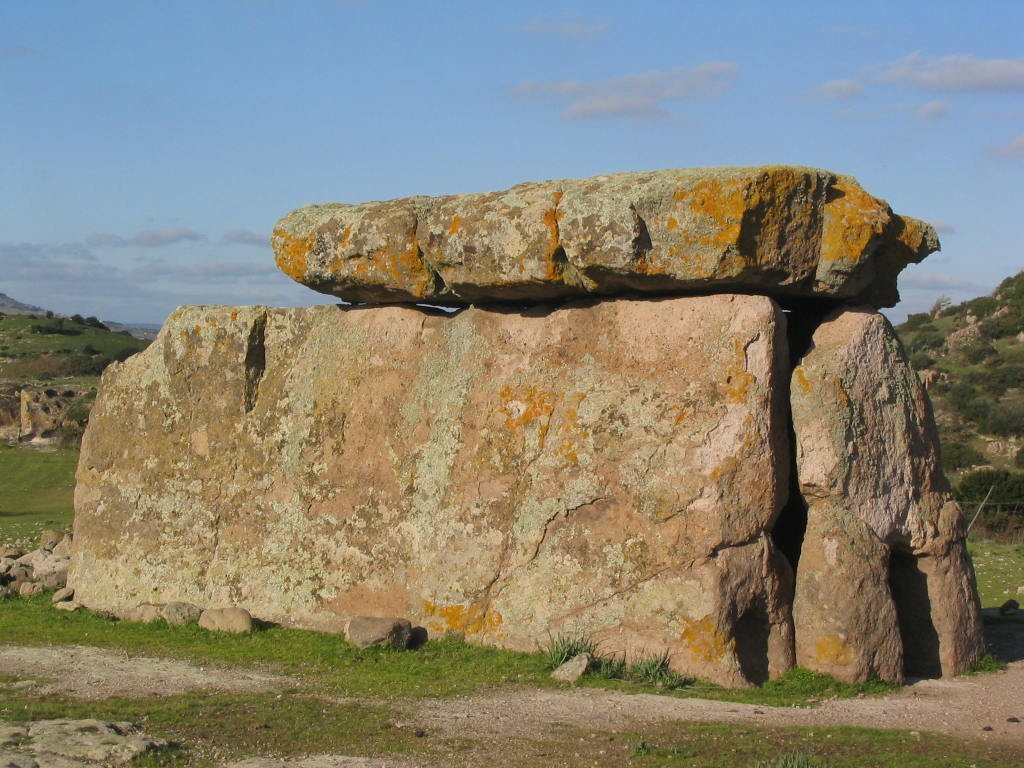
The rectangular dolmen is made from gray-pink tuffaceous trachyte, a volcanic rock with tuff-like characteristics. Three large, carefully squared upright stones form its sides and front, set into channels cut in the rocky ground. The structure measures about 5 by 2.2 metres in plan and stands 2.7 metres high. Its covering slab, resting about 2.1 metres above ground, measures 6 by 3 by 0.6 metres and weighs about 18 tonnes.
An opening about 0.5 metres square in the front stone leads into the chamber, which measures 4.18 by 1.14 metres. Just inside the entrance, a shallow niche more than a metre long is cut into the left wall; it appears to have held grave goods and offerings. The dolmen’s azimuth is 123.8 degrees, corresponding to the winter-solstice sunrise.
Nearby menhir
About 100 metres from the dolmen lies a fallen menhir, or large standing stone, broken into several sections. Made from local tuffaceous trachyte and shaped by repeated hammer blows, it has a rectangular cross-section measuring 125 by 86 centimetres. It originally stood 2.4 metres high.