Cemetery of Kings: Geneva’s Historic Burial Ground
Site at a Glance
- Popularity
- High
- Country
- Switzerland
- Primary era
- Modern
- Eras represented
- Modern
- Civilizations
- Swiss
- Site type
- Burial
- Remains
- Necropolis
On this page10 sections
History
The Cemetery of Kings, officially known as Cimetière de Plainpalais, is a burial ground beside Rue des Rois in Geneva, Switzerland. Established outside the city walls in 1482 for plague victims, it grew beside a hospital founded in 1469 to address recurring epidemics. The church of Notre-Dame de Miséricorde was built there in 1487 for the hospital and cemetery and remained in use until 1776.
Plague burials and the Reformation
The Swiss Reformation, the sixteenth-century Protestant movement in Switzerland, brought the closure of most parish-church burial grounds in 1536. The Cemetery of Kings then became Geneva’s principal burial ground and its only public cemetery. Burial there was limited to Protestants until 1876.
In keeping with Calvinist practice, the Protestant tradition shaped by John Calvin, early graves were left without headstones, as Calvin himself had wished. The cemetery’s familiar name comes from Rue des Rois, not from royal burials. The street’s “king” was the winning marksman in an annual competition at a nearby training ground. The contest’s participants used arquebuses, early firearms, and its title was awarded from 1509 to 1847.
Expansion and changing civic use
The cemetery’s official name refers to Plainpalais, the surrounding district. Plainpalais was a separate municipality established in 1798 and incorporated into Geneva in 1931. France took Geneva in 1798, and from 1802 Catholic residents had a separate cemetery. When it closed in 1830, its human remains were transferred to a designated part of the Cemetery of Kings.
The cemetery expanded in stages around 1820, 1854, and 1883. It remained unenclosed until 1850, with cattle grazing among the graves. Geneva took ownership in 1869, after which the General Hospital managed the grounds.
Restricted burial and civic commemoration
A 1876 law prohibited burial grounds restricted by religious denomination. Geneva’s Saint-Georges cemetery opened in 1880 for burials regardless of faith, and new rules for the Cemetery of Kings followed in 1883. Ordinary burials and new family graves ended; plots were reserved for people holding a cemetery concession, an authorization to use a grave. The higher price of a concession here compared with other cemeteries also contributed to fewer burials. The rules were renewed in 1958.
Today, public officials and distinguished people whose lives and work benefited Geneva may apply for a concession through the city’s Administrative Council, its executive authority. The cemetery thus serves as a civic pantheon, a burial place honoring distinguished people, including some from abroad. Women account for nearly a third of its graves, partly because older family plots remain.
Restrictions came under public debate over Grisélidis Réal, a Swiss writer, artist, and advocate for sex workers’ rights. Her request to be buried there, expressed in her will, was approved four years after her death in 2005; a headstone followed seven years later. The decision clarified the city’s burial policy and reflected a change in its approach to contemporary culture.
A park-like cemetery
As burials declined, the grounds took on an increasingly park-like character, reinforced by improvements around 1945. A funeral centre with a chapel and mortuary building has operated there since 1956. The present mortuary was completed in 1955 to the design of architect Robert R. Barro, after city architect Frédéric Gampert withdrew from the project following criticism.
Remains
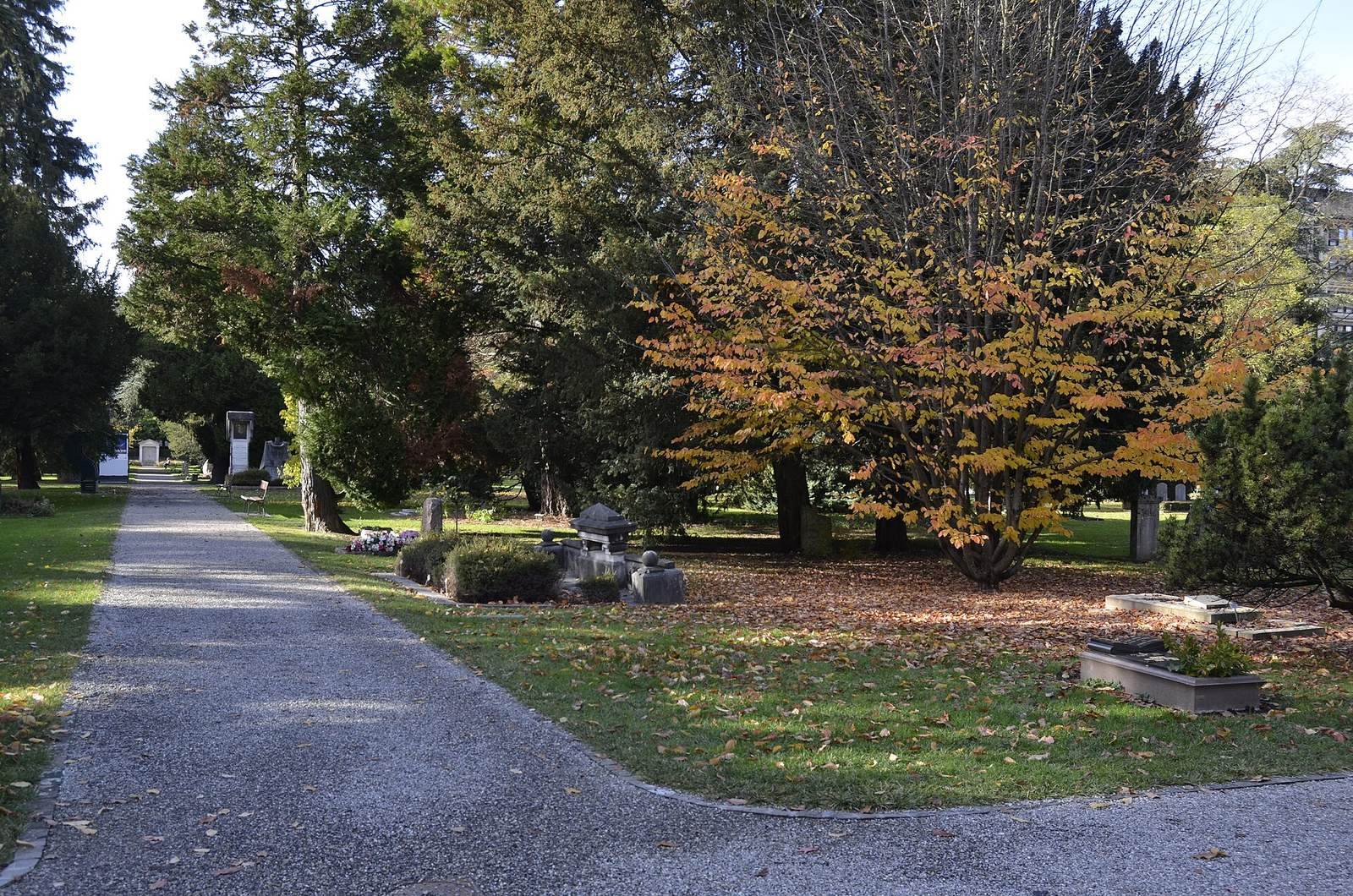
The cemetery covers about 28,000 square metres, or 2.8 hectares, and contains more than 350 graves. Its main entrance is on Rue des Rois, and a central aisle lies within the grounds.
Graves and memorials
Calvin’s grave and nearby burials
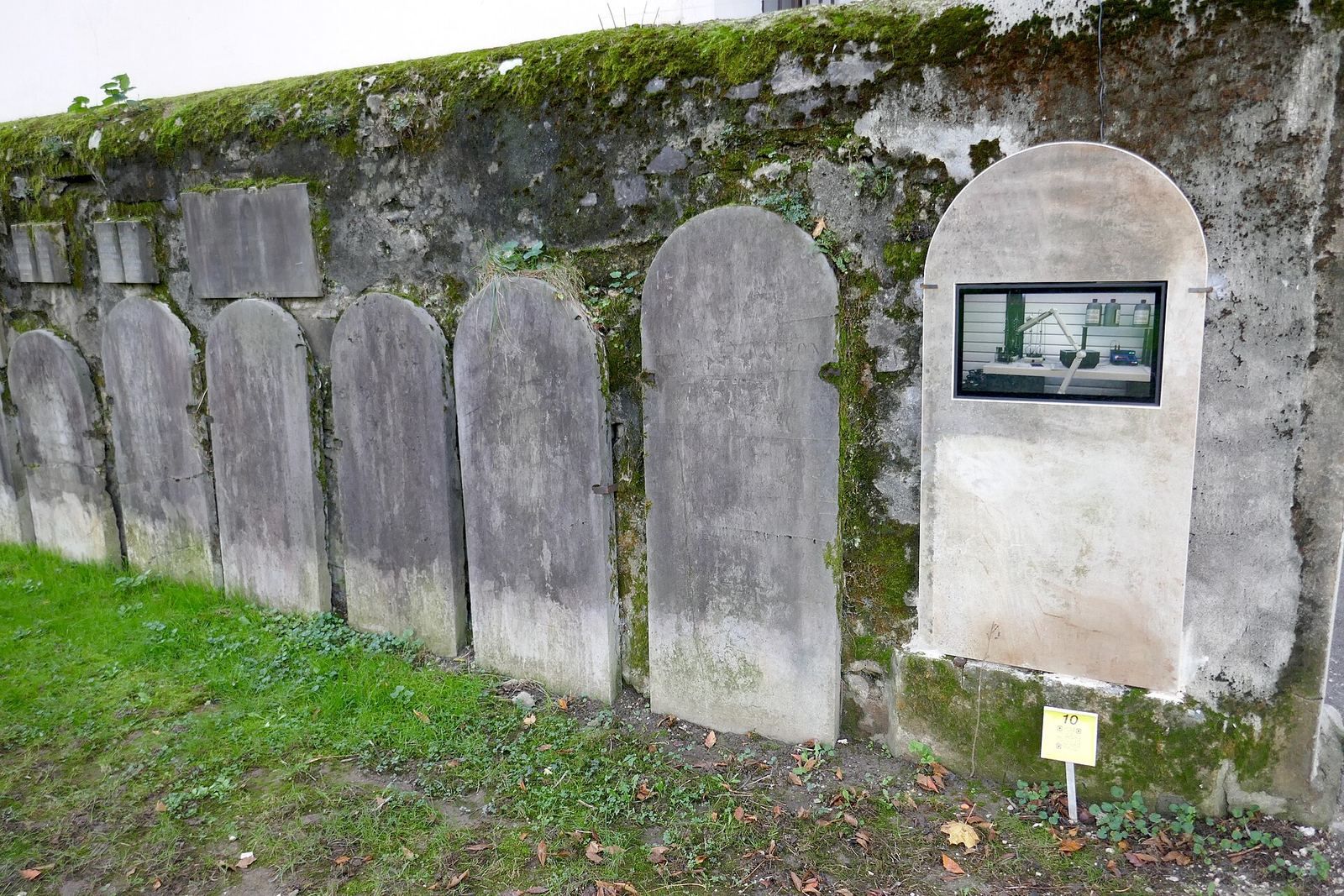
A marked grave traditionally identified as John Calvin’s was reconstructed during the nineteenth century. A headstone was erected in 1835 to mark the 300th anniversary of the Swiss Reformation, though the precise location of Calvin’s remains is unknown. Nearby graves include those of Sophie Dostoïevskaïa, daughter of Fyodor and Anna Dostoïevskaïa; Argentine writer Jorge Luis Borges; Grisélidis Réal; actor François Simon; music educator Émile Jaques-Dalcroze; and politician James Fazy, founder of Geneva’s Radical Party. Also buried nearby is Léon Nicole, who presided over Geneva’s Council of State.
Other graves and memorials
The grave of Swiss general Guillaume Henri Dufour is shared with his wife, Susanne. A sculpture by Genevan artist Carl Angst is associated with the grave of Adrien Lachenal, a former President of the Swiss Confederation. A memorial in the cemetery honors Austrian writer Robert Musil, who died in Geneva.
Trees
Between 60 and 80 tree species grow in the cemetery. A large evergreen holm oak at the Rue des Rois entrance is associated with eternal life. A weeping beech hangs over the grave of physician and Geneva state councillor Alfred Vincent; a handkerchief tree evokes grief, while cedar roots have unsettled a stone cross. A flowering sophora draws bees, and a pencil cedar was planted by Caran d’Ache, a Swiss stationery company, for its wood’s usefulness to the local pencil industry. Botanist Edmond Boissier brought a Spanish fir in memory of his wife, who died during a journey. Planting a tree beside a relative’s grave was once customary but is no longer allowed.