Certosa di San Giacomo: Capri’s Historic Carthusian Monastery
Site at a Glance
- Popularity
- Medium
- Country
- Italy
- Primary era
- Medieval
- Eras represented
- Medieval, Early Modern
- Civilizations
- Kingdom of Naples, Spanish
- Site type
- Religious
- Remains
- Monastery
On this page12 sections
History
Foundation and Carthusian community
Certosa di San Giacomo is Capri’s oldest monastery, founded in 1371 on the island of Capri, Italy. Its original plan followed a late-Romanesque tradition characteristic of buildings on Capri at the time. The Carthusians are a Catholic monastic order whose way of life combines periods of individual solitude with communal worship and life.
Count Giacomo Arcucci, secretary to Queen Joan I of Naples, initiated the monastery on land donated by the queen. Arcucci joined the community as a monk in 1386. Joan granted the monastery privileges that the monks maintained through the political upheavals affecting the Kingdom of Naples from the fourteenth to the sixteenth century.
Raids, rebuilding, and local tensions
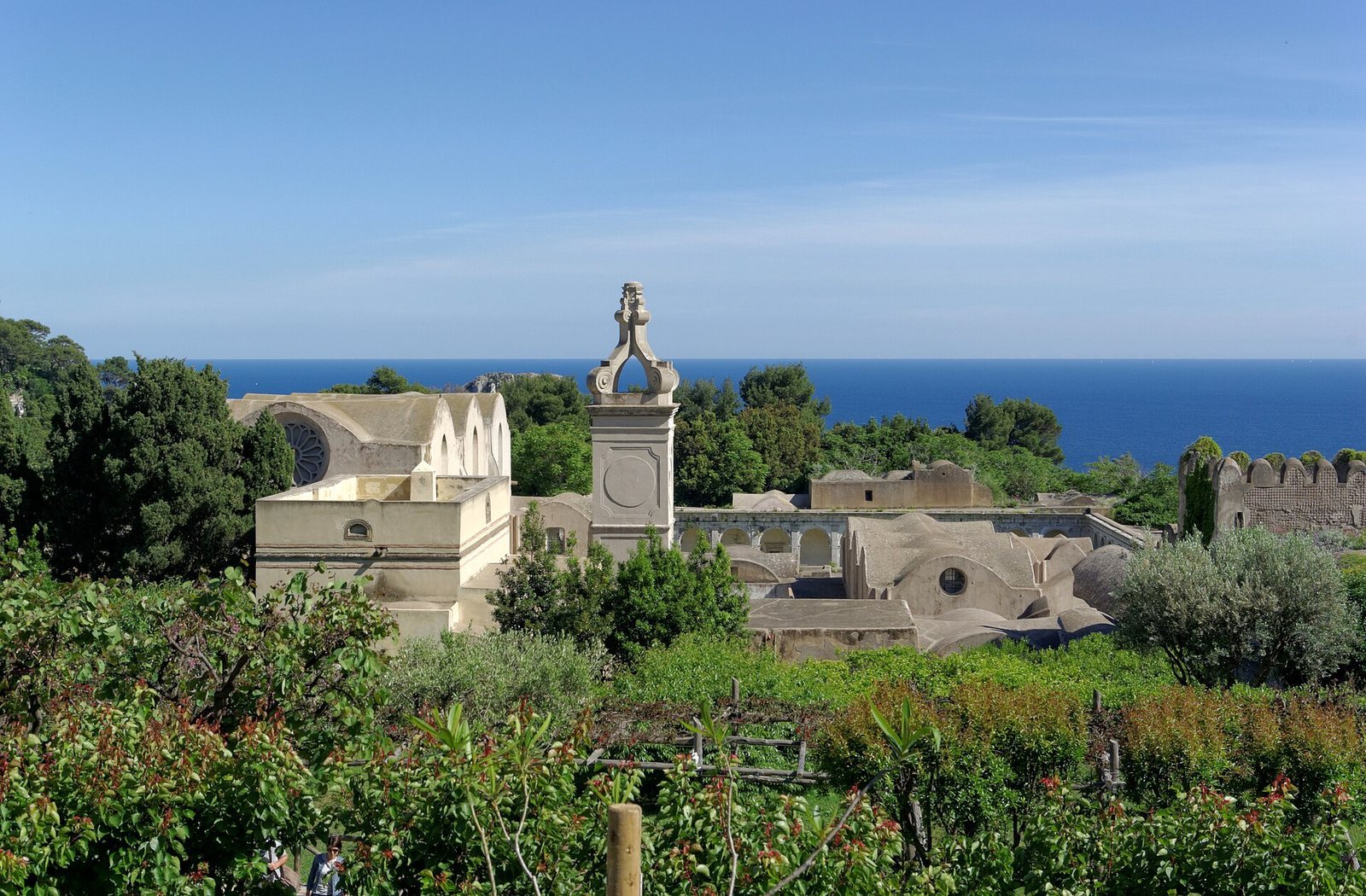
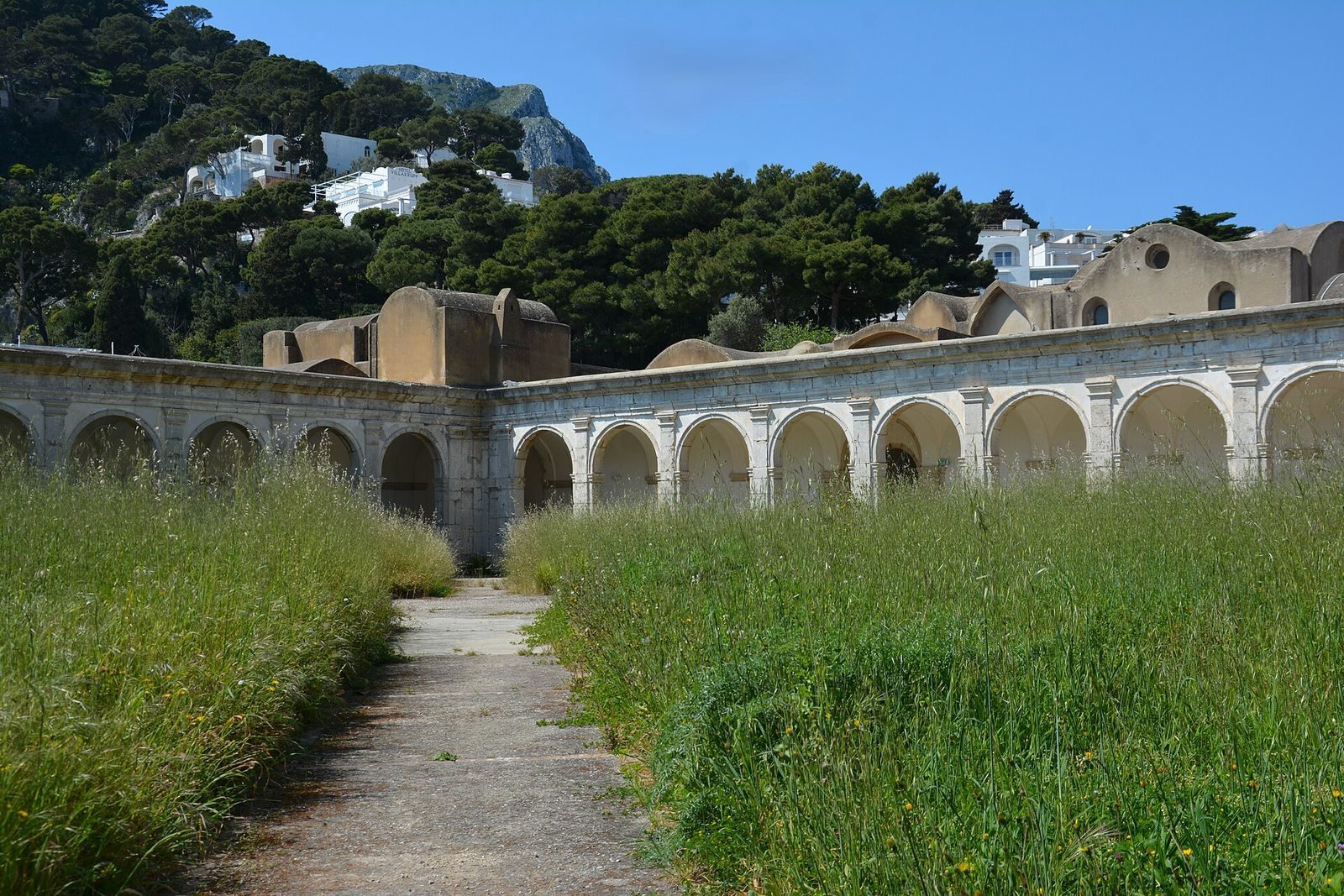
The monastery endured pirate raids, looting, and destruction affecting Capri and the Amalfi Coast, especially during the first half of the sixteenth century. In 1553 it was rebuilt and fortified, and a new cloister, a covered walk around an open courtyard, and a watchtower were added. The tower later collapsed.
Relations between the monks and islanders were often strained because the monastery held land and rights to graze animals and hunt. During the plague on Capri in 1656, the monks closed themselves inside the complex. Islanders retaliated by throwing the bodies of plague victims over its walls.
Closure and changing uses
In 1808, Joachim Murat, a French military commander who became king of Naples, took Capri from the English. The monks’ property was confiscated and sold, and the monastery closed. Its buildings served as a barracks from 1815, later became a hospice, and between 1868 and 1898 housed an institution for military personnel and anarchists sent there for punishment.
Religious return and museum
In 1936, Lateran canons, members of a Catholic clerical community who live under a shared rule, returned the complex to religious use and opened a school. They left during the Second World War, after which the buildings deteriorated. A museum devoted to German painter Karl Wilhelm Diefenbach was established there in the mid-1970s, and the complex also continued to serve as a school. Large-scale restoration began in the early 2000s.
The National Archaeological Museum of Capri opened in the monastery in 2024. Additional galleries opened in May 2026, broadening the museum’s account of the island’s history.
Remains
Plan and construction
The late-Romanesque plan divides the complex into three principal zones: the pharmacy and the women’s section of the church, the monastic buildings, and the guest quarters. Its traditional organization also separated communal spaces, the monks’ enclosed quarters, service areas, and rooms for guests.
Cloisters and surviving artwork
Great Cloister
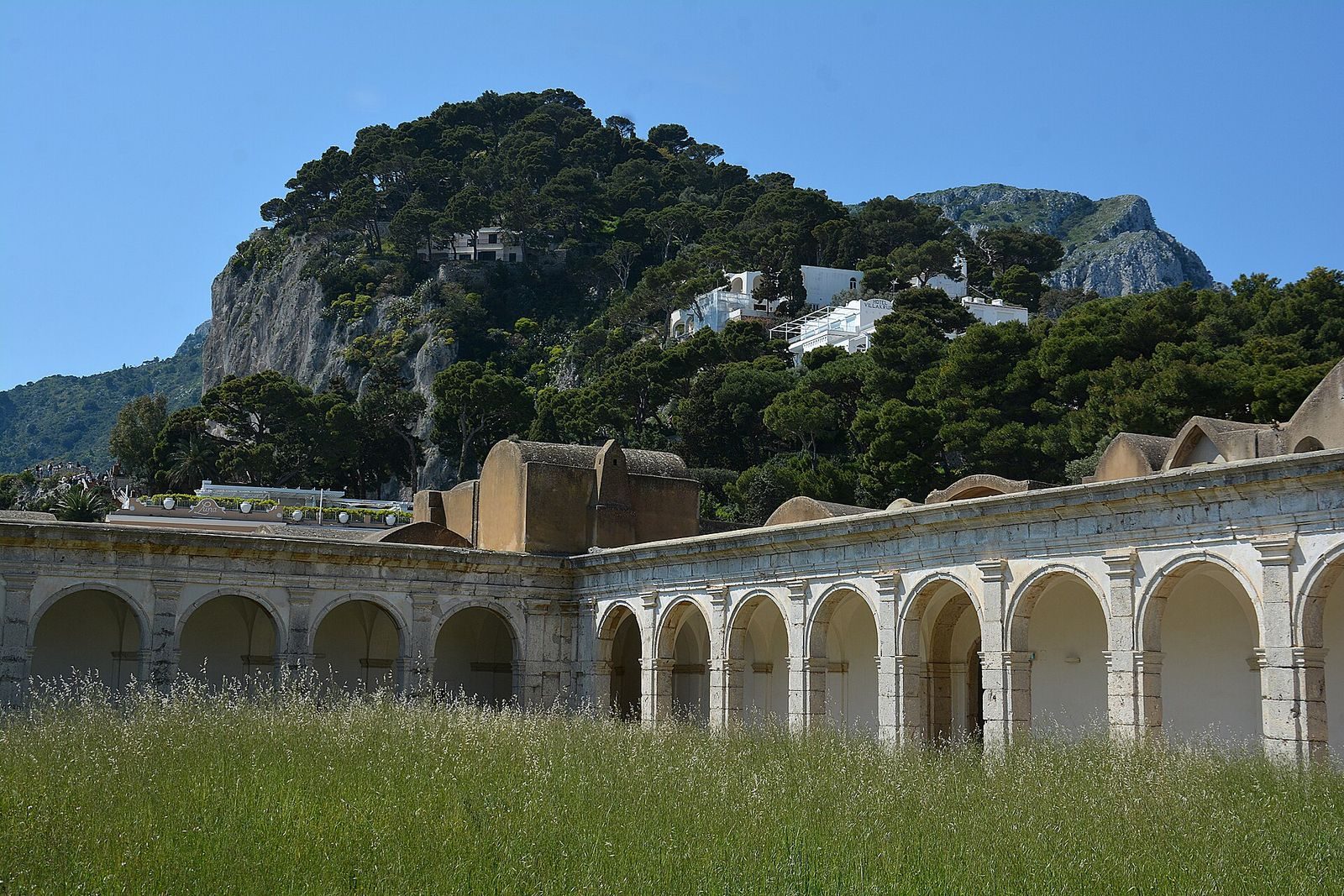
The Great Cloister has a late-Renaissance design and dates to the sixteenth century.
Small Cloister
The Small Cloister contains marble columns from the Roman period.
Fourteenth-century fresco
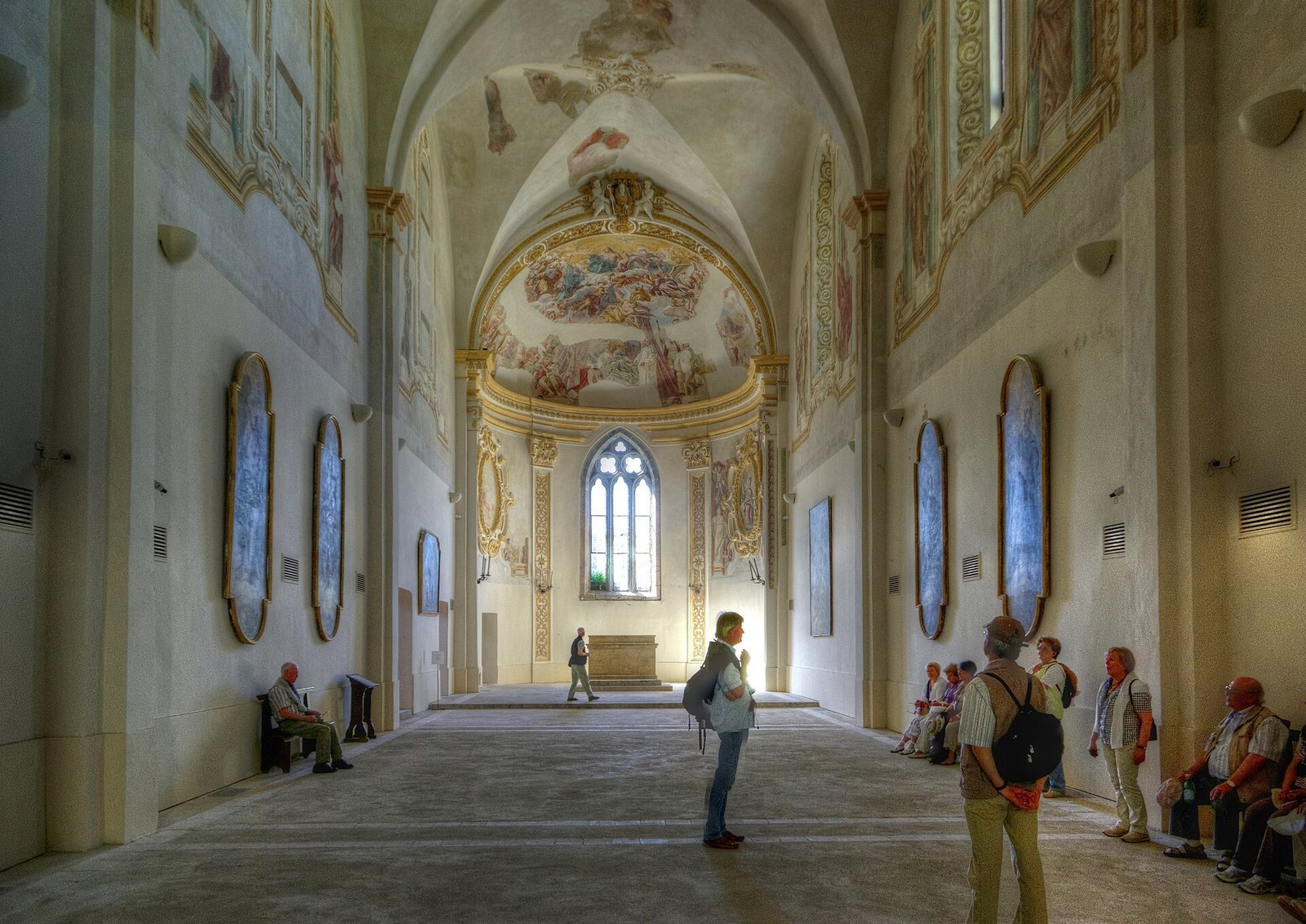
A fresco, a painting made on wet plaster, by the Florentine painter Niccolò di Tommaso dates to the fourteenth century and survives at the monastery.
Museum galleries and finds
The museum’s initial installation occupied eight rooms and displayed about 120 finds, including marble sculptures, frescoes, ceramic and silver vessels, architectural elements, and objects from imperial villas and other archaeological settings in Campania. The opening exhibition focused on Capri under Augustus and Tiberius, presenting the island as an imperial residence and an important center of Roman power during the Julio-Claudian dynasty, Rome’s first imperial ruling house, founded by Augustus and continued by his successor Tiberius. The later galleries extend the story from the Roman Republic through the Middle Ages and include finds from archaeological sites across Capri. They also feature the so-called Sarcophagus of Crispina, a stone coffin restored and returned to public display.