Sesönk: A Tumulus Tomb in the Former Kingdom of Commagene
Site at a Glance
- Popularity
- Very Low
- Country
- Turkey
- Primary era
- Classical
- Eras represented
- Classical
- Civilizations
- Unclassified
- Site type
- Burial
- Remains
- Burial Mound
On this page10 sections
History
Sesönk is a burial mound in the rocky hills south of Zormağara, in Adıyaman Province, Türkiye, within the former kingdom of Commagene, a Hellenistic kingdom in southeastern Anatolia. The monument is broadly dated to either the first century BC or the first century AD. It may have been a hierothesion, a funerary sanctuary associated with a ruler or royal family, but its date and proposed royal burial remain uncertain. Sesönk means “Three Stones” in Kurdish; it is also known as Dikilitaş, Turkish for “Standing Stone.”
Discovery and changing interpretations
Otto Puchstein and Charles Sester discovered the monument on 27 April 1882. On 1 July that year, Puchstein and Carl Humann climbed the ridge, and they later published a description in a travel account. They interpreted the tomb as a royal-family sanctuary and proposed that Laodike, wife of Mithridates I and mother of Antiochus I, was buried there. Their theory drew partly on comparison with the monument at Karakuş and on their reading of Sesönk’s sculptures.
Researchers returned to the tomb sanctuary in the 1970s and 1980s, including John H. Young, Friedrich Karl Dörner, Jörg Wagner and Wolfram Hoepfner. Young and Wagner considered Mithridates II, son and successor of Antiochus I, a more likely occupant than Laodike. Hoepfner also raised the possibility that the tomb belonged to high-ranking Commagene nobles.
In the 2000s, archaeologist Michael Blömer challenged the claim of a royal-family burial. He noted that the chamber at Karakuş is built into its mound, while at Sesönk the mound was heaped above the chamber, probably marking the grave. He also compared the chamber’s plain fittings with those of Roman tombs in Syria and southern Anatolia. Mounds combined with column monuments are known in Syria and Cilicia, and comparable Roman tombs date to the first century AD, leaving an earlier date for Sesönk uncertain.
Blömer also questioned earlier readings of the seated figures and the object held by one of them. He identified the figure on the left, rather than the one on the right, as male, and considered the object more likely to be a roll than a ritual bundle of twigs. In his view, it might relate to the woman’s role in a household rather than to royal ritual.
Remains
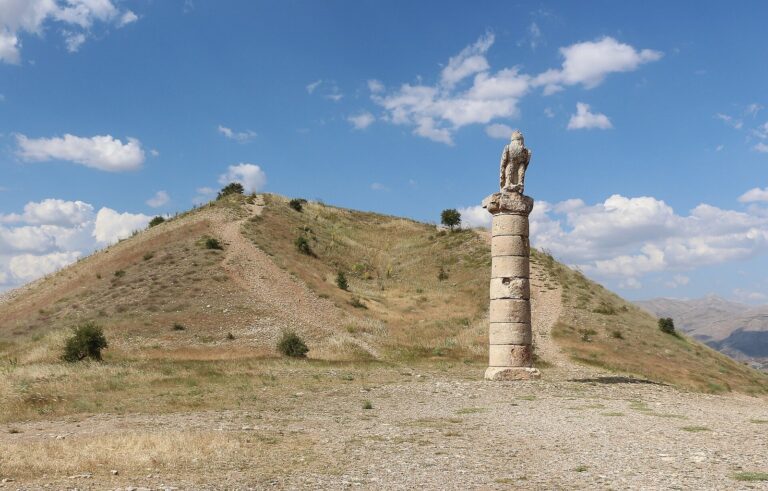
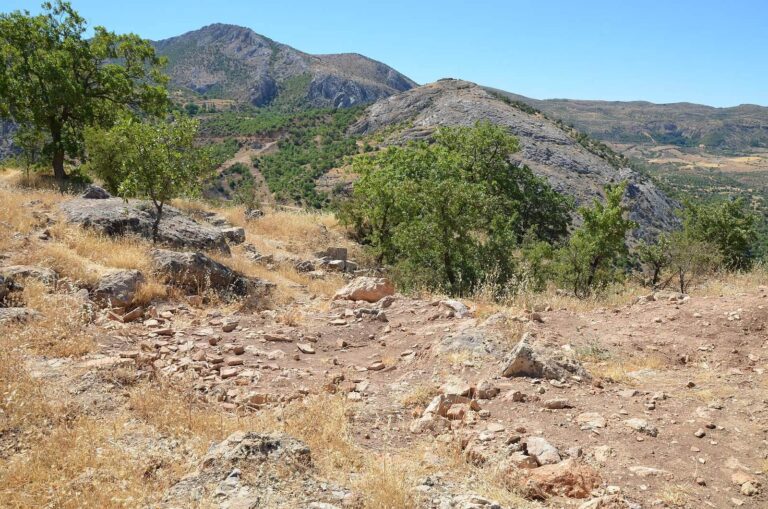
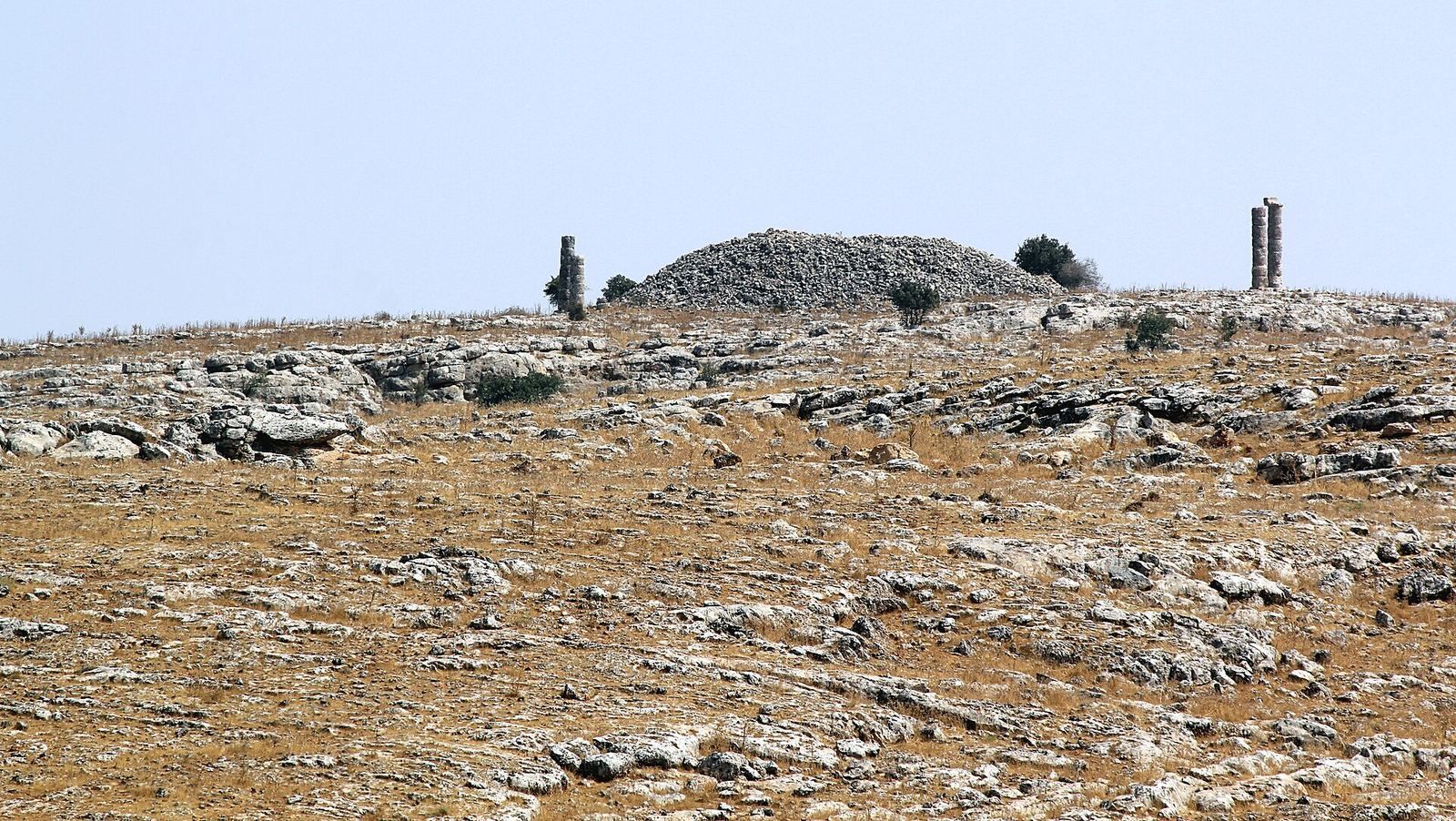
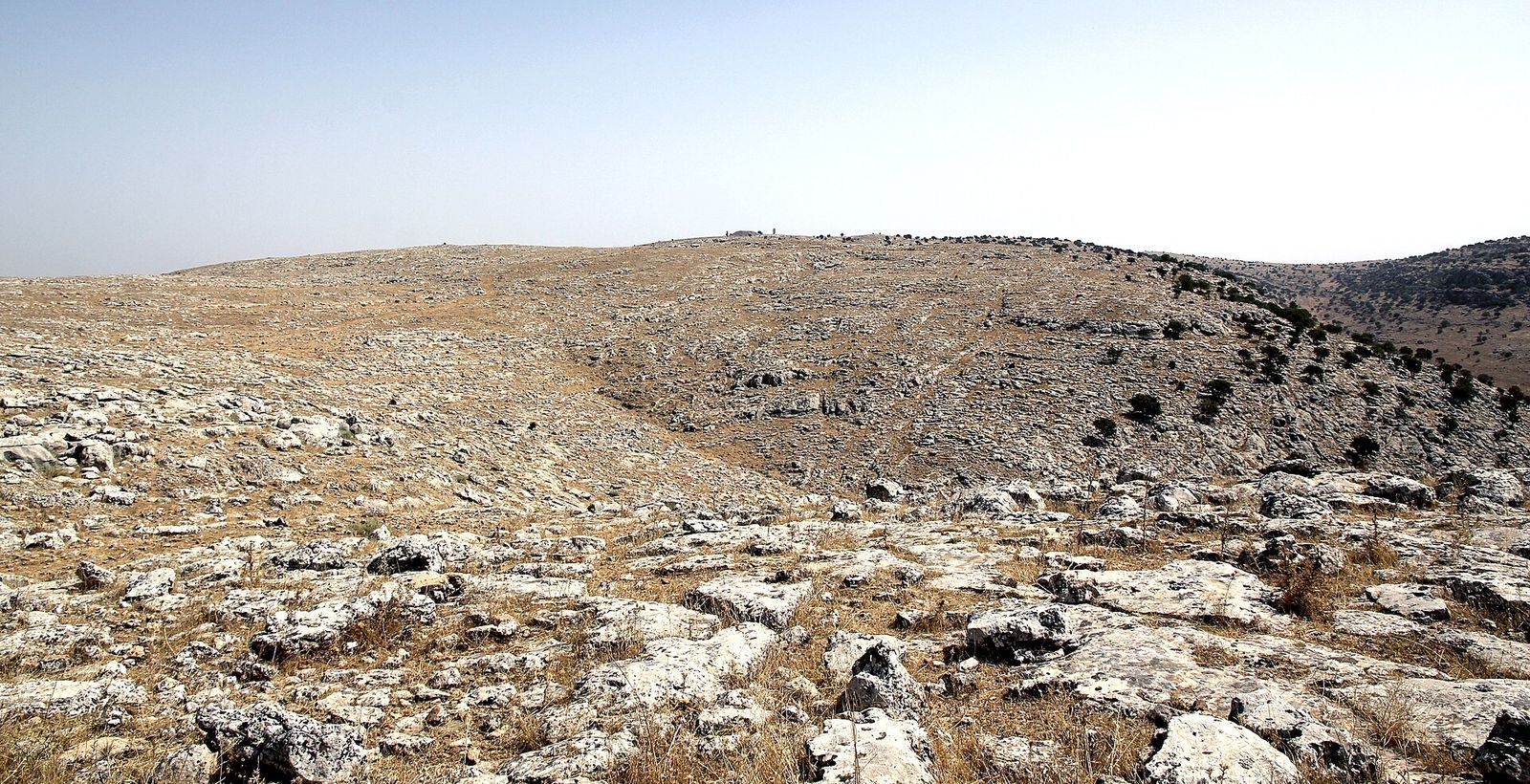
The complex is arranged around a rubble-stone mound, with a rock-cut tomb reached from the north, a deep shaft to the northwest and pairs of stone columns to the northwest, northeast and south. Sesönk stands in rugged hills south of Zormağara and Dikilitaş villages. The Euphrates, flowing from the Atatürk Reservoir, is about 4 km to the south. Samosata, the former Commagene capital, was about 40 km east and is now flooded by the reservoir. Nemrut Dağı lies about 90 km to the northeast and is visible in clear weather.
The mound and underground features
Burial mound
The artificially raised mound measures 35 m across and reaches a maximum height of 6 m. It is made of rubble stone. Its flattened summit has subsided, probably as a result of tomb robbing.
Burial chamber
On the north side, an entrance passage and staircase descend 6 m to a rectangular chamber cut into bedrock. Three rectangular burial recesses, bordered by simple moldings, are set into its walls. A later tunnel, now filled, cuts into a niche in the rear wall; its purpose is unclear. Local villagers said that it continued as far as the Euphrates.
Northwestern shaft
A separate shaft cut into bedrock lies northwest of the mound. It is at least 11 m deep and measures 2.55 by 1.65 m. Climbing footholds are cut into its walls. Humann and Puchstein considered it a possible cistern, while later researchers have suggested that it could have served as a second burial chamber.
Columns and sculpture
Column monuments
Three pairs of unfluted limestone columns stand northwest, northeast and south of the mound. They rest on square bases and have Doric capitals, the upper sections of columns in the Doric order. Two columns remain largely upright, and one capital is still in place. The columns were joined by a simple horizontal framework of two stone beams laid one above the other, which apparently supported sculptures. A small quarry a few metres northwest of the mound supplied stone for the column sections and sculptures.
Sculpture group
Fallen fragments include a seated group of two figures, which Humann and Puchstein reconstructed with an eagle on either side. The group is 1.10 m high where preserved and is broken into two pieces; the figures’ bodies are in poor condition. Both sit on a shared throne and wear Greek-style cloaks. One holds an object in the left hand, resting on the knee. Fragments depicting eagles and lions, as well as a stone block that Humann and Puchstein interpreted as part of a throne, have also been found.