Balma del Moro: A Prehistoric Corridor Dolmen in France
Site at a Glance
- Popularity
- Very Low
- Country
- France
- Primary era
- Bronze Age
- Eras represented
- Stone Age, Bronze Age, Modern
- Civilizations
- French
- Site type
- Burial
- Remains
- Tomb
On this page7 sections
History
Prehistoric origins and local name
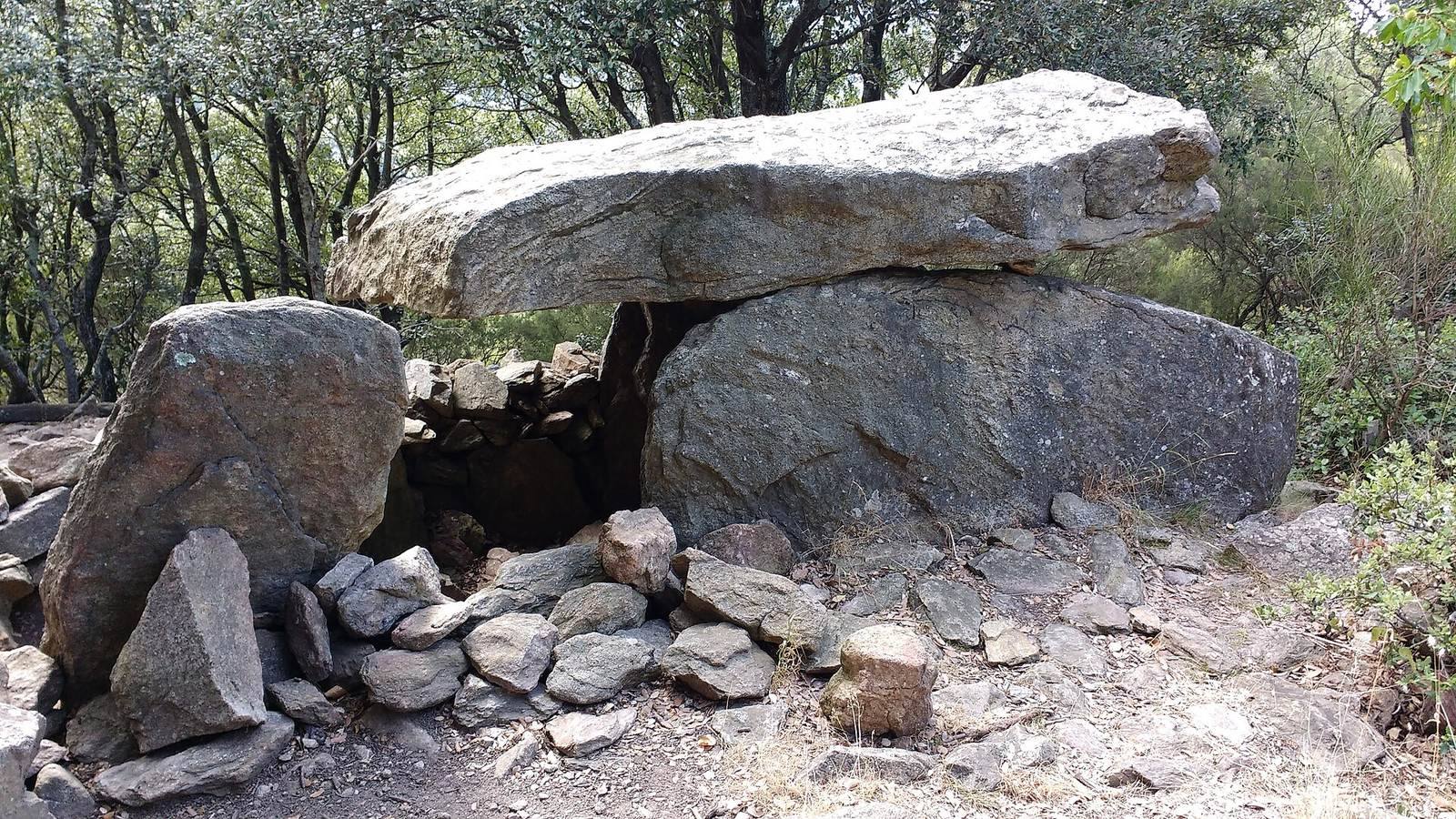
Balma del Moro is a granite corridor dolmen, a prehistoric stone tomb with a passage leading to a burial chamber, at Laroque-des-Albères, France. It is assigned to the Late Neolithic, the final phase of the Neolithic, and the Bronze Age, a later prehistoric period associated with bronze use. Its structure suggests it was erected near the end of the third millennium BCE, in the later part of the megalithic period, when prehistoric cultures built large stone monuments. The monument is also called the Dolmen de la Balma del Moro and Balma Corba.
The name combines two words with different local associations. Balma is a Celtic-origin place-name transmitted to Roussillon by the Romans; in Catalan it means a shallow cave or rock shelter and is used for caves, nearby places, and sometimes dolmens. Moro means “Moor” in Catalan, but here it refers to legendary beings in local mythology, not to the Saracens who invaded the region in the Middle Ages.
Study and later use
François Jaubert de Passa first mentioned the dolmen in 1835, in a letter to Prosper Mérimée about dolmens in northern Catalonia. It gained wider recognition and fuller study after Paul Pallary described it. Prehistorian Jean Abélanet later considered it one of the department’s three most beautiful and largest dolmens. Over a long period the monument was plundered and was sometimes used as a hunting shelter.
Remains
Ridge setting and mound
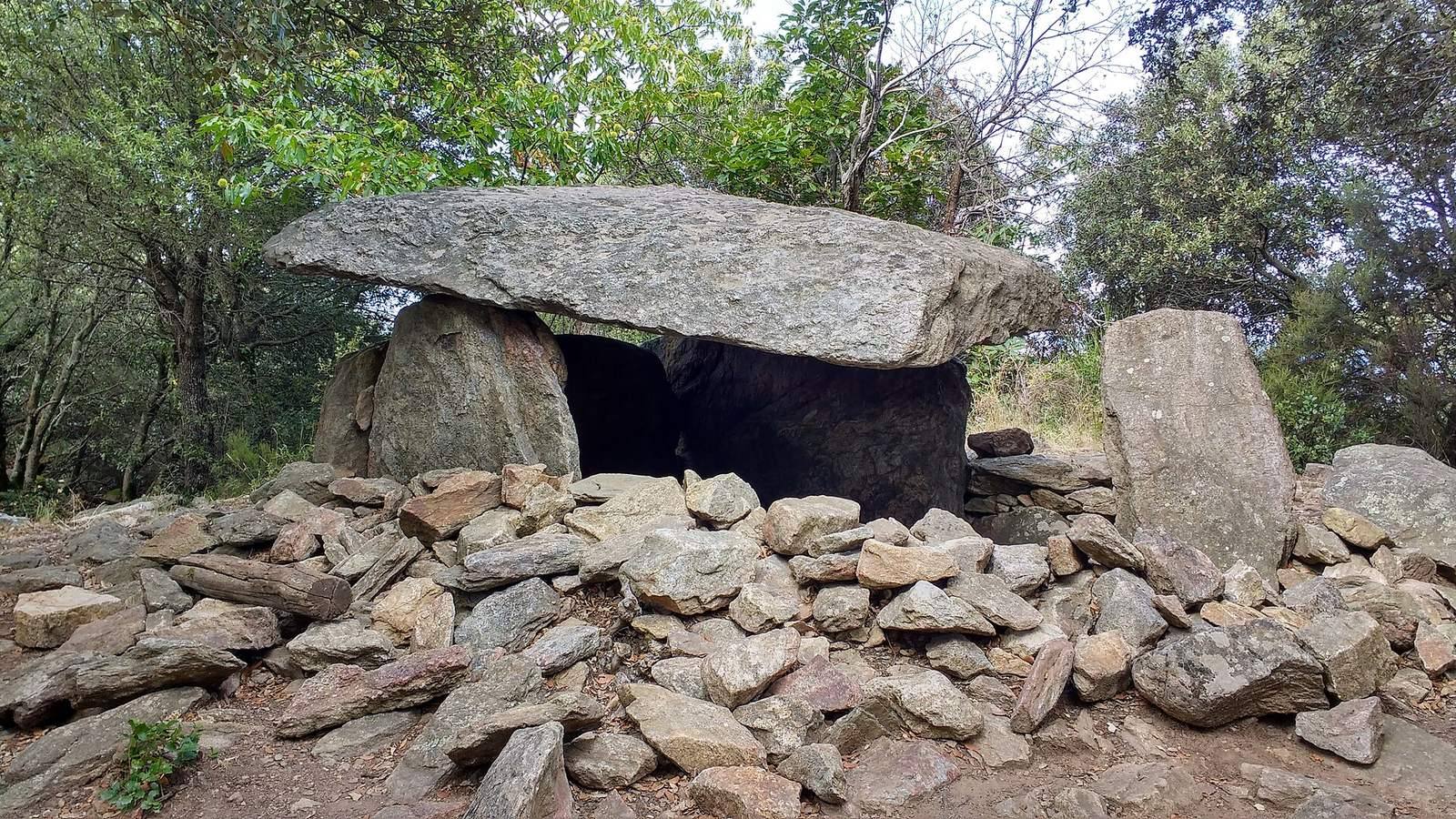
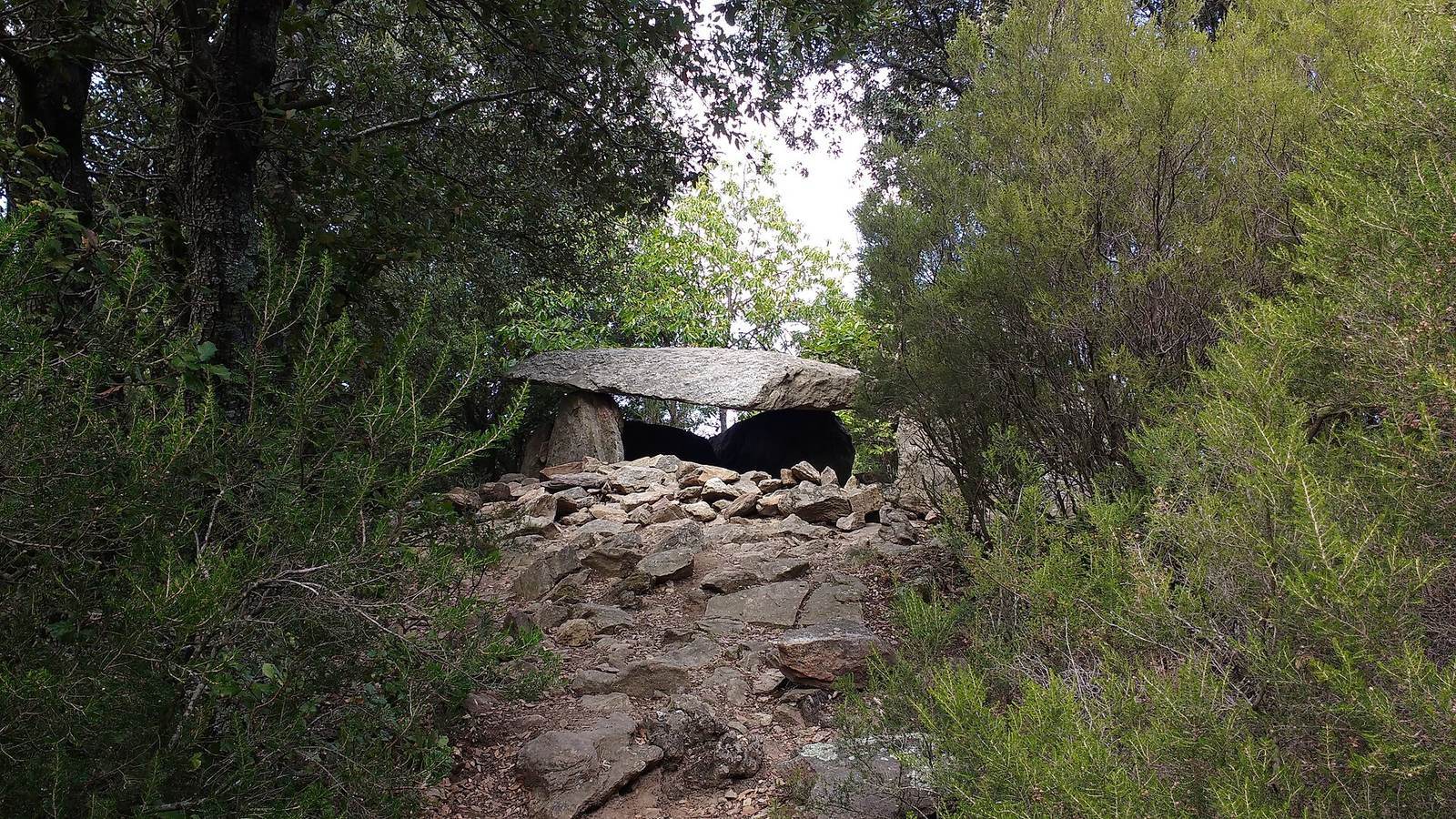
The dolmen stands at about 600 m above sea level on an Albères ridge overlooking the Roussillon plain. It occupies level ground at the foot of the northwest slope of Roc del Migdia. Its circular mound appears to have been formed in stepped levels and to include structural elements radiating outward. Because the northern side of the ridge drops steeply, the mound may not originally have covered the monument completely.
Chamber, passage, and stonework
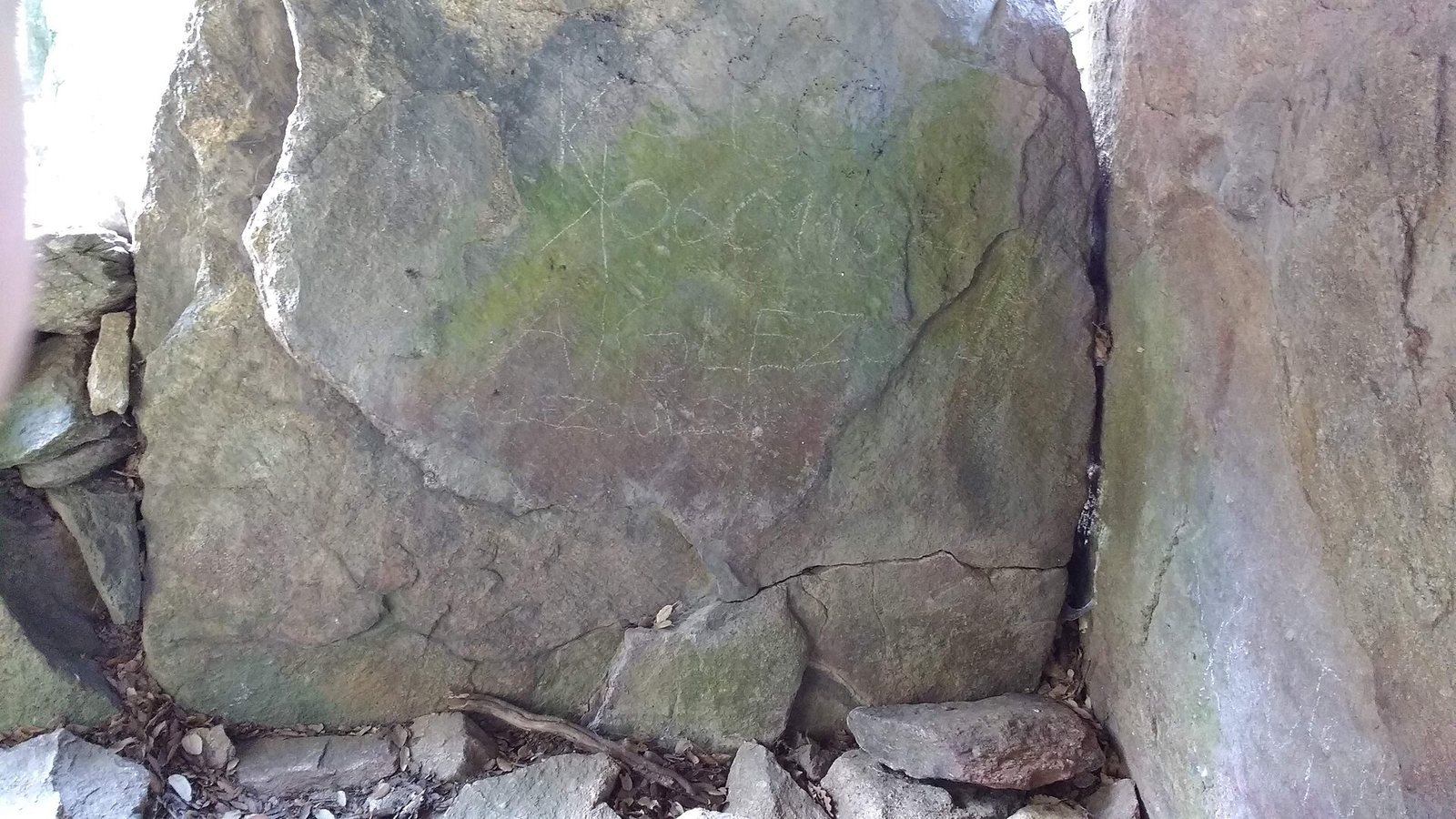
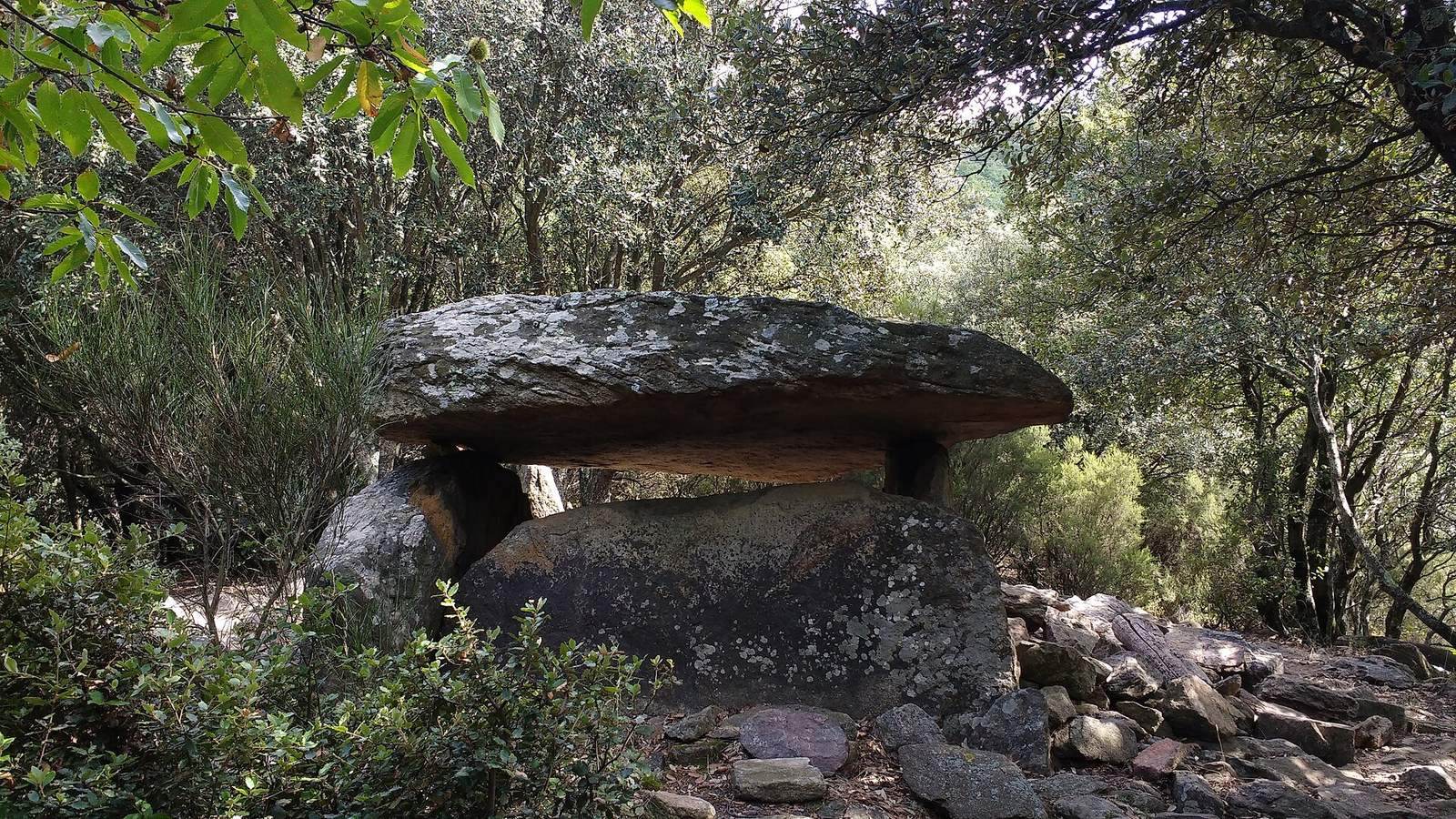
The rectangular chamber measures about 2.5 m long, 2 m wide, and 1.6 m high. Three upright slabs form its west, north, and east sides, and the entrance faces south-southeast. The opening is about 0.8 m wide and 0.95 m high. The eastern slab is 2.53 m long and 0.25–0.40 m thick, extending beyond the 2 m-long northeast end slab; the western slab is 1.44 m long and 0.20 m thick. A slab 0.67 m wide and 1.35 m high, aligned with the eastern upright, is the surviving remnant of the original passage. The capstone is 3 m long. The dolmen as a whole is about 5 m long and 1.25 m high. Its slabs are local granite, obtained a short distance away on the ridge to the east. Low slabs and dry-stone walls, built without mortar, supplement the side uprights and are modern modifications.
Archaeological finds
Material sifted from the chamber included a few recent glazed pottery fragments, a small number of heavily eroded and atypical pottery fragments, and two flint flakes. A small cast-bronze object shaped like an arrowhead, but too thick to serve as one, was found on the mound.