Lampron: An Armenian Dynastic Fortress in Cilicia

Site at a Glance
- Rating
- 4.5
- Popularity
- Low
- Country
- Turkey
- Primary era
- Medieval
- External website
- Open
- Eras represented
- Medieval
- Civilizations
- Armenian, Byzantine
- Site type
- Military
- Remains
- Castle
On this page11 sections
History
Lampron is an eleventh-century Armenian fortress near Çamlıyayla in modern Turkey. Built on a commanding mountain site, it became part of the Armenian Kingdom of Cilicia and served as the hereditary stronghold and ancestral seat of the Hethumid princely dynasty.
Foundation and Hethumid rule
The fortress’s construction chronology remains uncertain within the eleventh century. The year 1045 is associated with its completion, while 1071 is given for its foundation or the beginning of its construction. Armenians settled the Byzantine-controlled site later in the eleventh century, during a period when Armenian migration into Cilicia reshaped the region’s political landscape.
In 1073, the Armenian feudal lord Oshin and his brothers, who came from Ganzak, moved to Cilicia. The Byzantine-appointed governor Ablgharib granted Lampron to Oshin after he had retaken the fortress from Arab forces. Ablgharib had received authority over Tarsus and the surrounding territory from Emperor Constantine IX Monomachos and encouraged other Armenian families to settle nearby.
Oshin, identified as the son of Hetum, later received the administration and revenues of the Namrun district as a fief from Emperor Alexios I Komnenos. He also received the Byzantine honorary title of Sebastokrator, a high-ranking imperial distinction. After repairing and strengthening Lampron, Oshin established a powerful base for the Hethumid house, which became closely connected with the Rubenid rulers of Cilicia.
Lampron during the Crusades
The Armenian Kingdom of Cilicia developed during the period of the Crusades. Trade and crafts prospered, while numerous Armenian monasteries were built. At the nearby monastery of Skevra, the style of Cilician Armenian miniature painting reached its final form by the end of the twelfth century.
During the First Crusade, in 1097, Baldwin reached Tarsus by way of Lampron. After the Crusaders took Tarsus, Sis became the capital of the Armenian Kingdom of Cilicia. Oshin maintained friendly relations with the Crusaders and surrendered his other possessions to them while retaining Lampron.
The fortress resisted unsuccessful attempts to seize it in 1171, 1176, and 1182. In the early thirteenth century, however, King Leo I of the Rubenid dynasty captured Lampron through a marriage stratagem. He arranged the marriage of his niece to a Hethumid nobleman, then seized the fortress while the wedding guests were celebrating at Tarsus.
Revolt, imprisonment, and the end of Armenian rule
In the early 1240s, Lampron became the center of a major revolt against King Hetum I. Its lord, Constantine, allied himself with Seljuk Sultan Kaykhusraw II and attacked the Armenian king. Smbat the Constable, lord of Paperon, led the counterattack. The revolt was suppressed, Constantine was captured, and he was executed for treason in 1250.
Between 1309 and 1310, the fortress briefly served as the prison of Henry II, the Lusignan king of Cyprus. The Mamluks, a military slave elite that ruled Egypt and Syria, repeatedly campaigned against the Armenian Kingdom of Cilicia in 1261, 1266, 1273, 1275, and 1276. Their campaigns ultimately ended Armenian rule in 1375.
A Mamluk garrison was later stationed at Lampron. The surrounding region subsequently came under the control of the Karamanids and then the Ottoman Empire. Lampron is now an archaeological site and a Crusader-period castle, with substantial but incomplete remains.
Remains
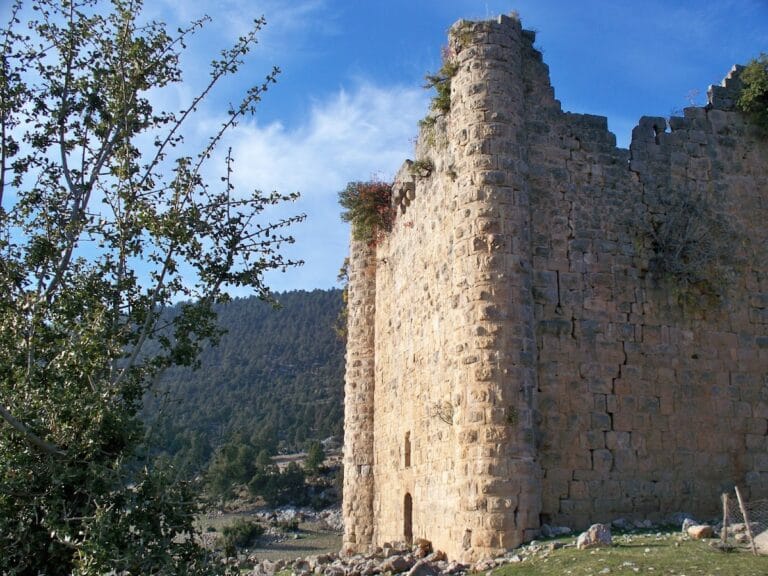
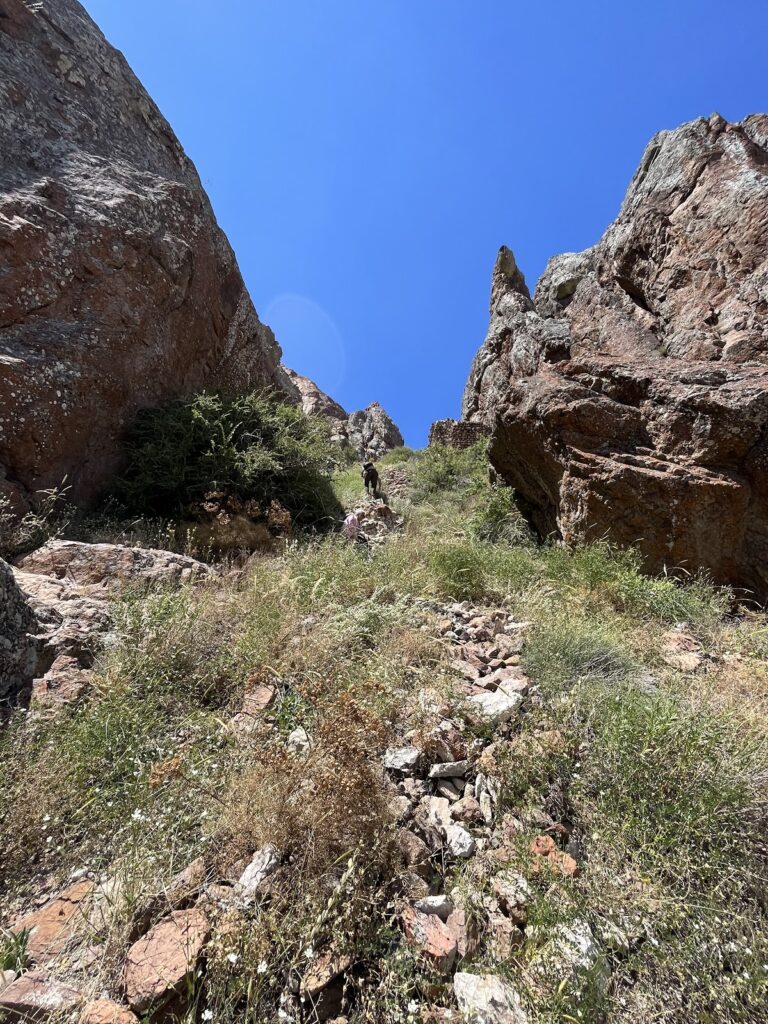
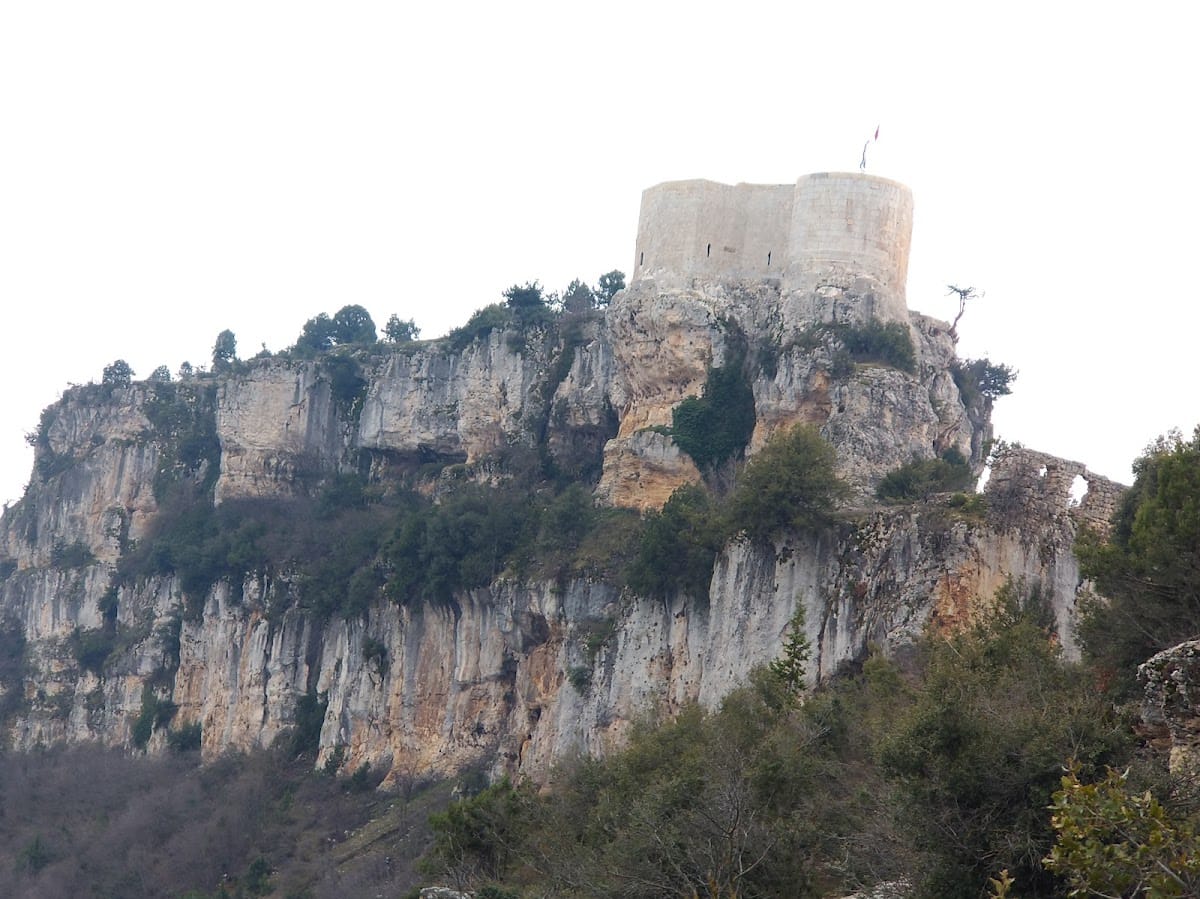
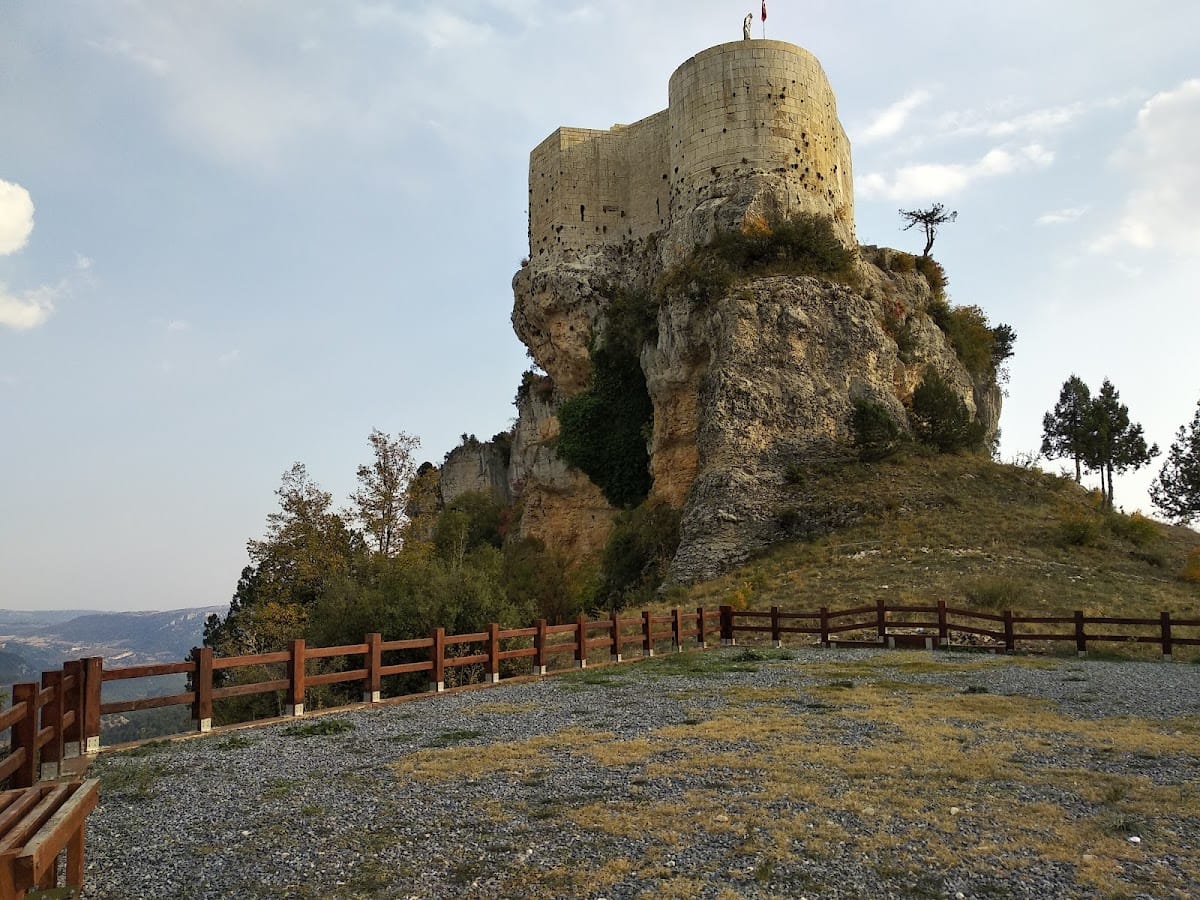
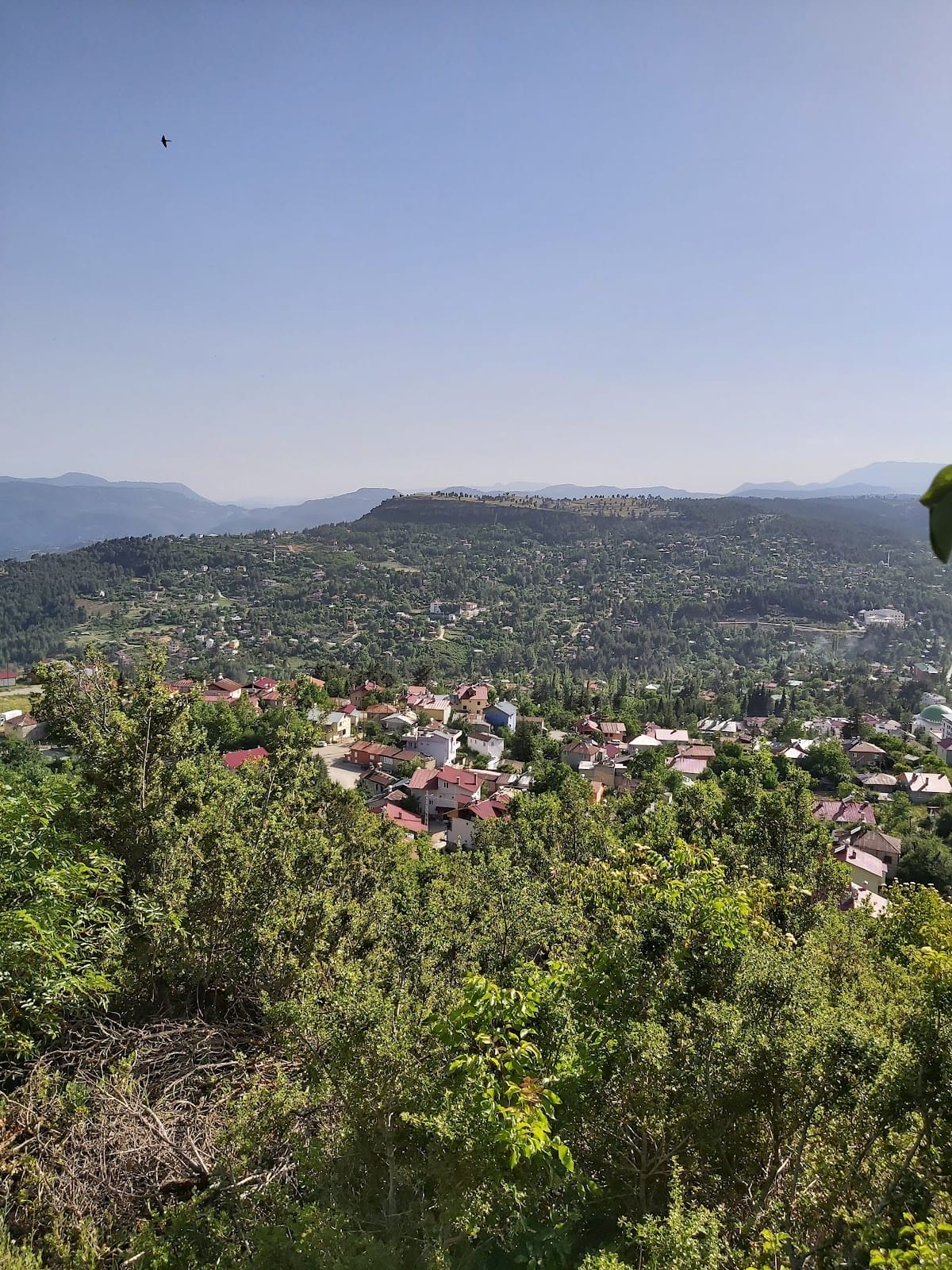
Lampron occupies a limestone platform projecting from the southern end of the Bolkar, or Bulgar, Mountains. The rocky fortress covers approximately 330 by 150 metres at an elevation of about 1,290 metres, with a drop of more than 50 metres toward the valley below. It stands where three elevated valleys meet, a position that allowed control of converging roads and routes toward Tarsus and the Cilician Gates. Sinap Castle is visible several kilometres to the northeast.
Courtyards and defensive access
Lower courtyard
A dry moat was cut across the northwestern end of the platform, separating the fortress from the rest of the mountain plateau. Within the complex, a small and narrow lower courtyard extends along the south and west sides. A medieval vaulted bathhouse lies southwest of and below this courtyard.
Upper courtyard
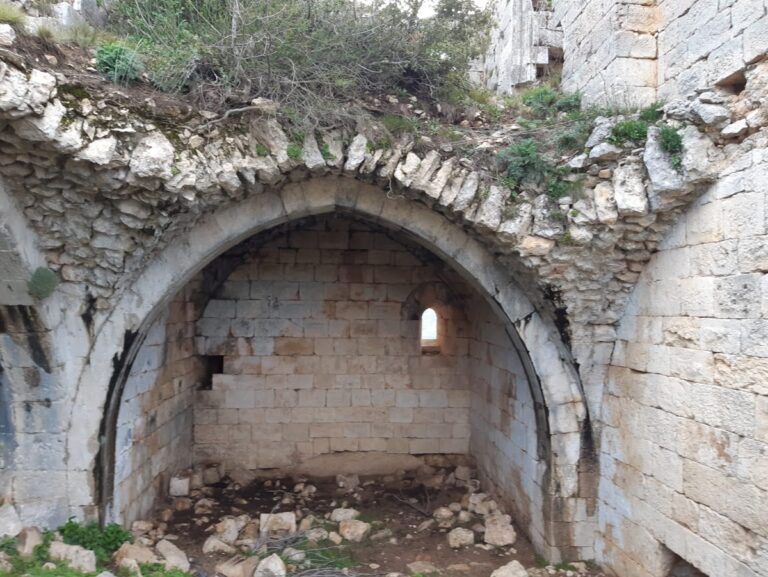
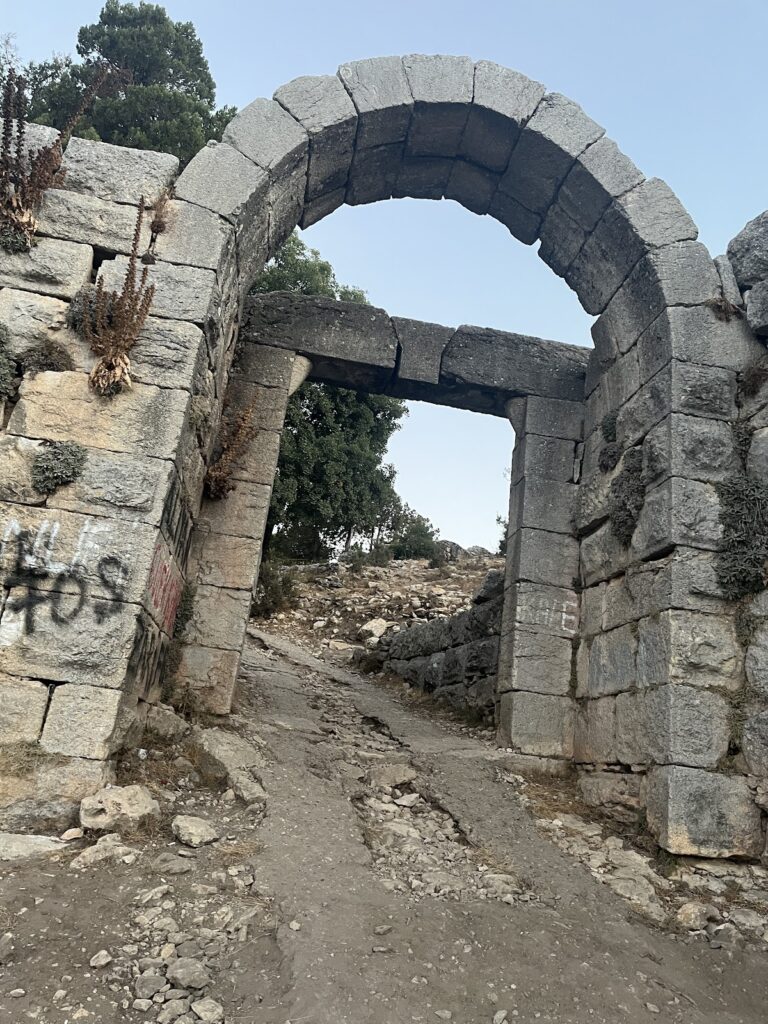
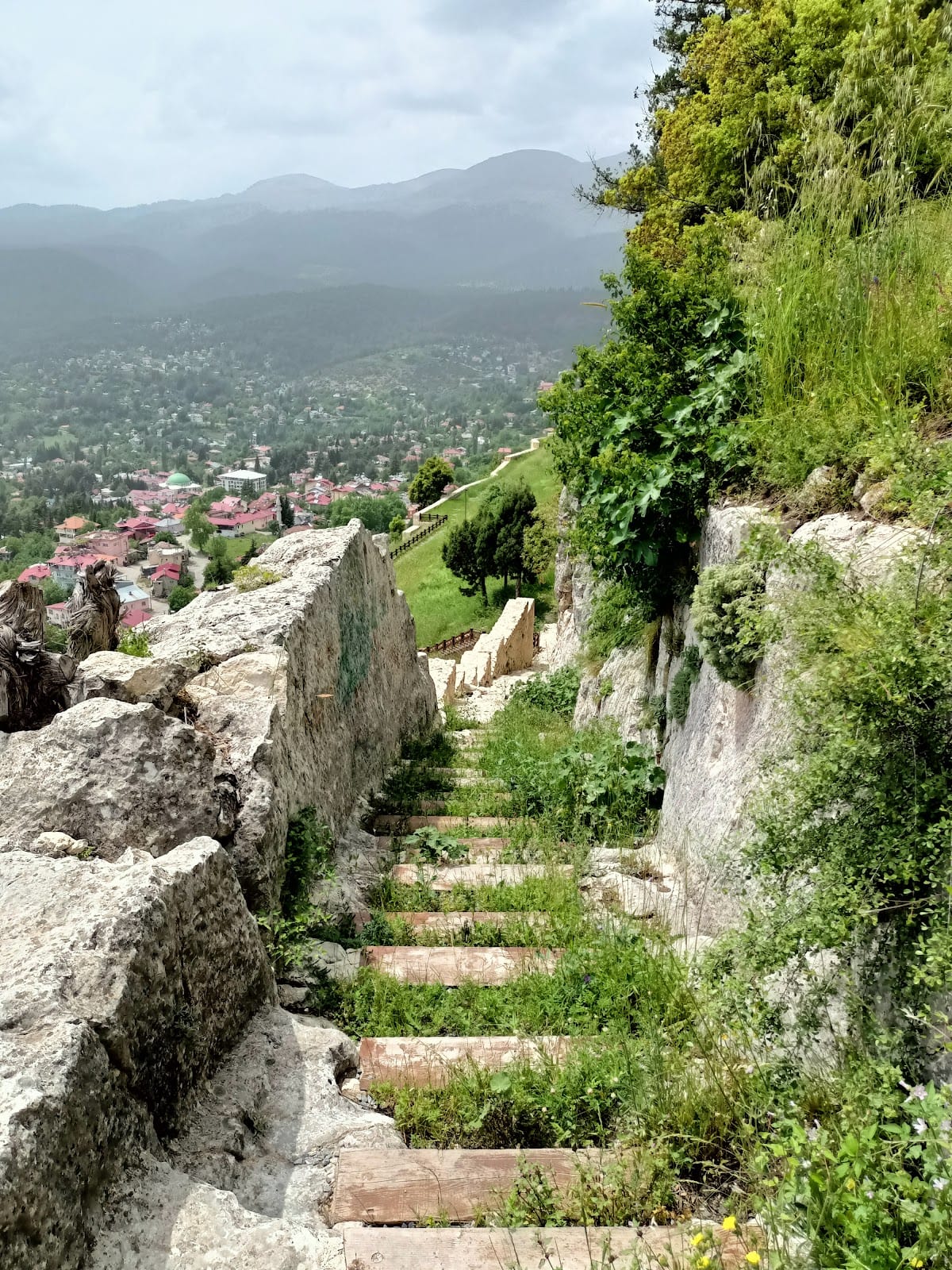
The much larger upper courtyard is reached either by stairs cut into the rock or through a narrow entrance passage that turns before access is gained. Numerous ruined buildings occupy its southern and eastern sides, and several have foundations cut directly into the bedrock. The survival of a standing vaulted hall contrasts with the more fragmentary condition of many other buildings.
Vaulted chambers and bathhouse
Northern vaulted chambers
Six adjoining vaulted chambers stand at the northern end of the upper courtyard. Carefully dressed limestone masonry forms their walls, while two chambers include loopholes and gun ports. Their construction and defensive openings are part of the surviving evidence for the fortress’s military character.
Medieval bathhouse
Excavation of the small medieval vaulted bathhouse revealed five rooms. Three are arranged from east to west, with two adjoining them on the north. A hypocaust, an underfloor heating system in which heated air circulates beneath a floor, lies beneath the bathhouse. Other buildings at Lampron were also heated by hypocausts.