Church of Saint Sophia, Holy Wisdom: An Orthodox Church in Moscow
Site at a Glance
- Popularity
- Medium
- Country
- Russia
- Primary era
- Early Modern
- Eras represented
- Medieval, Early Modern, Modern
- Civilizations
- Russian
- Site type
- Religious
- Remains
- Church
On this page4 sections
History
Wooden churches and the stone building
A wooden church stood on the site by 1480. Another wooden church was built in 1650, but fire destroyed it in 1685. Construction of a stone church began in 1692. The name Holy Wisdom, or Sophia, expresses divine wisdom in Christian theology.
Closure and return to worship
Soviet authorities closed the church in 1932, and its building became a factory for experimental sports clothing operated by Dynamo. In 1990, the former church and adjoining grounds were transferred to the KGB, the Soviet state security agency.
In 2001, employees of the Federal Security Service (FSB), Russia’s federal security agency, proposed forming an Orthodox parish, with the service’s leadership supporting the initiative. Patriarch Alexy II, head of the Russian Orthodox Church from 1990 to 2008, consecrated the church on 6 March 2001. FSB director Nikolai Patrushev then ceremonially handed him the church key.
The active church belongs to the Russian Orthodox Church’s Moscow Patriarchate and is part of the Moscow City Diocese and its Sretensky Deanery, an administrative grouping of parishes. Russia designates the church a cultural heritage monument of federal significance.
Remains
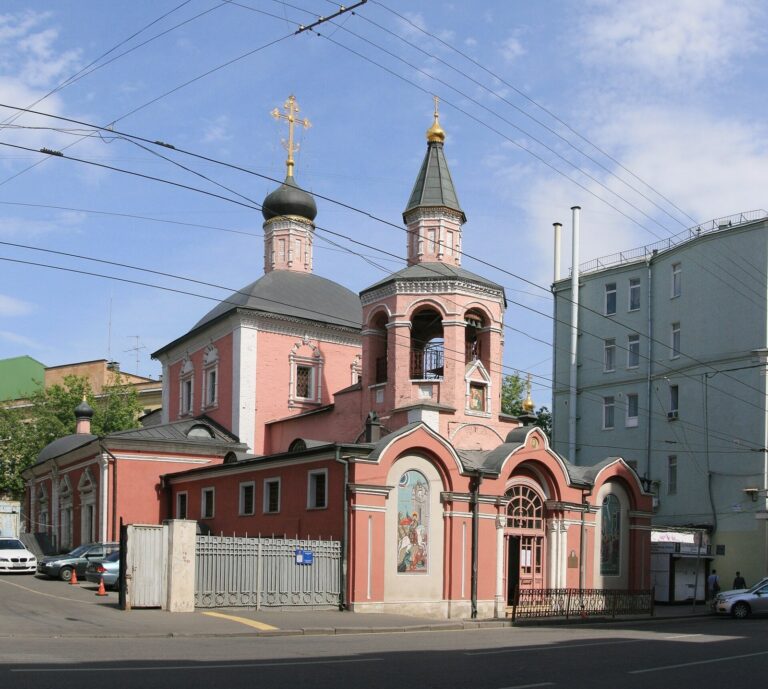
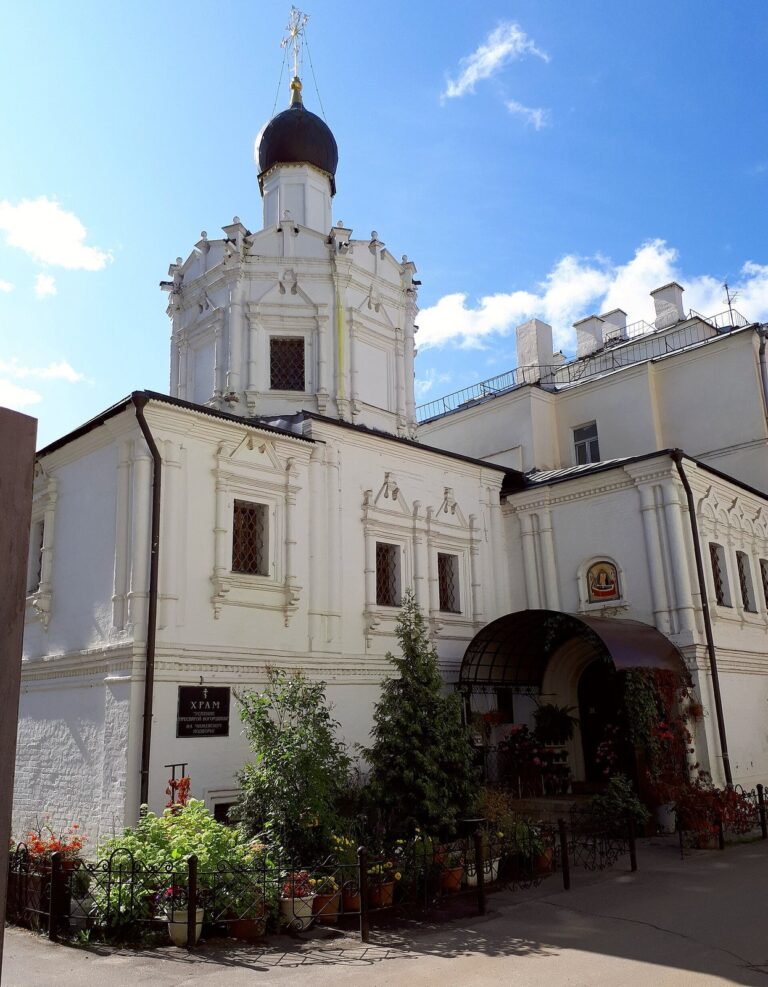
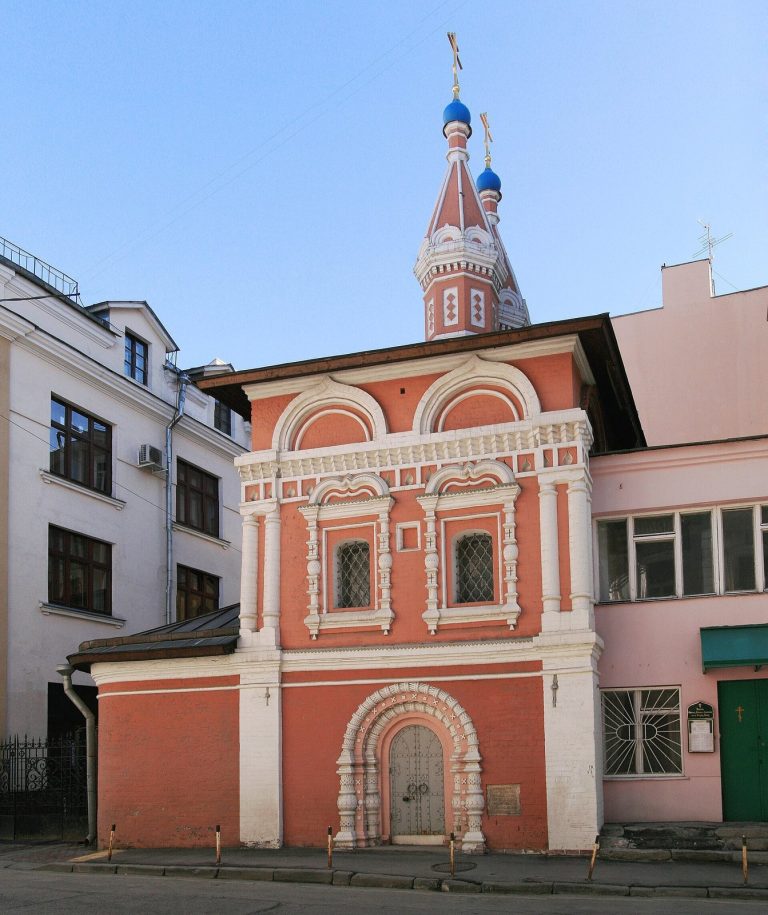
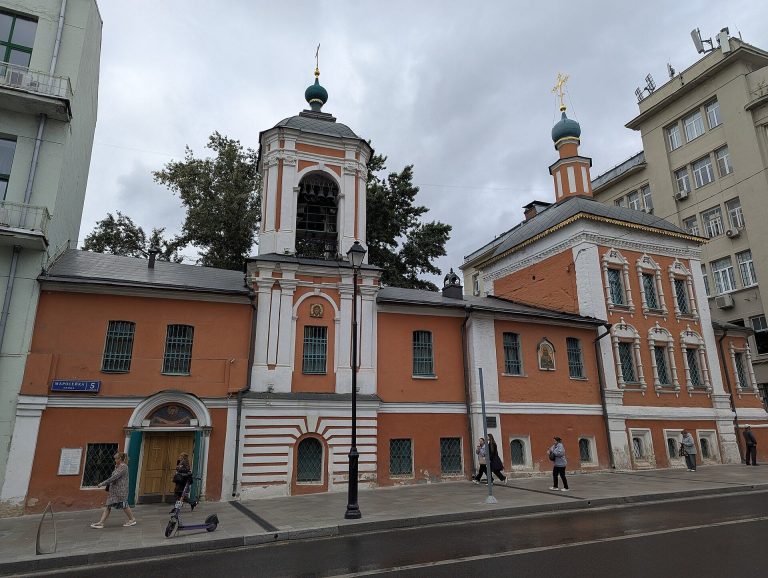
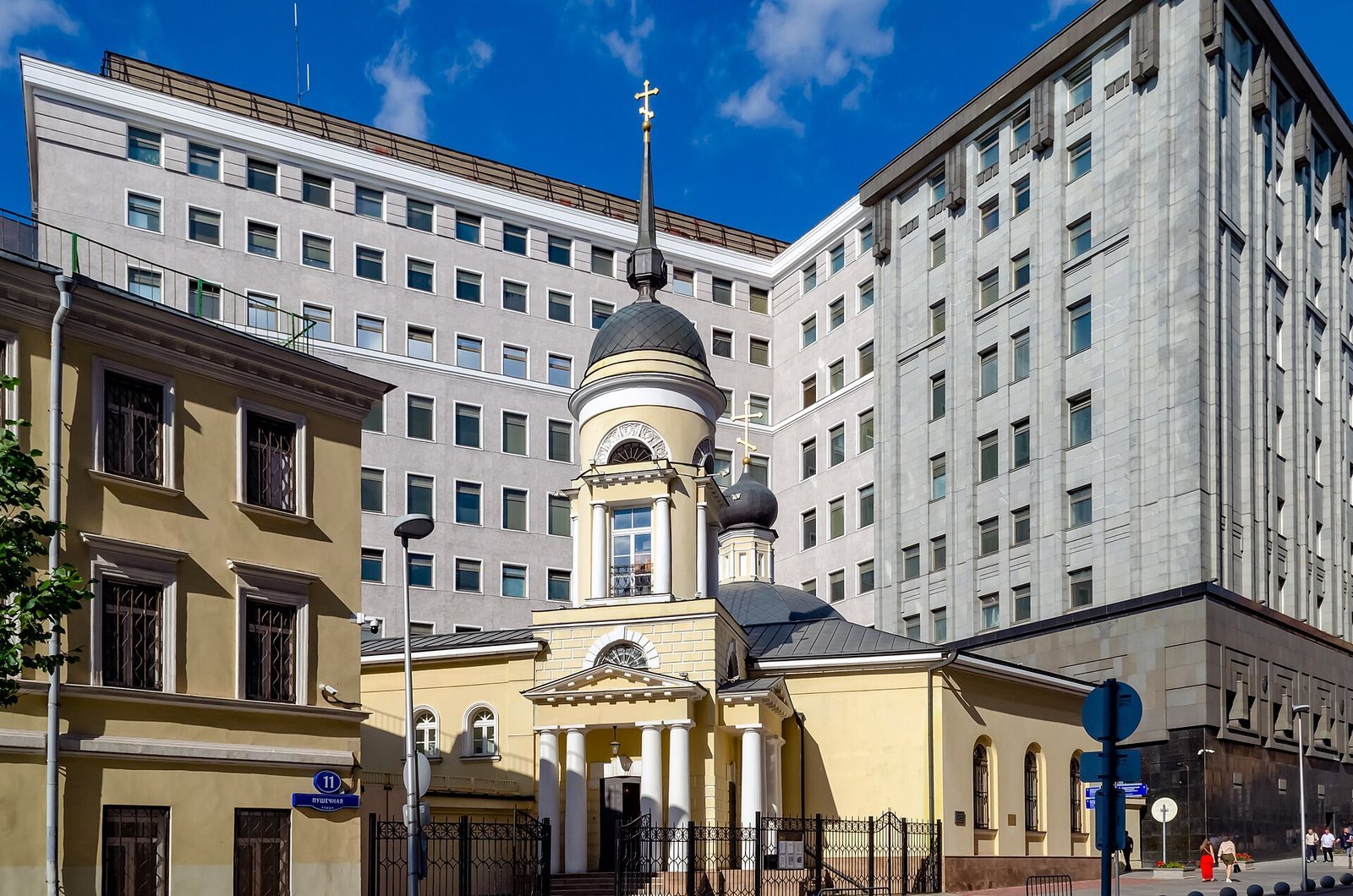
The stone church stands at 15 Pushchechnaya Street in Moscow’s Meshchansky District. Its principal altar is dedicated to the Kazan Icon, a prominent image of the Virgin Mary in Russian Orthodox tradition. A side chapel is dedicated to St Nicholas the Wonderworker, the widely venerated Christian saint traditionally identified as a bishop of Myra. A separate chapel to St Nicholas was built by 1691 and held services while the stone church was being constructed.
The facades were renewed and the dome covering changed in the second half of the eighteenth century. A bell tower was added in 1816. Alterations to the refectory, a communal dining room, and the chapels followed in 1842, and the church was renovated again in 1913. In 1932, the upper part of the bell tower was dismantled and the colonnade, a row of columns, was demolished.