Charax: A Roman Fort on Cape Ai-Todor, Ukraine
Site at a Glance
- Popularity
- Medium
- Country
- Ukraine
- Primary era
- Classical
- Eras represented
- Classical, Modern
- Civilizations
- Roman, Russian
- Site type
- Military
- Remains
- Fort
On this page21 sections
History
Foundation and frontier role
Charax was a Roman fort and military settlement on Cape Ai-Todor in Ukraine, founded under Emperor Vespasian in the first century AD to secure Crimea’s southern coast. It stood in a region inhabited largely by the Tauri, an ancient people of Crimea, and was intended to help protect Chersonesus and Greek trading centers around the Kerch Strait from Scythian attacks. The founding force may have included detachments from the Ravenna fleet and the XI Claudia Legion, but that attribution is uncertain.
Charax may have been a description rather than the settlement’s original proper name. The Greek word referred to a fortified place or camp. Pliny the Elder used the otherwise unknown name Characeni for a fortress on Taurica’s southern coast, while Ptolemy also mentioned a place called Charax. Whether the ruins at Ai-Todor are the ancient site remains uncertain.
Roman garrison and withdrawal
In the 60s AD, Roman troops led by Tiberius Plautius Silvanus Aelianus, a governor and military commander in Lower Moesia, defeated a Tauro-Scythian force besieging Chersonesus. Rome then effectively made the city a protectorate and stationed troops there. A separate military camp was established at Symbolon Bay, now called Balaklava Bay.
Roman forces left Charax during Emperor Domitian’s reign, and the fort was left empty. Roman troops returned in the 120s AD, when a detachment of the I Italica Legion, a major Roman military unit, repaired the fort. A detachment of the XI Claudia Legion was present again near the end of the second century. Stamps on roof tiles helped identify the legions associated with the site.
The Romans abandoned Charax for good in the mid-third century, probably in AD 244, when troops were concentrated in Moesia to put down a revolt. Before leaving, they destroyed the water supply and several important buildings. One interpretation holds that retreating soldiers also deliberately disabled the fort to prevent its use by an enemy. Goths occupied the site soon afterward. A fourth-century cemetery points to continued settlement, including a fishing community.
Rediscovery and archaeological research
Peter Keppen described the fortification wall and noted traces of buildings inside it in 1837. His excavation in 1849, supported by Count Shuvalov, yielded few results, which were not published. Regular excavations began in 1896 with the involvement of Grand Duke Alexander Mikhailovich. Michael Rostovtzeff joined the work in 1901, identified the ruins as Charax, and argued that the settlement was a Roman city rather than simply a fort. A museum for finds opened at the site in 1907; that excavation campaign ended in 1911.
Vladimir Blavatsky led further excavations in 1931, 1932, and 1935, investigating the baths, aqueduct, and cemetery. Archaeological work at Charax continues. The site is recognized as a heritage site of national significance in Ukraine and a federal-level cultural heritage monument in Russia.
Remains
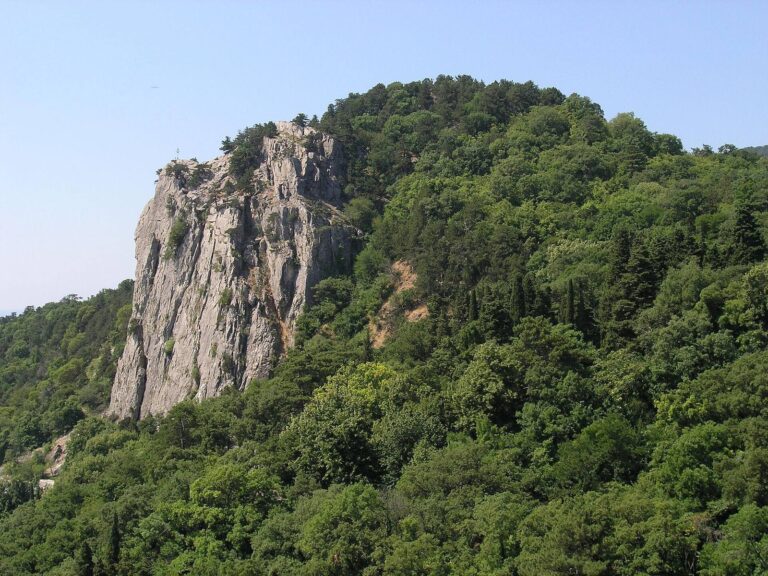
Charax occupied a hill on the western ridge of Cape Ai-Todor and covered about 4.5 hectares. Its defenses combined constructed walls with the cliff on the southern side. The settlement is described as the largest known Roman fort or military settlement in Crimea.
Walls and defensive layout
Outer defenses
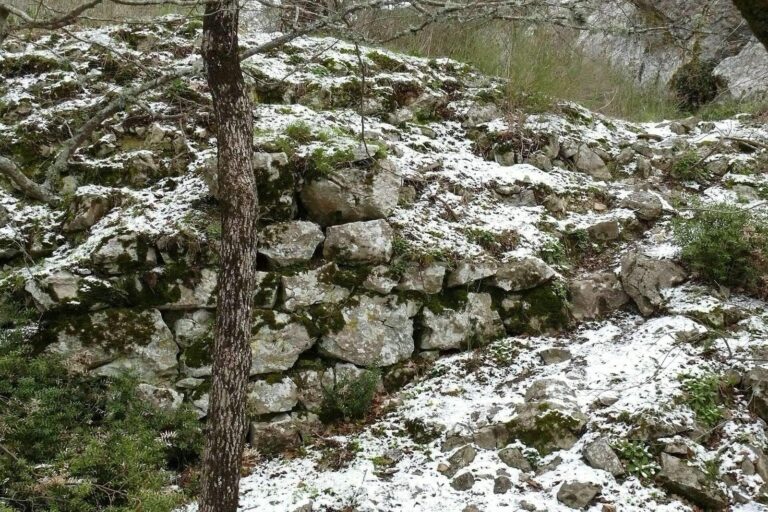
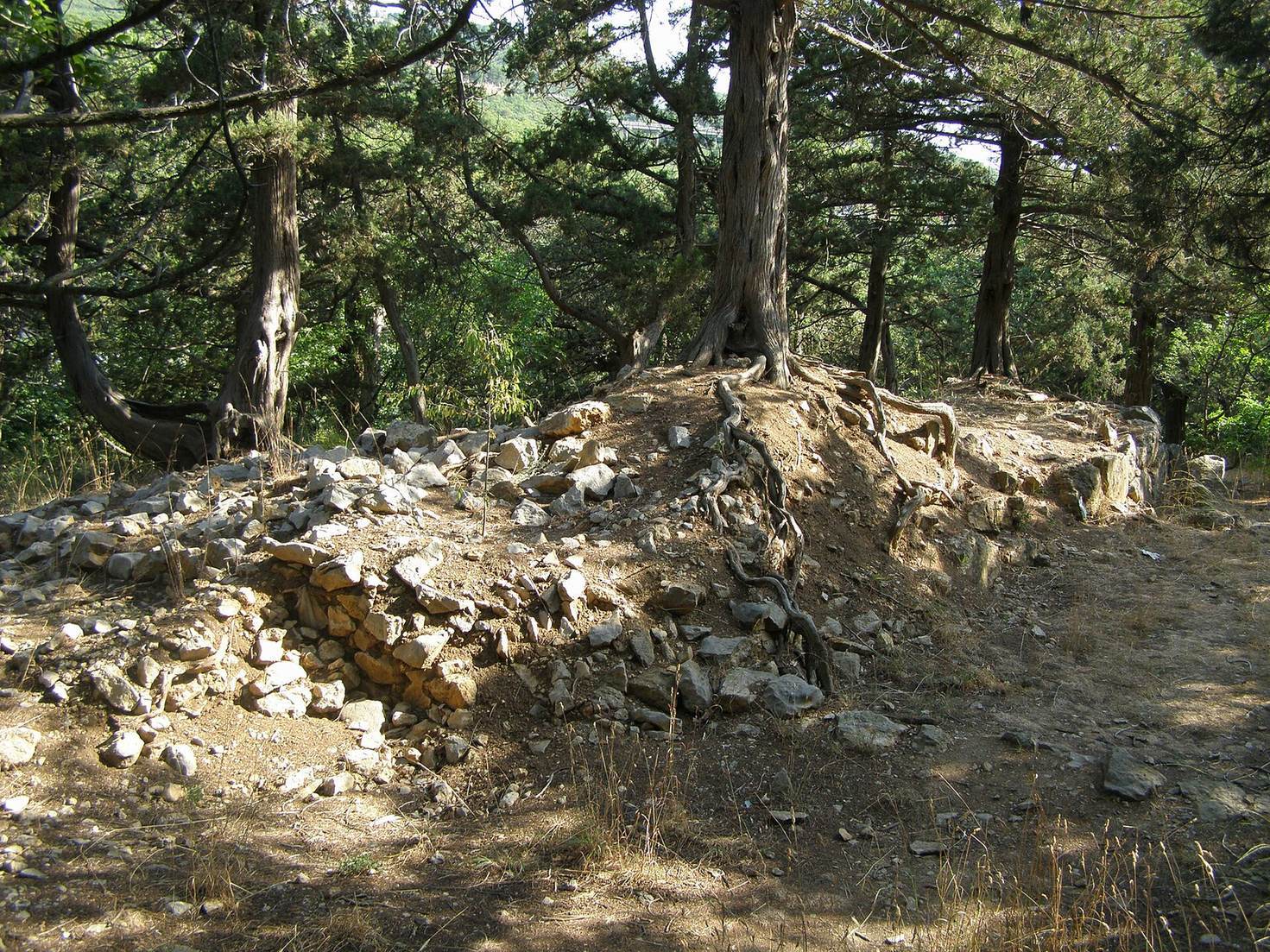
The outer wall had three entrances. The main gate on the north was flanked by two neighboring towers, while smaller gates opened to the northwest and northeast. Its large stone blocks once led to an attribution to the Tauri. Lime mortar in the masonry later supported a Roman attribution; a Tauri settlement or fortification elsewhere on the cape remains possible. The outer wall was destroyed in the 1960s.
Inner wall and open ground
A second wall, built of rubble stone, enclosed a smaller area and had one gate aligned with the main entrance in the outer wall. About two hectares of largely open ground lay between the defensive lines. This space appears to have been intended for troop deployment and for sheltering the population during an attack.
Buildings within the fort
Barracks and houses
Excavations near the inner wall uncovered the remains of two barracks and several houses. From the evidence at the site, Rostovtzeff estimated that the garrison numbered about 500 soldiers.
Headquarters and lighthouse
An administrative building may have stood at the fort’s center, with a proposed date of AD 138–155, during the reign of Antoninus Pius. A square commander’s headquarters with columns around its exterior stood at the hill’s highest point, where an altar to Jupiter was also located. A lighthouse occupied the same high point. Construction of a new lighthouse there in 1865 removed the remains of the headquarters; the newer lighthouse remains in operation.
Bathing and water facilities
Baths and exercise area
The bath complex included a changing room, a cold-water pool, and a heated bathing room. Clay pipes beneath the brick floors carried hot air to warm the rooms. Pebble mosaics decorated the floors, and frescoes covered the walls. An exercise area, also known as a gymnasium, was associated with the settlement.
Water pool and supply
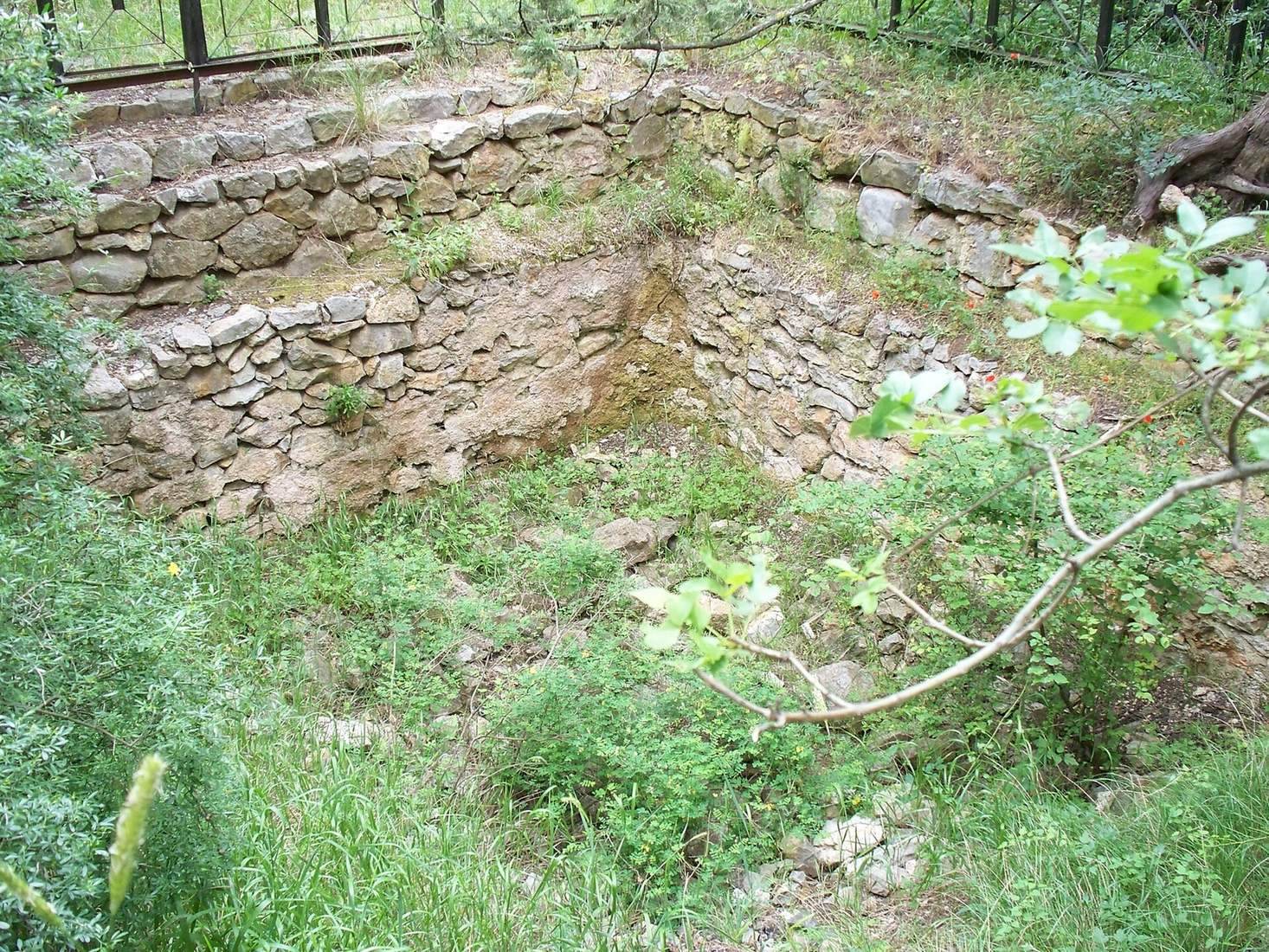
A water shrine, or nymphaeum, stood near the baths. Its pool measured 9 by 7.7 metres and reached a depth of 2.5 metres. Special lime mortar coated the walls to hold water, and stone steps led into the pool. An octopus mosaic decorated its floor. The pool may have served as a drinking-water reservoir. Finds from the area included an inscribed fragment reading [N]YMPH[AEVM] and a marble relief of a nymph leaning against a tree.
An aqueduct carried water from springs on Ai-Petri to the baths and pool, supplying a cape without fresh water. Roman soldiers made the pipes from clay. Excavators also found the remains of two public water basins.
Structures outside the fort
Road-monitoring post
At a crossroads outside Charax stood a post for monitoring a road. One or more soldiers probably served there. Dedications to Jupiter Optimus were found at the post, and Jupiter-related reliefs were also associated with the altar inside the commander’s headquarters.
Possible sanctuary of Artemis
West of the fort, excavators found a small structure and fragments of reliefs depicting Artemis the Huntress. These remains may belong to a sanctuary of Artemis. A sanctuary used by the Tauri may have occupied the same place earlier.
Reliefs, inscriptions, and other finds
Religious images and inscriptions
Religious finds reflect the range of worship associated with Charax. They include images of Jupiter, Artemis, Dionysus, Hermes, Hecate, and Mithras, as well as representations of Sabazios and the Thracian horseman. A relief now in the Pushkin State Museum of Fine Arts names Lucius Furius Seuthus as an optio, a junior officer serving the prefect, or commander, of the First Thracian Cohort.
Thracian horseman reliefs
A second marble slab, found by chance in 1961 and now in the Yalta Historical-Literary Museum, shows a mounted figure hunting a boar. This recurring ancient relief subject is known as the Thracian horseman. The slab bears the inscription Claudius Rus / Aurelius Maxim.
Small finds
Other finds from Charax include Roman bronze brooches, fragments of marble sculpture, gems, coins, and numerous ceramic objects.