Church of Theotokos Orans behind Petrovsky Gate: A Russian Orthodox Church
Site at a Glance
- Popularity
- Medium
- Country
- Russia
- Primary era
- Early Modern
- Eras represented
- Early Modern, Modern
- Civilizations
- Russian
- Site type
- Religious
- Remains
- Church
On this page9 sections
History
The Church of Theotokos Orans behind Petrovsky Gate is a Russian Orthodox church in Russia. Its stone construction began in 1676 in a seventeenth-century flame-like architectural style. The word “orans” describes a prayer posture with raised hands, not the church’s dedication. Its principal dedication is to the Theotokos of the Sign, the Eastern Christian title for Mary, the mother of Jesus.
Predecessor and early names
A predecessor church, probably made of wood, stood before the Romanov dynasty came to power in the early seventeenth century. It was located a short distance from the present church, approximately near the intersection of 1st and 3rd Kolobovsky Lanes, and was initially dedicated to Clement I, an early pope.
The church first appears in written records in 1625 as the Church of Nicholas the Wonderworker behind Petrovsky Gate. Nicholas the Wonderworker is a title for Saint Nicholas. Later names included the Church of Clement, Pope of Rome, on Truba and by Yar; the Church of Clement in the Streltsy settlement associated with Mikhailov’s prikaz (administrative office) and Rchinov; and the Church of the Sign of the Most Holy Theotokos and Clement in the Streltsy settlement. The Streltsy were Russian military units whose members also formed settlements.
Construction of the stone church
The foundation of the present stone church was laid on July 1, 1676, to mark the end of Prince Golitsyn’s campaign in Crimea. Golitsyn was a Russian nobleman and military commander. Archers in the regiment of Russian military officer Nikifor Ivanovich Kolobov financed the building, and work continued until 1681.
Closure and renewed worship
The church closed in 1930. During the Second World War, a laboratory of the USSR Academy of Sciences operated inside the building. Repairs to the church and bell tower began in 1968, followed by restoration work in the 1970s and 1980s that returned features of its earlier appearance. Worship resumed on December 10, 1997, and the bell tower underwent further restoration in 2011–2012.
The church belongs to the Russian Orthodox Church’s Moscow Diocese and Iverskoye Deanery, an administrative grouping of parishes within a diocese. It is active and has been a federal cultural heritage site in Russia. Since 2002, it has also held the status of a church at the Main Directorate of the Ministry of Internal Affairs for Moscow.
Remains
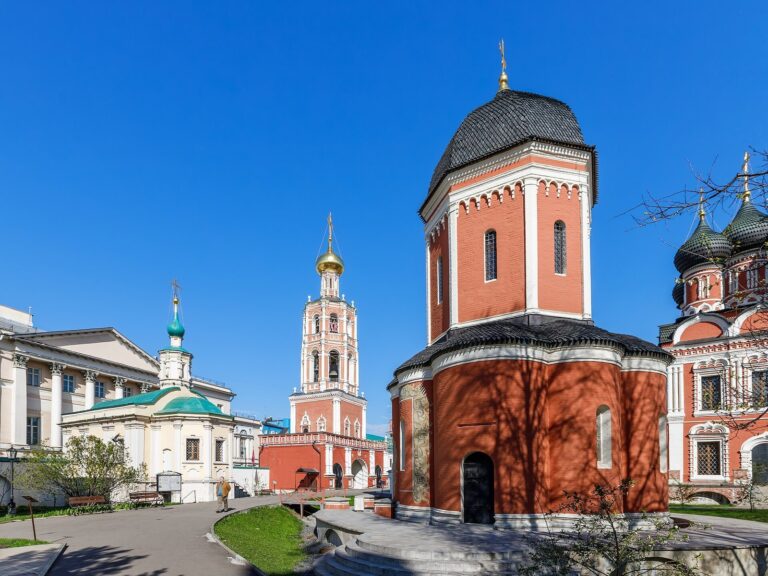
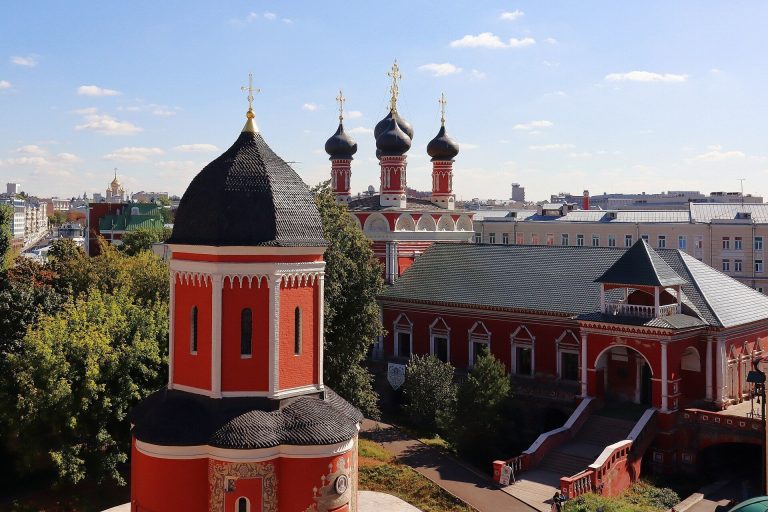
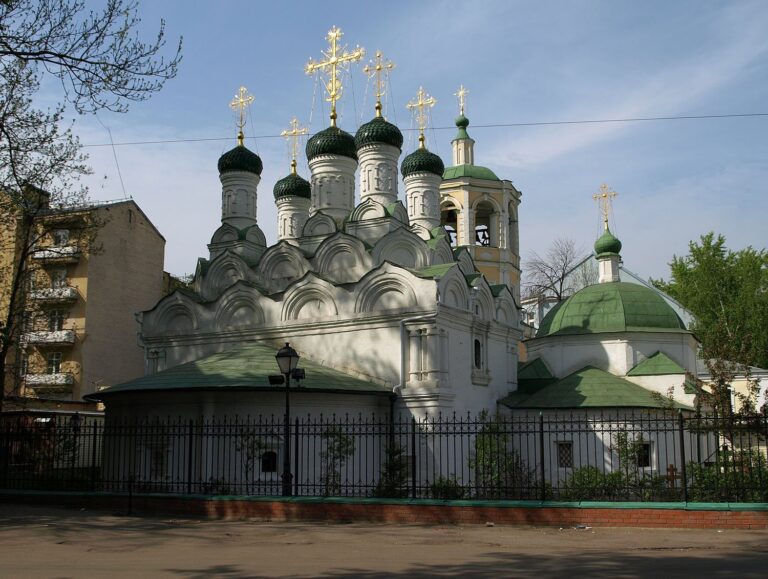
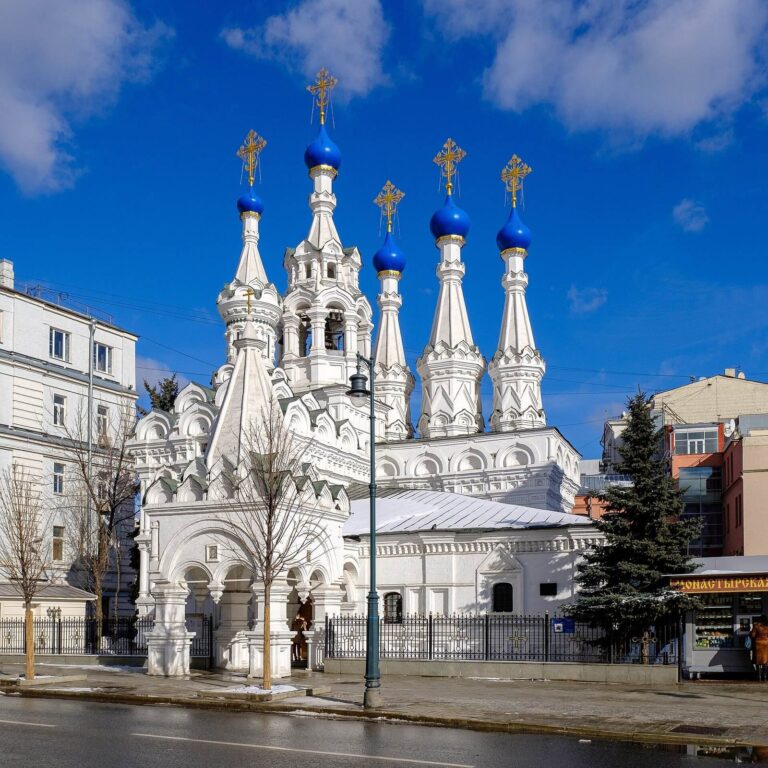
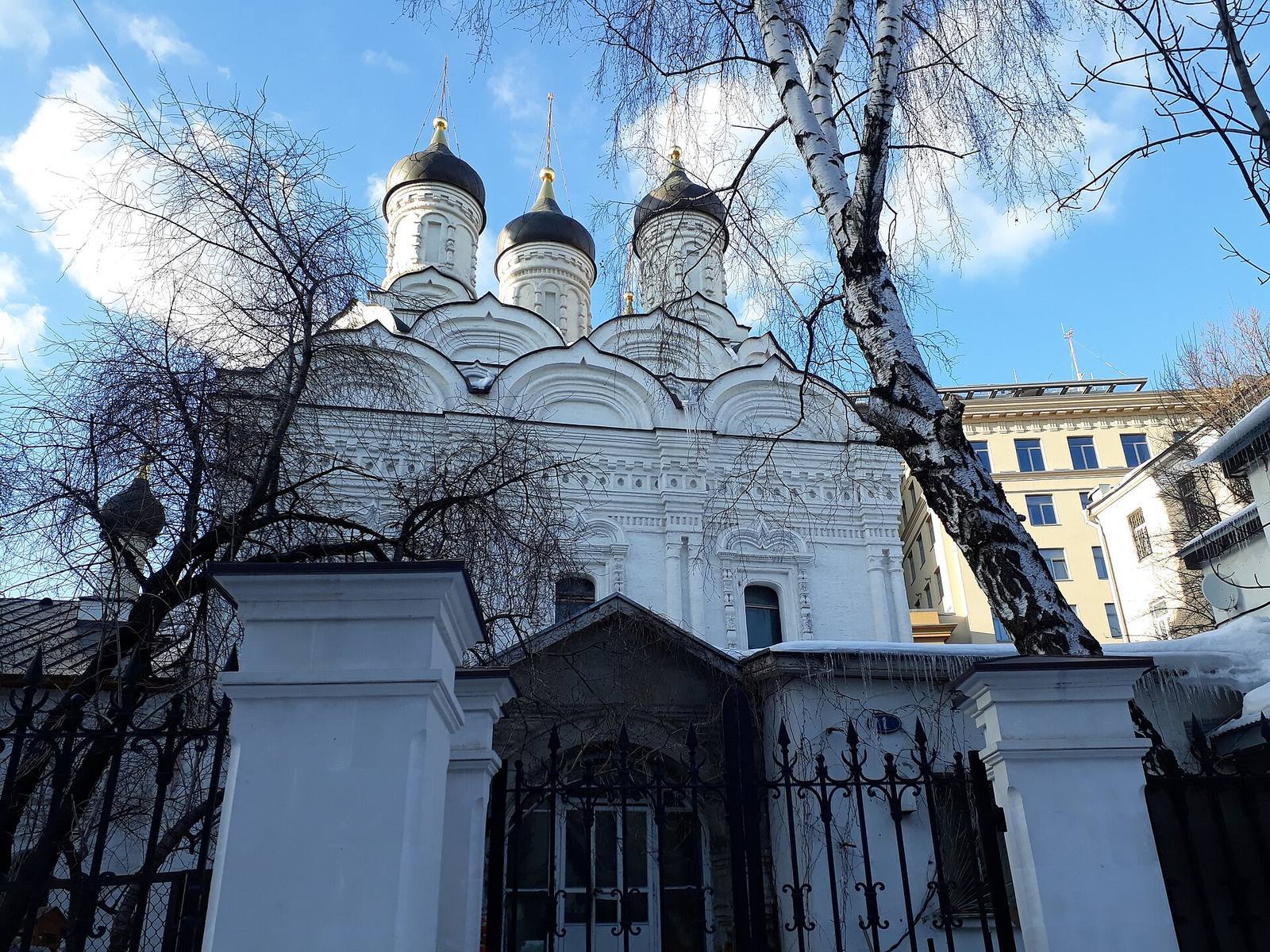
The church complex brings together a central church, side chapels, and a shared bell tower. Its seventeenth-century flame-like design has an upward silhouette suggestive of a flame, with five domes above kokoshniks, curved, gable-like decorative features used in Russian architecture.
Main church
The main altar is dedicated to the Theotokos of the Sign. Carved surrounds frame the church’s windows, forming part of its distinctive exterior.
Side chapels
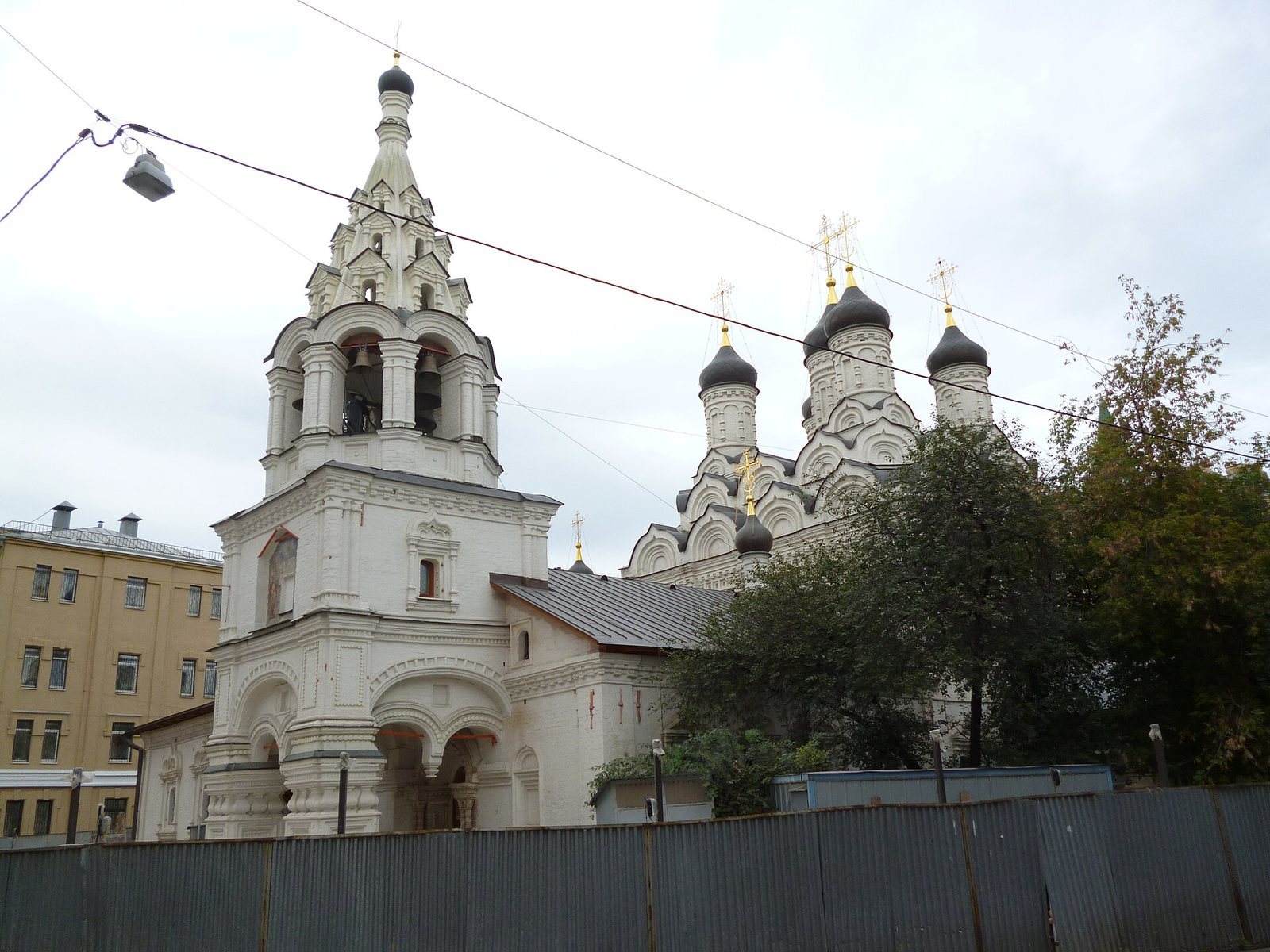
The side chapels are dedicated to St Nicholas the Wonderworker and Clement I. The Clement chapel is shaped like a separate five-domed church joined to the bell tower. In 1754, a chapel dedicated to All Saints was added on the church’s southeast side. During renovations in 1780, four domes were removed from the Clement chapel, leaving one. Its altar was relaid in 1819, and its iconostasis, the screen of icons separating the sanctuary from the main body of the church, was renewed in 1843. Later restoration returned domes as part of the church’s restored earlier appearance.
Bell tower
A fresco of angels survives in the framed case above the bell-tower entrance, near the place where an icon was formerly located.
Detectives’ memorial
A memorial installed on the grounds in 2015 commemorates Moscow detectives killed in the line of duty. Sculptor Ivan Cherapkin, an Honored Artist of Russia, depicted the Archangel Michael, a prominent figure in Christian tradition, carrying a spear and a shield bearing Moscow’s coat of arms and the inscription “MUR, Criminal Investigation Department.”