Roman Stadium of Patras: Venue for the Caesarea Games
Site at a Glance
- Popularity
- Low
- Country
- Greece
- Primary era
- Classical
- Eras represented
- Classical
- Civilizations
- Roman
- Site type
- Entertainment
- Remains
- Stadium
On this page4 sections
History
Construction and games
The Roman Stadium of Patras is an ancient venue for sports and performances in Greece, built under Emperor Domitian around AD 80–90. It may have been an imperial gift marking 100 years since Patras was established as a Roman colony, a settlement founded under Roman authority.
The stadium hosted the Caesarea, festivals held in honor of the emperor that combined athletic contests with cultural events. Athletes came from across Greece, and inscriptions found elsewhere in the country name victors in the games. Performances included theater and music. Mosaics and statues from Roman Patras also point to gladiatorial contests in the city, which were probably held at the stadium.
Burial and rediscovery
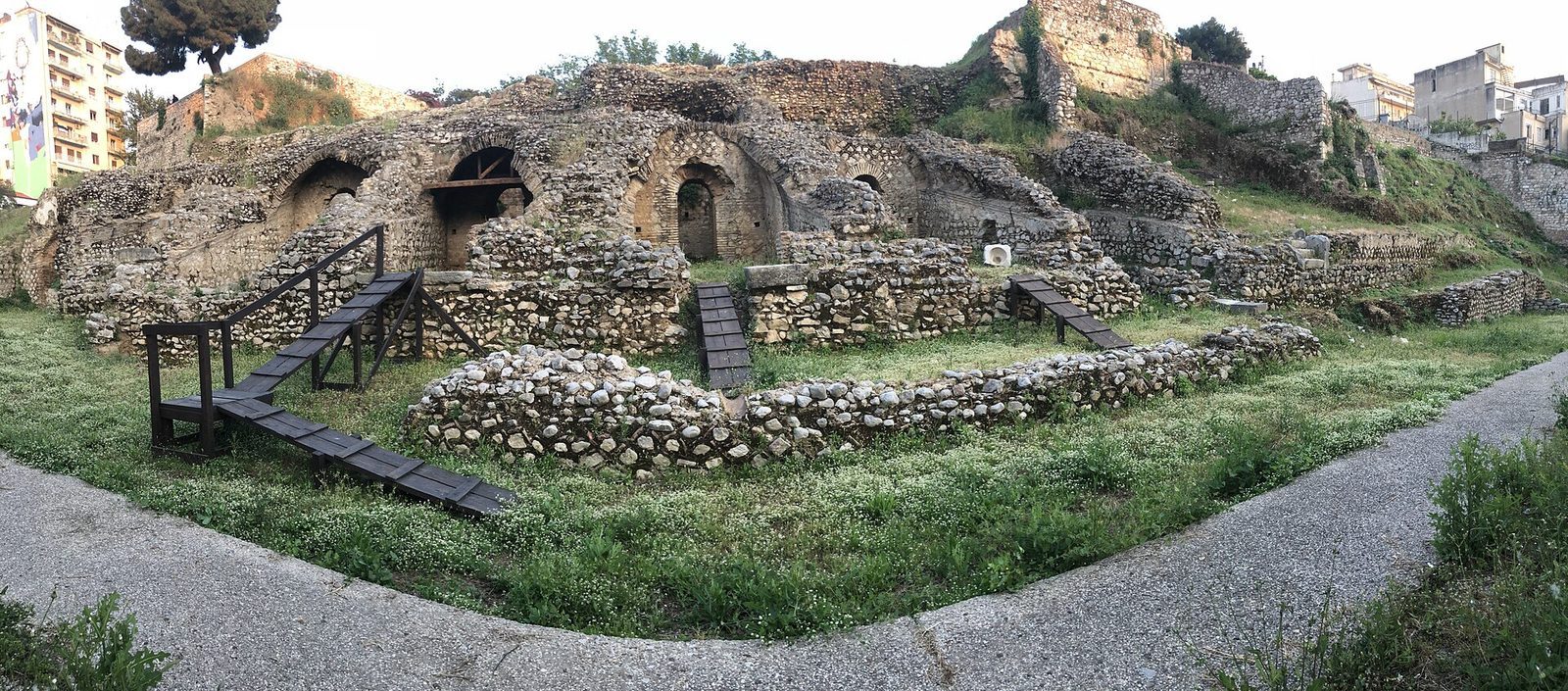
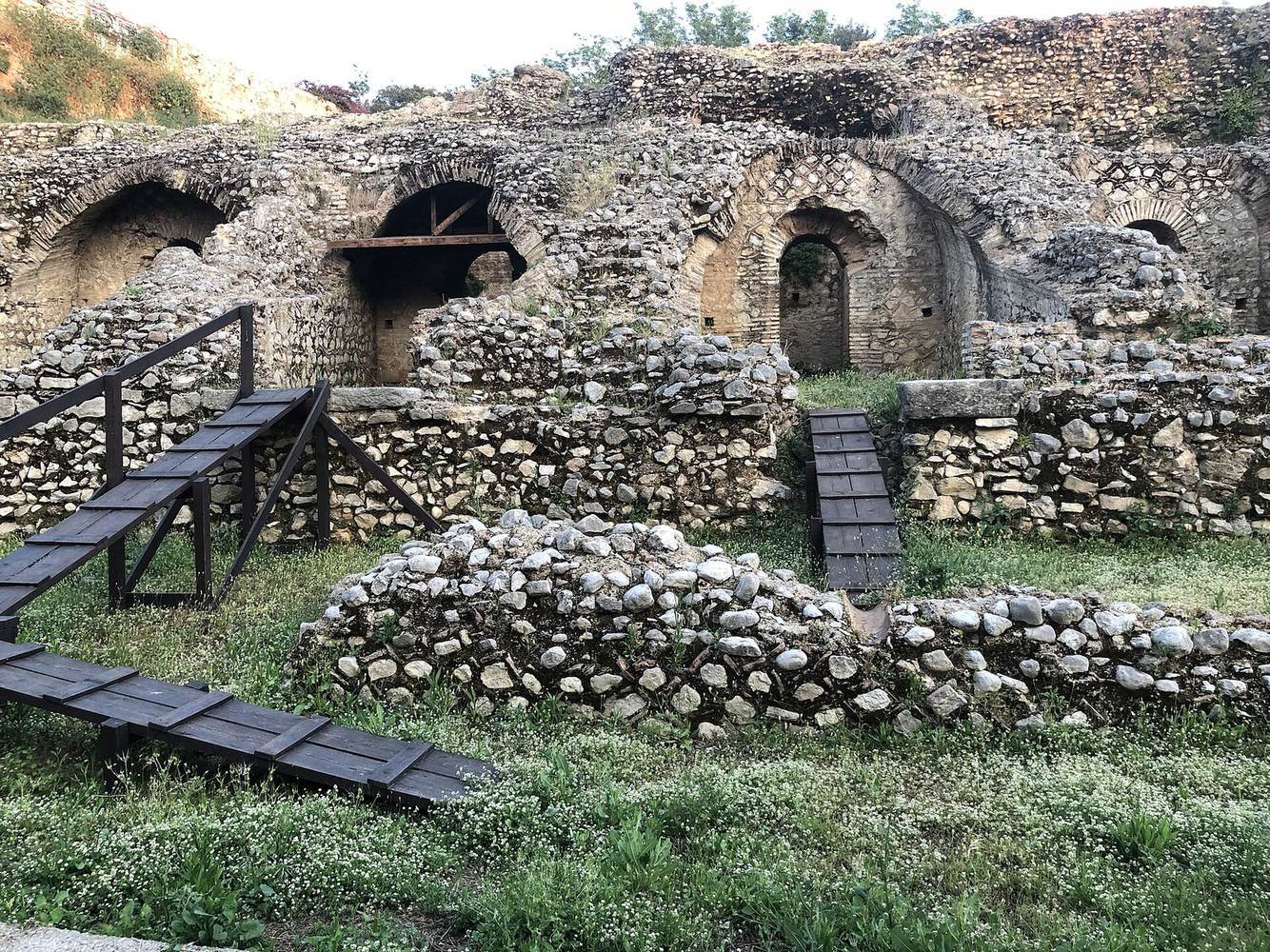
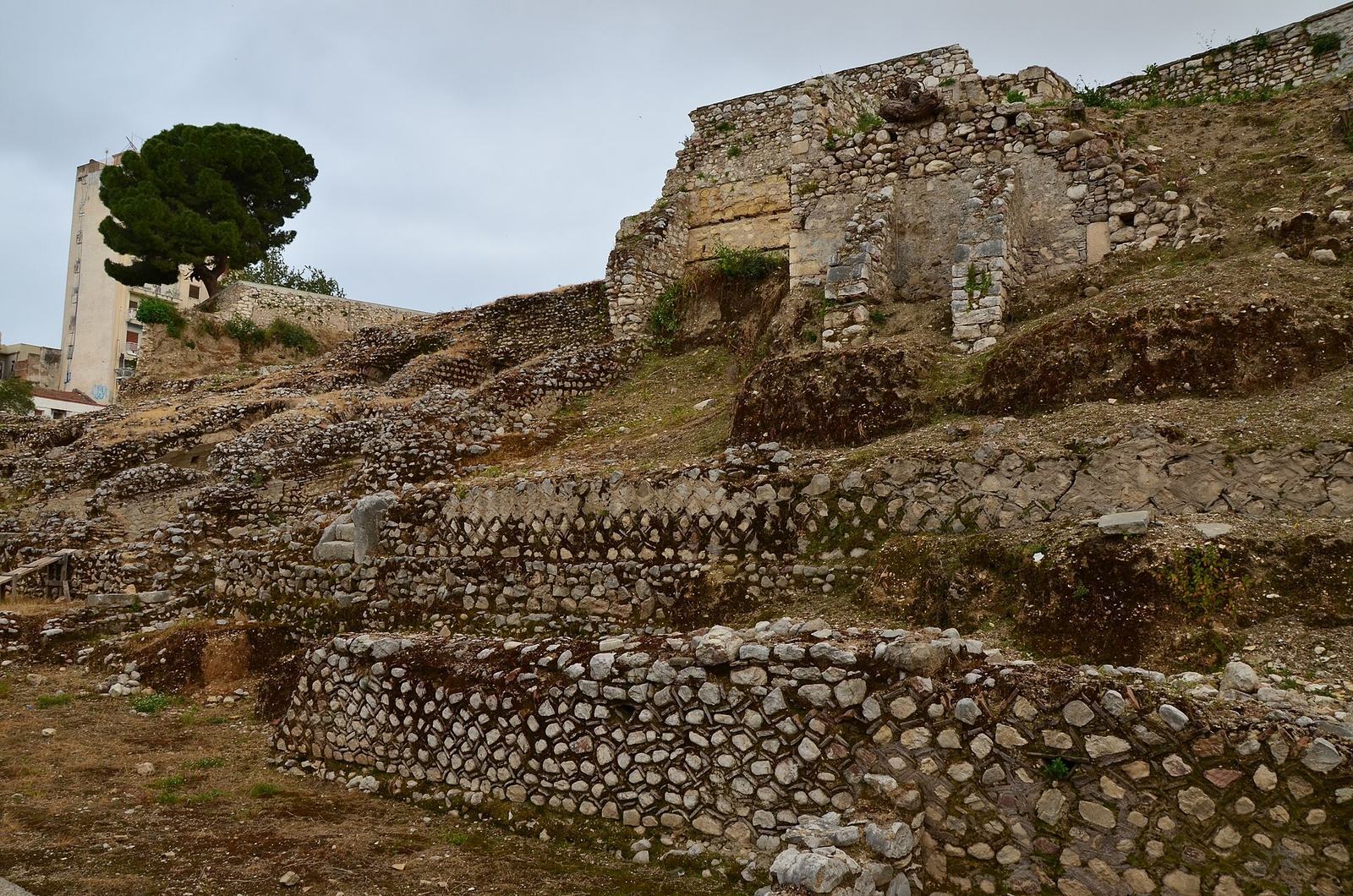
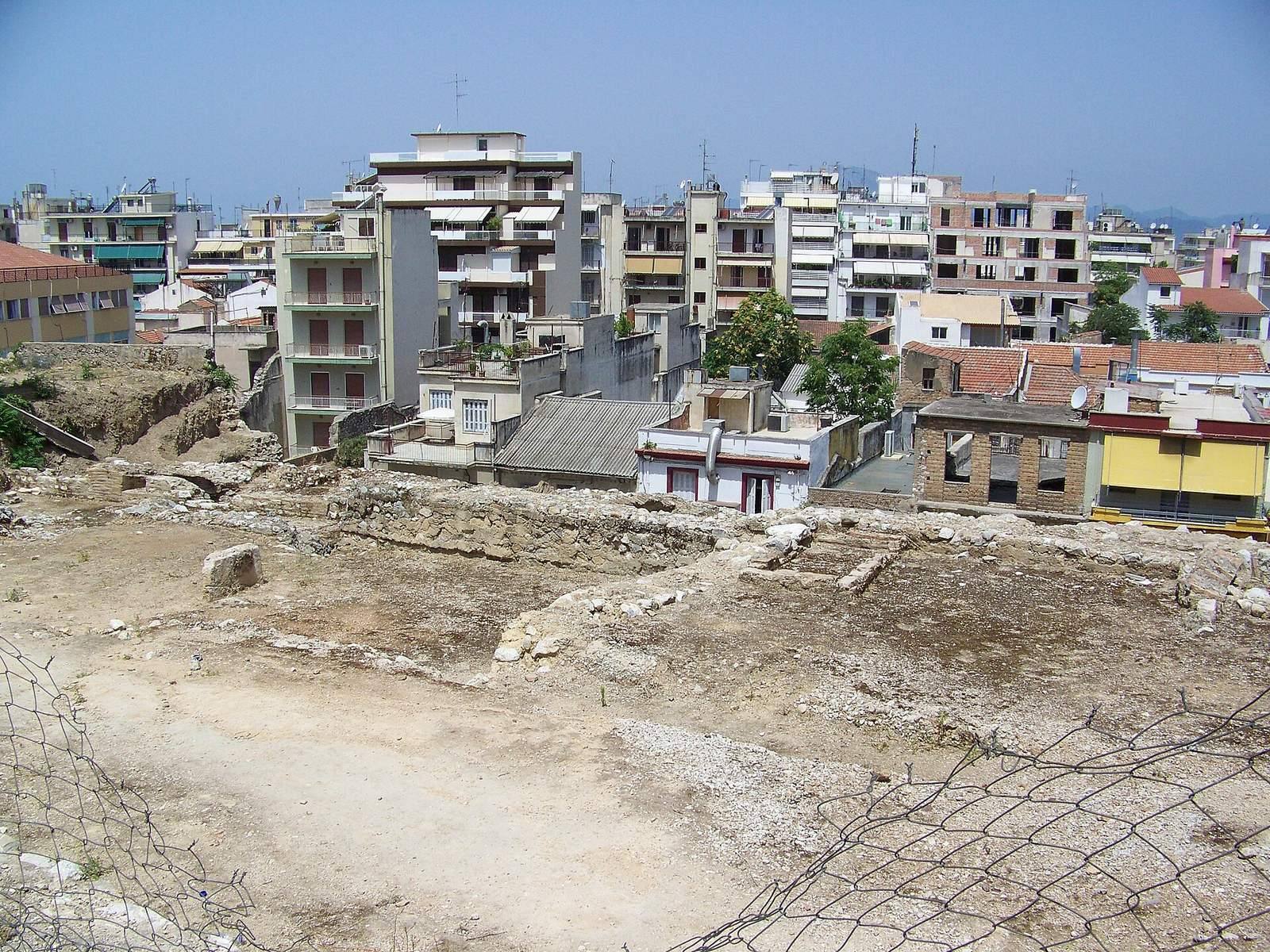
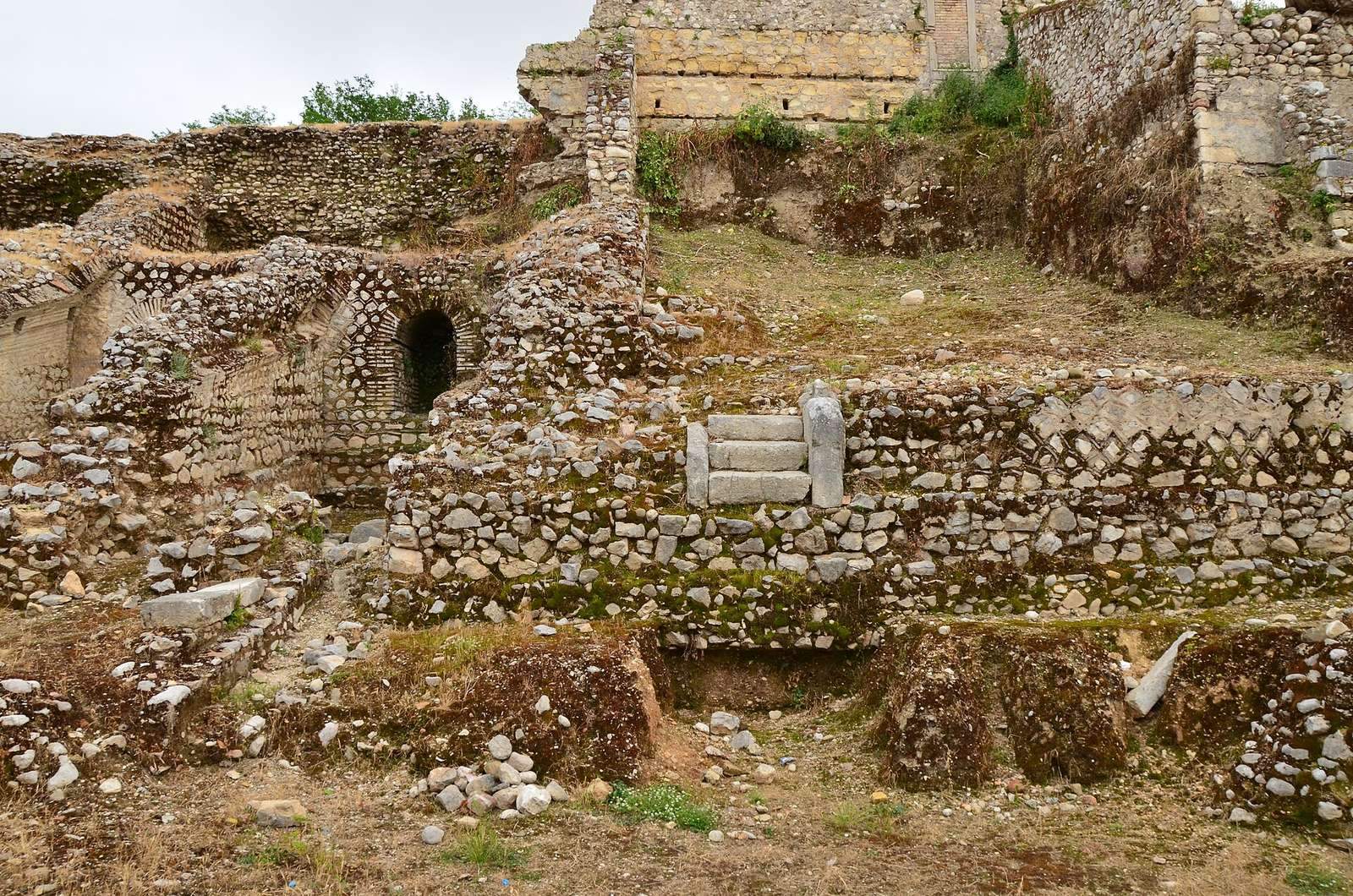
The stadium remained visible until about 1870, when houses were built over it. Its eastern section was uncovered in the 1990s. Excavation has continued as buildings above the remains are acquired and removed through a joint effort by the municipality and the Ministry of Culture. The exposed section has been restored and prepared for presentation.
Remains
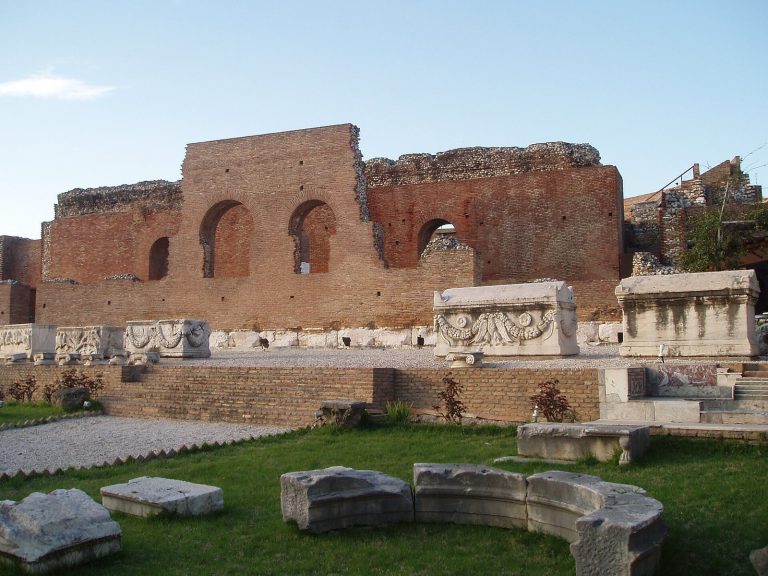
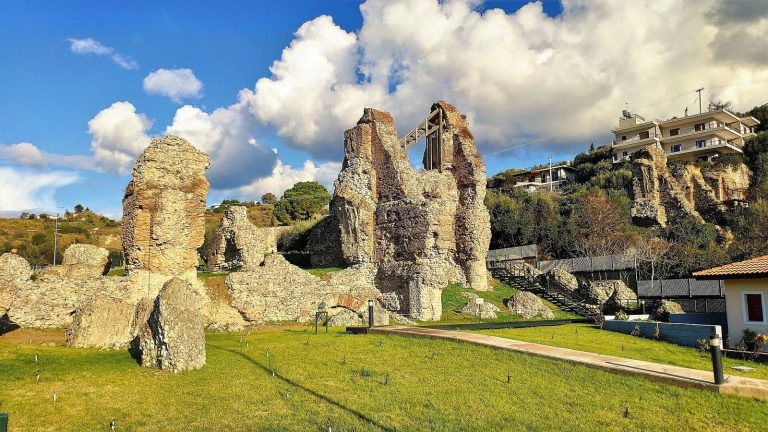
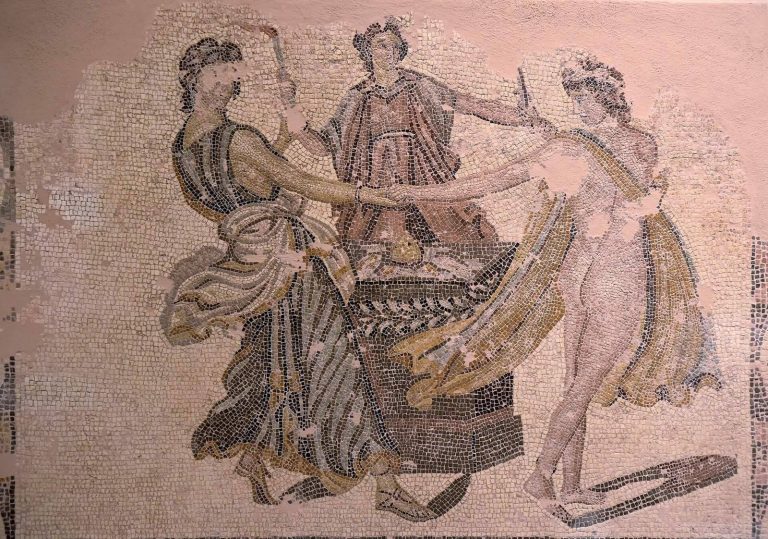
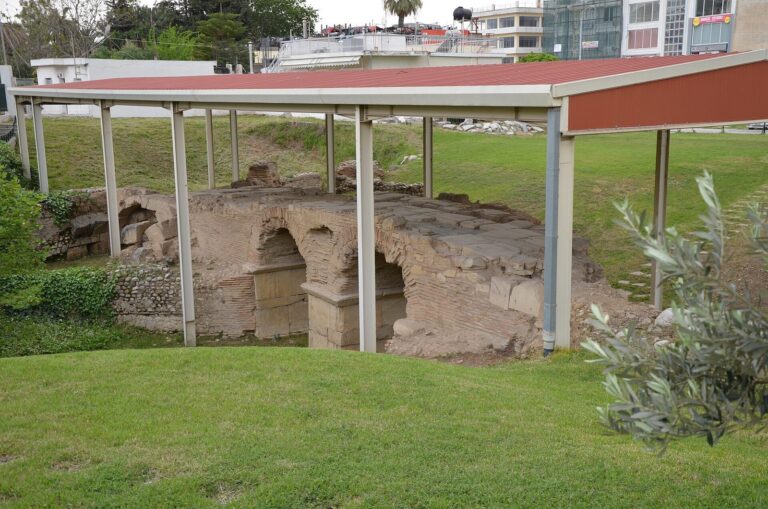
The ruins lie in central Patras beside the surviving Roman Odeon, an ancient building used for musical performances, often under a roof. The archaeological area covers 18,000 square metres, while much of the stadium remains beneath apartment blocks and other buildings. The stadium measured 200 metres long and 90 metres wide, with an elongated plan and two rounded ends. A low wall enclosed its performance area. Its eastern side was built into a natural slope, and its construction used fired brick and Roman concrete, made from lime-based mortar and aggregate. The eastern section is the main exposed part. A mosaic from a Roman house, now in the Patras Archaeological Museum, depicts the stadium alongside musical, theatrical, and athletic contests.