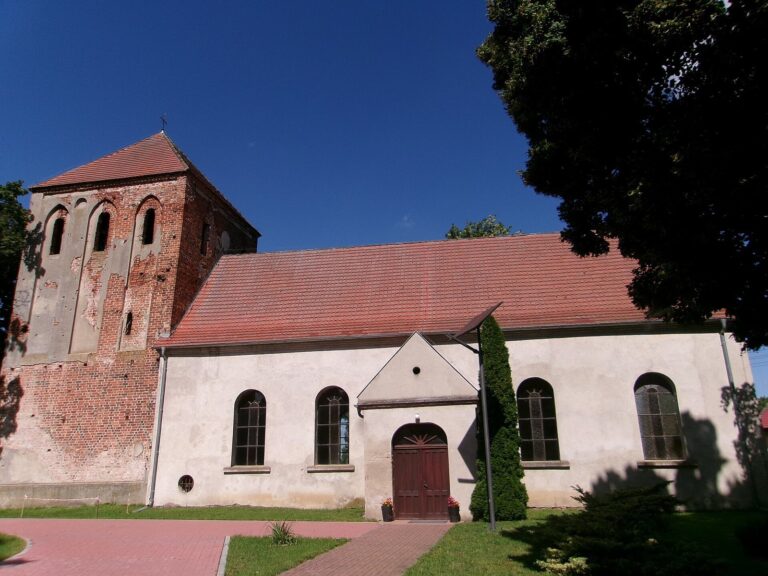
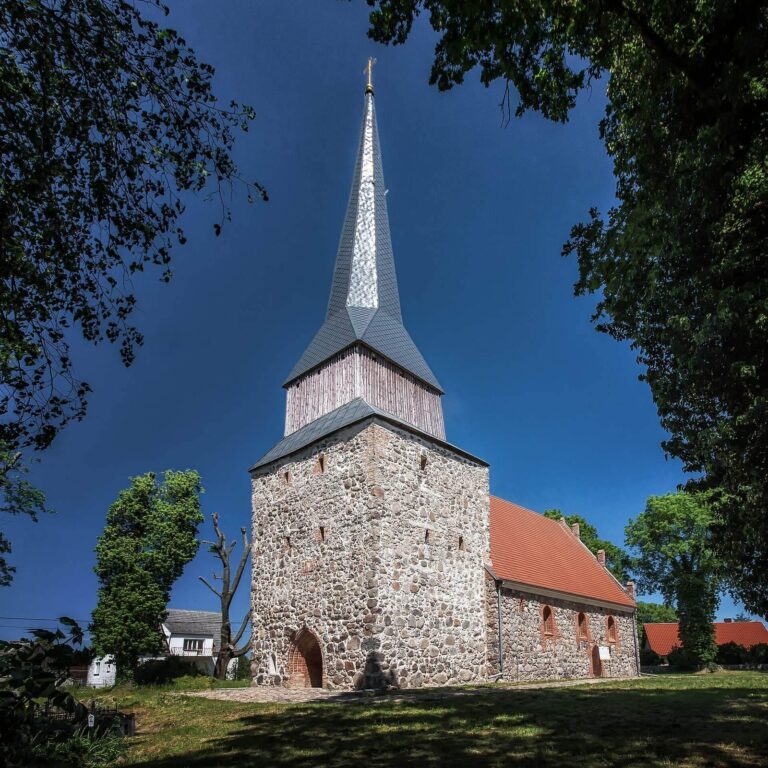
Our Lady Queen of Poland Church in Kunowo: A 15th-Century Roman Catholic Church
Site at a Glance
- Popularity
- Very Low
- Country
- Poland
- Primary era
- Medieval
- Eras represented
- Medieval, Early Modern, Modern
- Civilizations
- Duchy of Pomerania, Holy Roman Empire, Kingdom of Prussia
- Site type
- Religious
- Remains
- Church
On this page4 sections
History
Our Lady Queen of Poland Church is a Roman Catholic church in Kunowo, Poland, built in the 15th century and remodeled in the 18th. It is a filial church, meaning it is associated with a parish rather than serving as its principal church. The parish in Kobylanka is named for St Anthony of Padua, a 13th-century Franciscan friar and preacher, and Blessed Stefan Wyszyński, a Polish cardinal and primate; “Blessed” is a Catholic title recognizing beatification. The church is dedicated to Mary under the Catholic title Our Lady Queen of Poland, commemorated liturgically on 3 May. After the Second World War, it was blessed for Catholic worship on 15 August 1945.
Remains
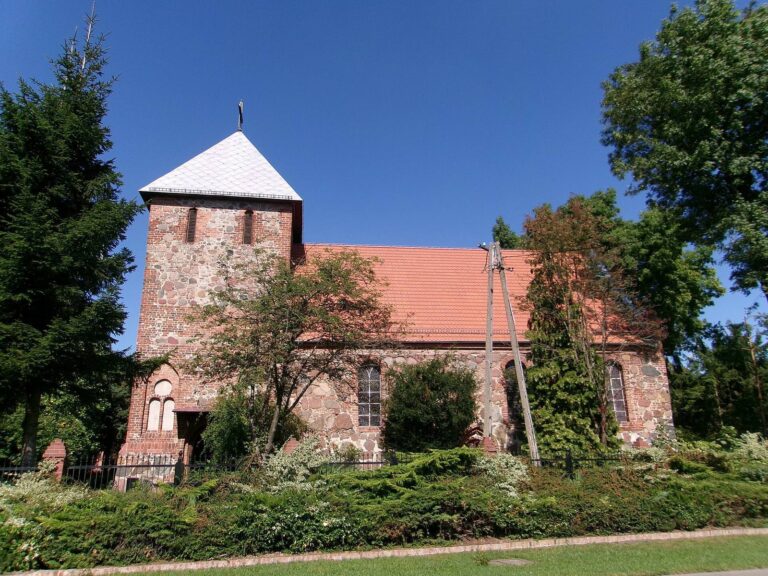
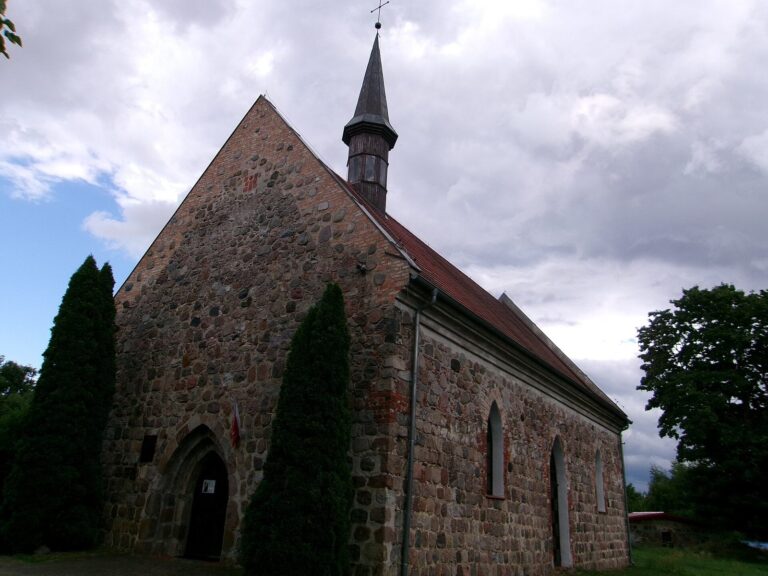
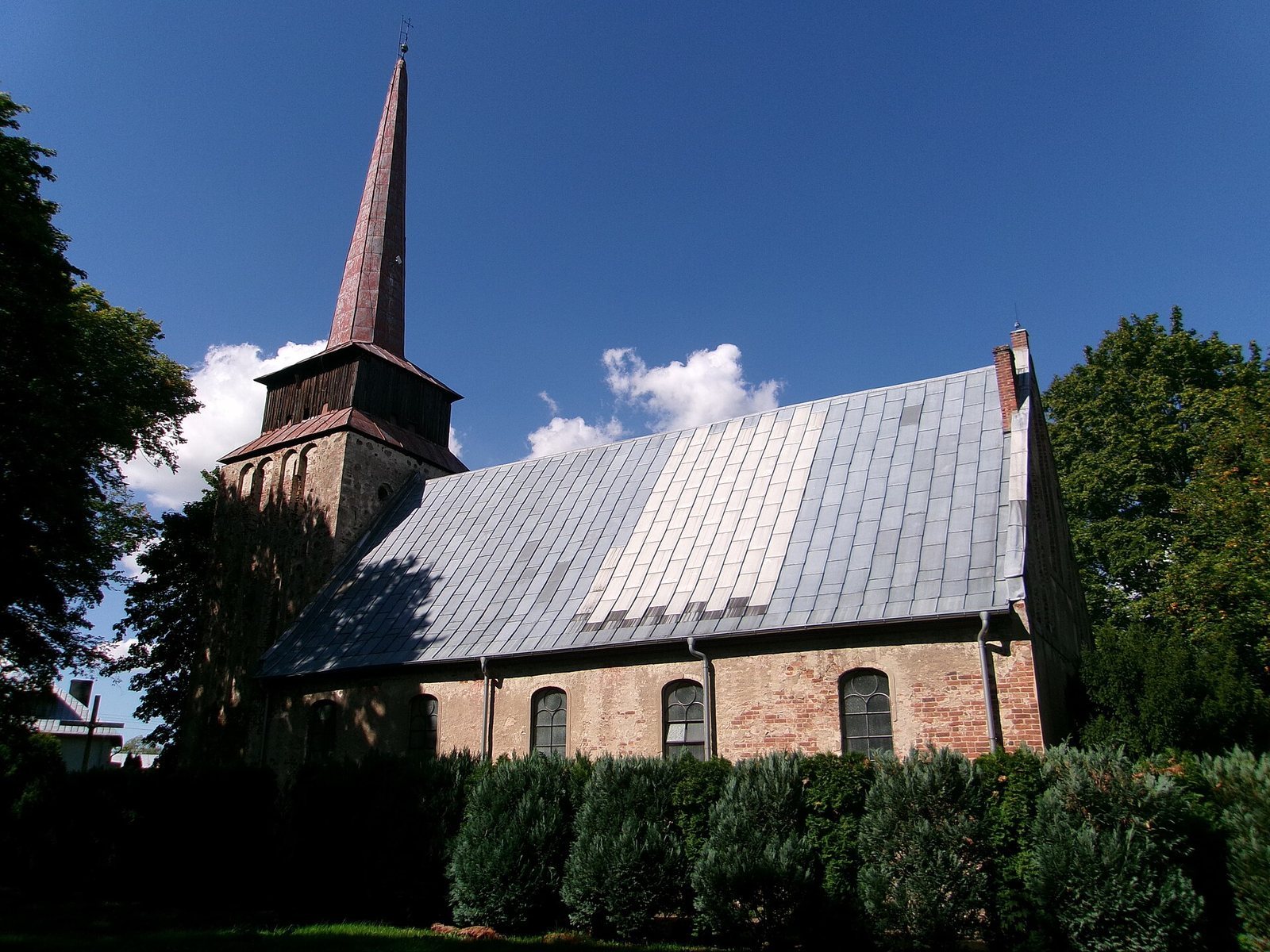
The church has a rectangular plan and is constructed of fieldstone and brick. Its surviving features combine the medieval building with alterations and furnishings from later centuries.
Exterior
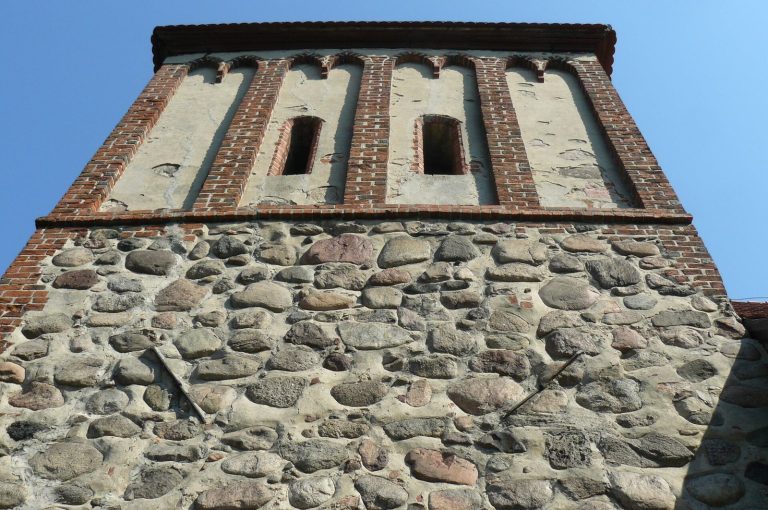
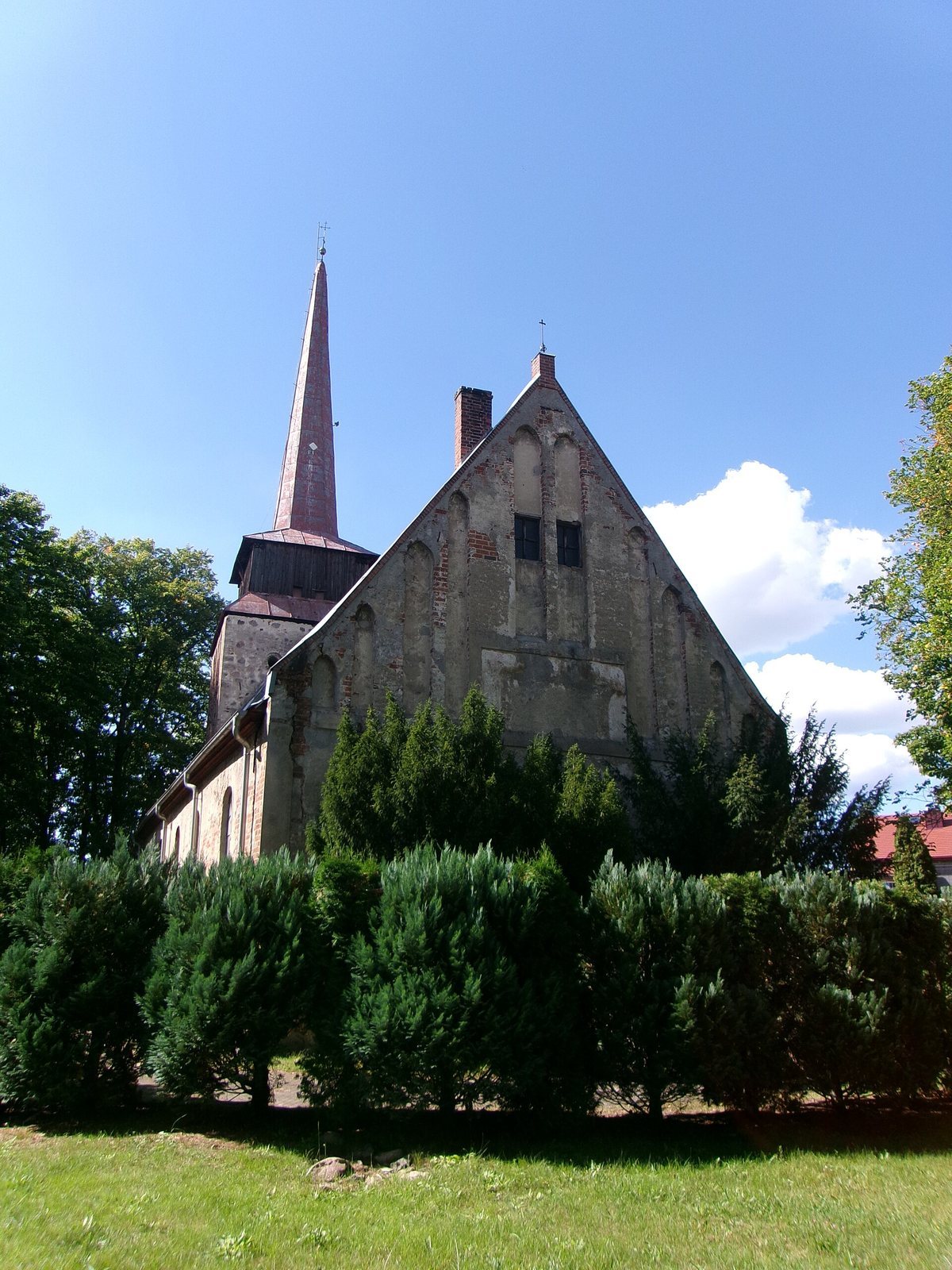
Decorative blind recesses, shallow wall spaces without openings, appear on the east gable. The nave’s side windows have segmental arches, whose curves are shallower than semicircles; they were widened during the 18th-century remodeling. Three small porches were also added along the north side at that time. A square stone tower adjoins the west end. Pointed-arch recesses decorate its exterior, and a shallow-arched portal opens at ground level. Above, a four-sided drum, the section beneath a roof or spire, supports a pointed spire.
Interior and furnishings
The interior has an elevated ceiling dating to the 18th century and a 19th-century choir gallery, a raised platform for singers, against the west wall. In the east wall, a niche for the Eucharist is secured by an iron grille and 15th-century oak doors. A tempera painting, made with pigments in a water-based binder, on the doors’ inner face depicts the Man of Sorrows, a devotional image of Christ emphasizing his suffering. The furnishings include a Baroque altar, in a European style of dramatic forms and ornament, with a Crucifixion scene, and a pulpit with a canopy dated 1714. Three tomb slabs dated 1584, 1737, and 1754 are set into the floor of the area around the altar.