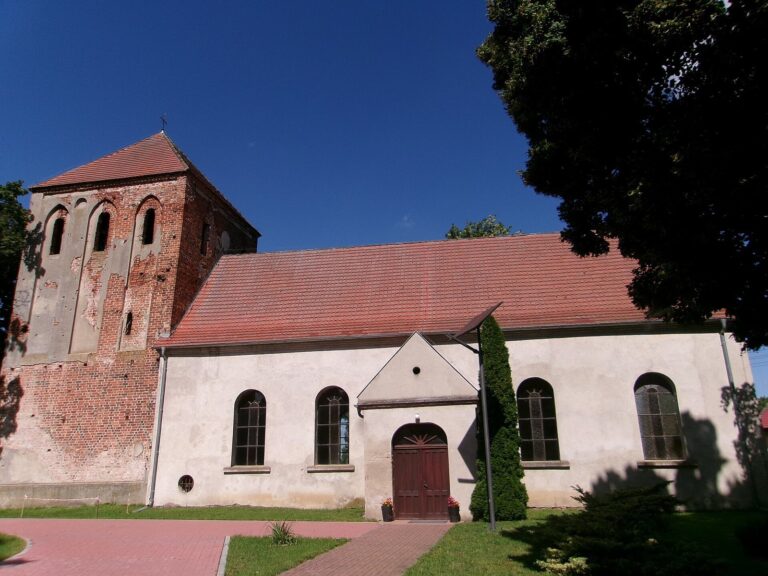
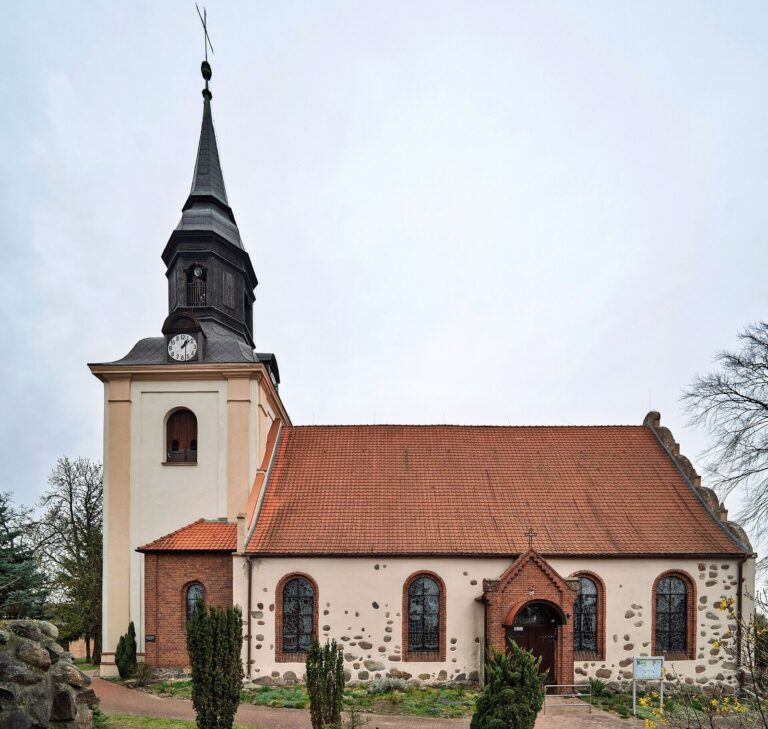
Church of St Faustina Kowalska in Strachocin: A Medieval Catholic Church
Site at a Glance
- Popularity
- Very Low
- Country
- Poland
- Primary era
- Medieval
- Eras represented
- Medieval
- Civilizations
- Unclassified
- Site type
- Religious
- Remains
- Church
On this page7 sections
History
Medieval church and Lutheran use
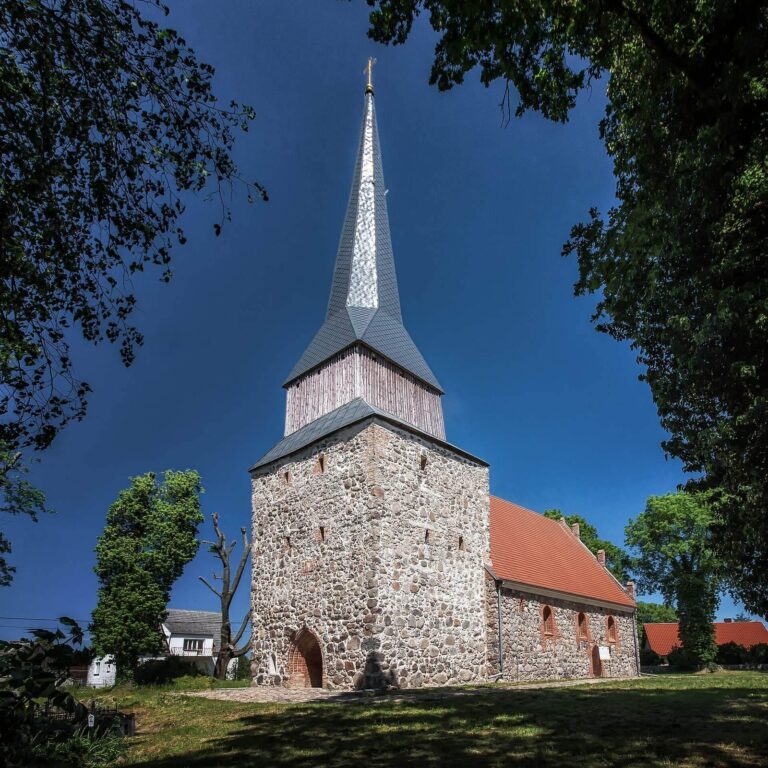
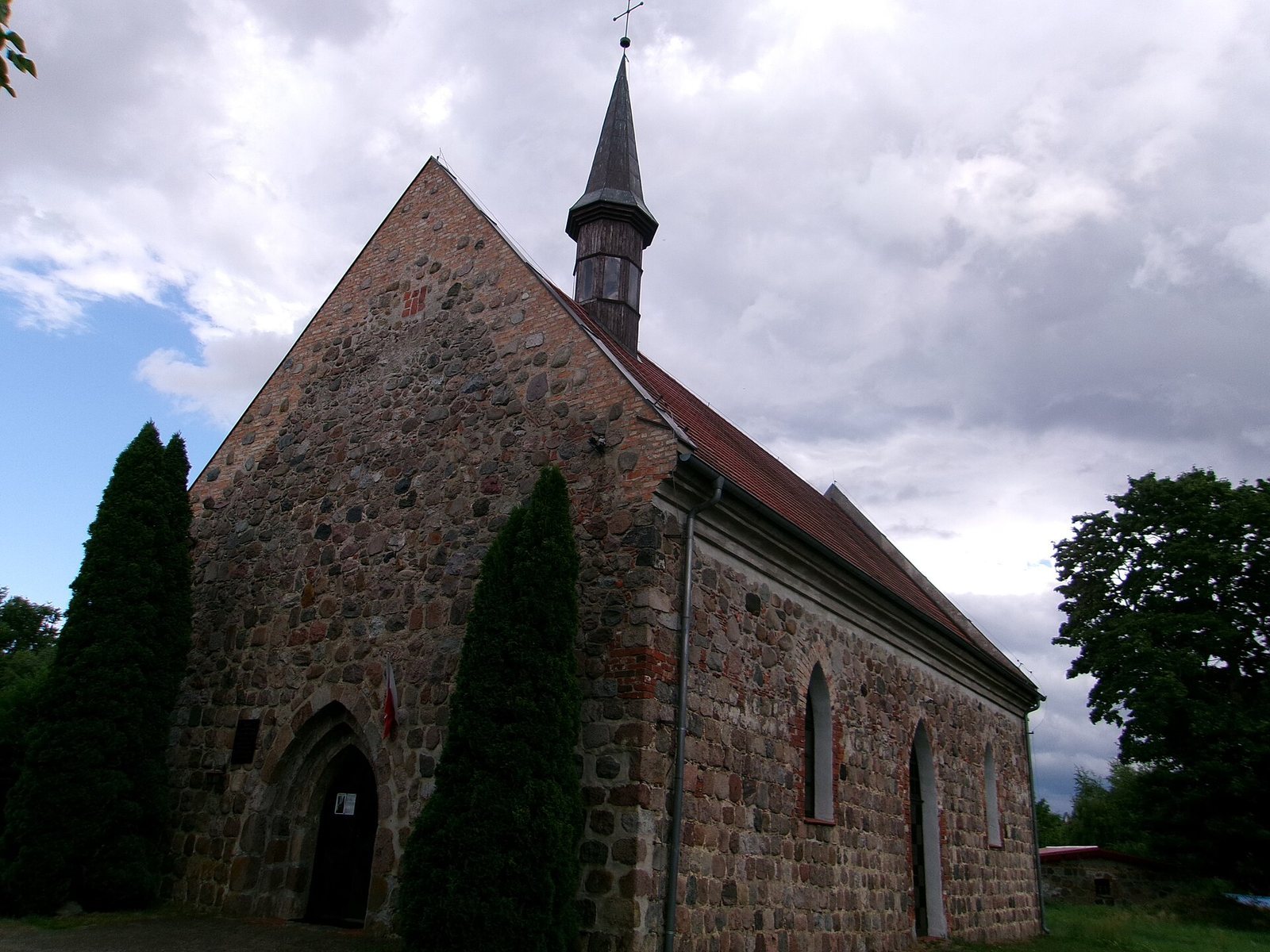
The Church of St Faustina Kowalska is a 13th-century stone church in Strachocin, Poland. From the Reformation onward, it was used by Lutherans, members of a Protestant tradition that emerged during that period.
Wartime damage and Catholic rebuilding
The church was devastated in 1945 and fell into disrepair after the Second World War. It was rebuilt between 1994 and 2004 to a design by engineer Maciej Płotkowiak, then blessed as a Catholic church by Bishop Zygmunt Kamiński. Today, it is a Roman Catholic church affiliated with the parish of St Maximilian Maria Kolbe in Krąpiel. Dedicated to St Faustina Kowalska, a Polish nun and mystic associated with devotion to Divine Mercy, it observes her liturgical memorial on October 5.
Remains
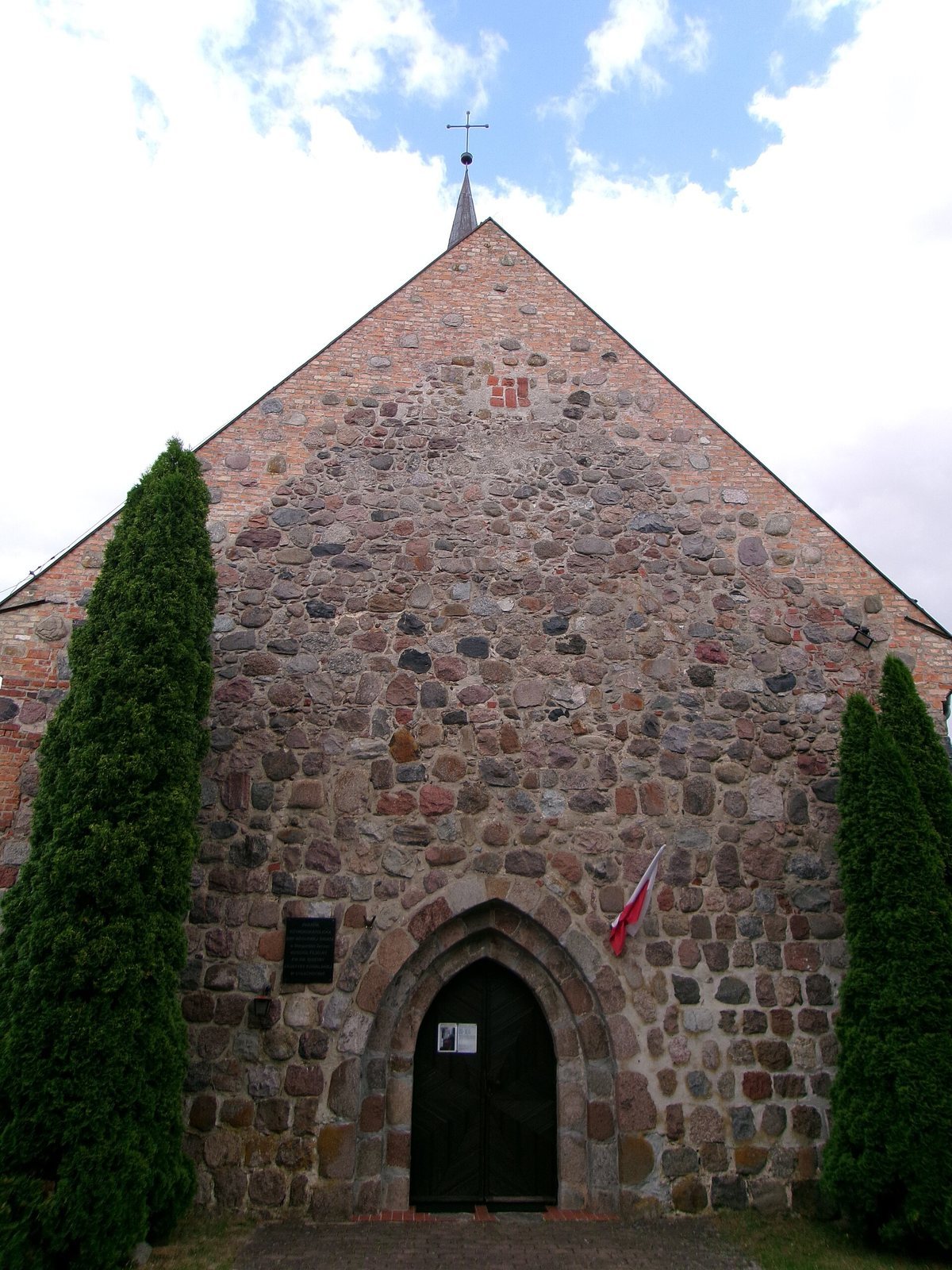
The stone building has a rectangular plan measuring 20 by 11 metres. Its broad, unified interior does not have a central nave rising above side aisles. The upper wall sections show signs of rebuilding.
Church fabric and openings
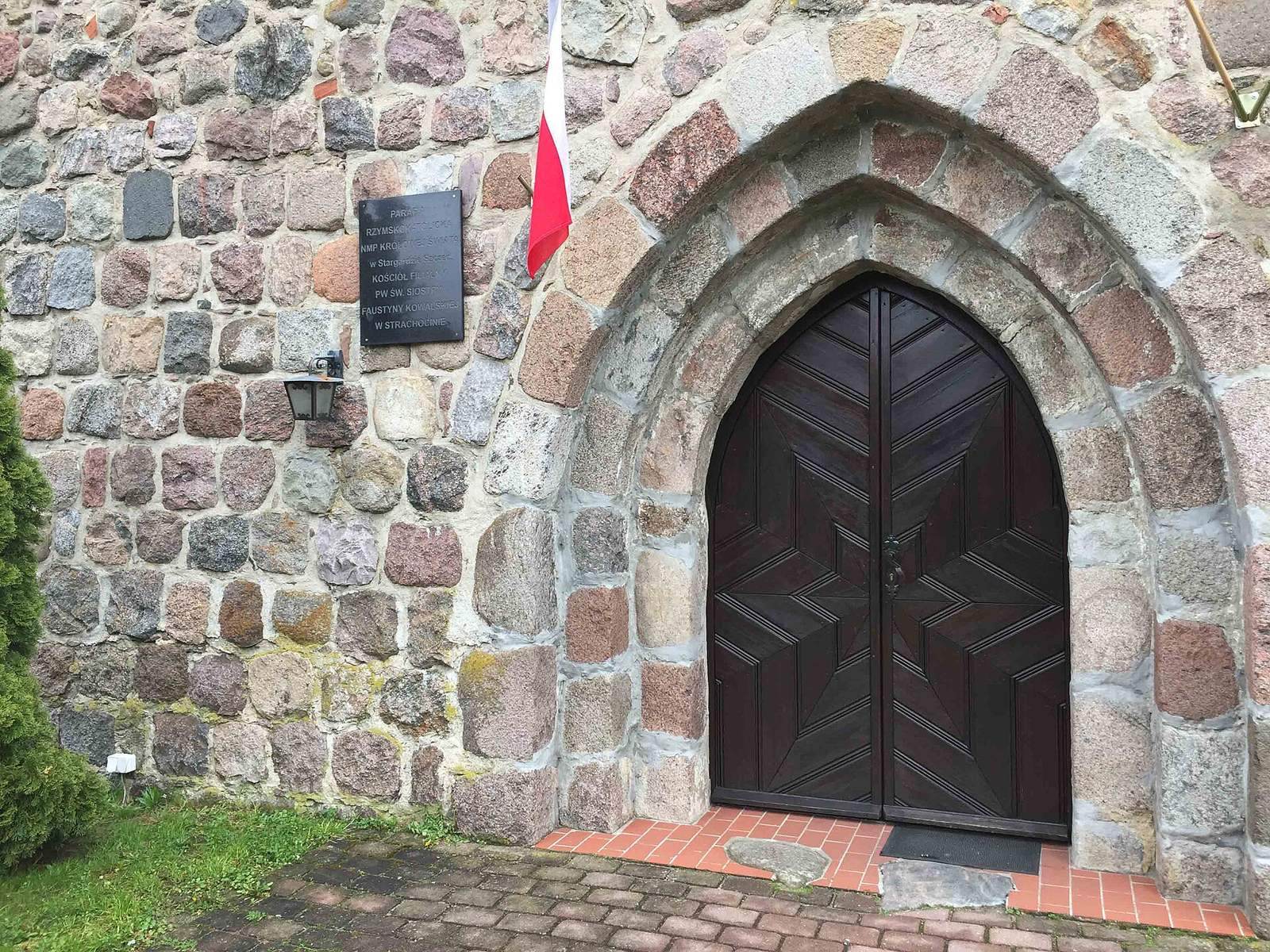
The west doorway is framed by three stepped recesses. A faint checkerboard mason’s mark is carved into its left side, and an equal-armed cross into the right. The north doorway has two stepped recesses, while a new Neo-Gothic doorway, built in forms inspired by medieval Gothic architecture, was opened in the south wall. The east wall has two pointed Neo-Gothic windows with a circular window above them. Two windows in the south wall and three in the north were rebuilt in the same style.
Interior and former altar
A niche with a triangular top in the east interior wall serves as the tabernacle, a receptacle for the Eucharist. The church’s former altar, made in the early 18th century in the ornate Baroque style, was transferred after 1945 to St Anne’s Church in Grabowo.
Bell tower and cemetery
A bell cast in 1904 hangs in a free-standing wooden bell tower beside the church. A stone wall encloses the former cemetery around the church grounds. After wartime devastation, its old gravestones were arranged as a lapidarium, a place where stone monuments are displayed.