Church of the Presentation of the Blessed Virgin Mary in Łęczyca: A 15th-Century Gothic Church
Site at a Glance
- Popularity
- Very Low
- Country
- Poland
- Primary era
- Medieval
- Eras represented
- Medieval
- Civilizations
- Duchy of Pomerania, Holy Roman Empire
- Site type
- Religious
- Remains
- Church
On this page8 sections
History
The Church of the Presentation of the Blessed Virgin Mary in Łęczyca, Poland, is a Gothic church built in the 15th century. Gothic is a medieval architectural style associated with features such as pointed arches.
After the Second World War, the building was consecrated as a Catholic church in 1947. It serves as a Roman Catholic branch church of the Parish of Divine Mercy in Parlin. Its dedication refers to the Presentation of the Blessed Virgin Mary, a Christian feast recalling her presentation in the Temple according to tradition. The feast falls on 21 November.
Remains
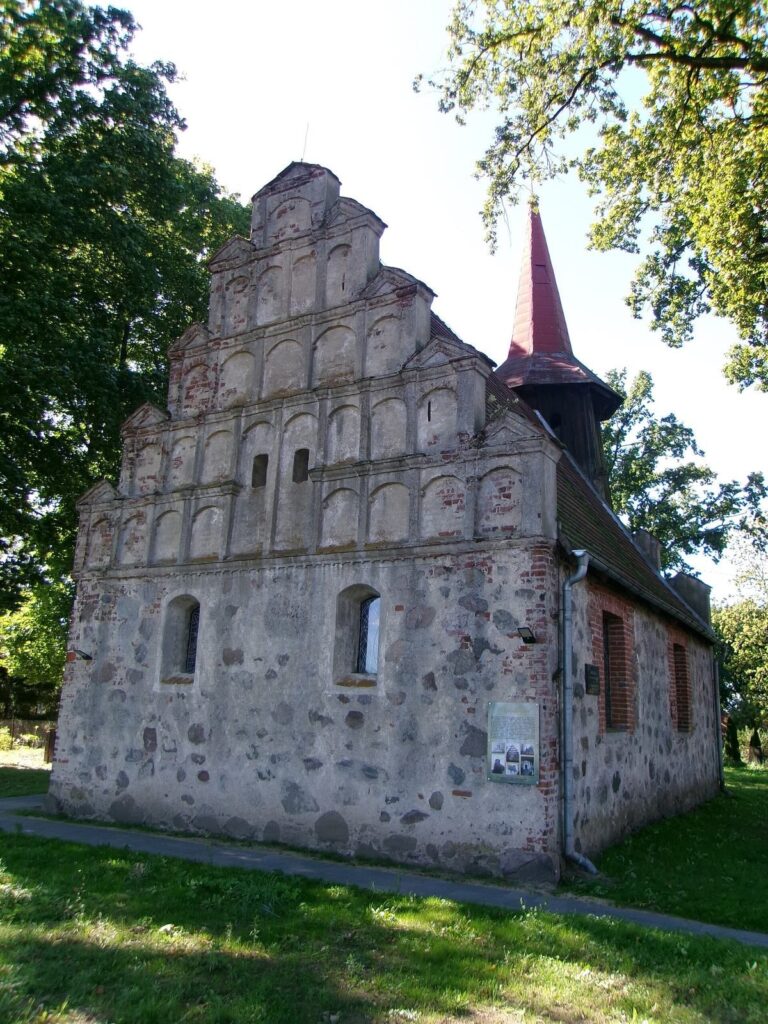
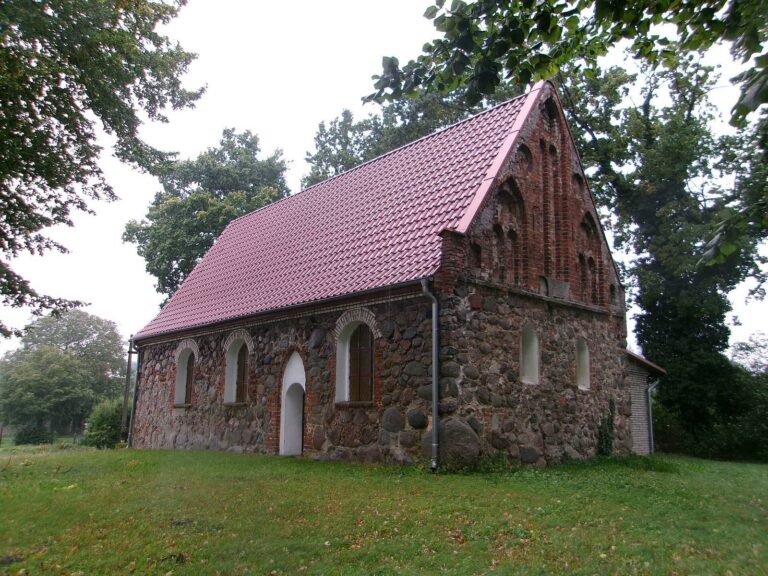
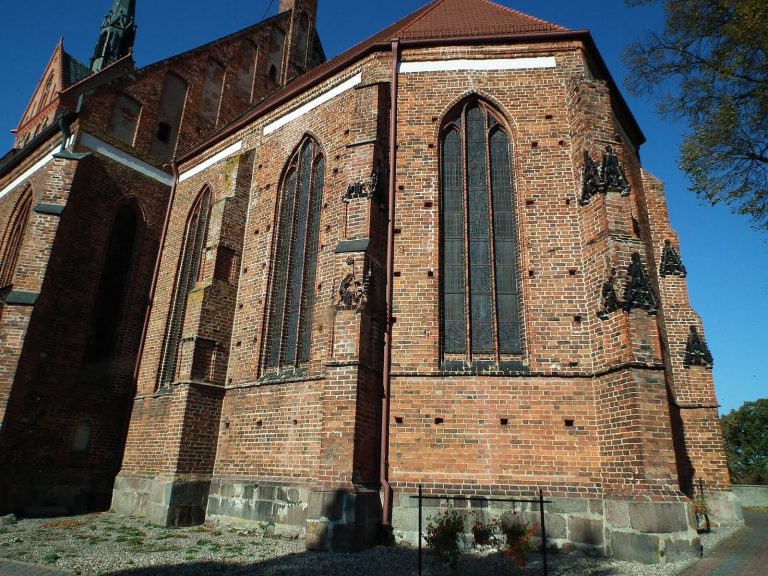
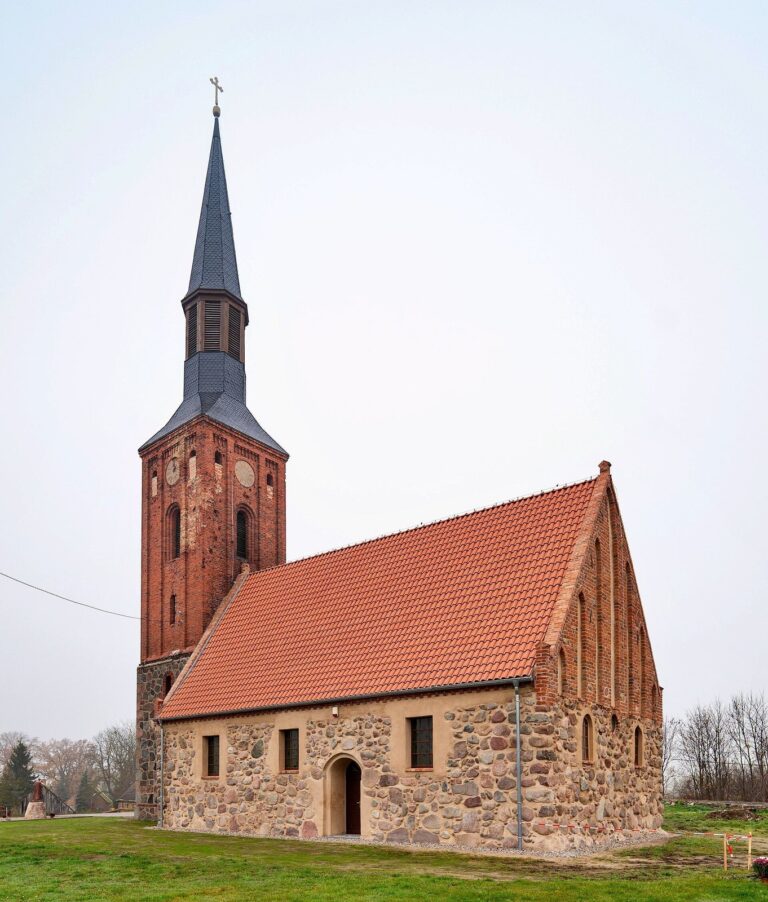
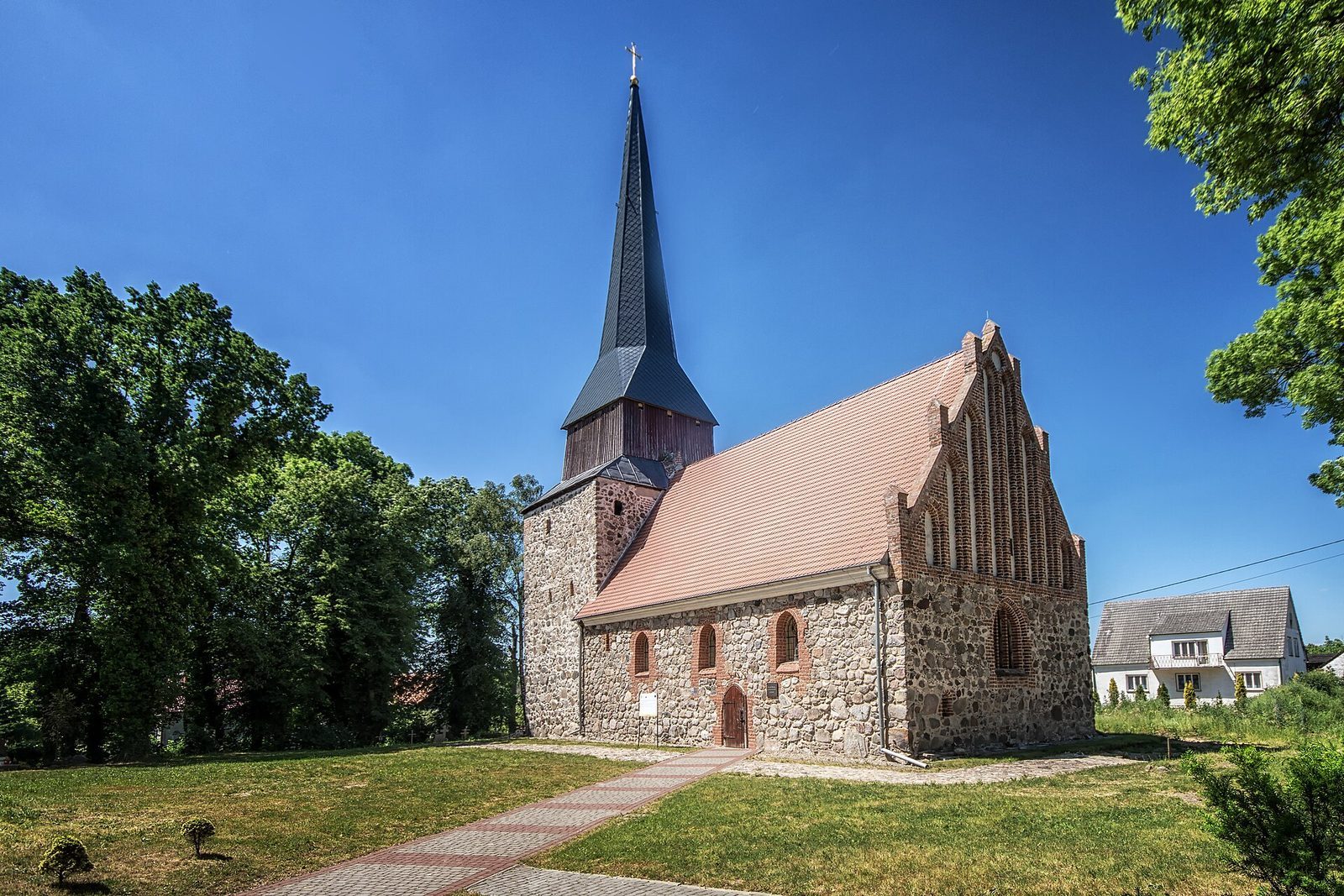
The church has a rectangular, east-oriented plan with a single nave. Fieldstone masonry supports a gabled roof covered with ceramic tiles, and a square tower is attached at the western end.
Exterior
Nave and entrance
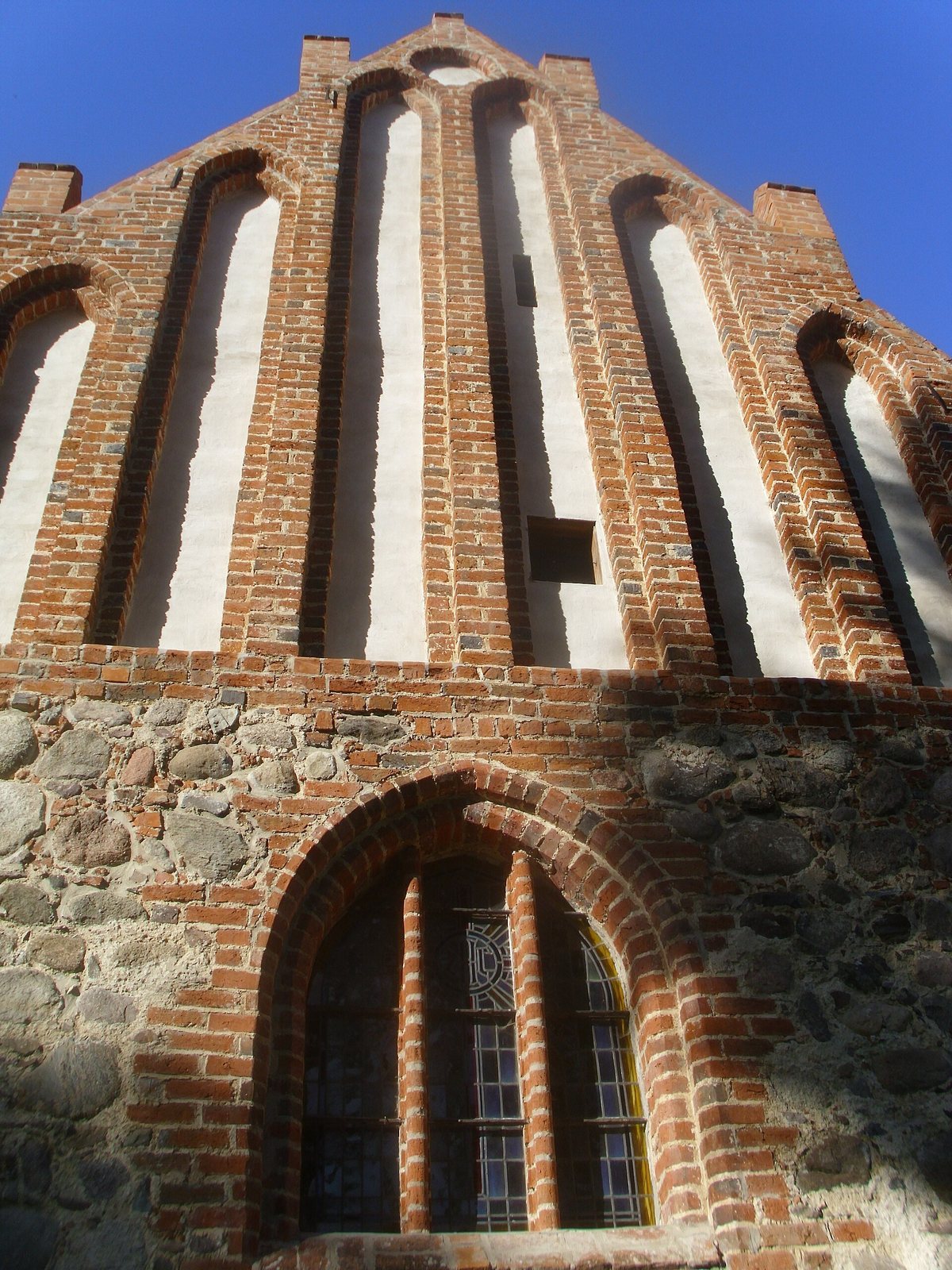
The east wall has a pointed-arch window, while its gable features pointed-arch blind panels, shallow decorations that do not open. Pointed-arch windows also light the nave’s side walls. A round-arched entrance portal occupies the south wall, with traces of a sundial above it.
Tower and enclosure
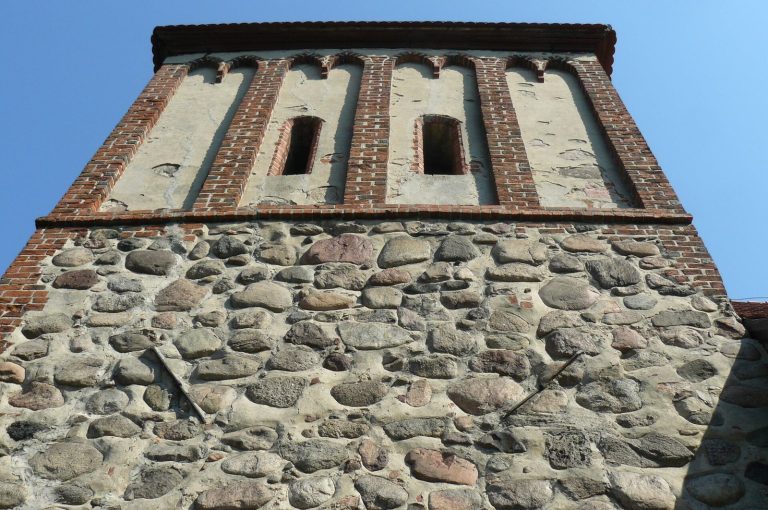
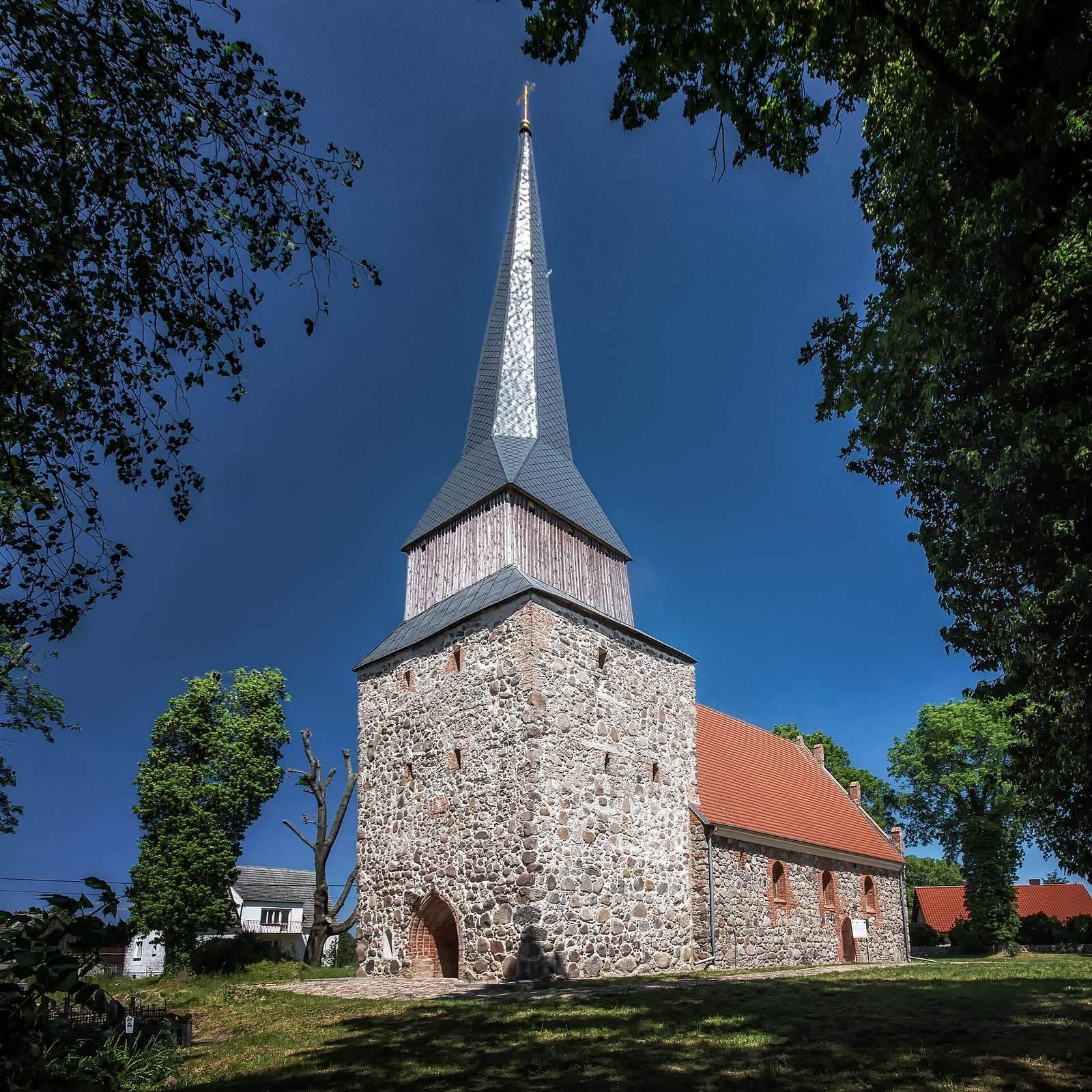
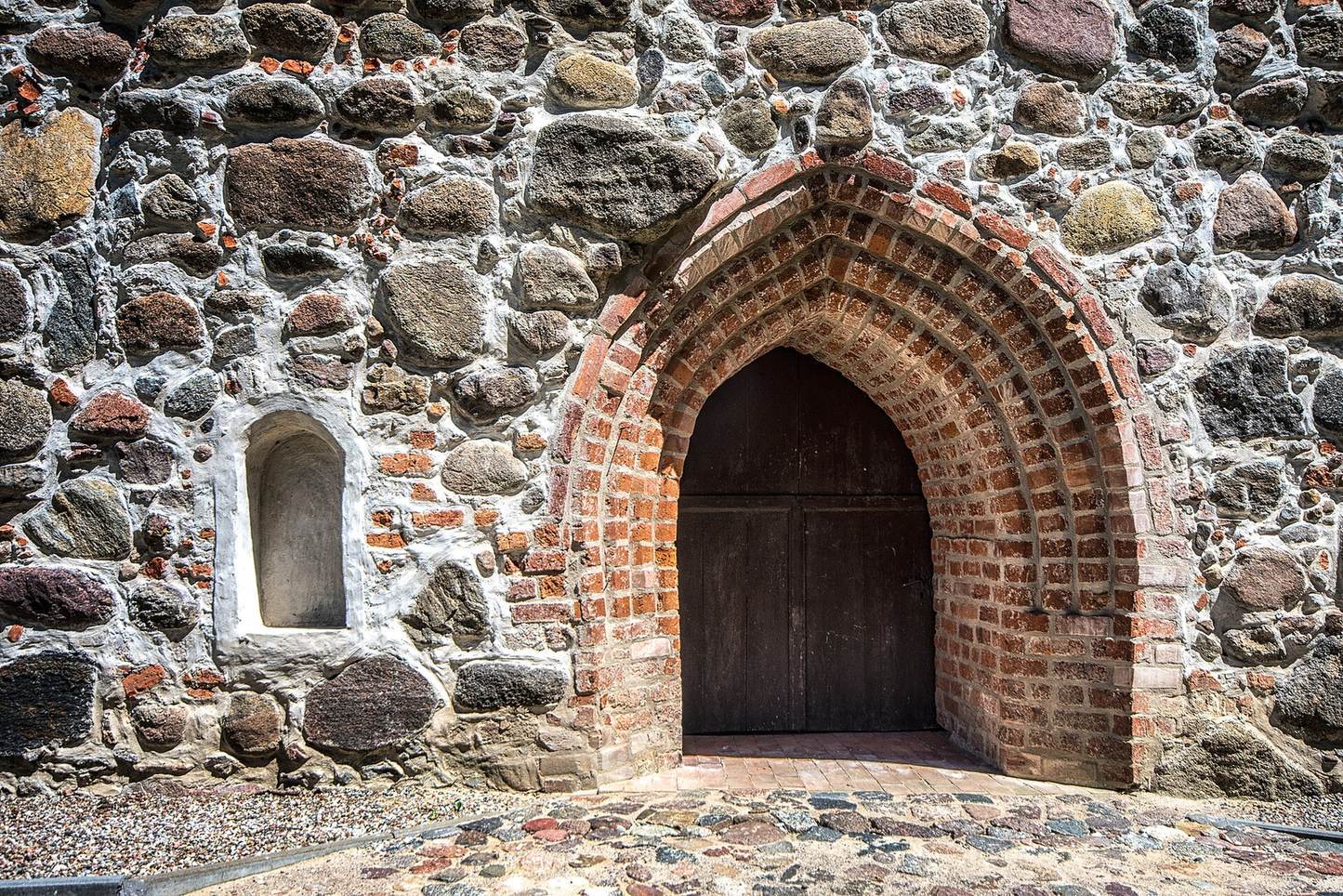
The west tower combines stone and timber construction and is topped by a spire clad in galvanized sheet metal. At its base is a stepped portal with a pointed arch. A bell dated 1923 hangs in the tower and measures 150 centimetres across. A stone wall with gates encloses the church grounds.
Interior
Ceiling and furnishings
A flat wooden ceiling covers the interior. An organ gallery stands above the entrance, and the church contains a Baroque pulpit, a work in a later style often associated with elaborate forms. A niche in the chancel, the area around the altar, once served as a sacrarium, a church recess used for water from sacred rites.
Tomb slab and figures
The church contains a sandstone Renaissance tomb slab for Bernet von Midelnitz and his wife, Katharina von Schöning. Renaissance art drew on classical models. Gothic figures include the Madonna, a representation of Mary, and St John the Baptist, the biblical prophet who baptized Jesus.