Church of Santa Maria Primerana: A Catholic Church in Fiesole, Italy
Site at a Glance
- Popularity
- Low
- Country
- Italy
- Primary era
- Medieval
- Eras represented
- Classical, Medieval, Early Modern, Modern
- Civilizations
- Grand Duchy of Tuscany, Republic of Florence, Roman
- Site type
- Religious
- Remains
- Church
On this page10 sections
History
The Church of Santa Maria Primerana is a Catholic church in Fiesole, Italy, dedicated to Mary and belonging to the Diocese of Fiesole, the territory administered by its bishop. Its foundation is dated to 966, the year it first appears in the historical record, while its consecration is placed in the 10th century. The church was built over a Roman temple. Nearby Lombard tombs, associated with the Germanic people who established a kingdom in early medieval Italy, suggest that the site may also have served an early Christian community.
Marian devotion and medieval enlargement
An image of the Virgin Mary in the church has been taken to indicate that this was the diocese’s earliest place of devotion to Mary. That proposed distinction may explain the name Primerana.
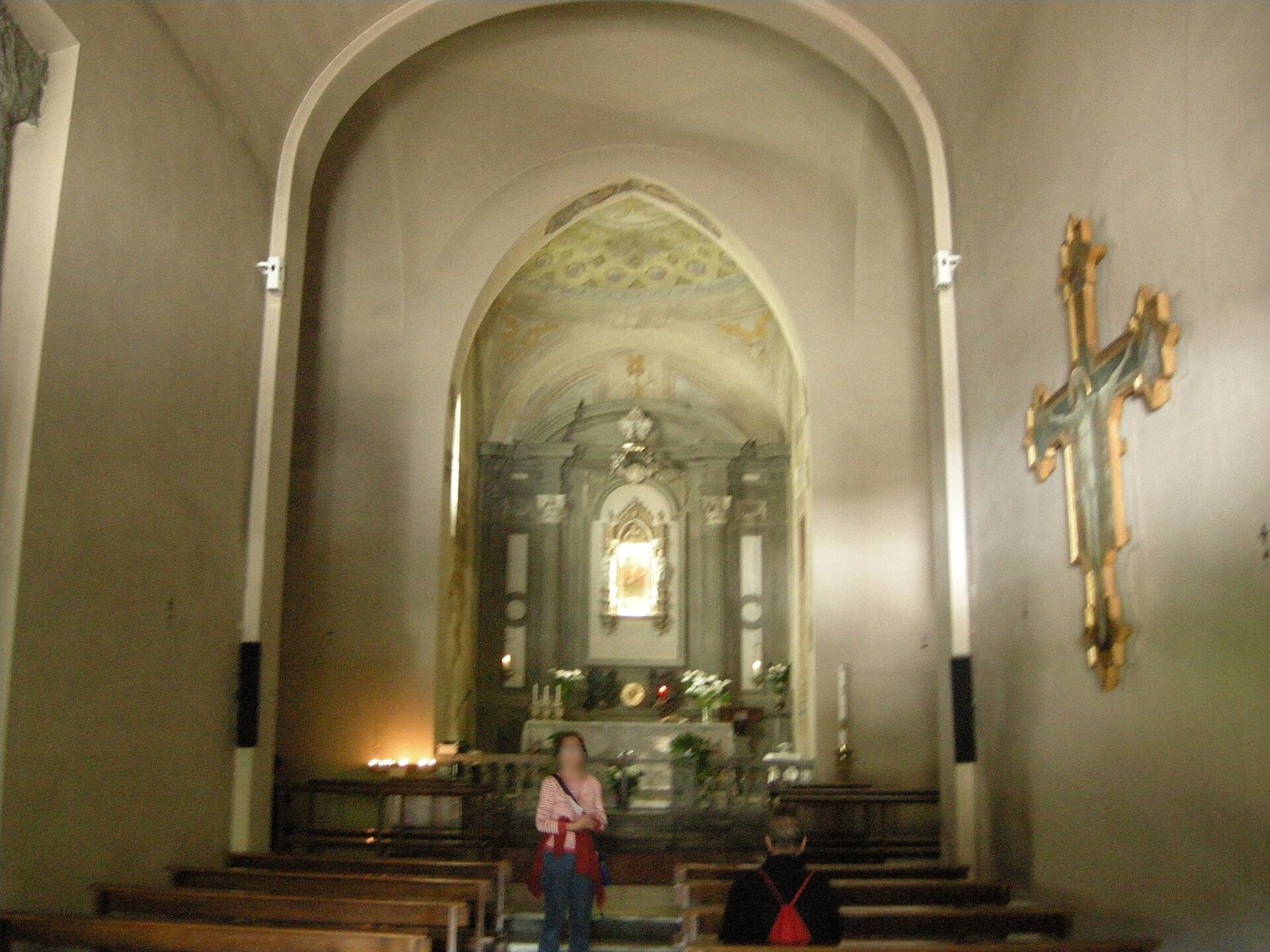
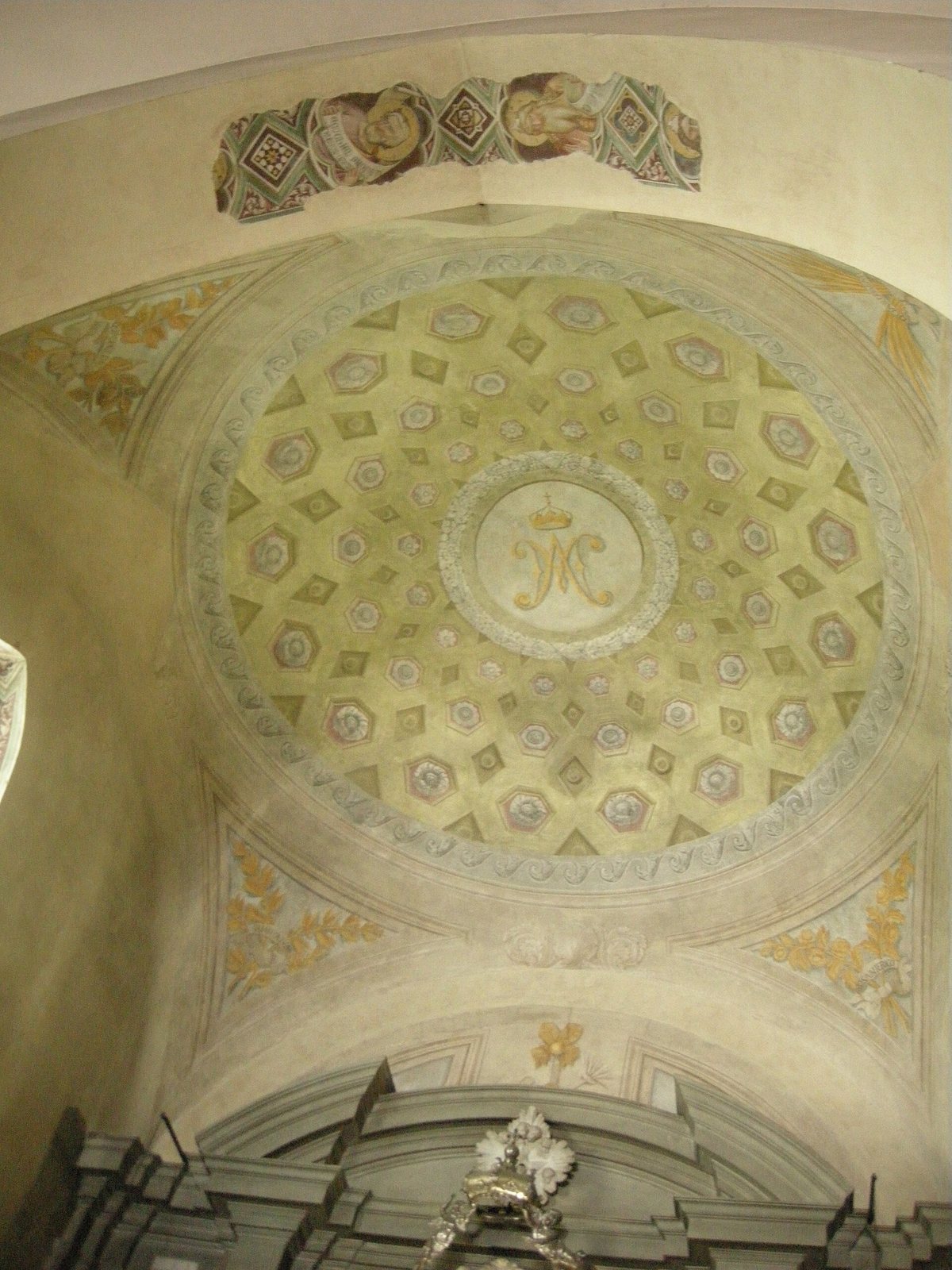
The church was enlarged during the Middle Ages. Its surviving Gothic chancel belongs to the medieval fabric of the building.
Late 16th-century renewal and restoration
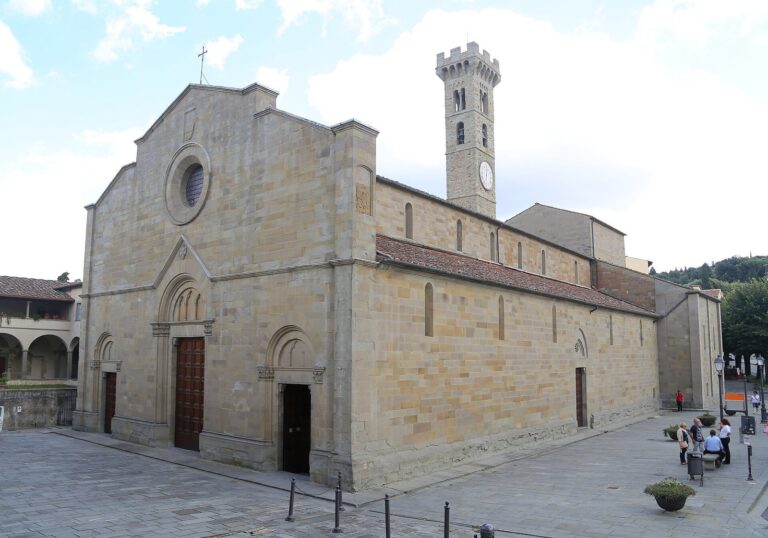
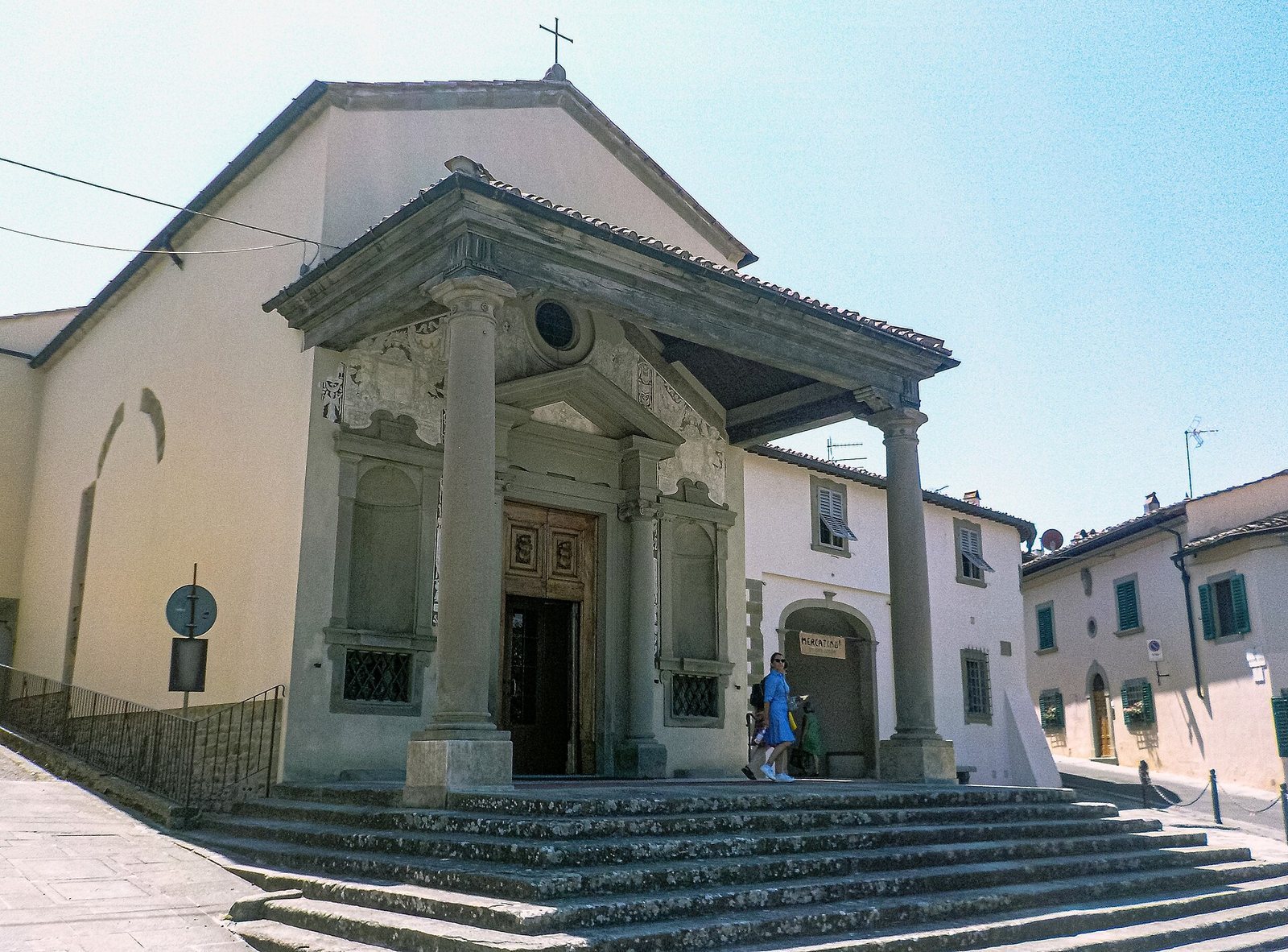
A new façade was built in the late 16th century, introducing a Mannerist phase in the church’s development. The decorative work associated with this period was later restored in 2016.
Remains
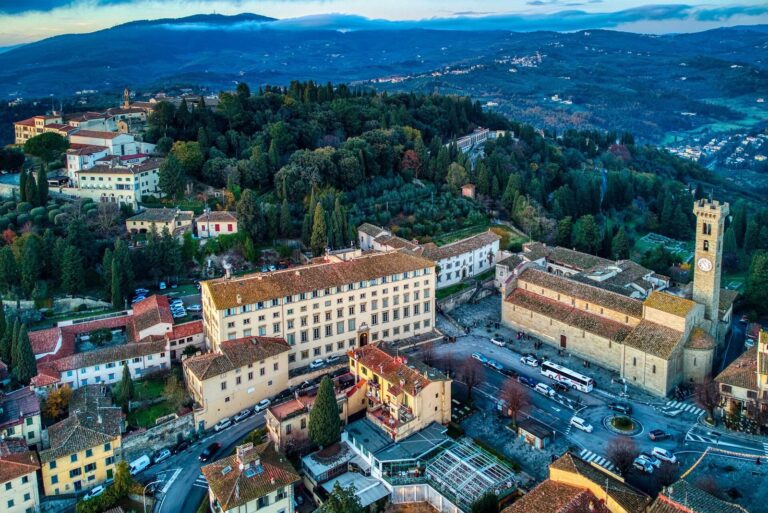
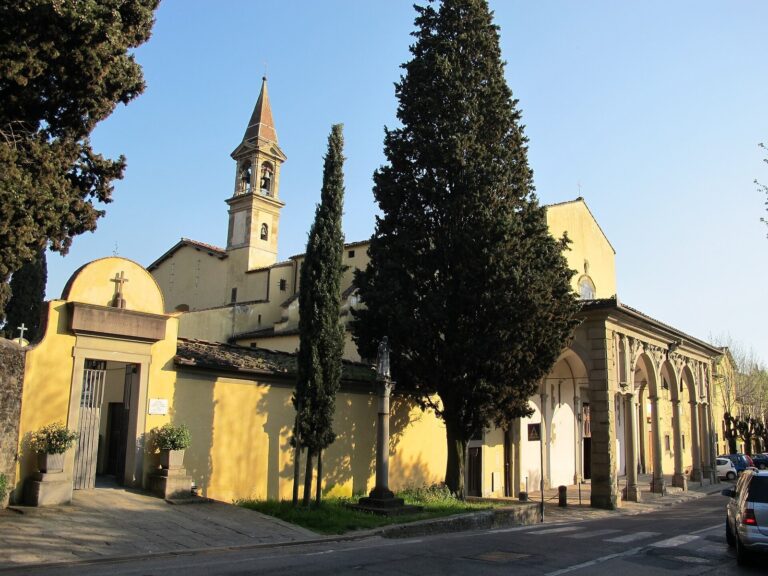
The church stands at the eastern end of Piazza Mino, beside the Praetorian Palace and near Fiesole Cathedral. Its surviving features bring together Roman remnants, a medieval chancel, later exterior work, and a single-nave interior with artworks from several periods.
Exterior and medieval fabric
A pillar from the Roman temple is built into the church’s north wall, and a Roman road runs north–south alongside it. The road is a decumanus, a principal street in a Roman settlement. The medieval chancel, the area around the altar, is Gothic. The façade has Mannerist treatment, a late Renaissance style marked by deliberate artifice and departures from classical balance. Its sgraffito decoration, made by scratching through an upper layer to expose a contrasting one, is by Ludovico Buti. A portico, or columned entrance porch, added in 1801 has a horizontal beam supported by columns.
Interior and artworks
High altar and Madonna and Child
The high altar was made between 1745 and 1767 to a design by Bernardino Ciurini. It holds a 13th-century panel of the Madonna and Child by the Maestro di Rovezzano, the conventional name for an unidentified Italian painter.
Crucifix on the right wall
A large, shaped and painted wooden crucifix hangs on the right wall of the nave, the church’s main lengthwise space. It dates to the 14th century and is associated with the style of Giotto and his followers; it is attributed to Bonaccorso di Cino.
Works on the left side
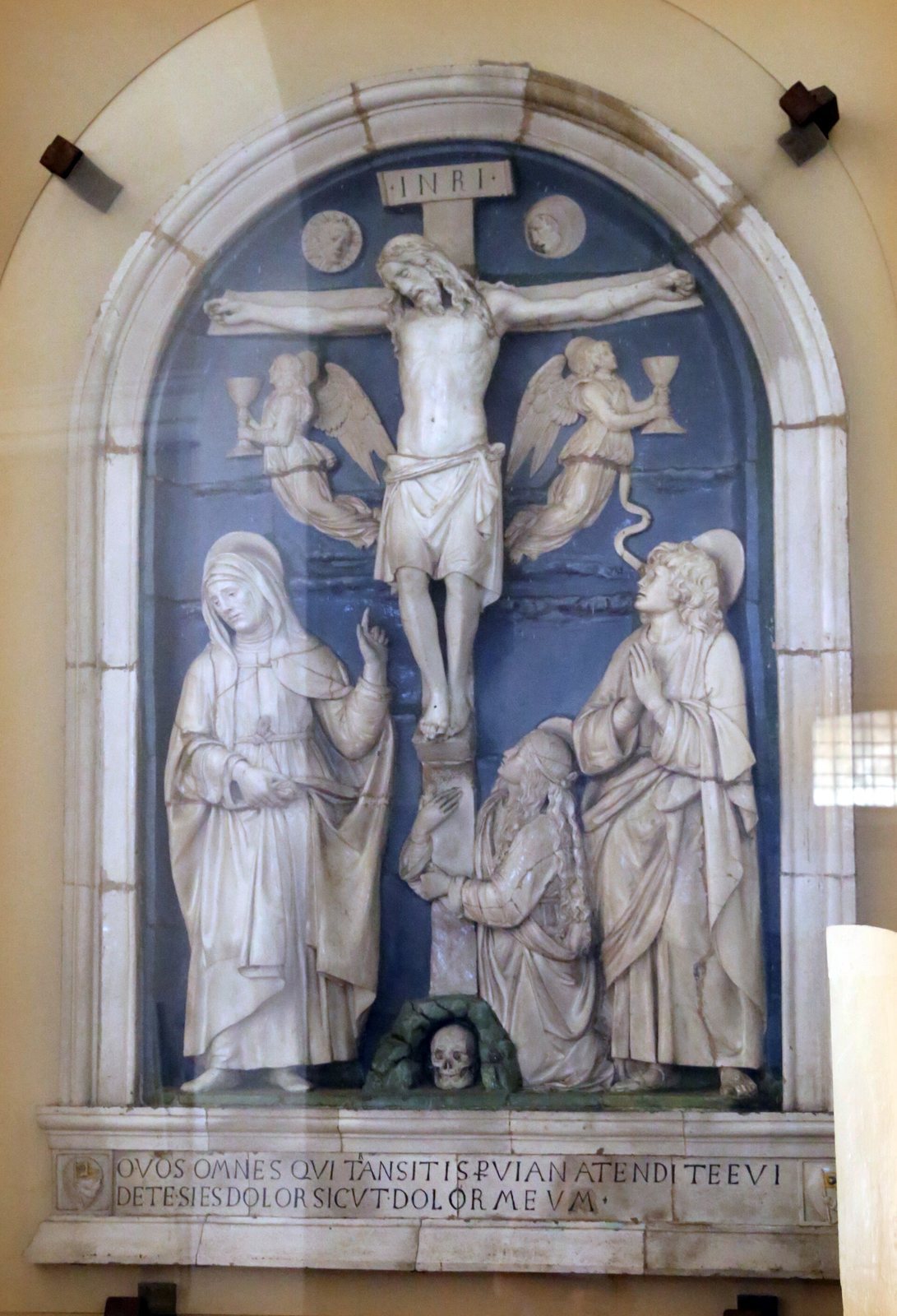
A panel depicting the Baptism of the Fiesolans hangs on the nave’s left wall. Attributed to Alessandro Fei del Barbiere and dated to 1589, it once formed part of the high altar in Fiesole Cathedral. Also on the left side is a glazed-terra-cotta altarpiece from Andrea della Robbia’s workshop, showing the Crucifixion with the Madonna, Saint John, Mary Magdalene, and angels.
Right transept and altar-area sculpture
Two marble votive bas-reliefs, devotional works whose sculpted forms project slightly from a flat surface, are set into the rear wall of the right transept, the crosswise part of the church that intersects the nave. Francesco da Sangallo made a self-portrait dated 1542 and a portrait of Francesco del Fede dated 1575. Faded wall paintings by Niccolò di Pietro Gerini survive on the walls around the altar.