Tabăra Monastery: An Orthodox Nunnery in Moldova
Site at a Glance
- Popularity
- Low
- Country
- Moldova
- Primary era
- Modern
- Eras represented
- Modern
- Civilizations
- Russian
- Site type
- Religious
- Remains
- Monastery
On this page15 sections
History
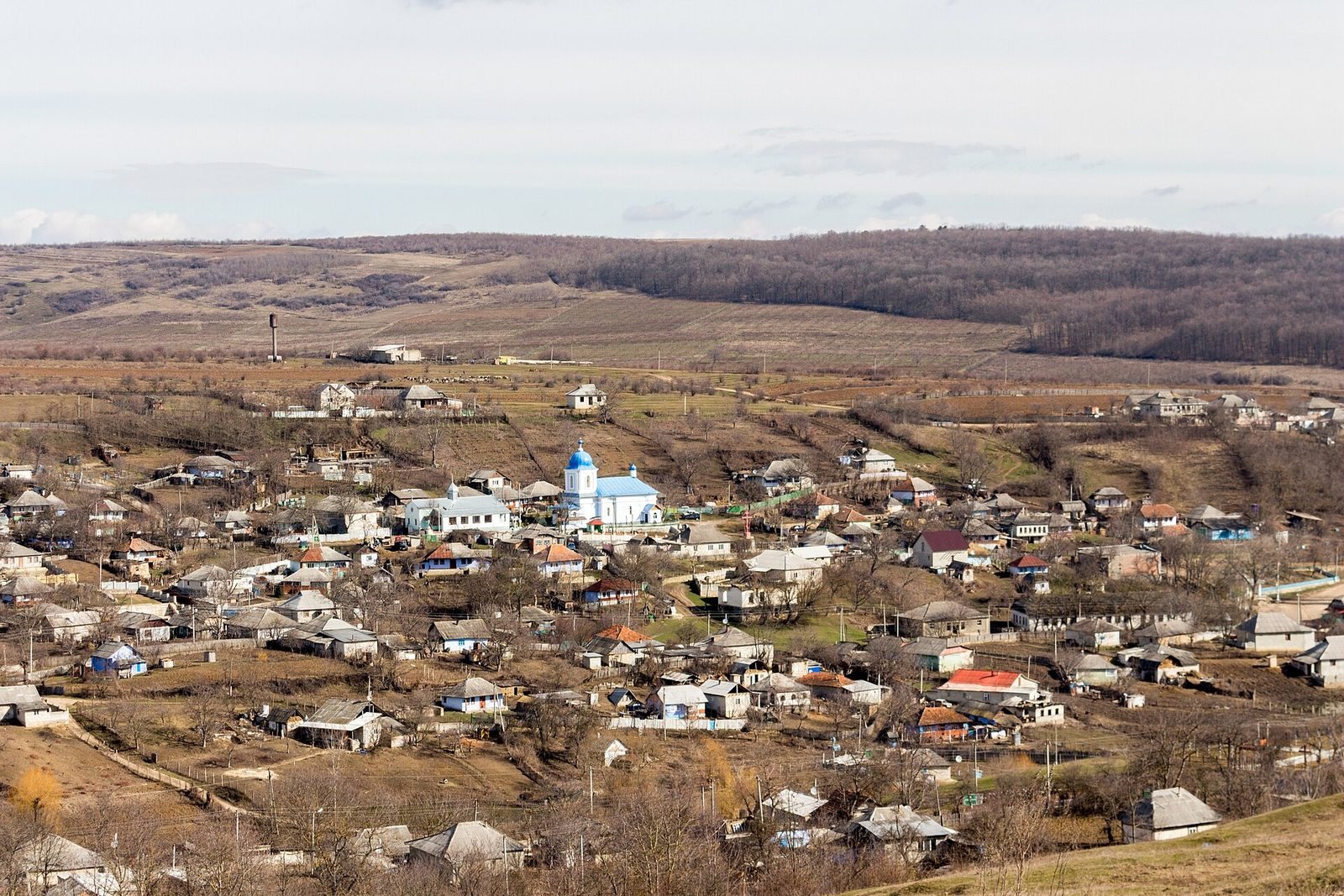
Tabăra Monastery is a women’s Orthodox monastery in the center of Tabăra village, in Moldova’s Orhei District. Its foundation is placed in the late eighteenth century, but the founder and year are uncertain: it is attributed either to the boyar Gheorghe Russo in 1784 or to his steward, Darie Carp, in 1779. A boyar was a member of the landowning nobility, while a steward managed an estate. The monastery’s original community was male. It is associated with the Metropolis of Chișinău and All Moldova, a regional Orthodox jurisdiction, and the Chișinău Diocese, a church district, within the Russian Orthodox Church.
Foundation and conversion to a women’s community
Local tradition links the monastery’s name to Moldavians who camped at the site while fleeing a Tatar massacre. In 1815, Metropolitan Gavriil Bănulescu-Bodoni, a senior Orthodox church leader, ordered the monastery to become a women’s community. Nuns came from the Fântâna-Doamnei hermitage, and the monks moved to the Horodiște hermitage, sometimes incorrectly identified as Țipova. Among the women who joined were Theodora, widow of the boyar Manolachi Băț, and her relative Maria Opincă.
The summer Church of the Dormition of the Mother of God, dedicated to the Orthodox feast commemorating the Virgin Mary’s death and bodily assumption into heaven, was built in 1828 to replace an earlier church. A stone Church of the Holy Trinity followed in 1857, replacing a church built in 1810.
Community life through the early twentieth century
Evdochia and Maria led the monastery from 1815 to 1837. They were followed by Agapia (1837-1838), Aglaida (1838-1841), Fevronia (1841-1845), Agapia again (1845-1860), Evghenia (1860-1867), Neonila (1867-1869), Elisaveta (1869-1884), Sofia (1884-1904), Olga (1904-1906), Evghenia (1906-1913), and Neonila (1913-1917). Ana took office in 1917.
In 1918, the community comprised 57 nuns and 164 sisters, and the monastery held 220 desetines of land, a traditional unit of land area used in the Russian Empire. Ana was still the head in 1923, when 175 women lived at the monastery: 62 nuns, 48 rassophore sisters who had received the monastic robe at an initial stage, and 65 other sisters serving under obedience. The community cultivated its land collectively.
By 1936, the estate covered 55 hectares and was worked by the community, then led by Abbess Hionia. The nun Donicioae succeeded her and headed the monastery during the Second World War and afterward.
Soviet closure
From 1953 until the monastery closed, its community was led by the nuns Raisa Ciobotari and Serafima. At first, more than 200 nuns and sisters lived there. After the monastery’s land was confiscated, many had to work at a nearby carpet factory. At the time of closure, 203 women belonged to the community, including 80 who earned good wages at the factory.
The nuns were expelled in 1959, and the monastery was disbanded in 1960. Some women moved to other monasteries, while many stayed in nearby houses; villagers occupied many of the monastery’s homes. During this period, the Dormition church served first as a club and later as a warehouse, while the Holy Trinity church was used as a village school. Both churches were repaired between 1954 and 1956.
In 1960, officials removed the monastery’s icons and sacred books on the stated pretext of transferring them to a museum. The objects were instead burned on a hill near the village.
Revival and recent leadership
The monastic community began to revive around 1989-1990. The Dormition church was renovated and consecrated in 1991. From that year, the nun Elifteria led the community and continued work on the Holy Trinity church, whose repairs were completed in the summer of 1998. Elizaveta Alexei served as abbess from 1993 to 1999. In 1998, the community included 18 nuns, 20 rassophore sisters, and six other sisters serving under obedience.
Later heads were Antonia Lisnic (1999-2002), Minodora Bobeică (2002-2004), Mitrodora Țurcan (2004-2006), Xenia Rusanovschi (2006-2009), and, from June 2009, Minodora Borș.
Remains
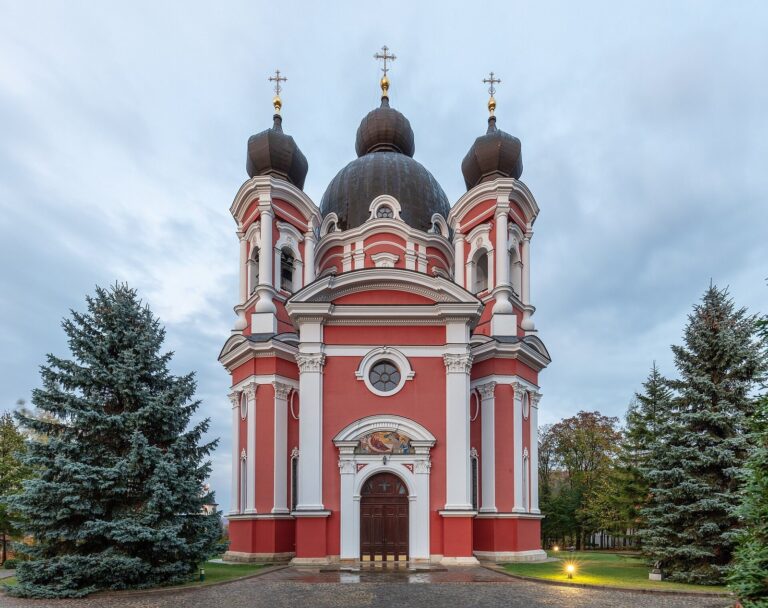
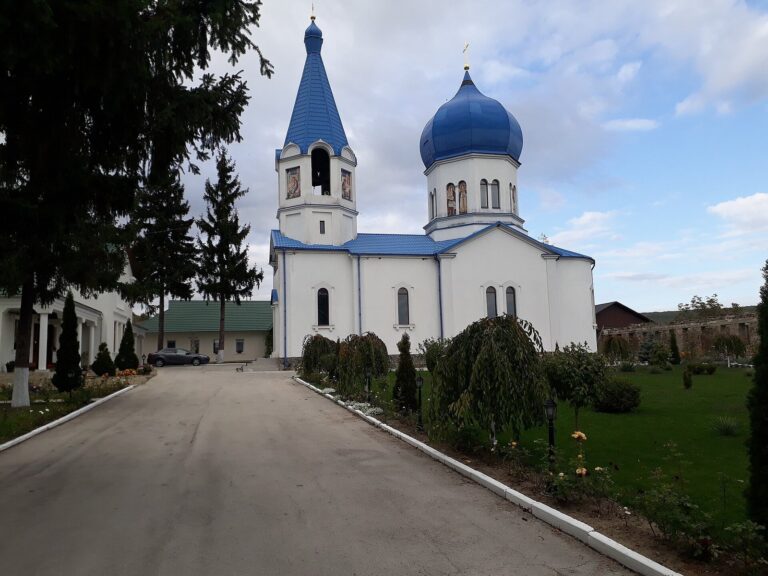
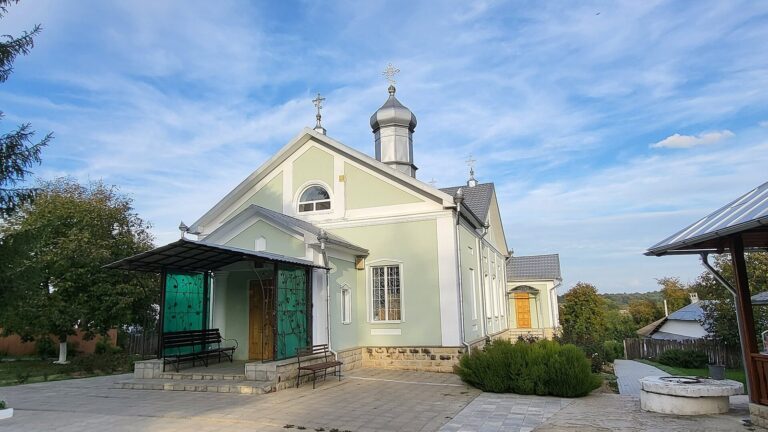
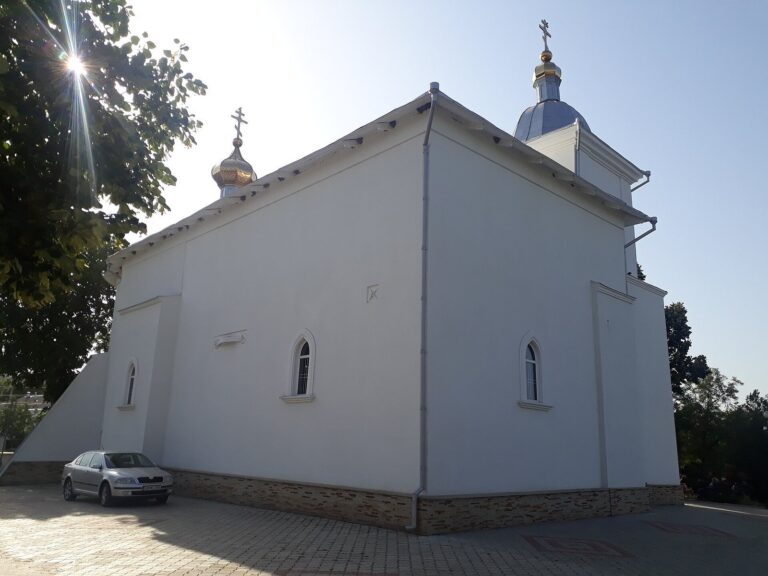
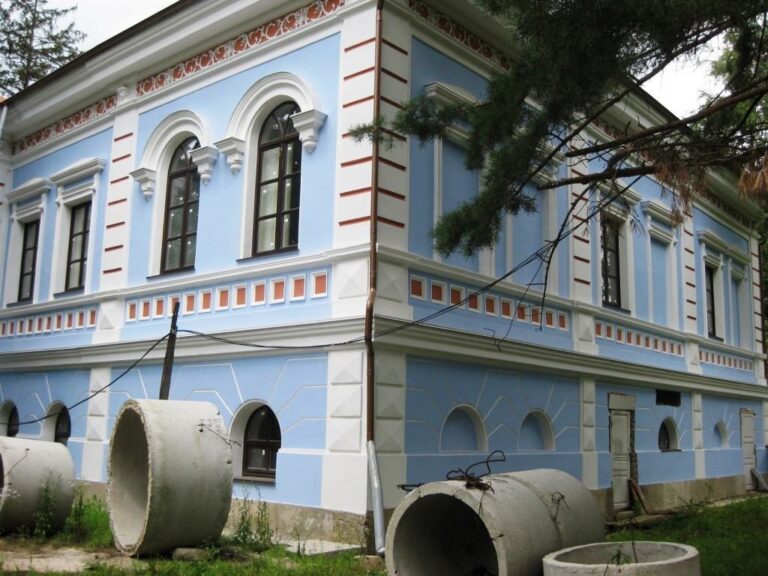
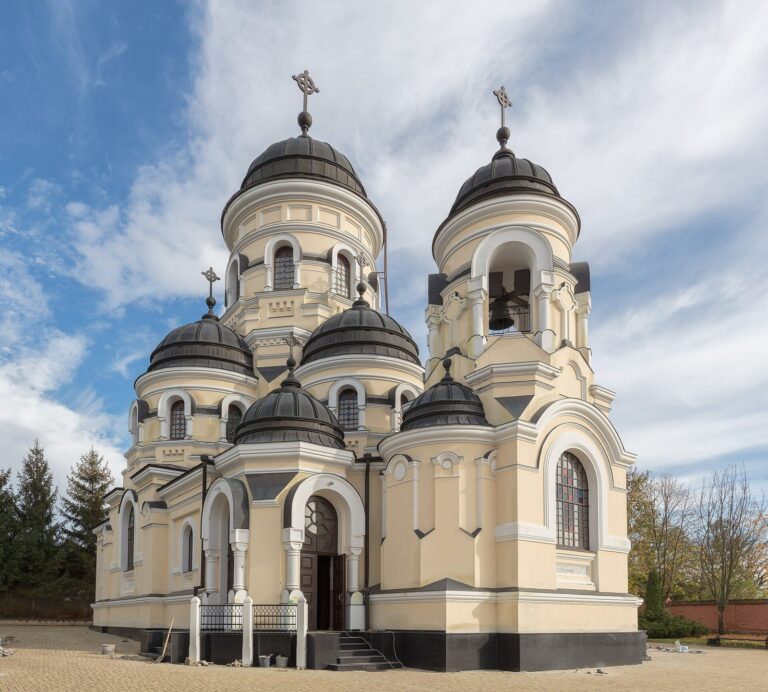
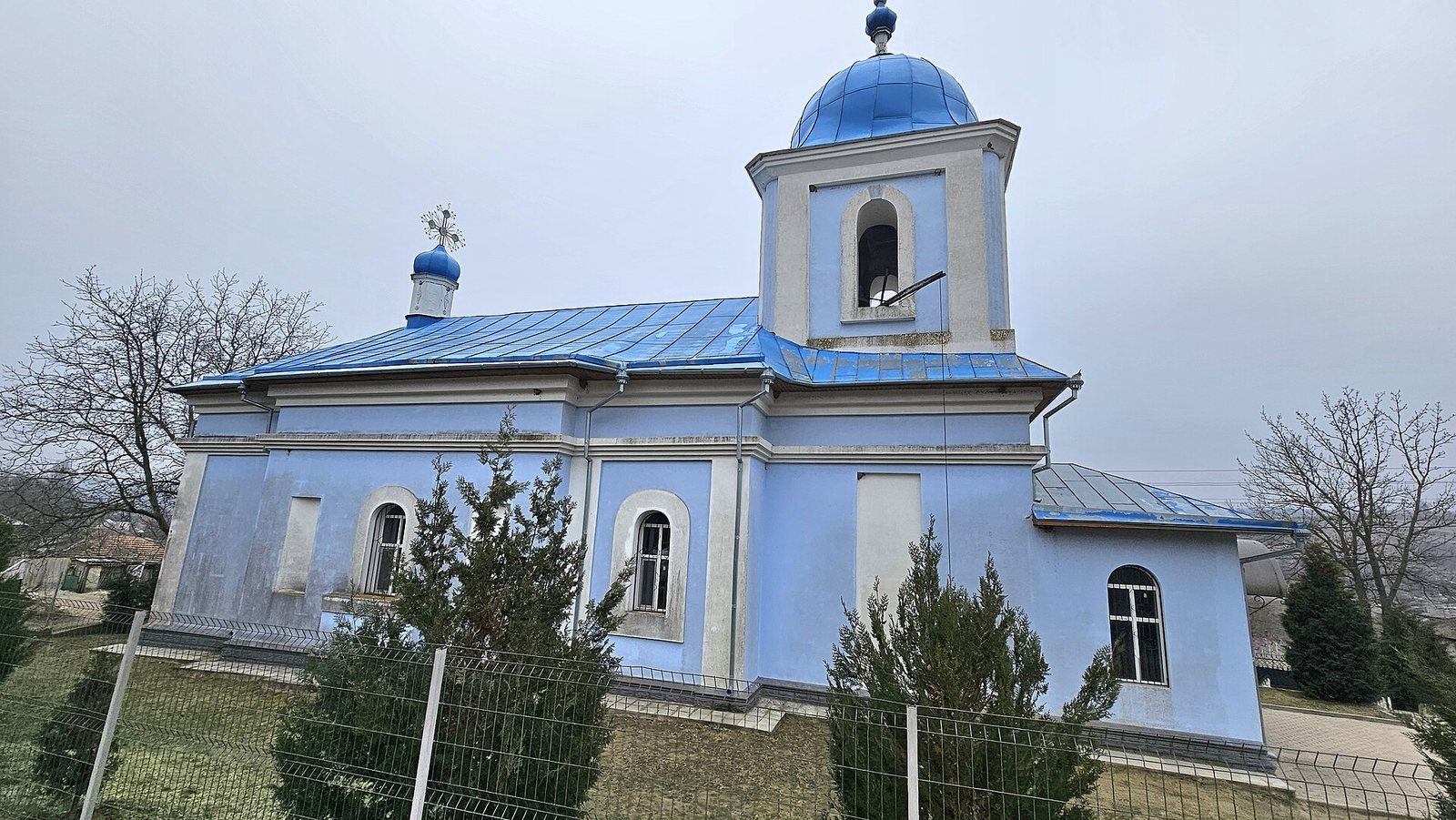
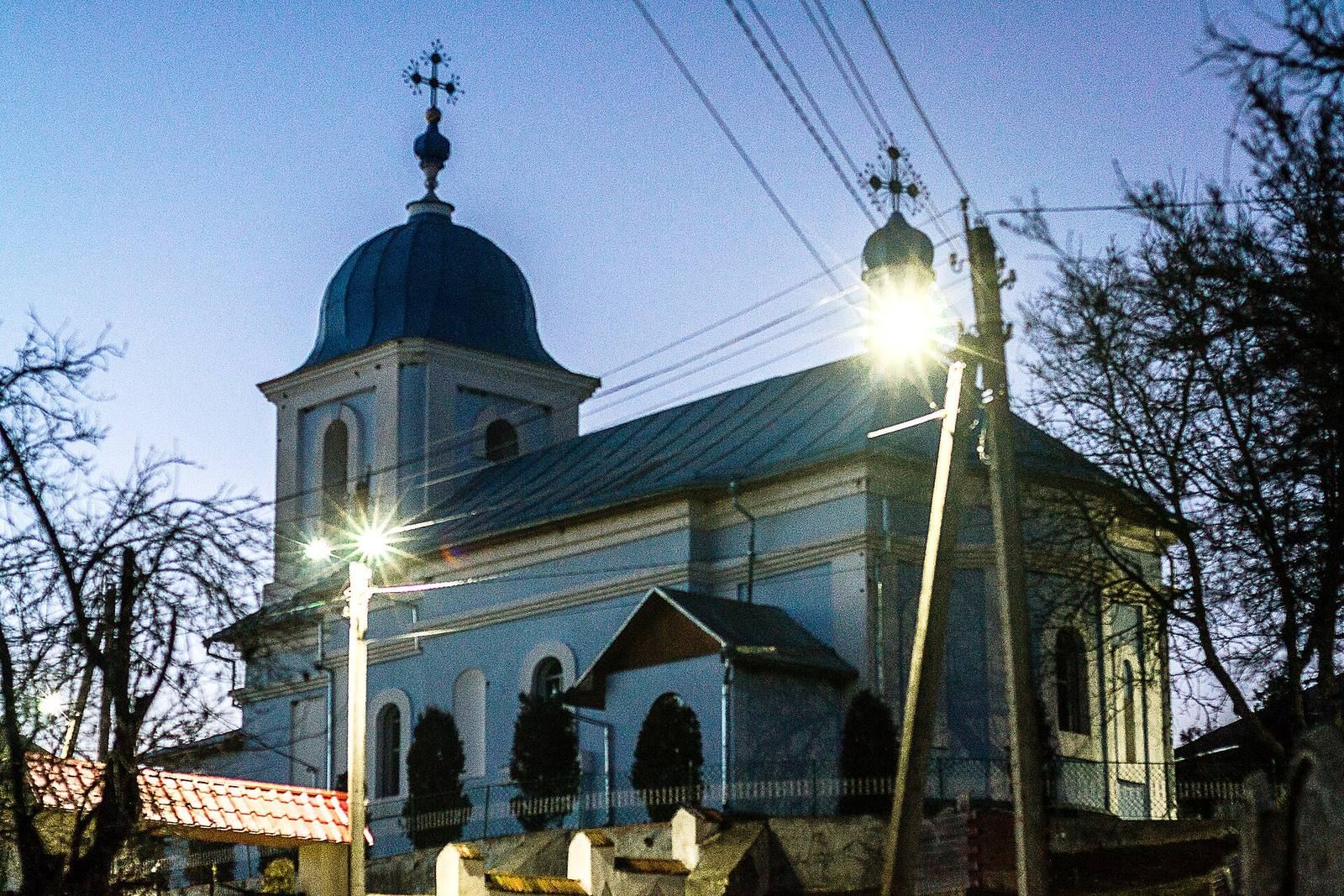
The monastery’s religious core comprises two churches with distinct plans. The smaller Church of the Holy Trinity is incorporated into a block of monastic cells, while the Church of the Dormition has a porch and entrance chamber arranged along a narrow corridor.
Churches
Church of the Dormition
The Dormition church has walls 1.2 metres thick. A narrow passage connects the porch to the entrance chamber, with a bell tower rising above it. A choir gallery occupies the upper part of the chamber, which opens into the nave beneath a semicircular arch. Small side altar recesses are set into the walls, and the altar end of the church is rounded. Interior paintings date to 1956 and were renewed after the monastery reopened.
Church of the Holy Trinity
The small, rectangular stone church is built into a block of monastic cells. A separate cell building for nuns was constructed beside it in 1996. Inside, the altar and nave are not otherwise divided. An incomplete icon screen separates them and retains an icon of the Mother of God and doors that provide passage through the screen.
Residential buildings and library
Monastic houses
In 1923, the monastery’s residential buildings included 100 one-storey houses occupied by nuns. During the Soviet period, more than 100 houses were used by the community.
Library
During the interwar period, the monastery library held 27 Romanian-language church books. Four were printed in the eighteenth century: Questions and Answers in Christ by Saint Symeon of Thessalonica (Bucharest, 1765), Words of Saint Theodore the Studite (Râmnic, 1784), a book of liturgical hymns (Iași, 1778), and a liturgical service book (Iași, 1794). The other volumes dated to the nineteenth century.
Icons
Icon dating to 1821
One of the two icons of the Mother of God and Child that survived the destruction of the monastery’s sacred objects dates to 1821. It was restored in 1910.
Icon painted in 1863
The second icon was commissioned for the monastery’s nuns by a boyar from the Orhei region. Its inscription gives the date as 30 January 1863 and identifies Vatopedi, an Orthodox monastery on Mount Athos, as the place where it was painted. It is a copy of a fourteenth-century image kept there. The icon shows the Mother of God and Child, with a hand and knife painted below them inside a reliquary. Around 2001, it was placed on a carved stand that allowed worshippers to pass beneath it. Abbess Xenia said that people who approached the icon with devotion had repeatedly found healing through it.
The fourteenth-century prototype at Vatopedi is associated with a monastic legend. A monk serving as a deacon became angry when a refectory attendant rebuked him for asking for bread and wine after an all-night vigil. He returned to the church with a knife and struck the icon near the Virgin’s right eye. Blood flowed from the wound, and the monk became blind. He repented, made a seat before the image, and wept there for three years. In the legend, a voice from the icon forgave him but declared that his hand would remain withered.