Ialysos: An Ancient Greek City on Rhodes
Site at a Glance
- Popularity
- Medium
- Country
- Greece
- Primary era
- Classical
- Eras represented
- Classical, Medieval
- Civilizations
- Ancient Greek, Byzantine, Crusader, Knights Hospitaller
- Site type
- City
On this page13 sections
History
Ialysos was an ancient Greek city on Filérimos Hill on the island of Rhodes, Greece, founded by the Dorians around 1100–900 BCE. It became one of Rhodes’s three principal cities and a member of the Doric Hexapolis, a group of six Dorian cities.
Prehistoric settlement
The area had been inhabited since prehistoric times, including during the Neolithic period. Minoan-period settlement remains have been found near modern Trianda, while Mycenaean chamber tombs occupied the nearby hills of Makriá Vounára and Móschou Vounára. These burials date to approximately 1700–1400 BCE. Much of the pottery recovered from the tombs came from mainland Greece, pointing to connections across the Aegean.
Homer’s Iliad names Ialysos among the Rhodian communities whose warriors joined the Trojan War under Tlepolemus. The prehistoric settlement may have served as a harbor and trading post between Mycenaean Greece and Anatolia. From the ninth century BCE, Phoenician seafarers also frequented Ialysos.
The Dorian city
Ialysos appears to have been Rhodes’s most prominent city during the fifth century BCE. The Olympic victor Diagoras of Rhodes came from the city. Its citadel was known as Orychoma, tentatively identified with the fort of Achaea. Achaea, within Ialysian territory, was traditionally regarded as the first Rhodian settlement of the Heliadae, a legendary lineage associated with the island.
A pre-Hellenic cult continued at the acropolis sanctuary before worship of Athena was established there. Athena’s cult later became associated with Zeus Polieus, a civic-protector aspect of Zeus. The temple to Athena Polias was first built in the Classical period and rebuilt during the Hellenistic period.
The foundation of Rhodes and Ialysos’s decline
In 408 BCE, Ialysos and the island’s other cities joined in founding a new shared city at Rhodes’s northern tip. It was intended to serve as a common commercial and harbor center. The new city’s growth contributed to Ialysos’s decline, probably as residents moved there. By the time of the geographer Strabo, Ialysos was a small settlement and no longer independent. The Roman author Pliny the Elder treated the name as an ancient designation for Rhodes rather than that of a separate city. Ialysos was later abandoned during the Roman Empire.
Religious and military reuse
A Christian basilica was built on the Athena temple site in the fourth or fifth century CE. A single-aisled domed church followed in the tenth century, and a monastery was established in connection with it during the fourteenth or fifteenth century. The ancient fortress also became the site of a sanctuary and a castle under Byzantine rule, the eastern continuation of the Roman Empire.
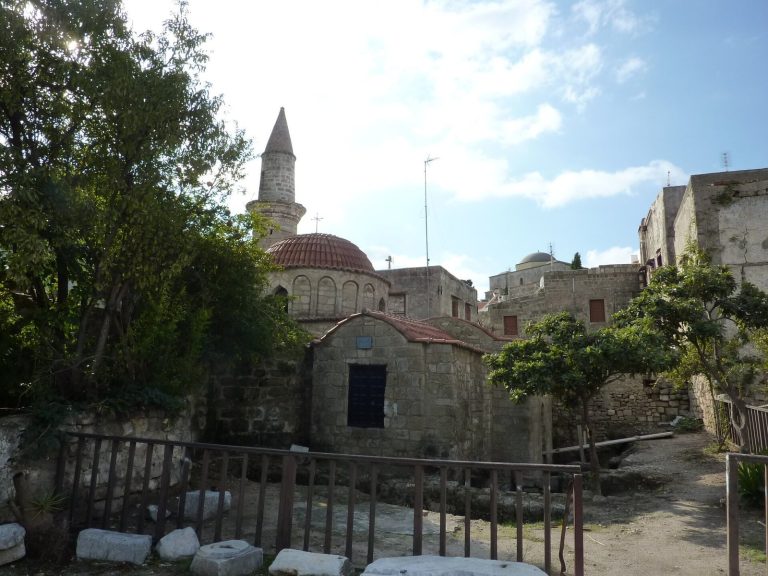
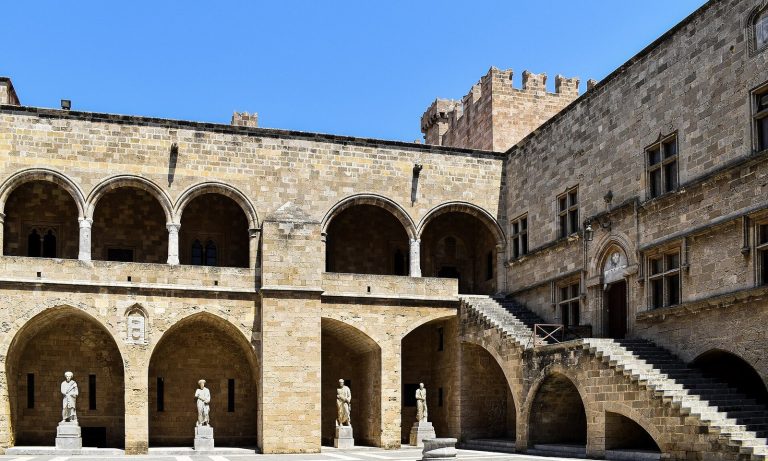
The Knights of St John, a medieval religious military order, conquered the fortress in 1306 and built a castle and the Church of St Mary of Filérimos. The church followed the Gothic-Provençal style, a regional form of Gothic architecture associated with Provence. In 1522, Ottoman sultan Suleiman I captured the fortress and used it as his headquarters a few months before the Knights surrendered to his forces.
Excavation and restoration
Auguste Salzmann and Alfred Biliotti discovered Ialysos’s necropolis in 1876. Many of its finds went to the Louvre in Paris and the British Museum in London. Italian archaeologists excavated the acropolis in 1914 and again from 1923 to 1926, uncovering the temple and investigating its surroundings. Luigi Pernier found an ancient wall beside the medieval cloister. The monastery was restored under Italian rule in the early twentieth century, and finds from Ialysos are held at the Archaeological Museum of Rhodes.
Remains
The ancient settlement extended across Filérimos Hill, with the acropolis, or upper city, on the hill and the lower city around it. The hill lies about two kilometres south of modern Ialysos, also known as Trianda, and ten kilometres southwest of the modern city of Rhodes. Most discoveries associated with Ialysos came from the prehistoric cemetery area.
The acropolis sanctuary
Athena Polias temple
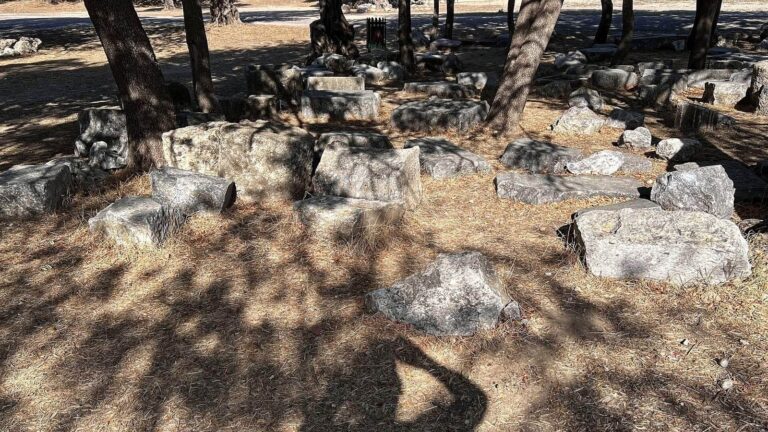
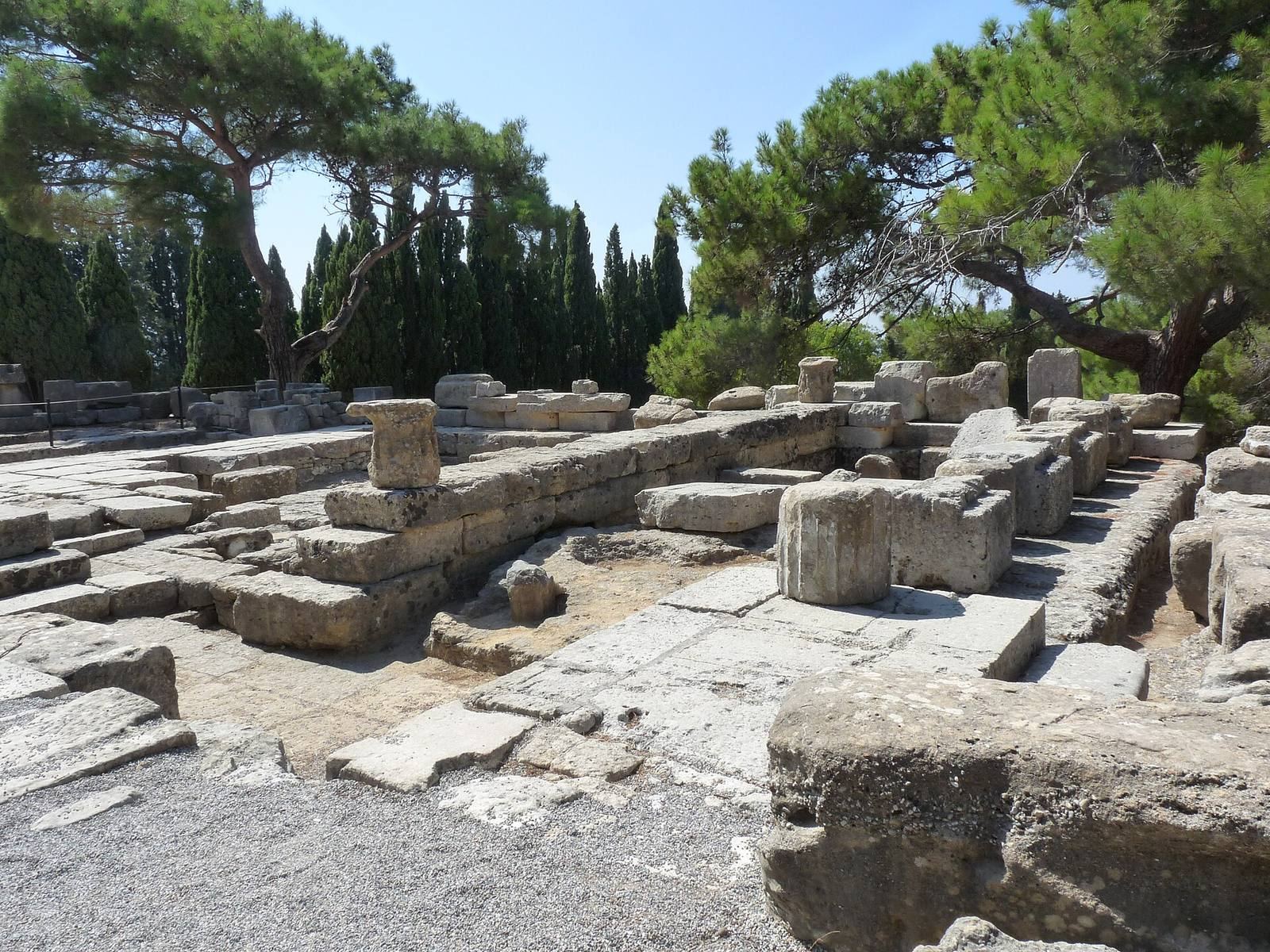
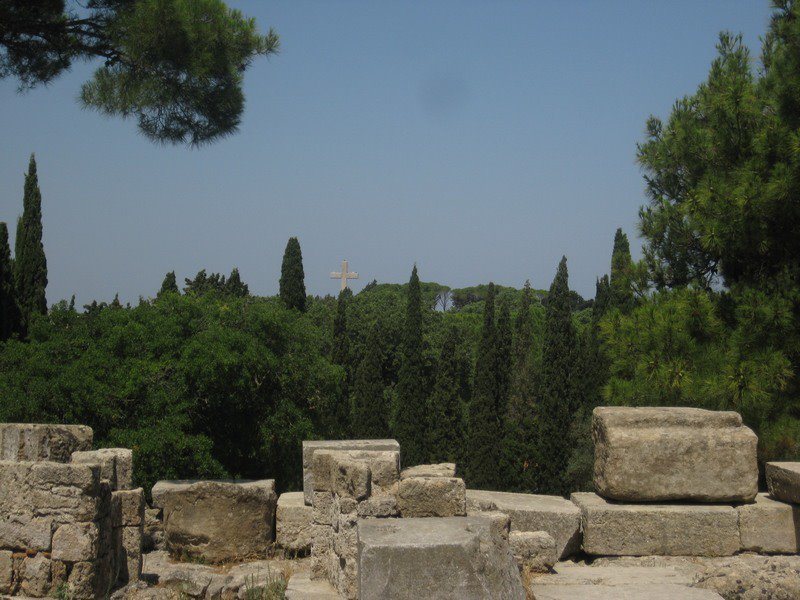
The temple stood at the summit of the hill. Built in the Doric order, one of the principal forms of ancient Greek architecture, it had columned porticoes at both ends. One reconstruction gives it four columns at each end; another proposes six. Its interior comprised an entrance porch, a central sanctuary, and a rear chamber. The foundations survive, along with parts of the columns and walls, and a base for the cult statue remains in the central sanctuary.
A votive deposit associated with the temple contained small figurines and other objects of clay and metal, dating broadly from the ninth to the fifth centuries BCE. A separate collection of offerings included women’s dress items and more than 2,000 garment fasteners. These fasteners have been interpreted as evidence of Athena’s worship as a protector of women.
Church and monastery
The later religious buildings occupied the temple site. The fourth- or fifth-century basilica was followed by a single-aisled, domed church in the tenth century. A monastery was subsequently connected with the church. The sequence preserves the site’s changing use as a place of worship, although the surviving description chiefly identifies the buildings’ positions and forms.
Fountain and waterworks
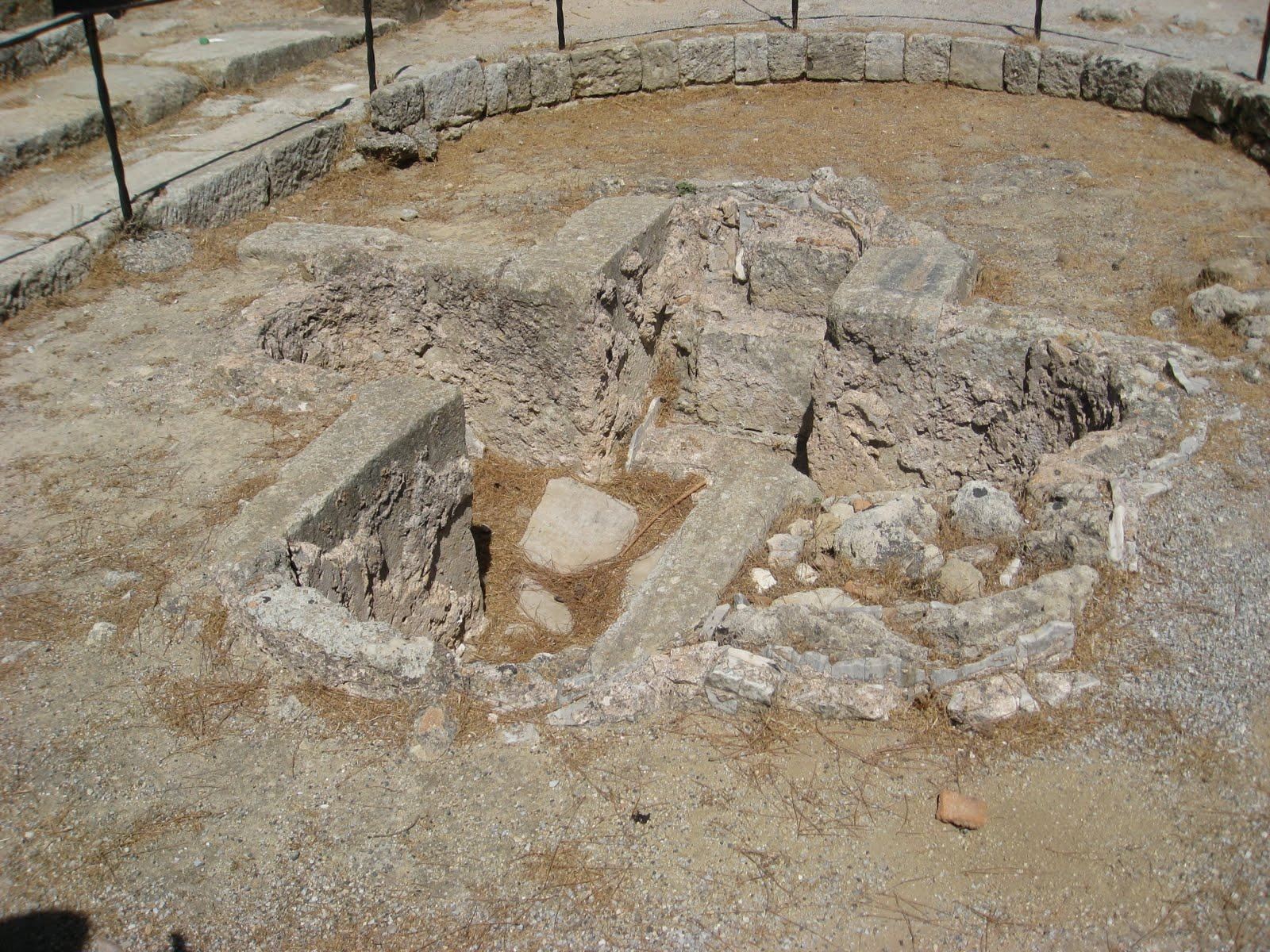
Below the acropolis’s southern slope, a monumental fountain was built in the late fourth century BCE against the rocky hillside. Water from a spring flowed through two lion-head spouts into a large basin. Pillars joined by slabs formed a parapet around the basin, and the slabs also carried lion-head decoration. A short ramp led to a small portico with a façade of six limestone Doric columns. The installation included a large reservoir and a water-distribution network. Some column pieces were found down the slope and in houses in the village below. The fountain was altered for medieval reuse, buried by a landslide, and excavated in 1923.
Fortifications and medieval buildings
Byzantine fortification walls survive on the eastern side of the hill. Their construction reused ancient stone, including material from the Athena temple. The Knights’ castle and the Church of St Mary of Filérimos were built at the former fortress. The church’s Gothic-Provençal design reflects a regional architectural style associated with Provence.
Sanctuary of Apollo Erethimios
In Ialysian territory southwest of the city, the place now called Thólos, a name derived from Theólogos, contains the ruins of a temple to Apollo Erethimios. Built in the fifth century BCE, the temple followed the Doric order and had two columns at its front. It remained in use into the Roman period, and a theater stood nearby.