The Wooden Church of Saint Mary Magdalene in Rabka-Zdrój: Former Parish Church and Museum
Site at a Glance
- Popularity
- Low
- Country
- Poland
- Primary era
- Early Modern
- Eras represented
- Early Modern, Modern
- Civilizations
- Austrian Empire, Habsburg, Polish–Lithuanian Commonwealth
- Site type
- Religious
- Remains
- Church
On this page12 sections
History
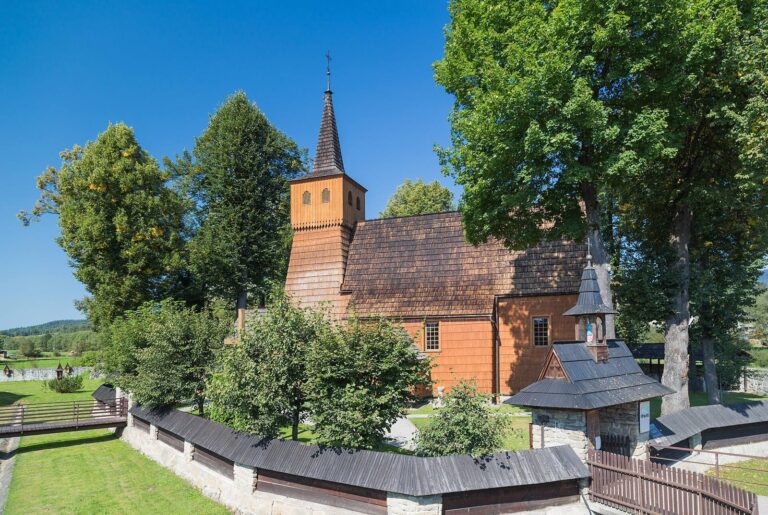
The wooden Church of Saint Mary Magdalene in Rabka-Zdrój, Poland, was completed in 1606 as a Roman Catholic parish church in the late Gothic style, a European architectural tradition. It was dedicated to Saint Mary Magdalene. Spytek Jordan, a Polish nobleman and castellan of Kraków, funded its construction. A castellan was a senior local official involved in the administration and defence of a castle and its district.
Construction and eighteenth-century alterations
A tower was added in 1744, followed by a small bell turret in 1753. Repairs between 1775 and 1778 altered the ceiling vault and added a choir.
Repairs and museum use
Further repairs took place in 1913. In 1936, the Władysław Orkan Museum was established inside the church, with ethnographic collections from the Rabka-Zdrój area. The building was renovated between 1970 and 1977. It now serves as a museum rather than a church.
Remains
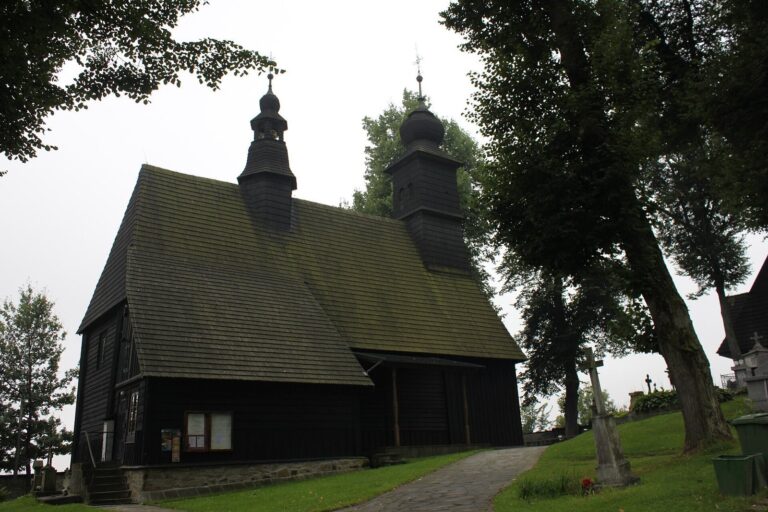
The church has a single-nave plan, with a narrower chancel, the area around the altar, ending in three sides. Horizontal timber logs form its walls, which rest on a raised masonry base. Shingled roofs cover the building, and a porch and sacristy, a room for storing religious objects and preparing for worship, adjoin it.
Exterior
Plan and timber construction
A shingle-covered apron runs around the building. The sacristy adjoins the chancel, while a porch is attached to the side of the nave, the main body of the church.
Tower and roofs
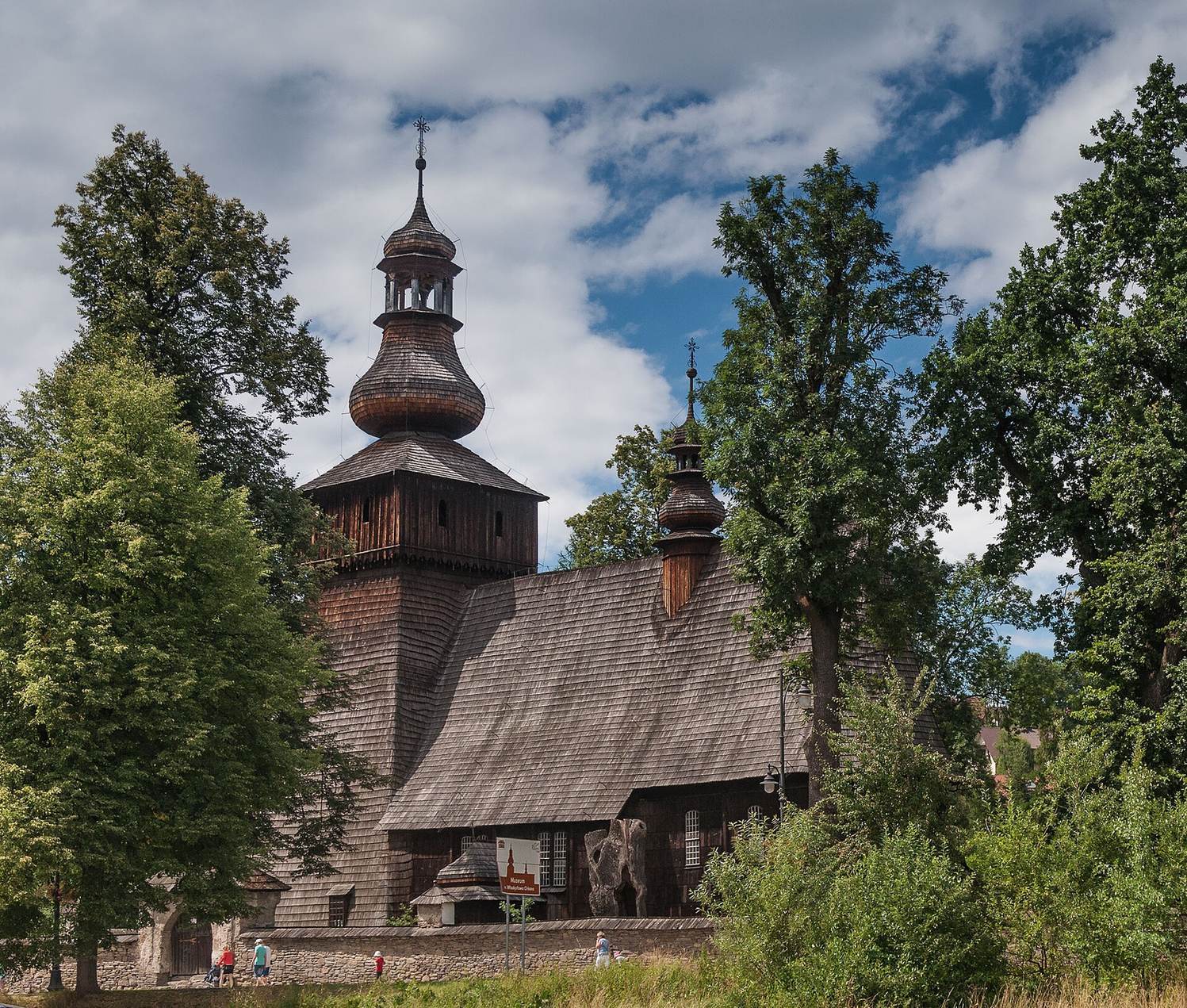
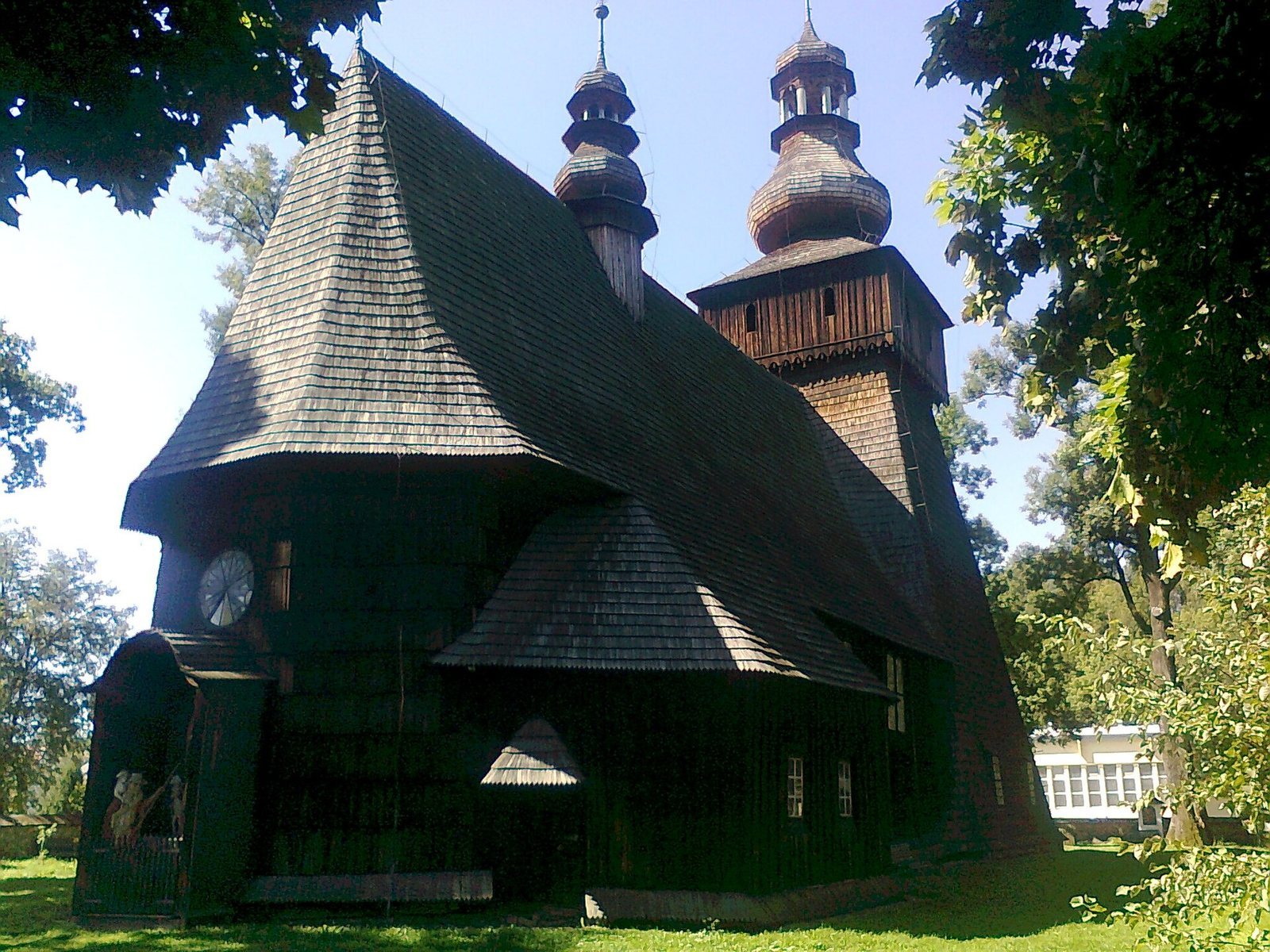
The large tower is wider than the nave, with walls that slope inward toward the top and a structure supported by upright posts. Its lower level contains a porch and a chamber. Above it is a shingle-covered onion-shaped roof in the Baroque style, a European artistic and architectural style, topped by a lantern, a small raised roof structure. The church itself has a steep, single-ridge shingle roof. A hexagonal bell turret, a small roof structure for a bell, rises from it and has a bulbous shingled roof with a lantern.
Exterior sculpture
A Crucifixion group made by the artist Stanisław Gosina in 1644 is mounted on the exterior. Inside, an angel figure and a seventeenth-century Baroque crucifix decorate the rood beam, which spans the opening between the nave and chancel.
Interior
Painted decoration
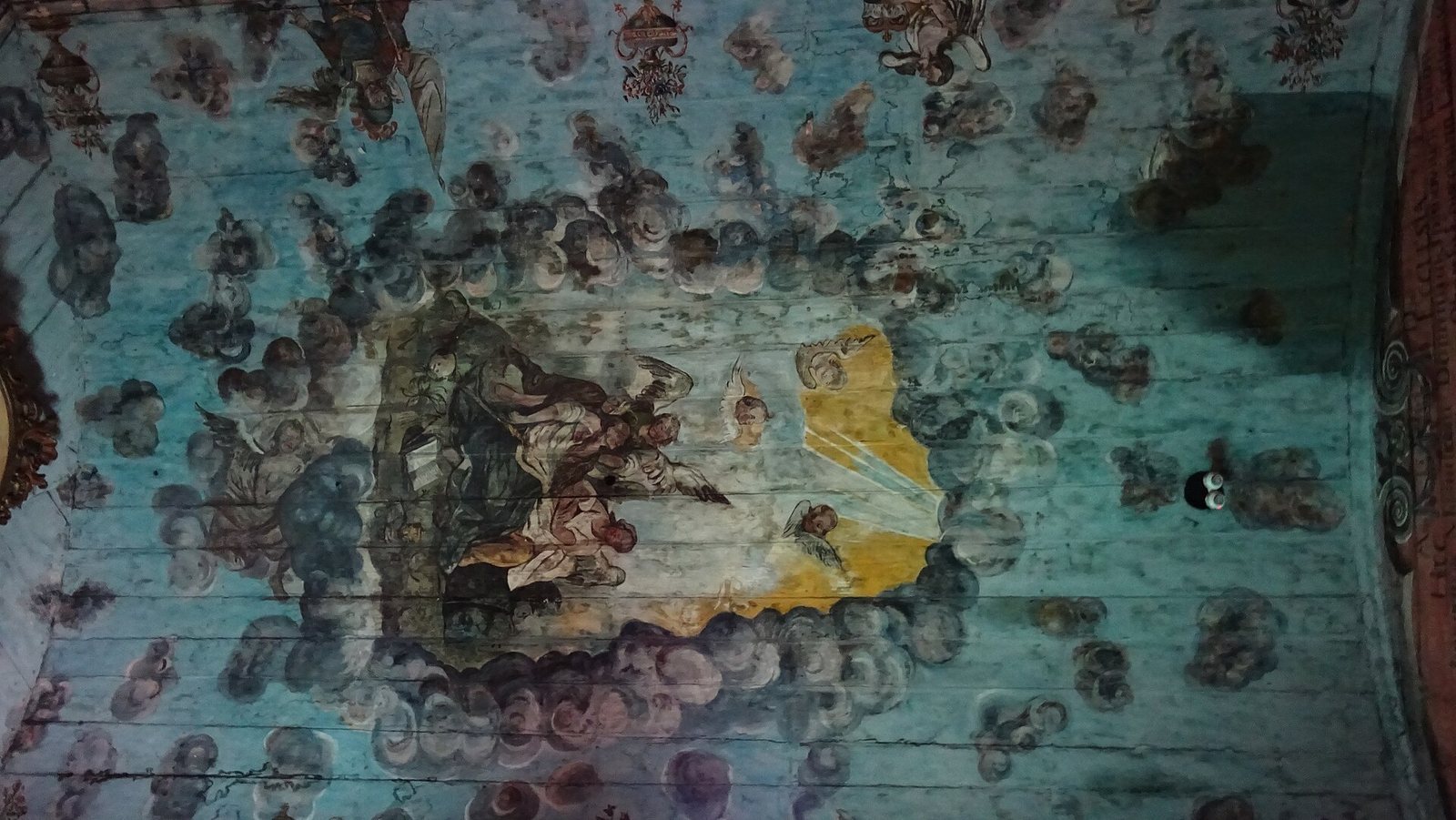
Late Baroque polychromy, painted decoration in several colors, covers parts of the interior. The priest Andrzej Antałkiewicz painted the decoration in 1802, showing Saint Mary Magdalene in the chancel and the Coronation of the Virgin with angels and floral designs in the nave. Earlier stencil polychromy, in which stencils form the patterns, dates to 1628 and also survives.
Gallery and ceiling
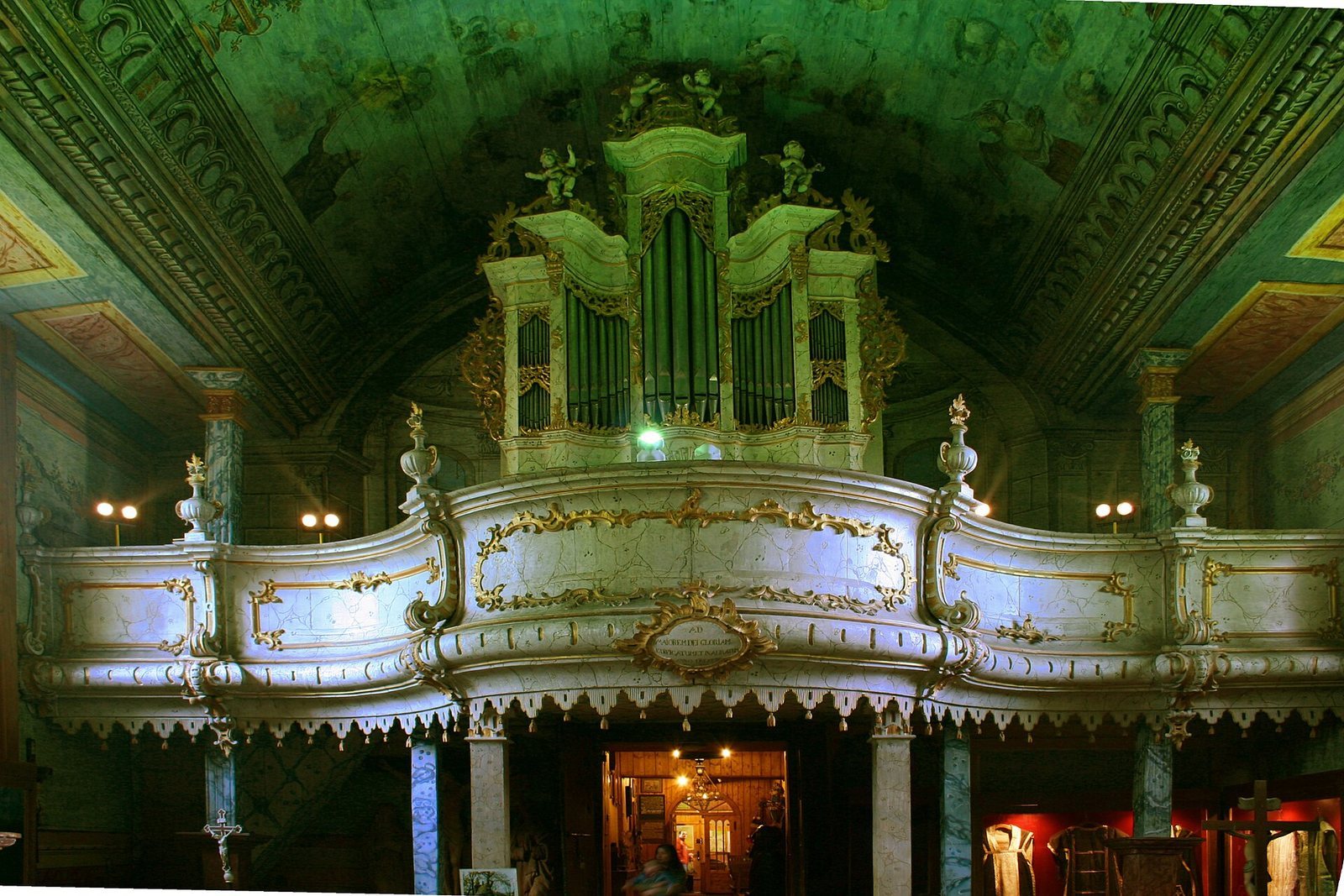
Posts support a false barrel vault, a non-structural ceiling shaped like a barrel. The musicians’ gallery, a raised space for performers, rests on two posts and has a wavy parapet. It holds a Rococo organ, in the European style that developed from Baroque, built in 1778. The organ has 13 stops, or selectable sound registers.
Altars and furnishings
The Baroque main altar dates to the mid-nineteenth century. Four Rococo side altars were made in 1778, and the late Baroque pulpit dates to the mid-nineteenth century. A stone baptismal font dates from the second half of the eighteenth century.