Saint Bartholomew Church in Wójtowa: A Late-Gothic Timber Church
Site at a Glance
- Popularity
- Very Low
- Country
- Poland
- Primary era
- Early Modern
- Eras represented
- Early Modern, Modern
- Civilizations
- Unclassified
- Site type
- Religious
- Remains
- Church
On this page10 sections
History
Saint Bartholomew Church in Wójtowa, Poland, is a Roman Catholic church built in the early sixteenth century, probably shortly before 1513. Dedicated to Saint Bartholomew, one of the Twelve Apostles in Christian tradition, it is a late-Gothic timber building, in a style associated with the later medieval period. It formerly served as a parish church and is now a filial church, meaning a subsidiary church within a parish, in the Diocese of Rzeszów, a Catholic administrative area under a bishop.
Alterations and later use
The church was changed in 1737, when its nave was lengthened, and altered again in 1918. A masonry chapel and sacristy were added in 1934. Repairs followed in 1962 and 2003.
A new church was built in 1990–94. Nearly all the old church’s furnishings were transferred there, while its most valued furnishing, a Gothic-Renaissance triptych, was moved to the Diocesan Museum in Tarnów.
Remains
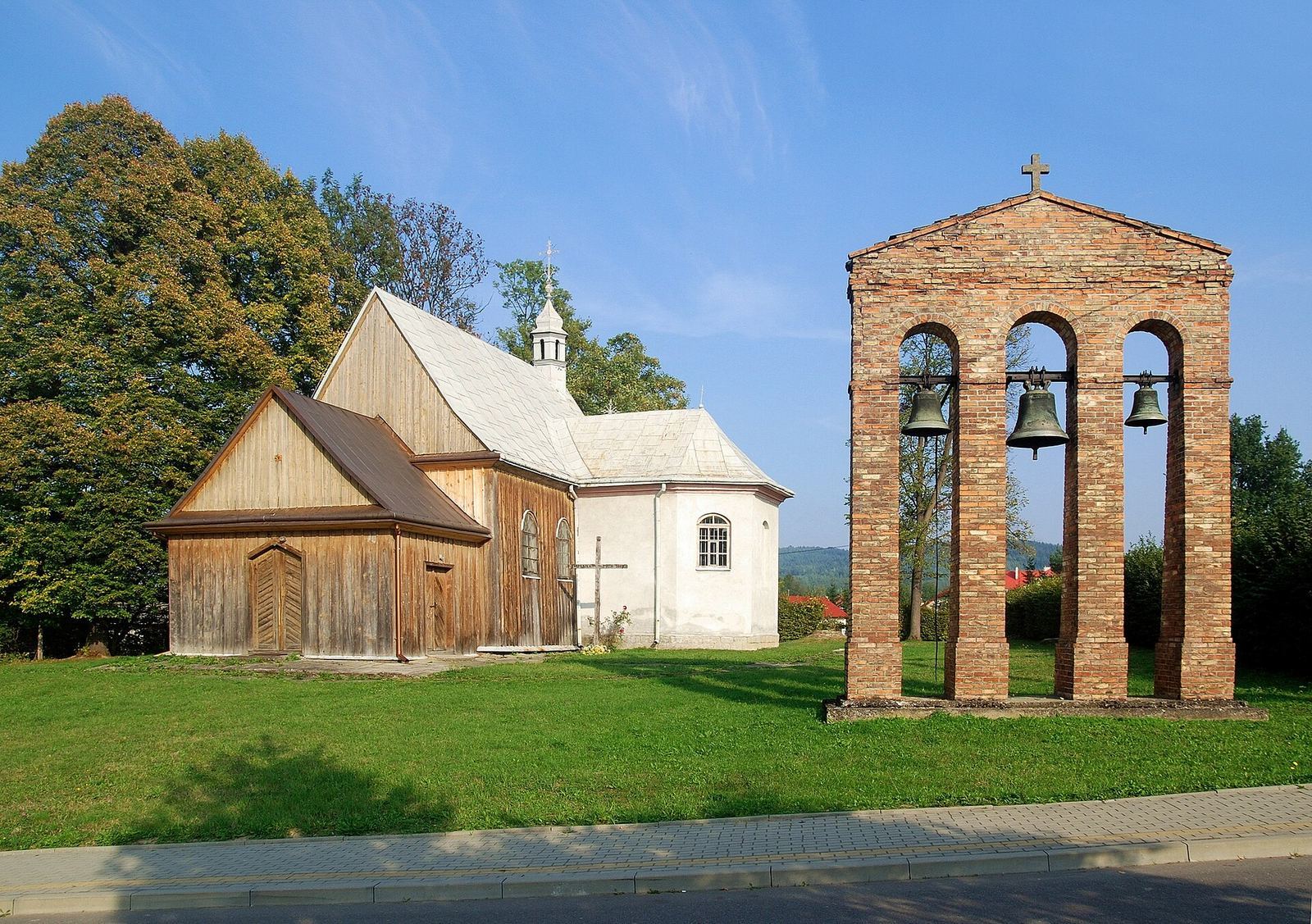
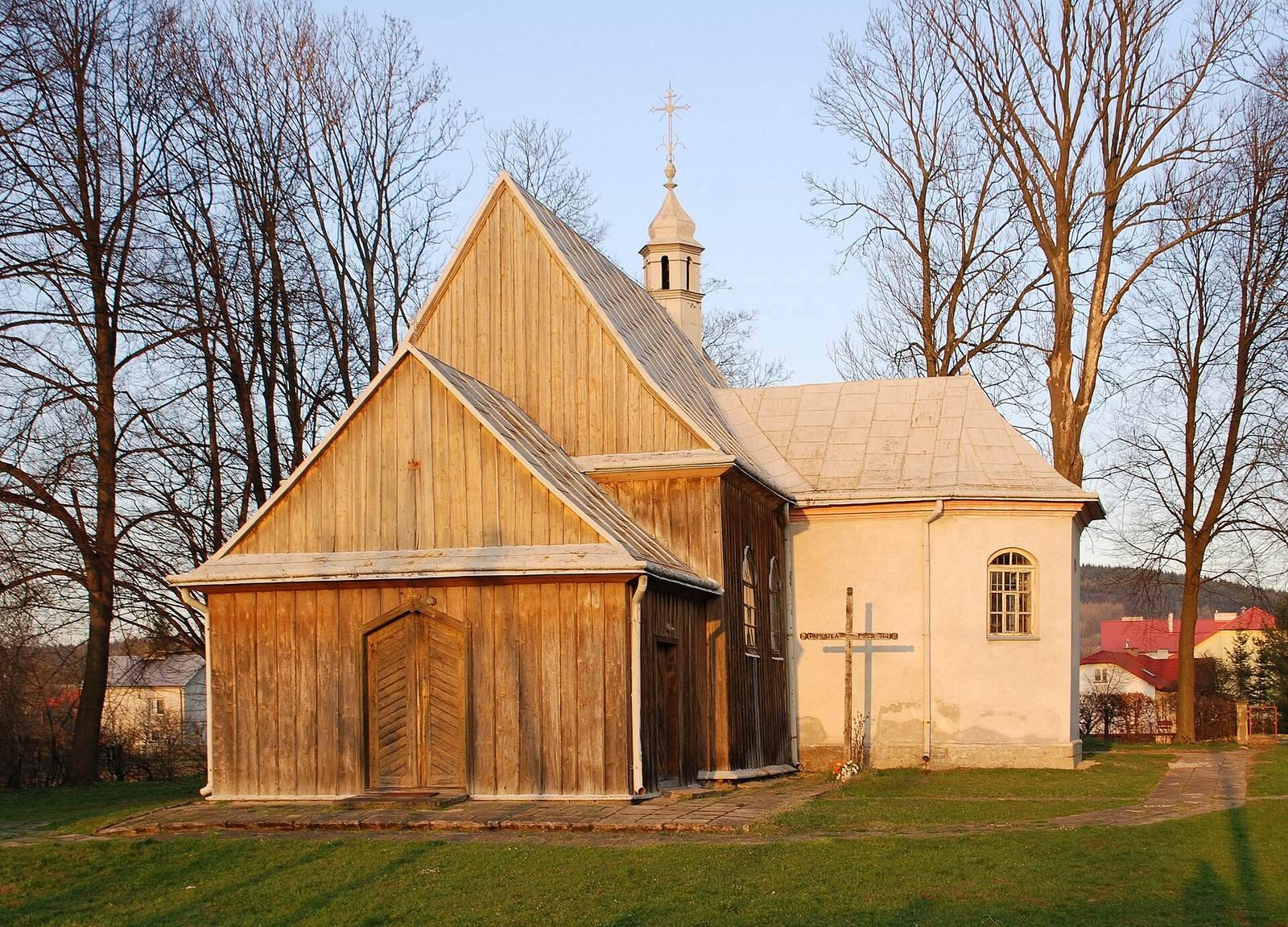
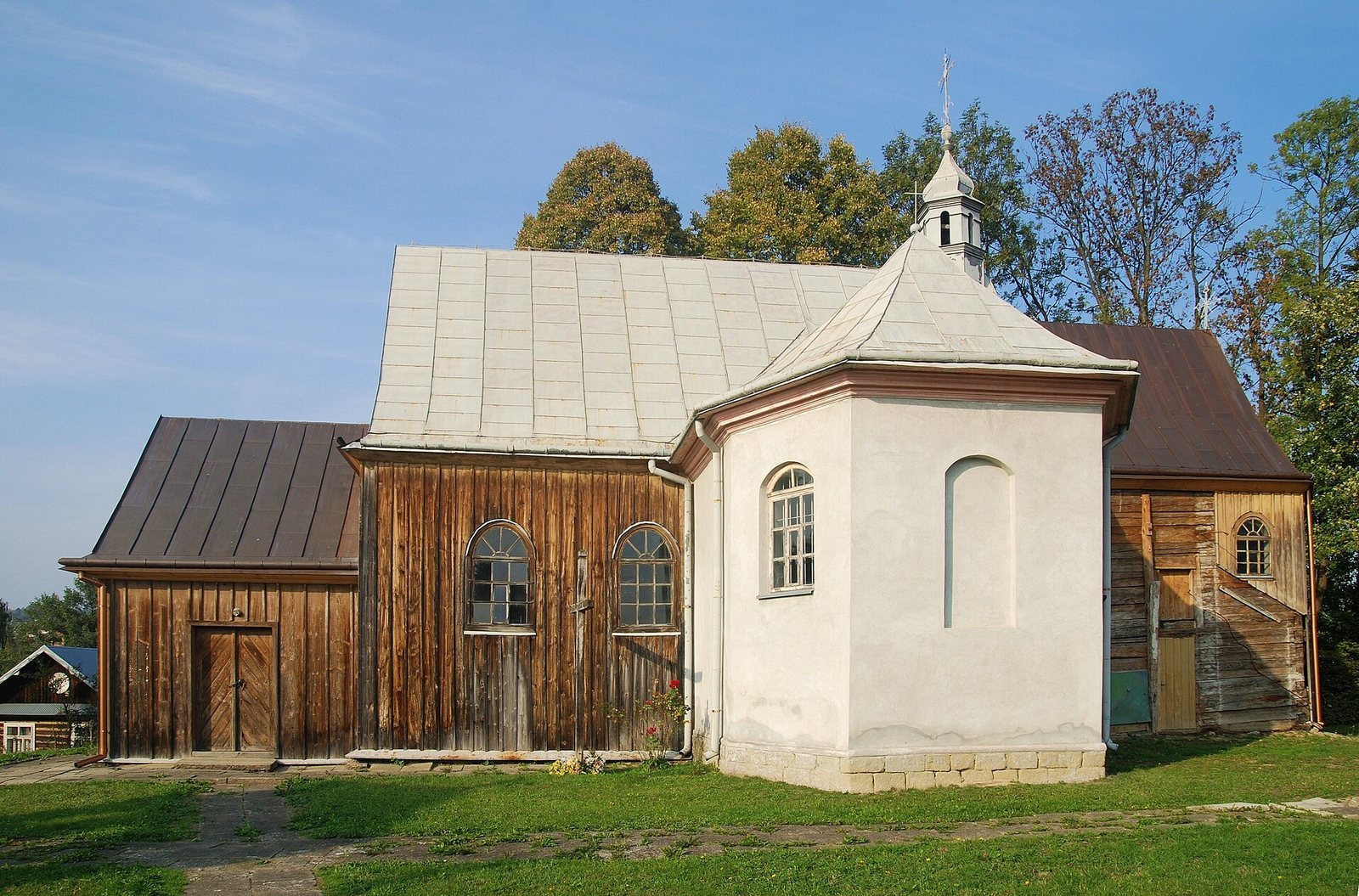
The church has an east–west orientation and a two-part plan. A larger nave with a porch connects at its east end to a narrower, rectangular chancel, the area around the altar, which ends in three sides. The timber building uses log construction, with horizontal timbers joined at their ends.
Plan and exterior
A sacristy, a room for liturgical objects and vestments, stands north of the chancel; a second, masonry sacristy is on its south side. The church also includes a masonry chapel. Vertical boards cover the walls, and a sheet-metal covering protects the roof, which has two ridge lines. Above the chancel, a small bell turret has an onion-shaped cupola topped by a lantern.
Interior
Figural painted decoration dates to 1939. A music gallery holds an organ made in 1867 and purchased by the parish priest Antoni Dobrzański.
Historic furnishings
Altars and tabernacle
The historic furnishings included two altars from the mid-seventeenth century. The main altar has Baroque elements, from an early modern European style, while the side-chapel altar is also Baroque. Its late-Renaissance tabernacle, a container for the Eucharist, bears a commemorative inscription, the date 1611, and the Nałęcz coat of arms, a Polish heraldic emblem associated with parish priest Zygmunt Jarecki.
Baptismal font and carving
Other furnishings included a late-Gothic baptismal font and a folk carving of the Passion Group, depicting Jesus’s suffering and crucifixion. The carving was placed on the rood beam, a crossbeam near the division between nave and chancel.
Triptych
The church’s most valued furnishing was a Gothic-Renaissance triptych, an artwork made of three panels, combining styles associated with the later medieval and Renaissance periods.
Bell tower
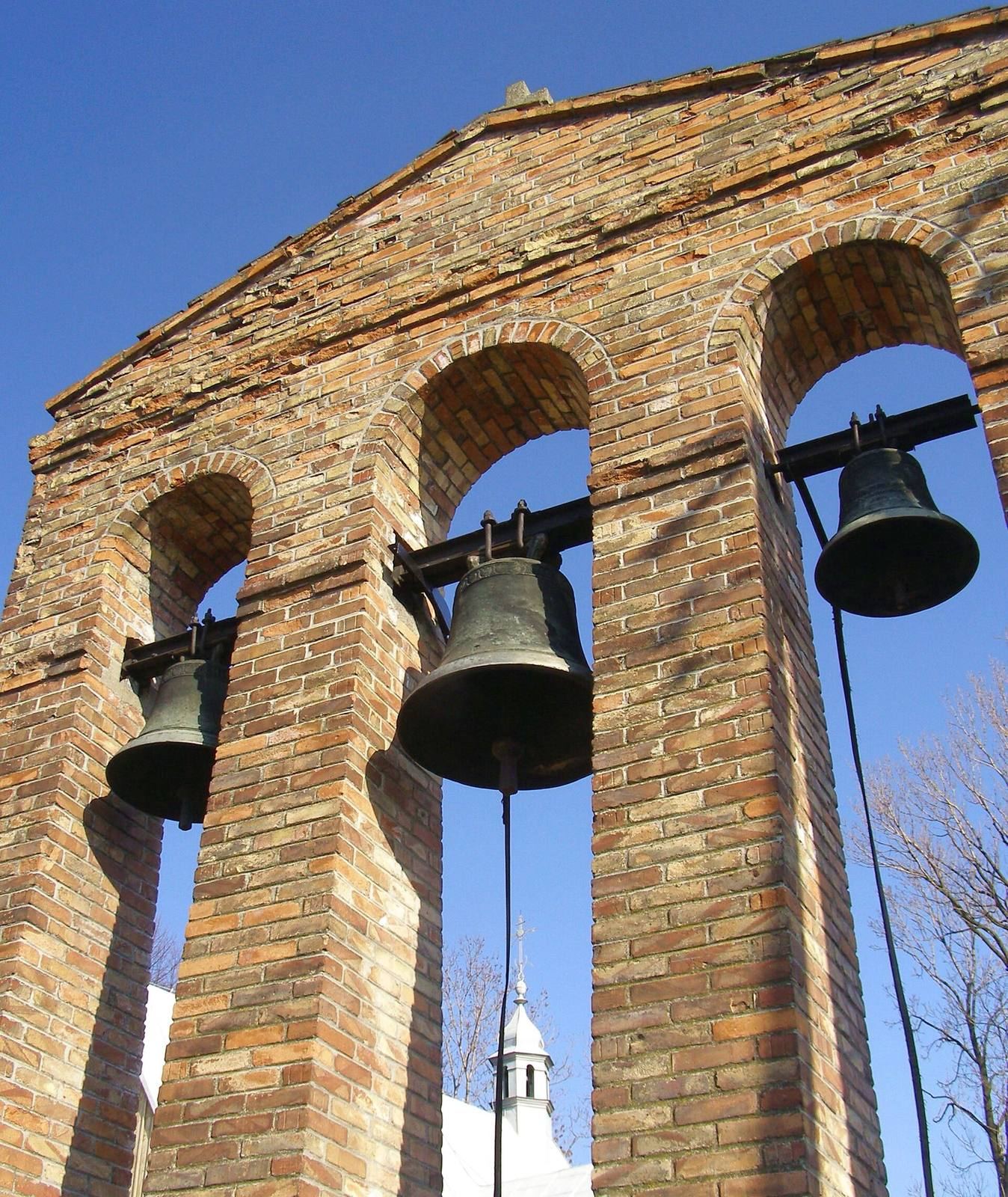
Beside the church stands a brick bell tower built in 1959. It is a wall-like structure with openings for its three bells.