San Sebastiano: Milan’s Civic Votive Church
Site at a Glance
- Popularity
- High
- Country
- Italy
- Primary era
- Early Modern
- Eras represented
- Early Modern, Modern
- Civilizations
- Austrian Empire, Duchy of Milan, Habsburg, Holy Roman Empire, Italian, Spanish
- Site type
- Religious
- Remains
- Church
On this page12 sections
History
San Sebastiano is a Roman Catholic church in Milan, Italy, proposed in 1576 as a civic votive project after a devastating plague and completed and consecrated in 1616. Its history reflects the close involvement of both municipal authorities and the church in Milanese public life.
Early church and dedication
A small church dedicated to Saint Tranquillino stood on the site near a fourth-century Roman imperial palace. In 1319, the Pusterla family took possession of it and changed its dedication to Saint Sebastian. The family also linked the church to a procession to Milan Cathedral, carrying a horse made of edible materials before distributing it to the public in the square.
Votive project and construction
In 1576, Milan’s governor, Antonio de Guzmán Zúñiga y Sotomayor, Marquis of Ayamonte, proposed a new church as an act of thanksgiving after the plague. His request to the Milanese church authorities was dated 15 October, and the first stone was laid on 6 September 1577. The plan drew on early Christian round churches and the Pantheon. Its centralized design was considered unusual in the post-Tridentine period, the era shaped by reforms following the Council of Trent.
Cardinal and Archbishop Carlo Borromeo resisted a civic church whose form recalled pagan temples, and asserted the church administration’s authority under recently approved rules governing relations between church and state. An agreement established joint civic and church oversight: the city nominated the civic chaplain, and the archbishop approved the appointment.
Pellegrino Tibaldi directed construction until he left for Spain in 1586. Giuseppe Meda then worked on the presbytery, the area around the main altar, and led the project until 1599, when Pietro Antonio Barca took charge. Fabio Mangone added a chancel, the area reserved for clergy and choir, to the main chapel in 1616–17.
Civic role and modern history
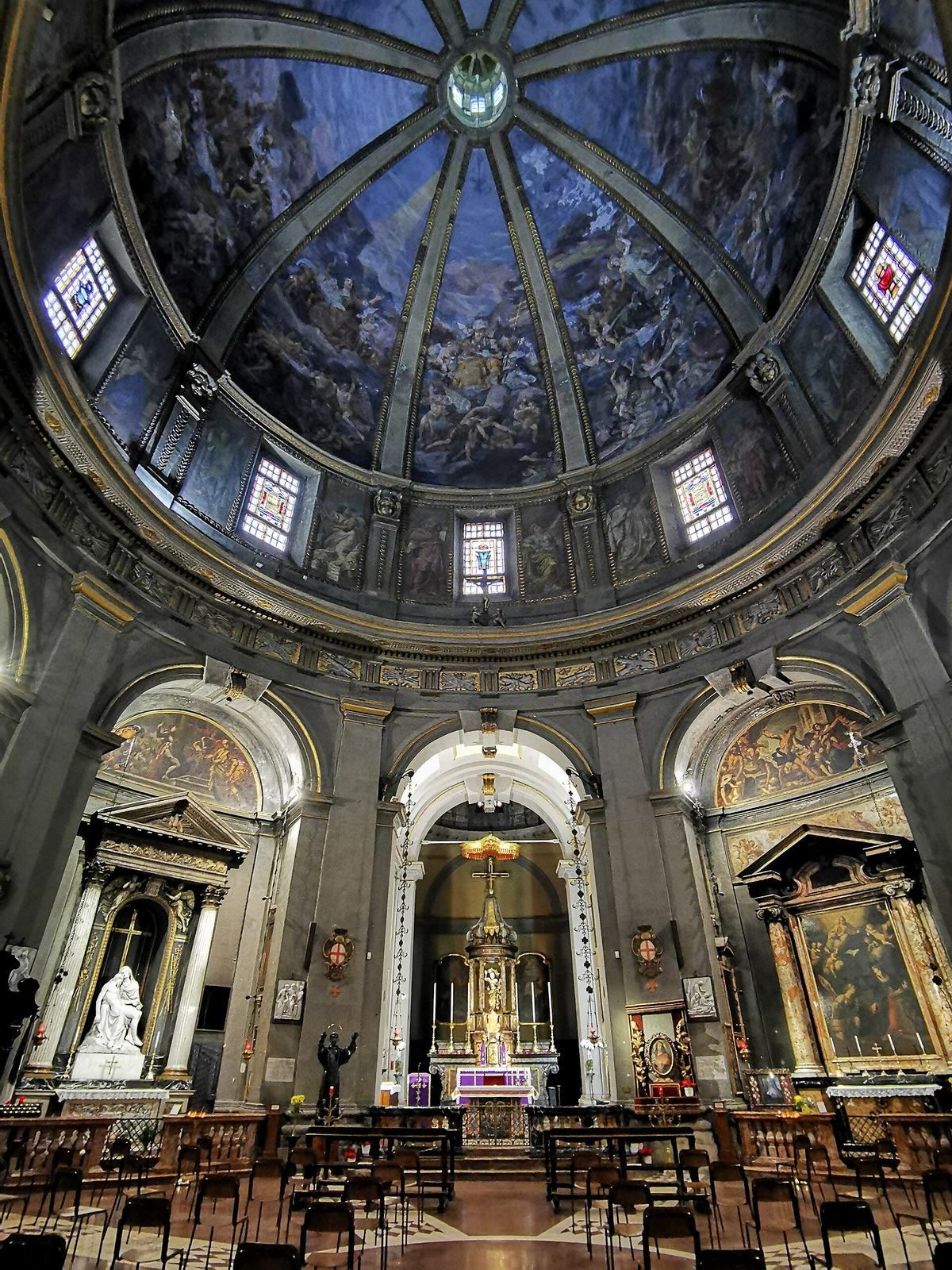
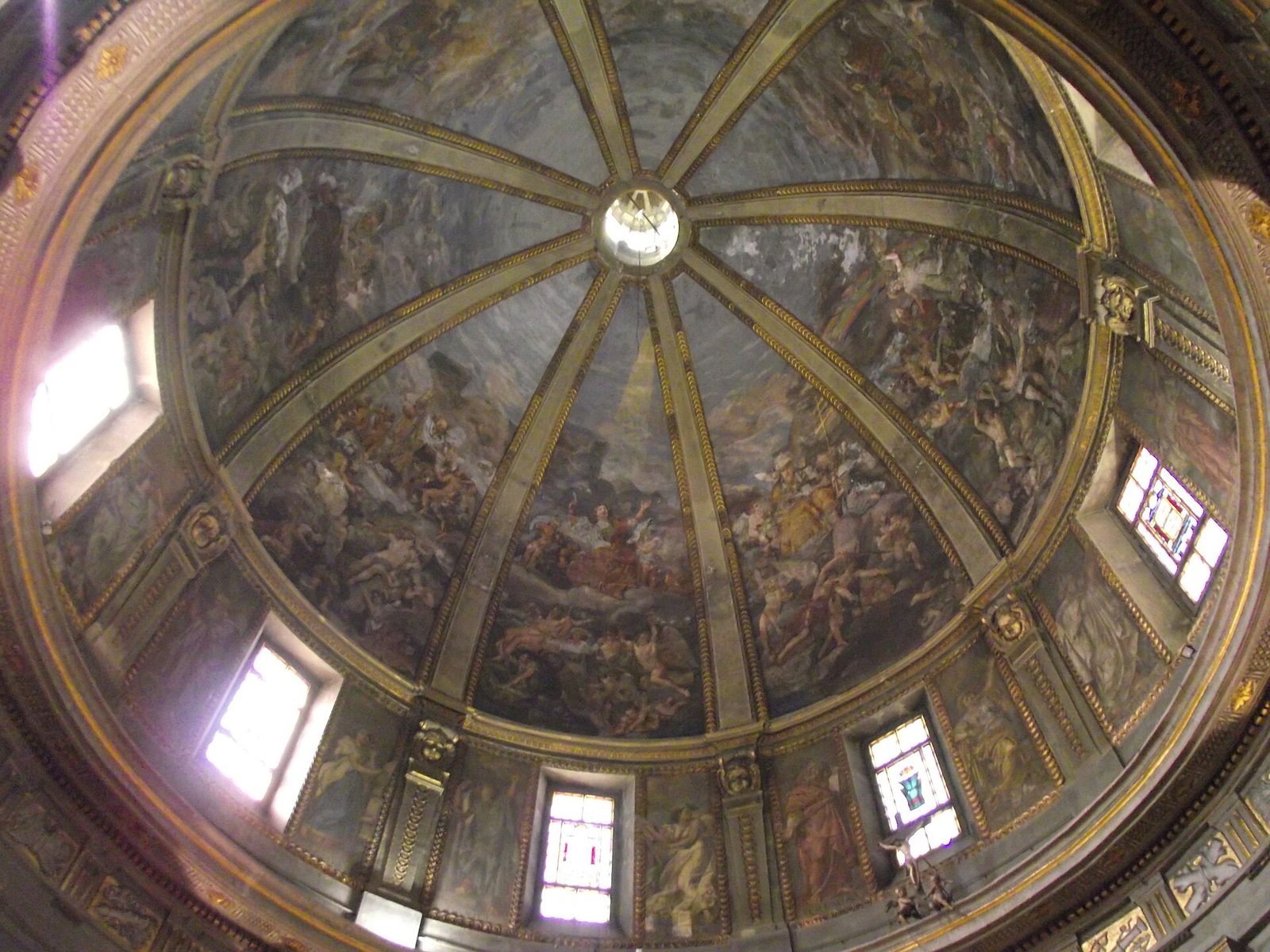
The church served religious and civic purposes. Six municipal districts held gatherings there for patronal festivals associated with their respective areas. Agostino Comerio decorated the dome in 1832, and in 1861 the municipality entrusted the rectorship to a municipal body established chiefly to safeguard the church’s artistic value.
In 1938, Milan’s chief municipal magistrate, Gallarati Scotti, led a general restoration and work to separate the church’s exterior from the houses that had become attached to it over the centuries. In 1970, a memorial was established beneath the Pietà Chapel in remembrance of the end of the Second World War and an unidentified person who had been interned and died in a concentration camp.
The Municipality of Milan owns the church, while the Archdiocesan Curia manages it by agreement. The curia appoints a rector with municipal approval, and the municipality covers the expenses. Worship follows the Ambrosian rite, the Catholic liturgical tradition associated with Milan.
Remains
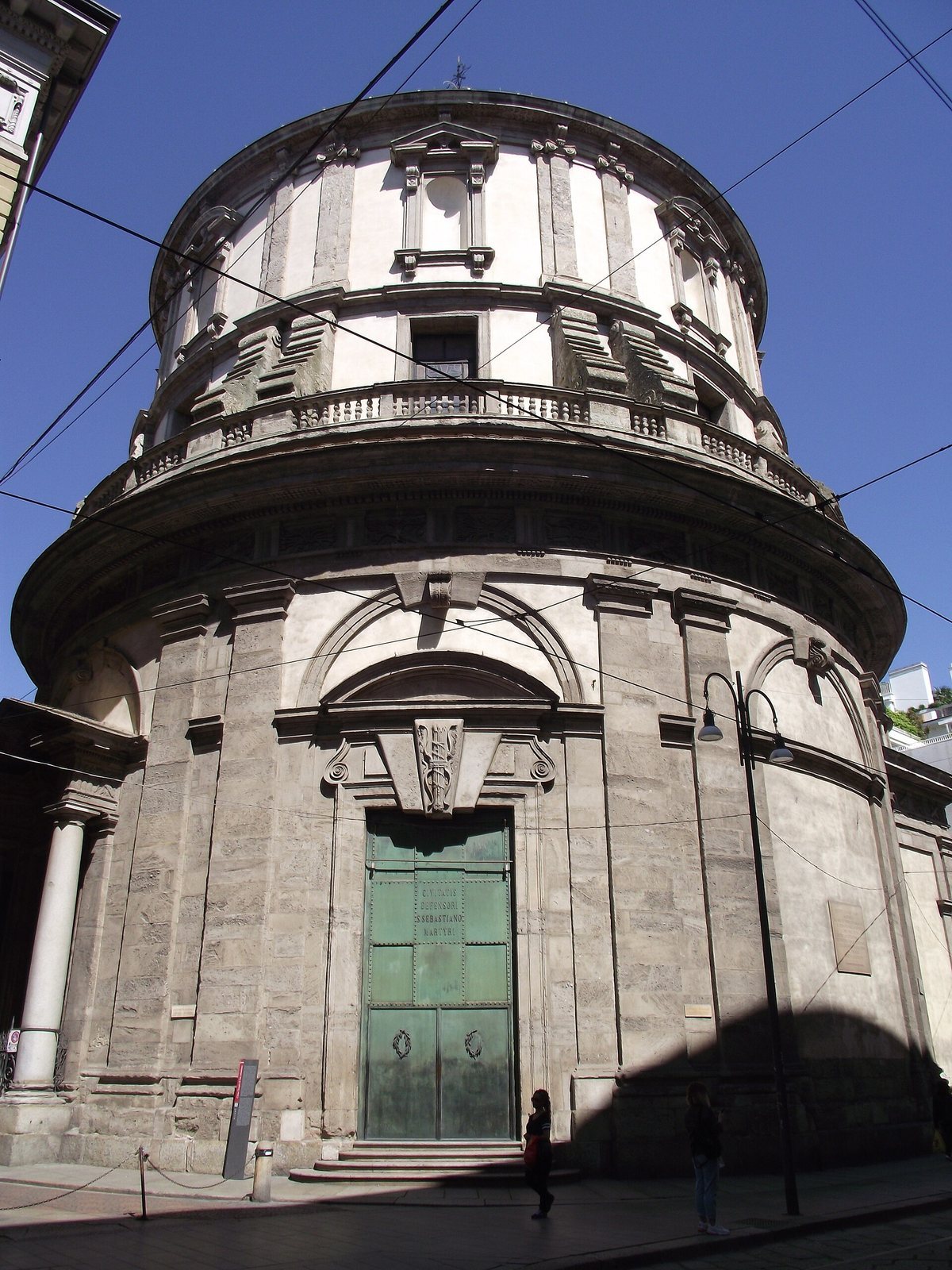
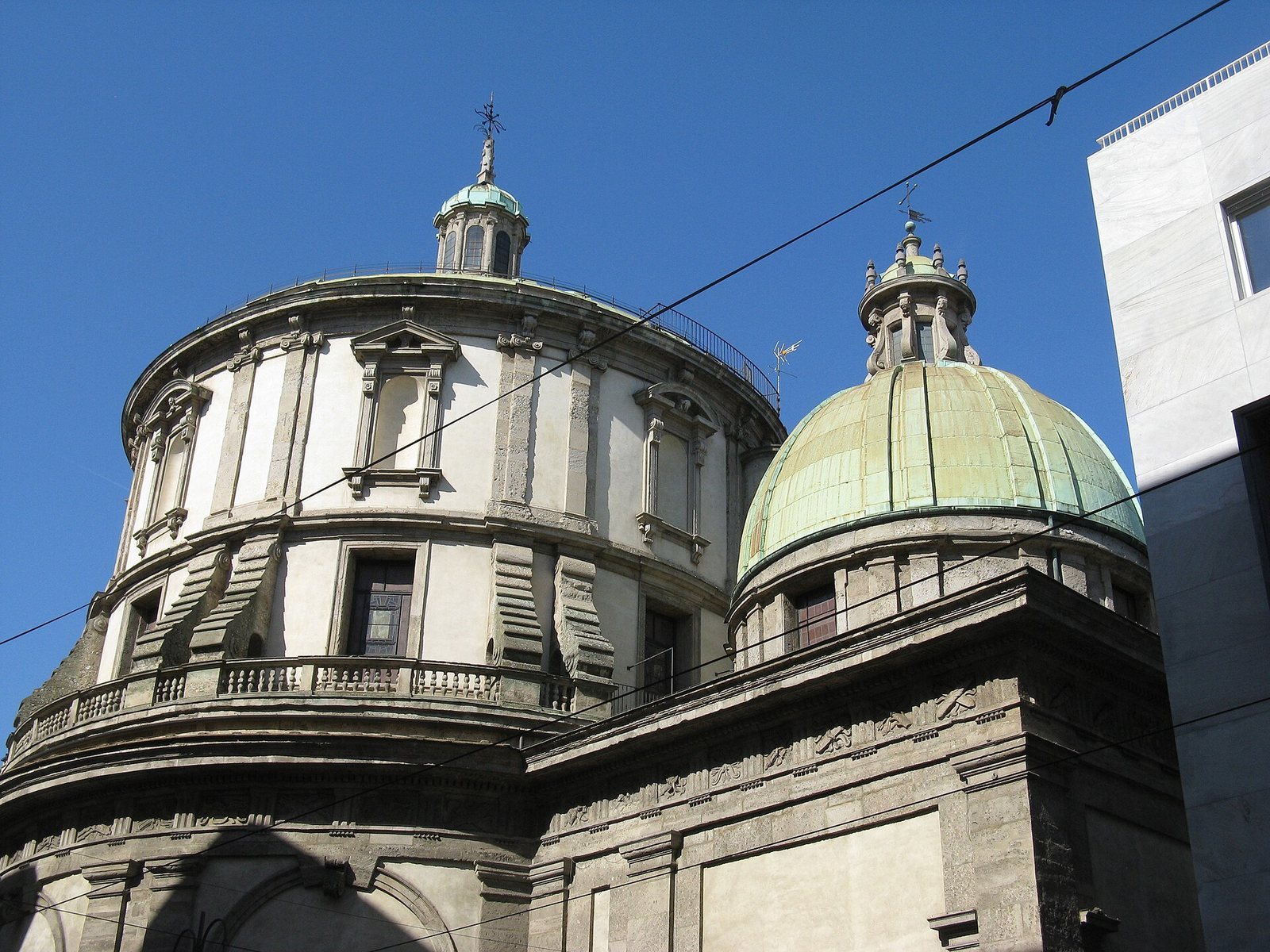
The church is arranged around a central space, with chapels around it and a dome above. Later additions altered the original centralized composition.
Central plan and dome
The chapels are arranged around the central space. The dome rises within a tower-like enclosure and projects much higher than the original design, which called for it to rise only slightly above the building. The later presbytery and chancel also changed the original centralized plan.
Exterior
Eight pairs of Doric pilasters, shallow column-like projections from a wall, frame the exterior arches, which align with the interior chapels. The upper drum, the structure supporting the dome, has Ionic pilasters. False windows and richly decorated spandrels, the spaces between arches and their surrounding frames, complete the upper exterior.
Interior features and artworks
Municipal emblems
The interior displays the coats of arms of Milan’s six historic municipal districts, whose representatives gathered in the church for patronal festivals.
Pietà Chapel memorial
Built in 1862, the Pietà Chapel contains a sarcophagus beneath it and a plaque explaining the memorial’s purpose. A Pietà depicts Mary mourning or holding the dead Christ.
Organ
A pipe organ built by Balbiani-Vegezzi Bossi in 1928 stands in two elaborately carved cases on paired choir lofts beneath the arches on either side of the entrance. Its keys operate electrically; the instrument has two 61-note keyboards and a 32-note pedalboard.
Paintings, sculpture, and stained glass
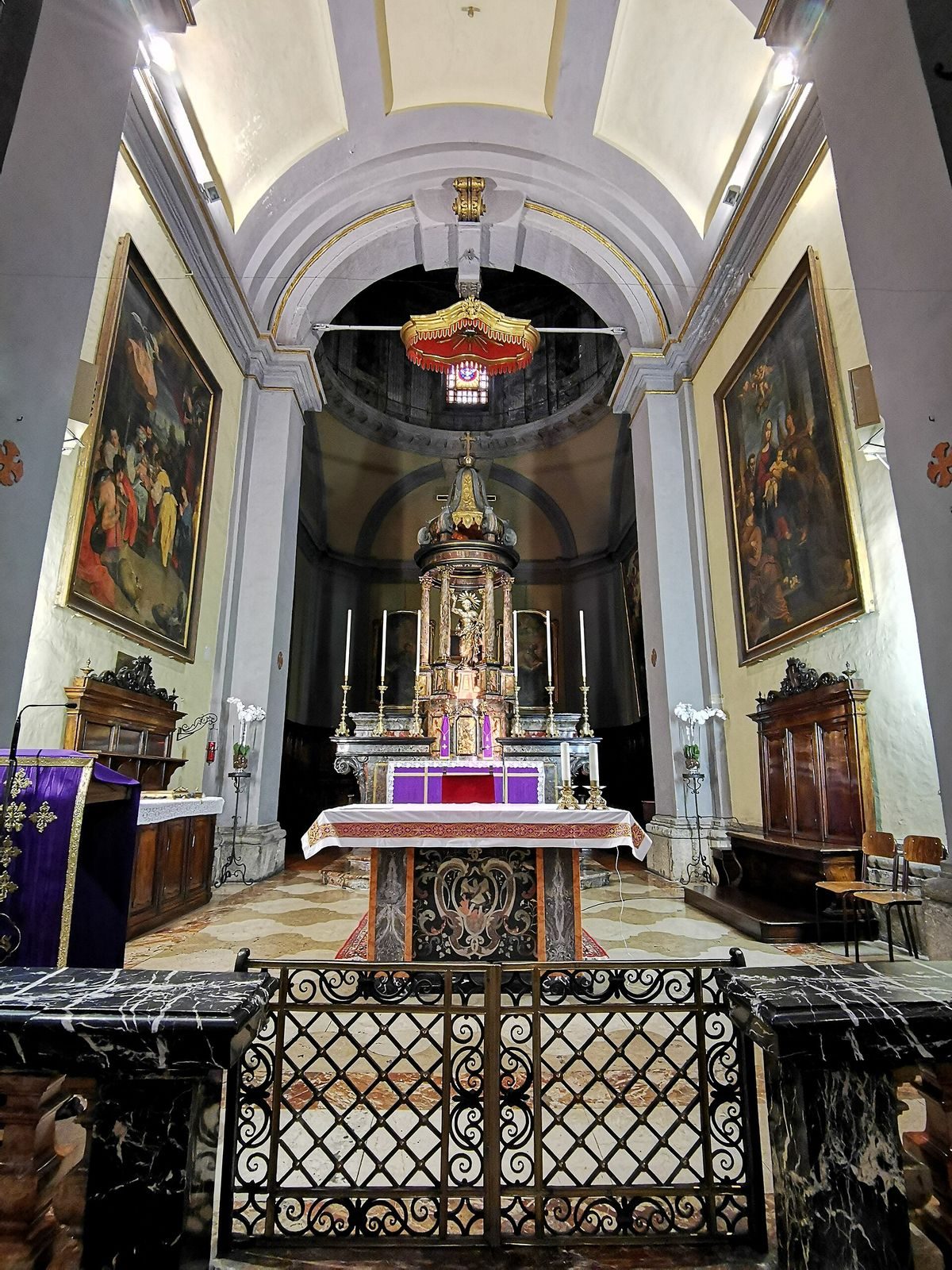
The church’s works include a seventeenth-century oil painting of Saint Sebastian by an unknown artist, Benedetto Cacciatori’s marble Pietà (1887), and Domenico Trentacoste’s bronze Saint Francis (1928). Other paintings are A. Moncalvo’s oil painting The Virgin Annunciate (1650), Andrea Lanzani’s oil painting of Saint Eligius (1724), Lazzaro Pasini’s The Deposition of Christ (1933), and an oil painting of Saint Eligius (1724). The church also contains a chased crucifix by M. Restelli (1932), F. Lombardi’s marble relief series of the Stations of the Cross (1933), and stained-glass windows by Pietro Marussig (1930). The Stations of the Cross depict scenes from Jesus’ path to crucifixion.