Transfiguration Cathedral, Bender: An Orthodox Church in Moldova
Site at a Glance
- Popularity
- Medium
- Country
- Moldova
- Primary era
- Modern
- Eras represented
- Modern
- Civilizations
- Kingdom of Romania, Russian
- Site type
- Religious
- Remains
- Cathedral
On this page8 sections
History
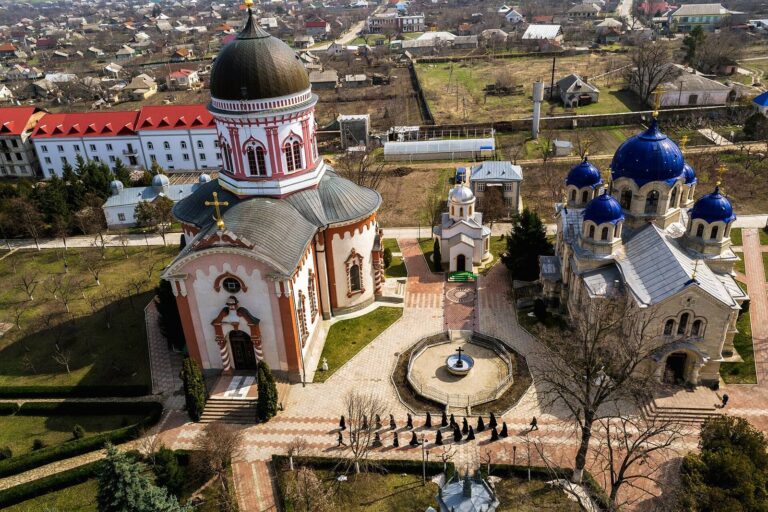
Transfiguration Cathedral, Bender, is an active Orthodox church in Moldova, planned in 1814 in Russian Classicism, a style shaped by classical forms, with elements of Moldovan folk tradition. Its founders intended it to commemorate Russia’s victory over the Turks and Bessarabia’s incorporation into Russia.
Foundation and completion
In 1814, engineers at Bender Fortress began moving the town 600 metres south to make an open strip of ground between the fortress and the settlement. The dilapidated St Nicholas and Dormition churches collapsed during the relocation. A new church dedicated to the Transfiguration was proposed on the remains of Turkish barracks.
The foundation stone was laid on 22 August 1815 during a military parade attended by townspeople. Archimandrite Ioanniky, a senior monastic cleric who served in the Chișinău church administration, prepared the project. The St Nicholas side altar was consecrated on 5 December 1819 and the Dormition side altar on 19 December. Work on the central Transfiguration altar was completed in 1820, and Archbishop Dimitrios of Chișinău and Khotyn consecrated the cathedral in 1827.
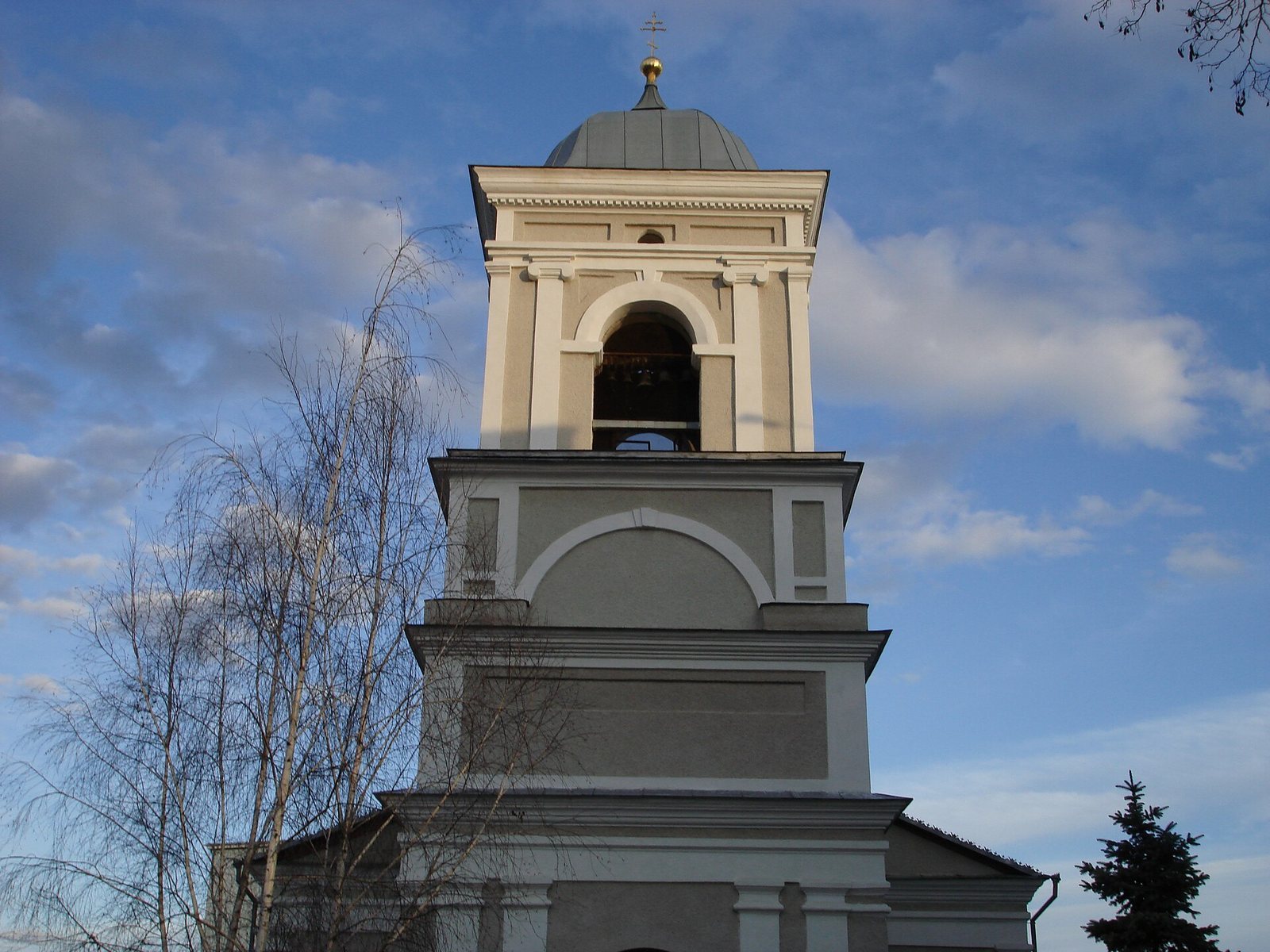
An icon screen was commissioned in Odessa in 1825, with its painting and carving undertaken by a priest and a chancery clerk. Limited funds delayed completion of the bell tower until 1832 and interior decorative work until about 1840.
Church life and twentieth-century events
From 1918 to 1944, the parish belonged to the Bessarabian Metropolis, a regional jurisdiction of the Romanian Orthodox Church, apart from the Soviet period of 1940–1941. After Soviet authority returned in 1944, the cathedral joined the Chișinău Diocese, a bishop’s territorial jurisdiction, of the Russian Orthodox Church. It is now identified with the Moldovan Orthodox Church, within the Diocese of Tiraspol and Dubăsari and the Bender deanery, a smaller church district, under the Moscow Patriarchate.
Artillery fire struck the cathedral during the Second World War and caused a fire. In 1948, it was placed under state protection as an architectural monument of the early nineteenth century. Until the Cathedral of the Nativity in Tiraspol was consecrated in 2000, Transfiguration Cathedral served as the principal center of Orthodox life in Transnistria.
During the Battle of Bender, part of the 1992 Transnistria conflict, shelling damaged the cathedral. With snipers nearby, people crawled to the church and opened it for prayer after receiving a bishop’s blessing. The roof and domes were re-covered after the fighting.
On 8 March 2009, during the Triumph of Orthodoxy, an Eastern Orthodox feast celebrating the restoration of icon veneration, Archbishop Justinian of Tiraspol and Dubăsari restored a rite condemning Hetman Ivan Mazepa. A hetman was a Cossack military and political leader; in Orthodox Christianity, an anathema is a formal condemnation that excludes a person from communion.
Remains
Plan and exterior
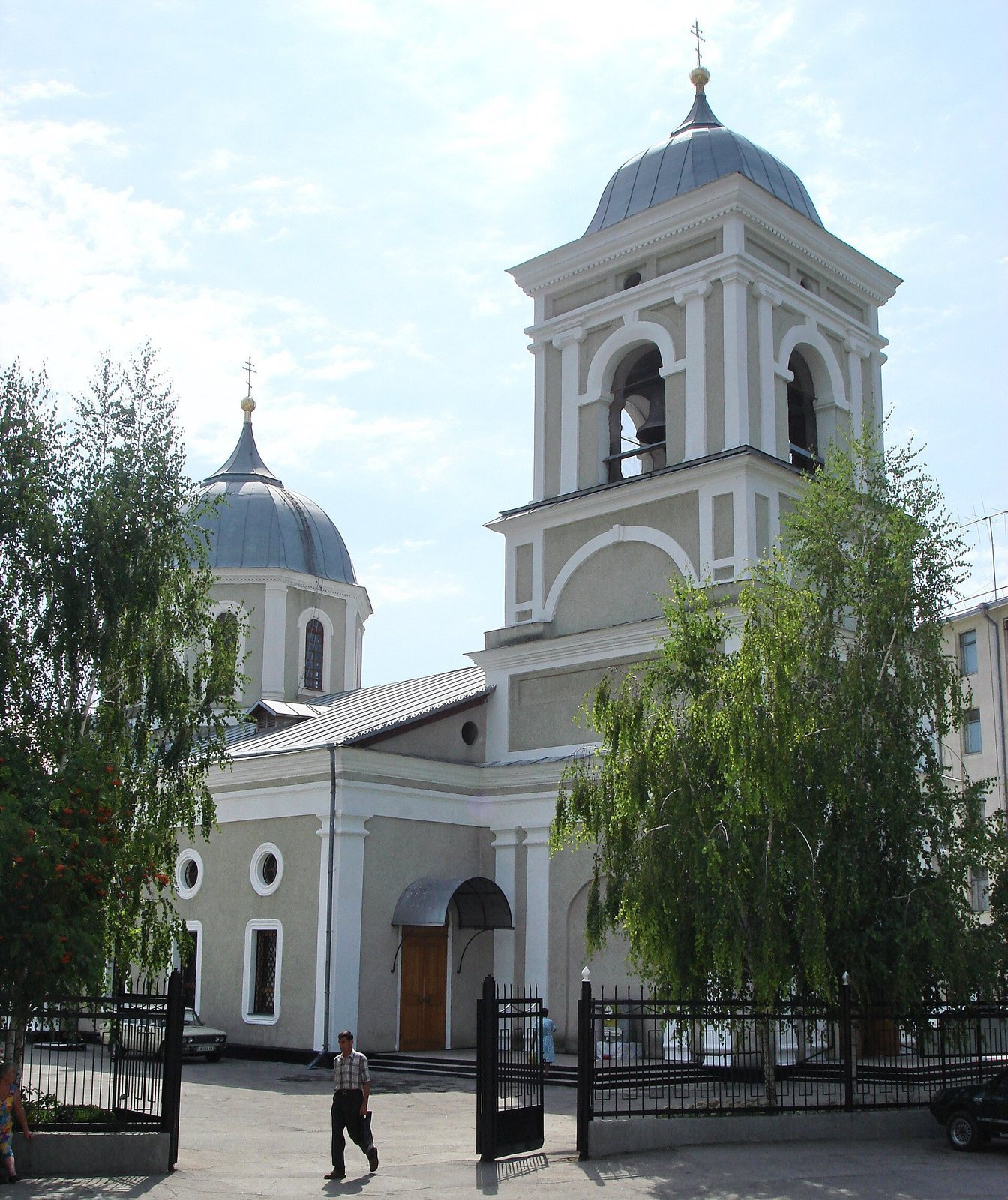
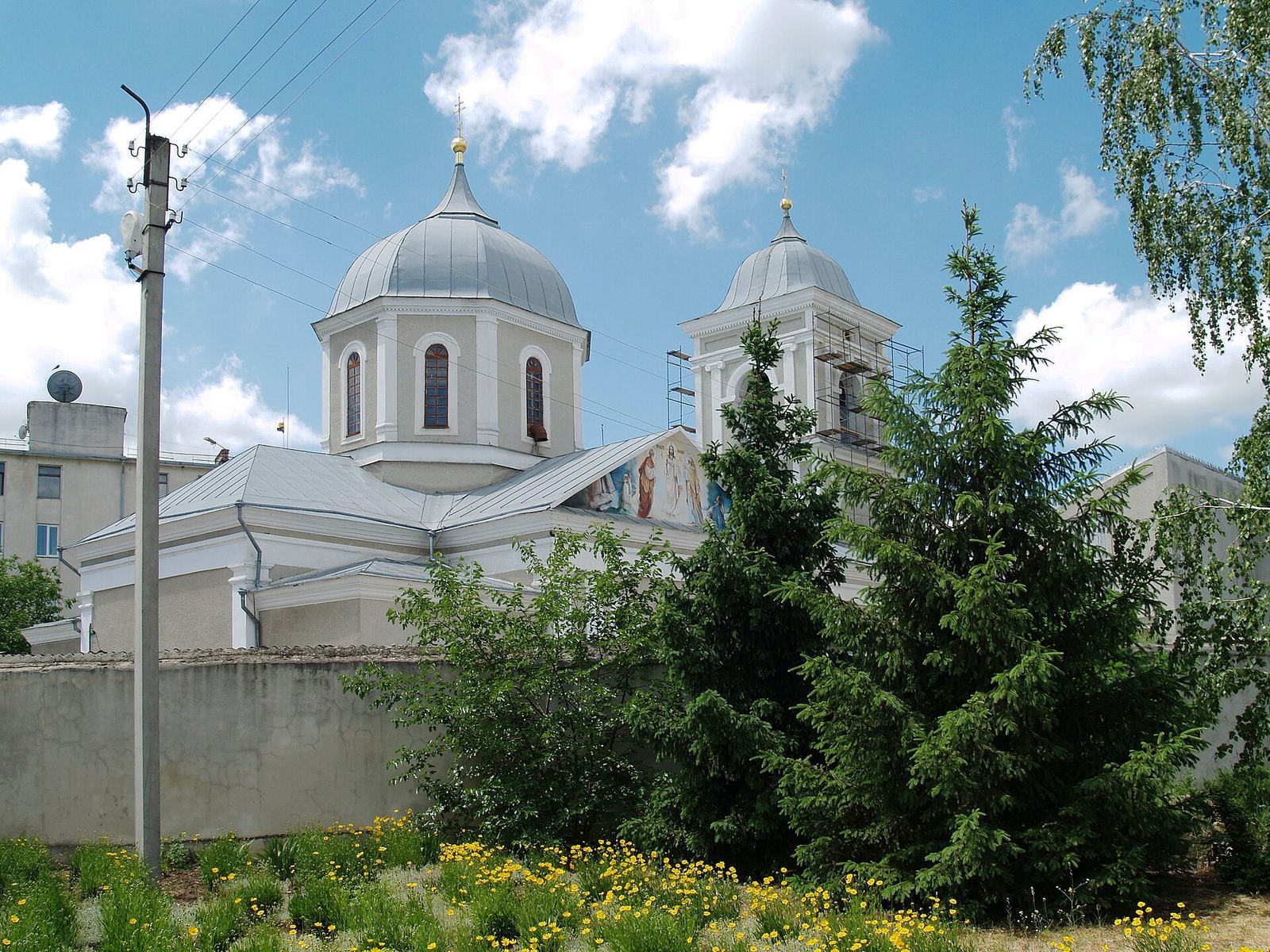
The brick cathedral has a cross-domed plan, with its principal dome above the crossing of the building’s main arms. Smooth wall surfaces contrast with attached columns. The single main dome has a profile likened to the helmet of a medieval Rus warrior, and the building also has one bell tower. A bell weighing three tonnes was added in 1911.
Interior and decoration
Altars and iconostasis
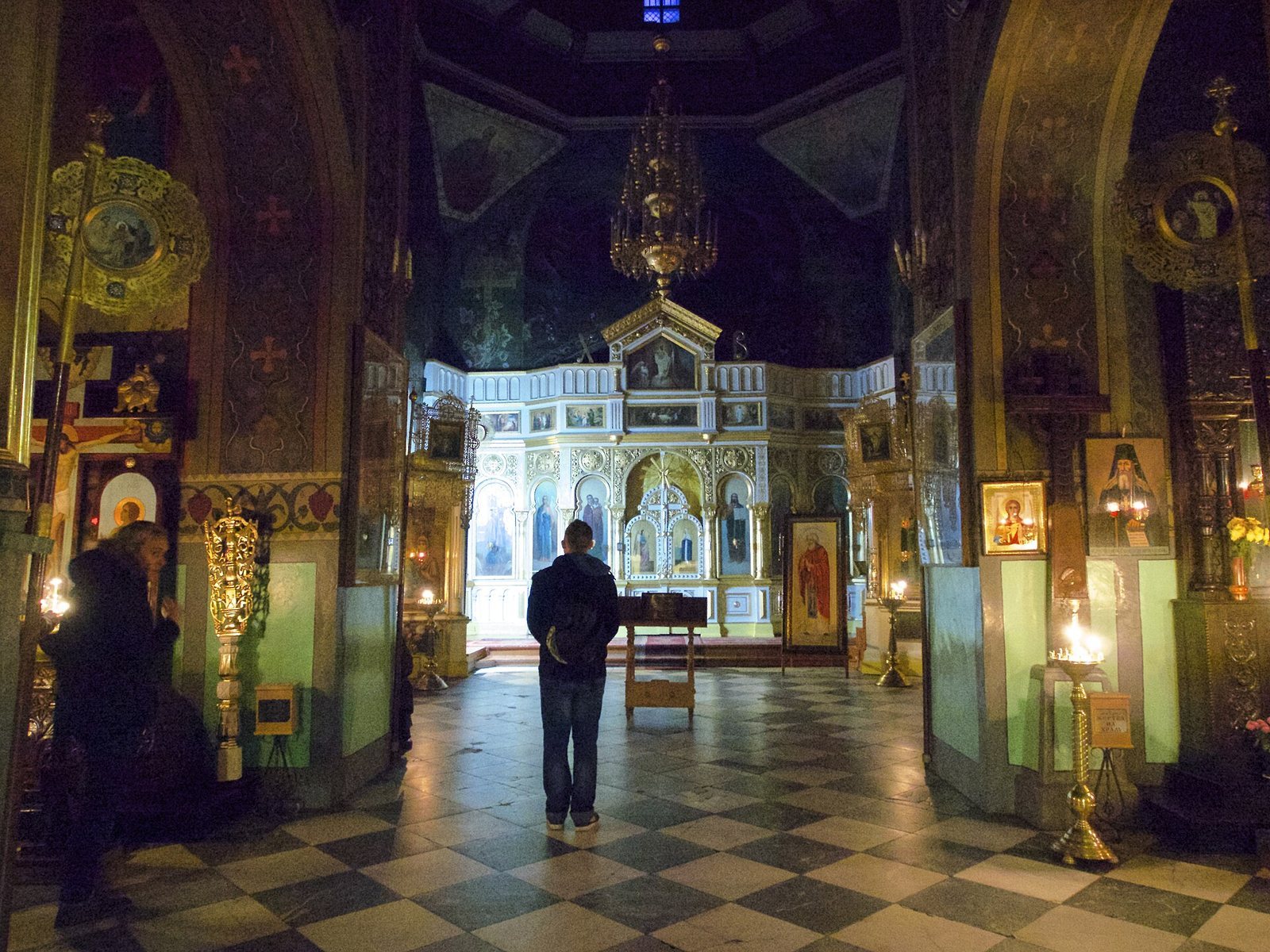
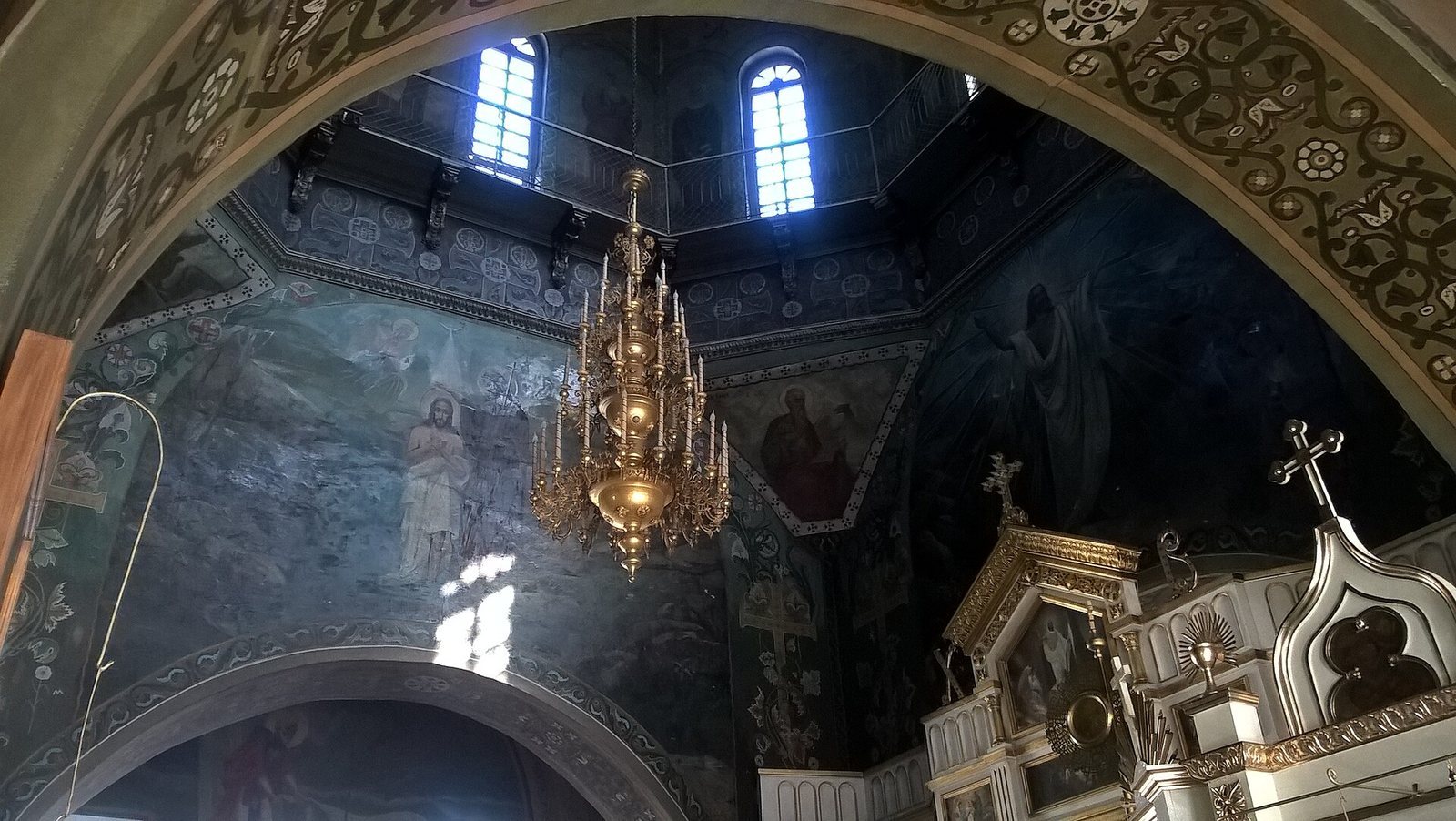
The cathedral has three altars. The central altar is dedicated to the Transfiguration, the Christian event in which Jesus’ divine glory was revealed to his disciples. The side altars are dedicated to St Nicholas, an early Christian bishop venerated as a saint, and the Dormition, the Eastern Orthodox teaching of the Virgin Mary’s death and assumption into heaven.
An iconostasis, the screen of icons separating the sanctuary from the main body of the church, was commissioned in Odessa in 1825. Its canopy rested on seven wooden columns. The original was destroyed in a Second World War fire and replaced in the 1960s with an iconostasis from a Bender regimental church, a church serving a military regiment, which had also been destroyed.
Wall paintings
From about 1934, Moldovan painter and sculptor Alexandru Plămădeală and four former students of the Chișinău art school painted the interior. The cathedral’s frescoes, paintings made on wet plaster, were reconstructed after the Second World War. A restoration in the late 1990s destroyed surviving frescoes by Plămădeală and substantially damaged other interior paintings.