Stratos: An Ancient Greek City in Acarnania
Site at a Glance
- Popularity
- Very Low
- Country
- Greece
- Primary era
- Classical
- Eras represented
- Classical
- Civilizations
- Ancient Greek
- Site type
- City
On this page7 sections
History
Stratos was an ancient Greek city in Acarnania, on the western bank of the Achelous River in present-day Greece. Its foundation is usually placed in the sixth or fifth century BCE, although it may have begun as early as the eighth or seventh century BCE. The city was described as Acarnania’s most important, with its greatest prominence in the fourth and third centuries BCE. A Greek civic community centered on a city and its surrounding territory was known as a polis, and Stratos’s territory was called Stratikē. The city lay among fertile plains and controlled access to the plain from the north. The Anapos and Petitauros joined the Achelous nearby. Ancient Greek was spoken there.
War and political change
During the Peloponnesian War, fought between Athens and Sparta and their allies from 431 to 404 BCE, Stratos sided with Athens, as did most Acarnanian cities. In 429 BCE, Ambracia attacked under the Spartan commander Knemos, with support from the Peloponnesian League, a coalition led by Sparta. The assault was repelled. Thucydides later described Stratos as the largest city in the region.
In 314 BCE, the Macedonian king Cassander consolidated Stratos with Agrinio and Sauria into a single political unit. Sauria may have been the same place as Thyria. Aetolian control spread through Acarnania during the fifth and fourth centuries BCE, while Stratos’s incorporation into Aetolia is also placed after the death of Pyrrhus, king of Epirus, in 270 BCE. Aetolian resistance compelled Philip II of Macedon to reach terms during his campaigns to conquer Greece. Later, Philip V and Perseus attempted to capture Stratos, but it remained under Aetolian control.
Roman rule and archaeological investigation
In 167 BCE, the region became part of the Roman Empire. The Romans later returned it to the Acarnanians, from whom it had passed to the Aetolians.
The British traveller and antiquarian W. M. Leake visited the area in 1805. L. Heuzey surveyed the ancient remains in 1856, and the French School of Athens began excavations in 1892–1893. Further work took place particularly in 1910–1911 and 1924, alongside investigations by Greek archaeologists in the early twentieth century. Research continued in the early 2000s under Finnish archaeologist Jari Pakkanen, associated with the Finnish Institute of Athens, and excavations at Stratos remain ongoing.
Remains
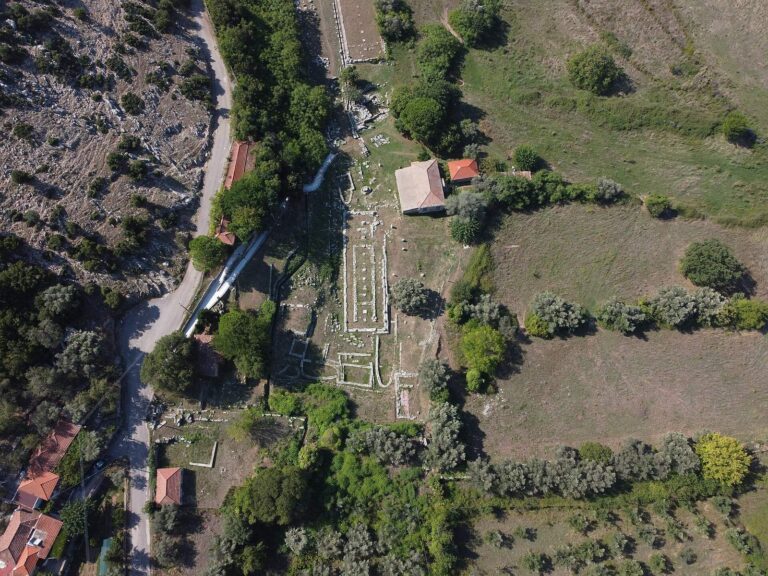
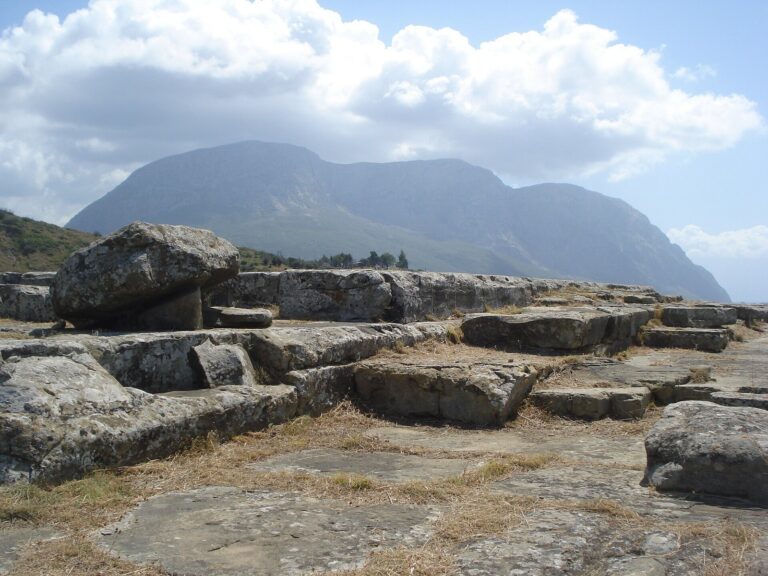
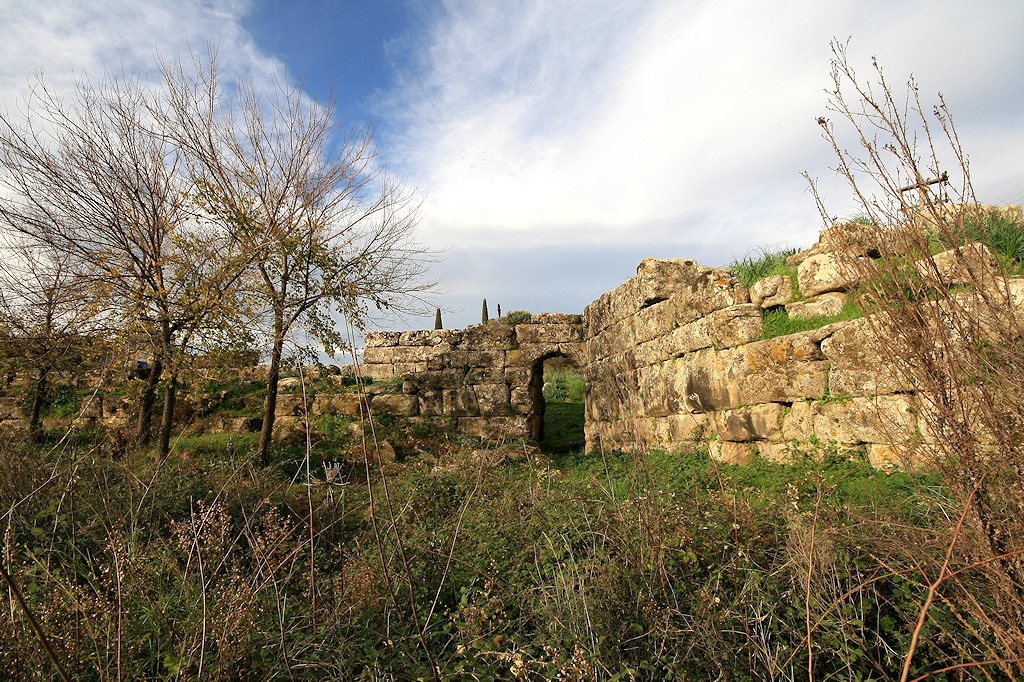
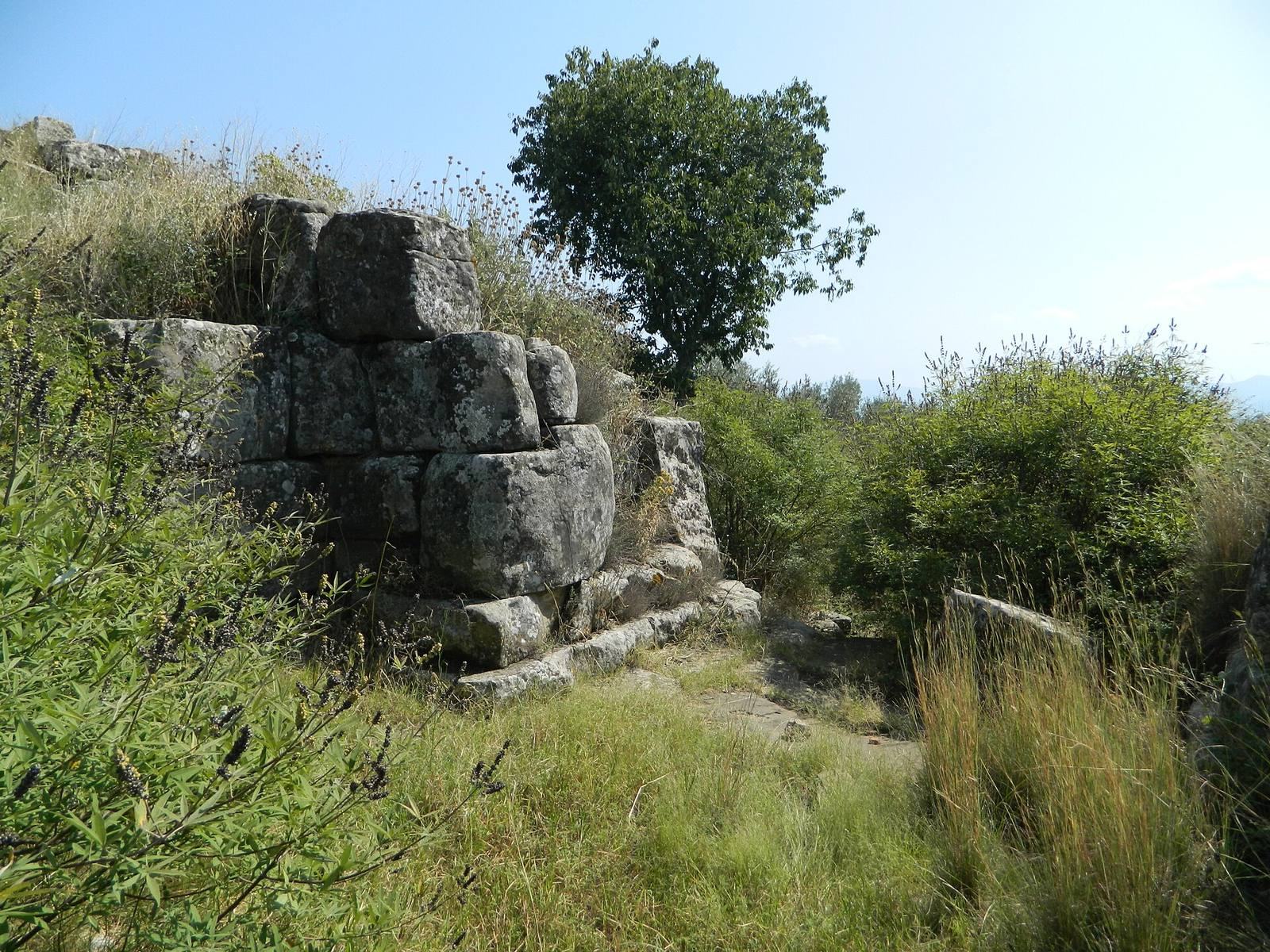
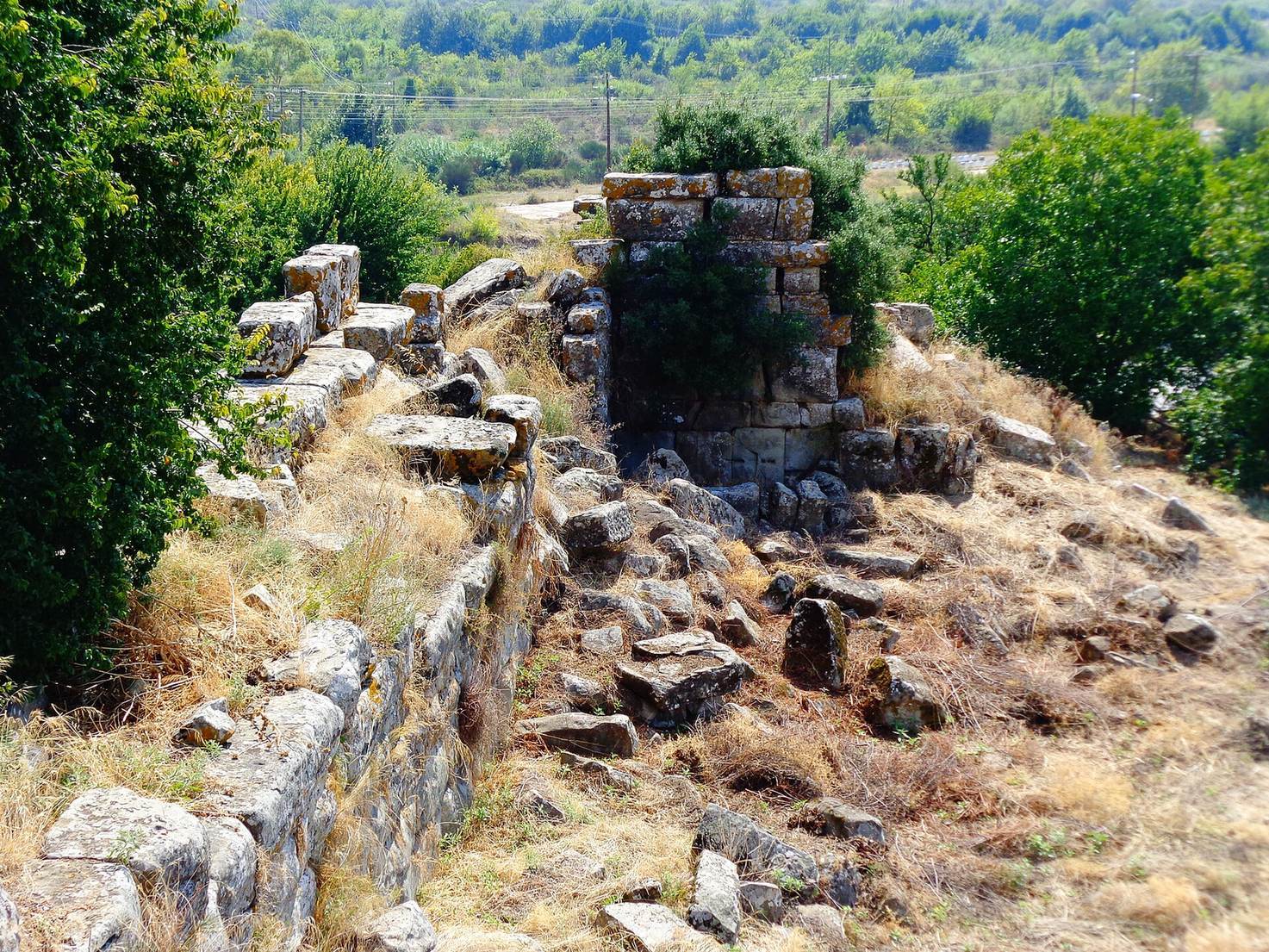
The ruins extend across three hills within an enclosed area whose walls had an estimated circuit of about four kilometres. The defenses probably date to the fourth century BCE and included towers and gates. A second wall ran north to south through the enclosure, dividing it into roughly equal parts.
Walls and acropolis
The acropolis, the fortified high part of a Greek city, occupied the northern sector of Stratos and had its own wall, joined to the city defenses. Along the eastern side, the city wall followed the Achelous River.
Temple of Zeus Stratios
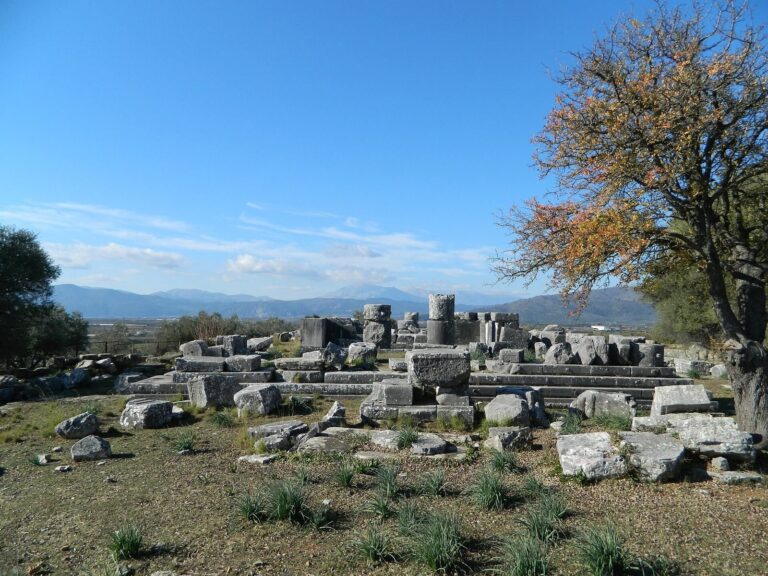
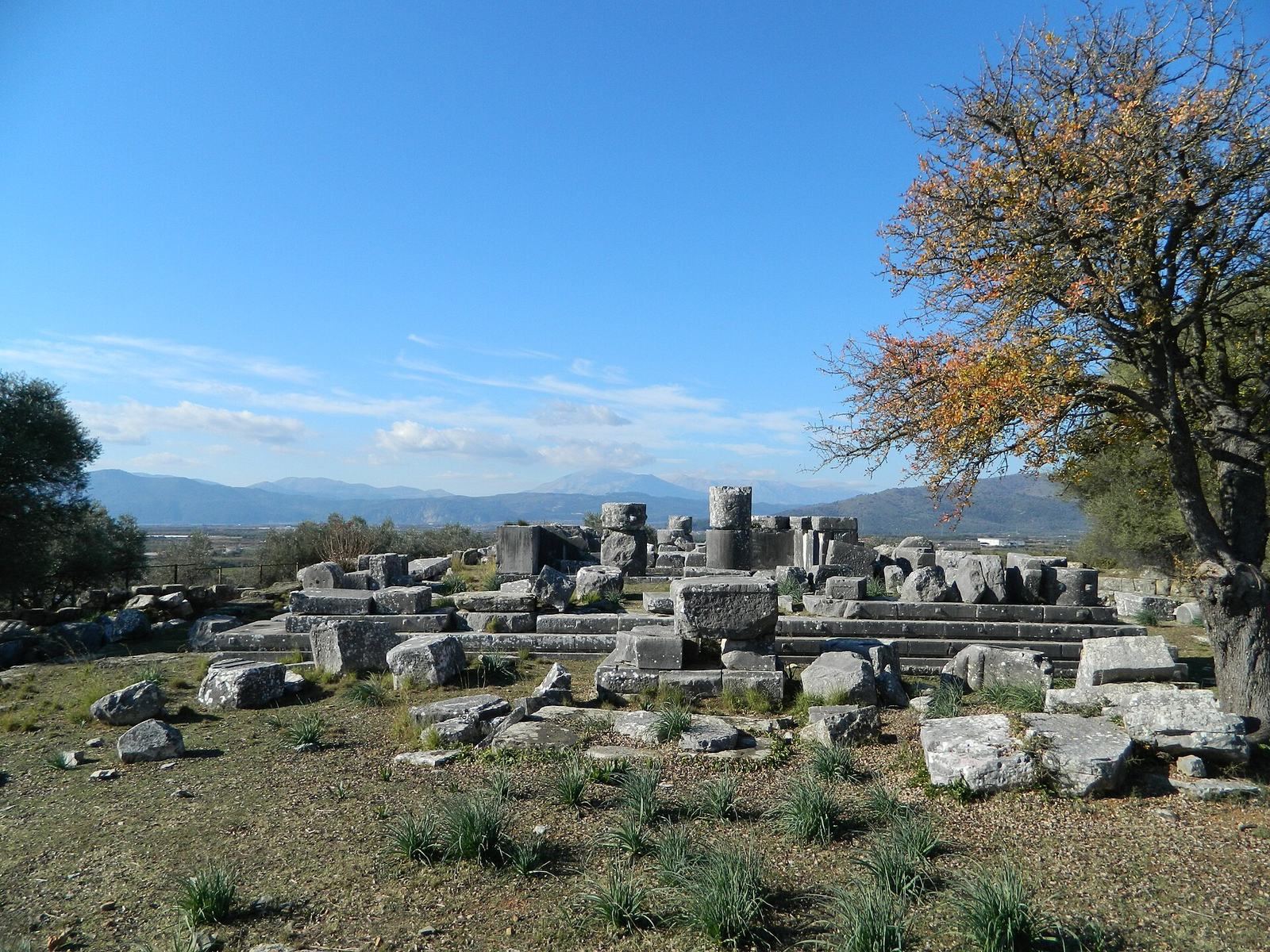
The temple of Zeus Stratios stood in the northwestern part of the walled city. Built in the late fourth century BCE, as the Classical period gave way to the Hellenistic period that followed Alexander the Great’s conquests, it measured about 16.5 by 32.4 metres. Six columns crossed its front, with a colonnade surrounding the main building. The outer colonnade followed the Doric style, the horizontal beam resting on its columns was Ionic, and the interior used Corinthian forms.
Theatre and civic spaces
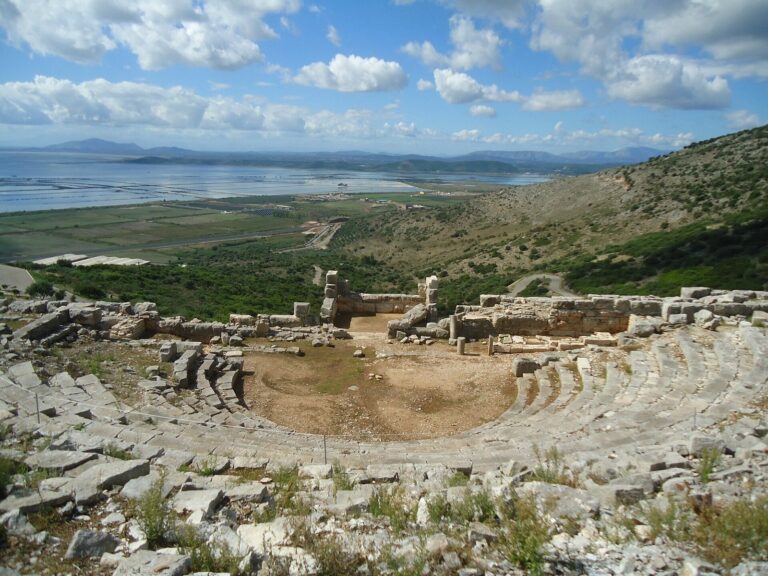
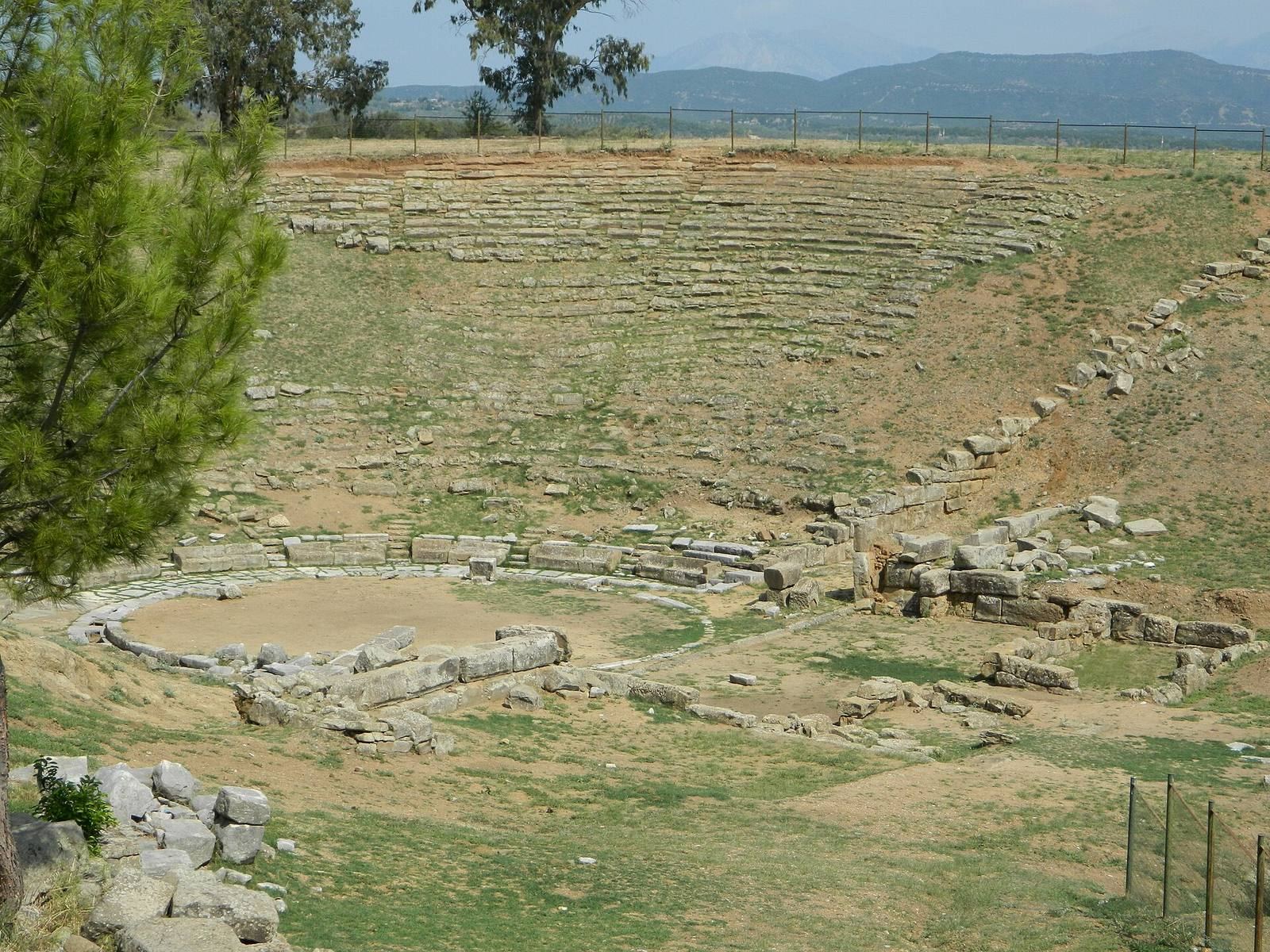
The fourth-century BCE theatre stands on a hill northeast of the present-day village of Stratos. It has a semicircular plan, about 30 rows of seats, and a circular performance area at its center. The agora, or marketplace, lies southwest of the village. An inscription naming a gymnasiarch, an official involved in administering a gymnasium, points to the presence of a gymnasium, a place for physical training and education. Finds from the city are held at the Archaeological Museum of Agrinio.