Church of St John the Baptist in Pieniążkowo: A Late Gothic Parish Church
Site at a Glance
- Popularity
- Very Low
- Country
- Poland
- Primary era
- Early Modern
- Eras represented
- Early Modern, Modern
- Civilizations
- German, Kingdom of Prussia, Polish–Lithuanian Commonwealth
- Site type
- Religious
- Remains
- Church
On this page8 sections
History
Construction and consecration
The Church of St John the Baptist in Pieniążkowo is a late Gothic Roman Catholic parish church in Poland, built from 1590 to 1593. Its construction was initiated by Jan Oleski, heir to the estate of Ostrowite. Dedicated to John the Baptist, the Christian figure known for baptizing Jesus, the church belongs to the parish of the same dedication in the Diocese of Pelplin, the territorial jurisdiction of a Roman Catholic bishop in northern Poland. Hieronim Rozdrażewski, bishop of Włocławek, consecrated the church on 29 September 1593.
Nineteenth-century changes
A Confraternity of the Holy Guardian Angels, a religious association organized around shared devotion, operated at the church during the nineteenth century. The most extensive remodeling took place in 1879 and altered the building’s exterior form.
Later repairs
Further major repairs took place in 1903, 1953, from 1973 to 1975, from 1988 to 1993, and from 2017 to 2023.
Remains
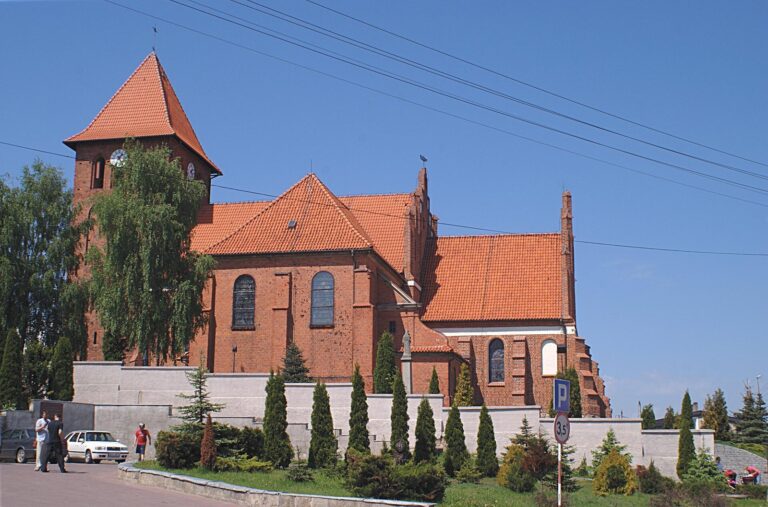
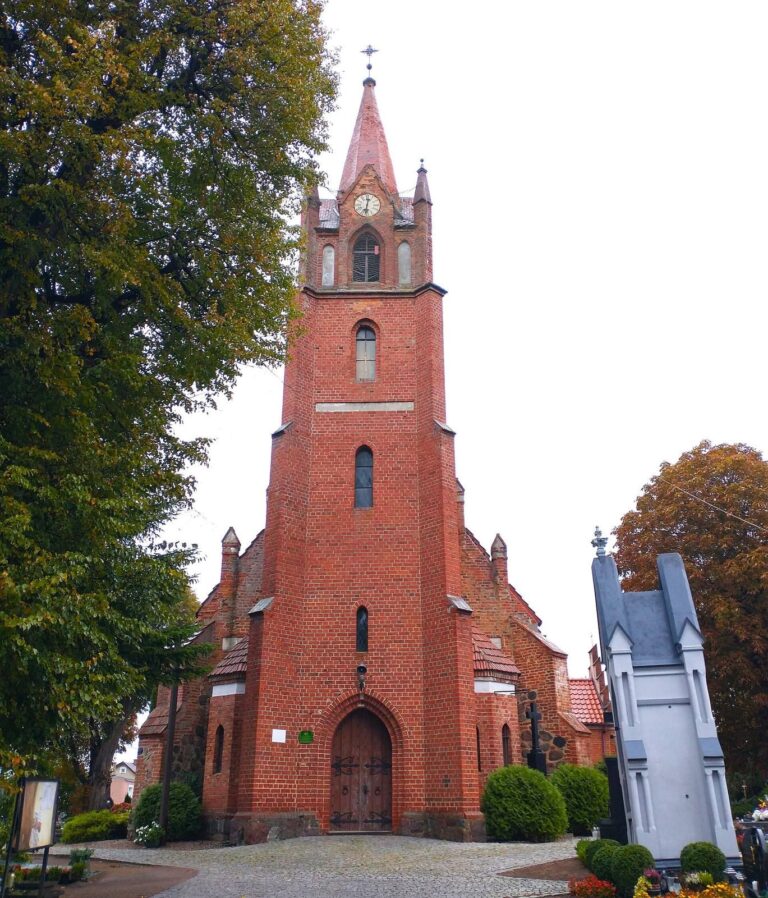
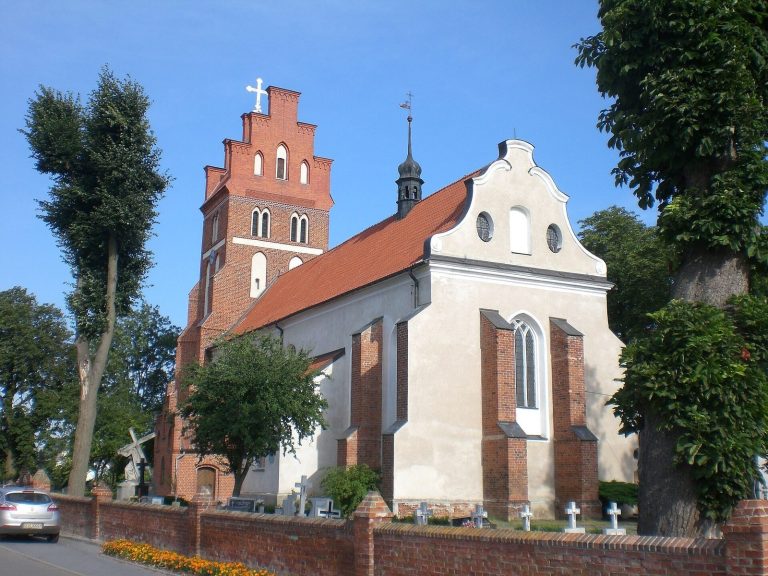
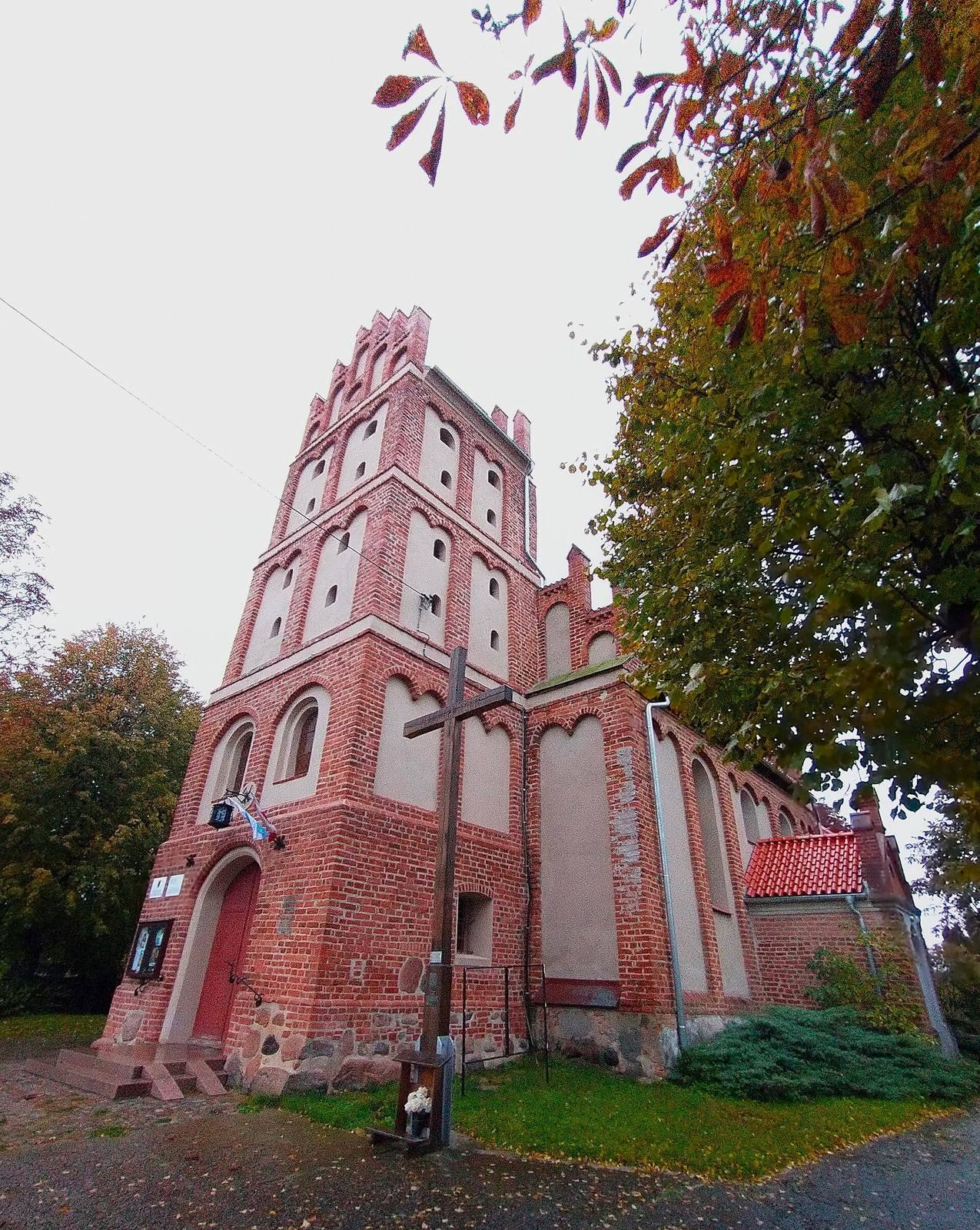
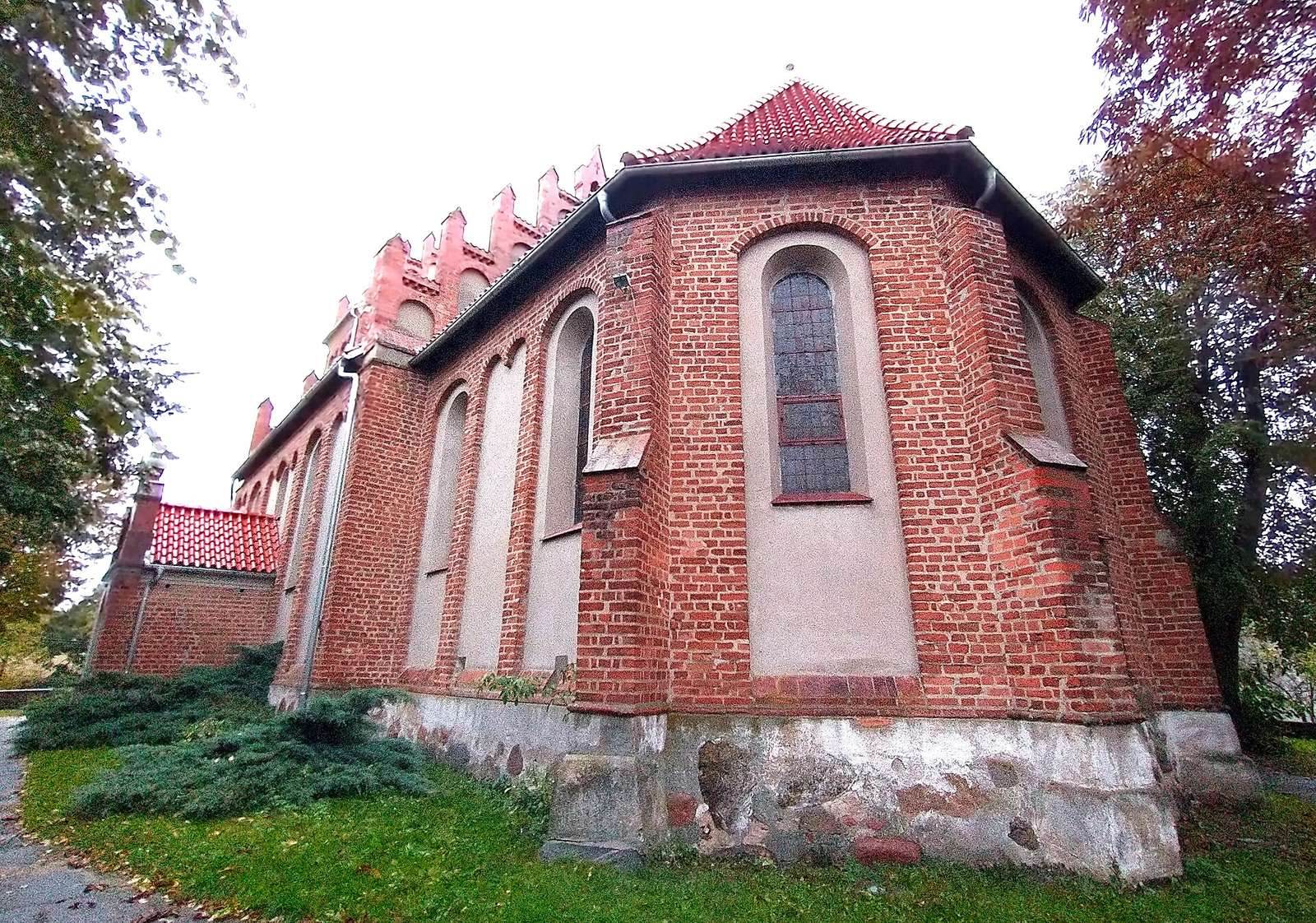
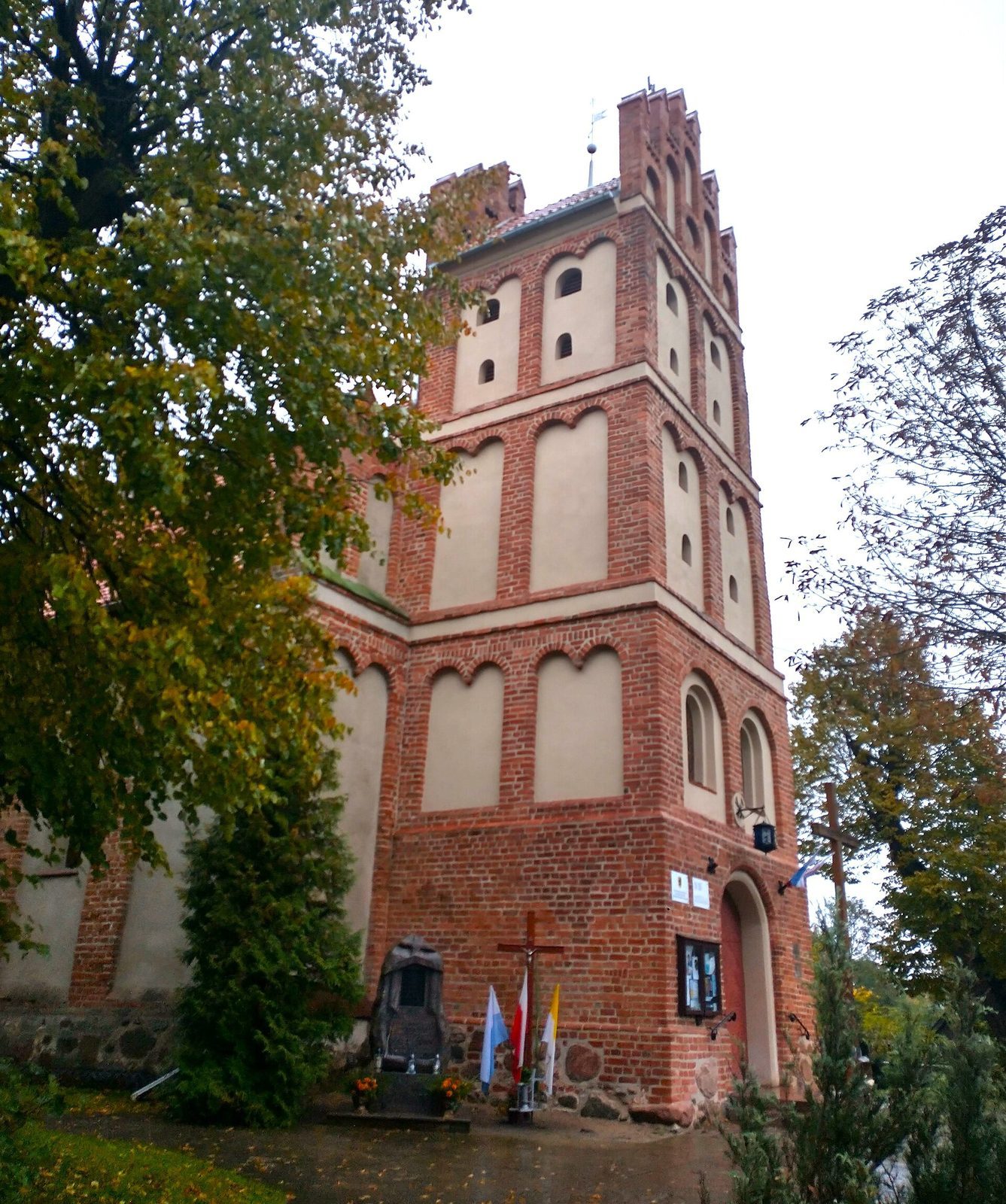
The church covers 176 square metres and has a single tower. It is built of brick, with wooden ceilings and roof supports, and is covered by a tiled roof.
Exterior and plan
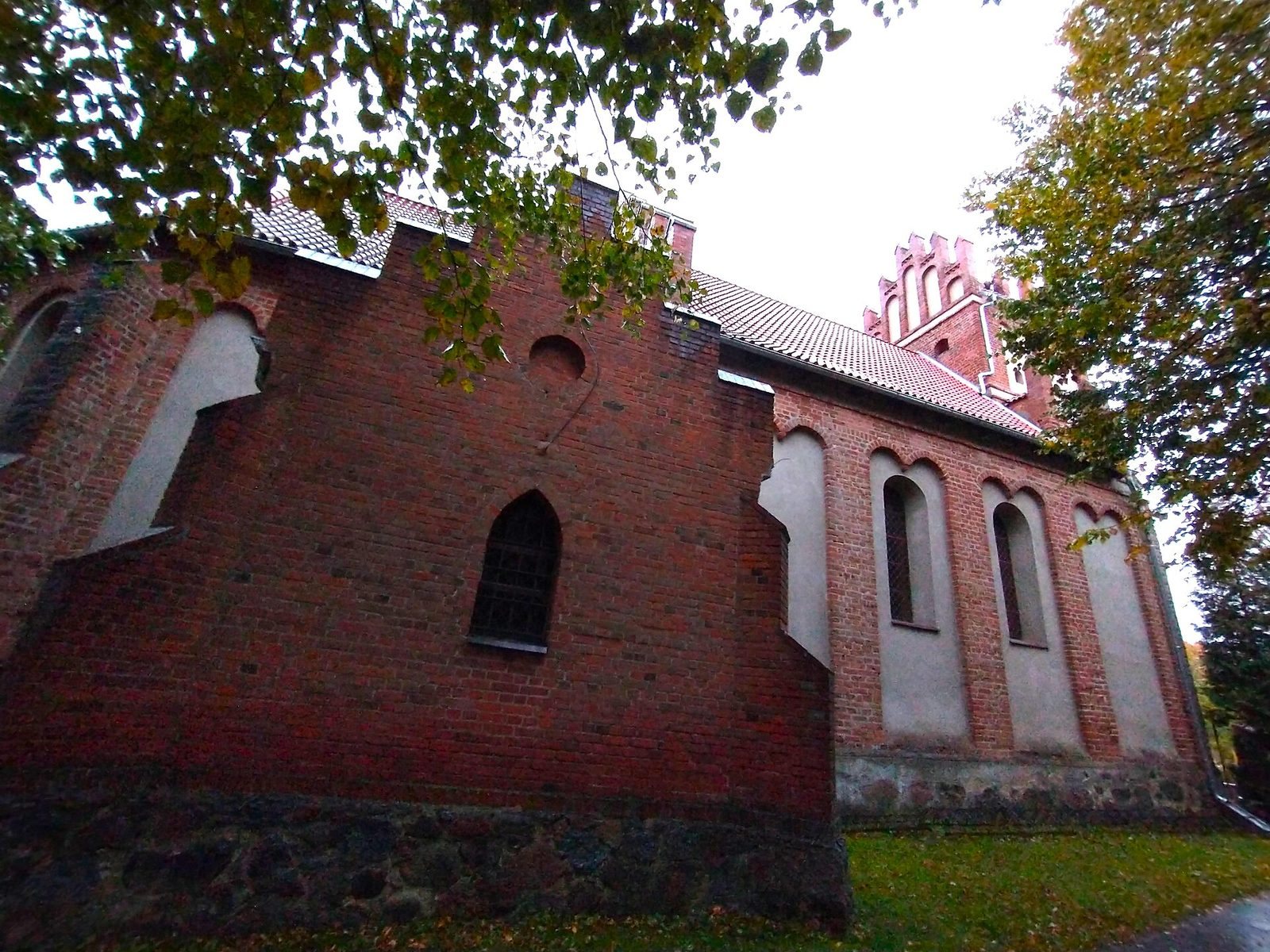
Plastered panels decorate the nave and tower façades. Stepped gables, finished with small pointed ornaments called pinnacles, screen the roofs of both. The five-sided chancel, the part of the church containing the altar, has a multi-pitched roof. A sacristy, a church service room, stands on the north side; the porch on the south was remodeled in 1879. The wall and tower gables were also given Gothic-revival forms during that work.
Furnishings and memorials
The church’s furnishings are Baroque, a European artistic and architectural style that developed from the late sixteenth century, though some objects are older. A tombstone commemorating Jerzy and Zofia Oleski includes Gothic features and was probably carved by Willem van den Blocke, a sculptor and architectural artist active in Gdańsk. The church also contains a crucifix dating from the turn of the fourteenth and fifteenth centuries.
Associated buildings
A former poor hospital built in 1853 and a rectory dating from 1864 stand with the church as a unified architectural ensemble.