Creevelea Friary: A Franciscan Monastery in Ireland
Site at a Glance
- Popularity
- Medium
- Country
- Ireland
- Primary era
- Early Modern
- Eras represented
- Early Modern
- Civilizations
- Irish
- Site type
- Religious
- Remains
- Monastery
On this page9 sections
History
Creevelea Friary is a Franciscan monastery in Ireland, founded in 1508 as a daughter house of Donegal Abbey. Its founders were Eóghan O’Rourke, lord of West Bréifne, and his wife Margaret O’Brien, whose father was a king of Thomond. Creevelea is identified as the only Irish Franciscan monastery founded by a woman and the last Franciscan house established in Ireland before the Reformation.
Foundation and early community
The first friars came from Donegal Abbey and followed the Observant reform, which called for stricter adherence to Franciscan rules. Creevelea was also associated with the Third Order of Saint Francis, a tradition rooted in penitential communities whose regular branches lived together as religious communities.
Thomas MacBrady, Bishop of Kilmore, consecrated the church in 1511. He appears to have died either during the ceremony or on a later visit, and was buried at Creevelea that year. Margaret was buried there in 1512, when the church was still made of timber; Eóghan was buried there in 1526.
Patrick O’Hely completed his religious training and took his final vows at Creevelea. After becoming Bishop of Mayo abroad, he returned to Ireland, where he was captured, tortured, and hanged outside Kilmallock during Elizabeth I’s persecution of Catholics. In 1992, Pope John Paul II declared him blessed as one of 24 Irish Catholic martyrs.
Fire, destruction, and renewed use
An accidental fire destroyed the friary in 1536 and killed two friars, Eremon O’Donnell and Mael Sechlainn MacGovern. Brian Ballach O’Rourke rebuilt the house. In 1590, English commander Richard Bingham used it as a stable while pursuing Brian O’Rourke, who had sheltered survivors of the Spanish Armada. English forces also took partial possession and destroyed the friary. The friars stayed in the area, and the house was dissolved around 1598.
A new friary was built for the community in 1618, and the friars returned to Creevelea in 1642. The New Model Army, the English Parliament’s professional force during the civil wars, expelled them in the 1650s as part of the Cromwellian conquest, the campaign to bring Ireland under Parliament’s control. After the monarchy returned in 1660, the Franciscans came back and lived in nearby thatched cabins.
Later community and memory
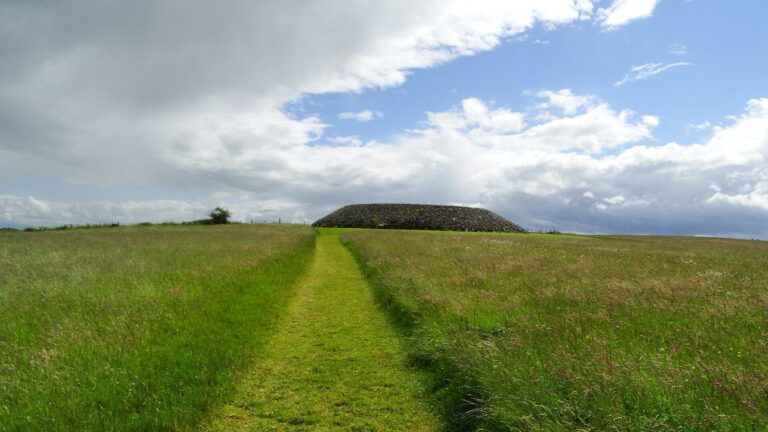
In the early eighteenth century, friars taught a hedge school attended by Charles O’Conor of Bellanagare, an Irish antiquarian and Celtic scholar. He later recalled learning Latin from Corderius’s grammar and reading Ovid, Suetonius, and Erasmus, as well as studying the Celtic harp, fencing, and dancing. During the same century, Franciscans used a megalithic tomb at nearby Sranagarvanagh as a Mass rock, a place for Catholic worship when public Mass was restricted.
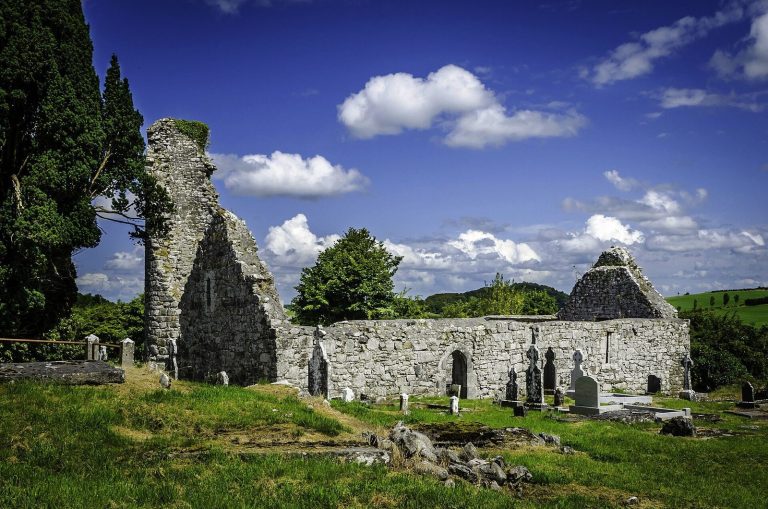
The friary church continued to serve as living quarters until 1837. Among those buried at Creevelea were Sir Tadhg O’Rourke, the last King of West Bréifne, who died in 1605, and Thaddeus Francis O’Rourke, Bishop of Killala, who died in 1735. Creevelea is preserved as a National Monument of Ireland.
Remains
The surviving complex
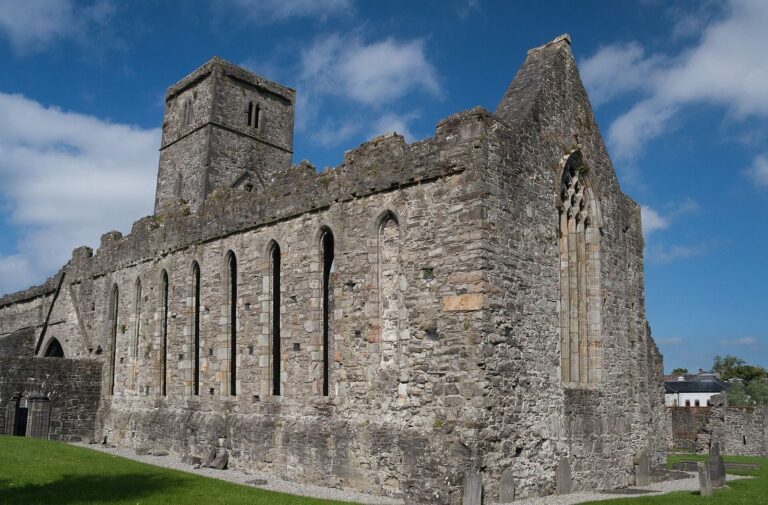
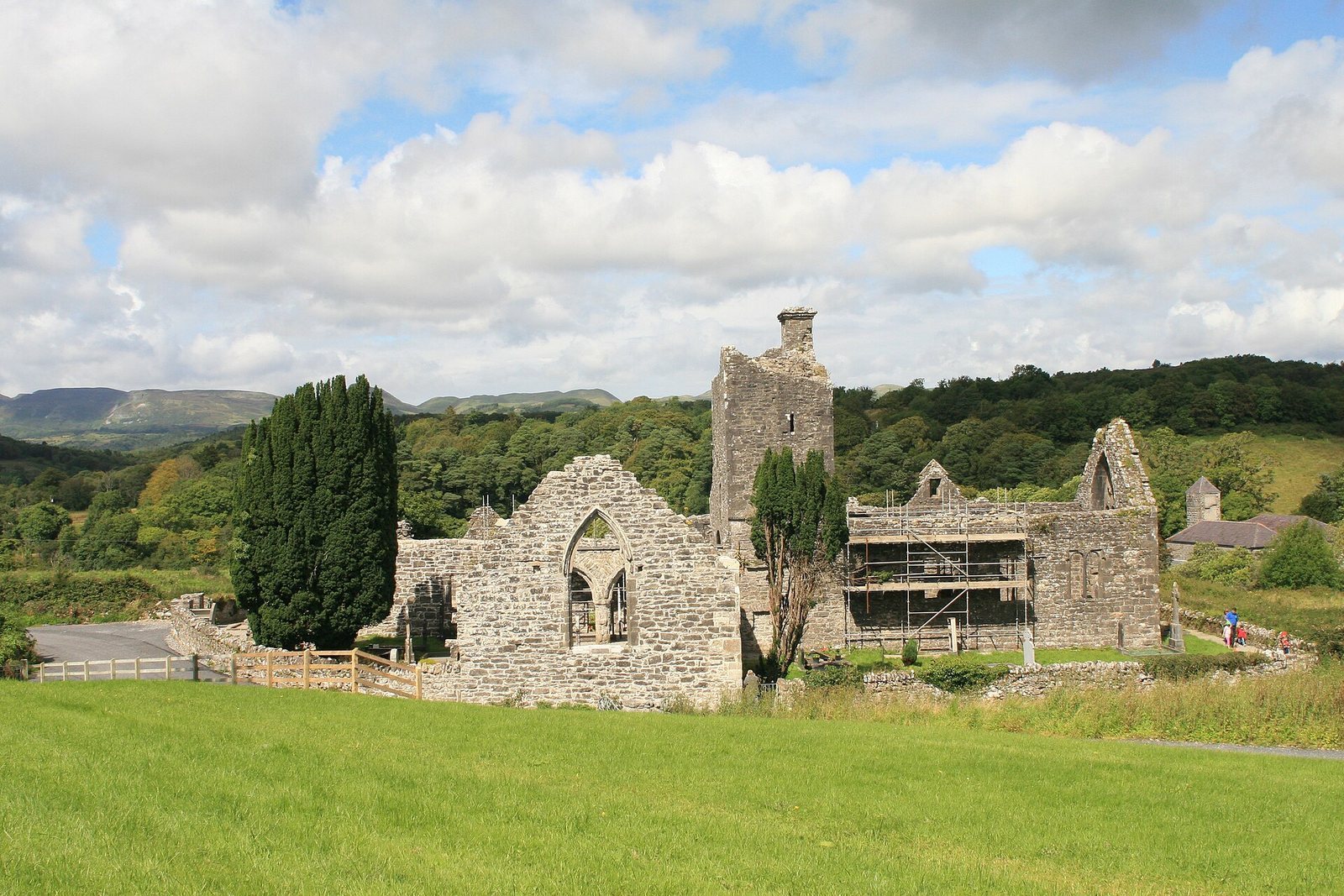
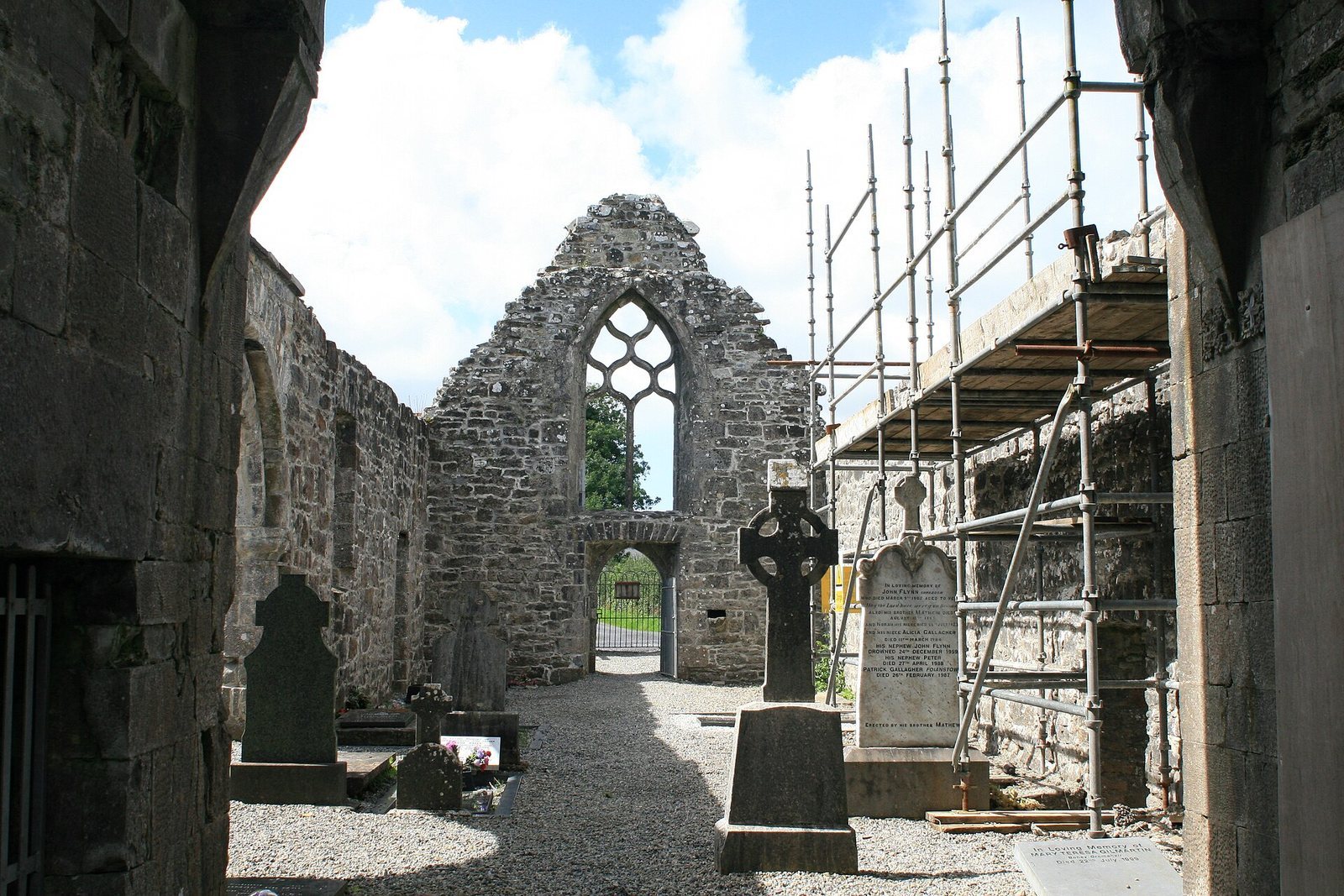
The remains reflect the rebuilding begun after the 1536 fire. The complex includes the church, a cloister (covered walks around a courtyard), a chapter house (a meeting room for the friars), and domestic buildings. A monastic garden and residential buildings lay north of the church.
Church
The church had a nave, the main space for worship, without side aisles, along with a chancel (the sanctuary end), a choir (the area for communal prayer), and a tower. A transept, the crosswise section of a church, stood on its south side. The church was covered with thatch at one period. In the seventeenth century, the bell tower was converted into living quarters.
Cloister and domestic buildings
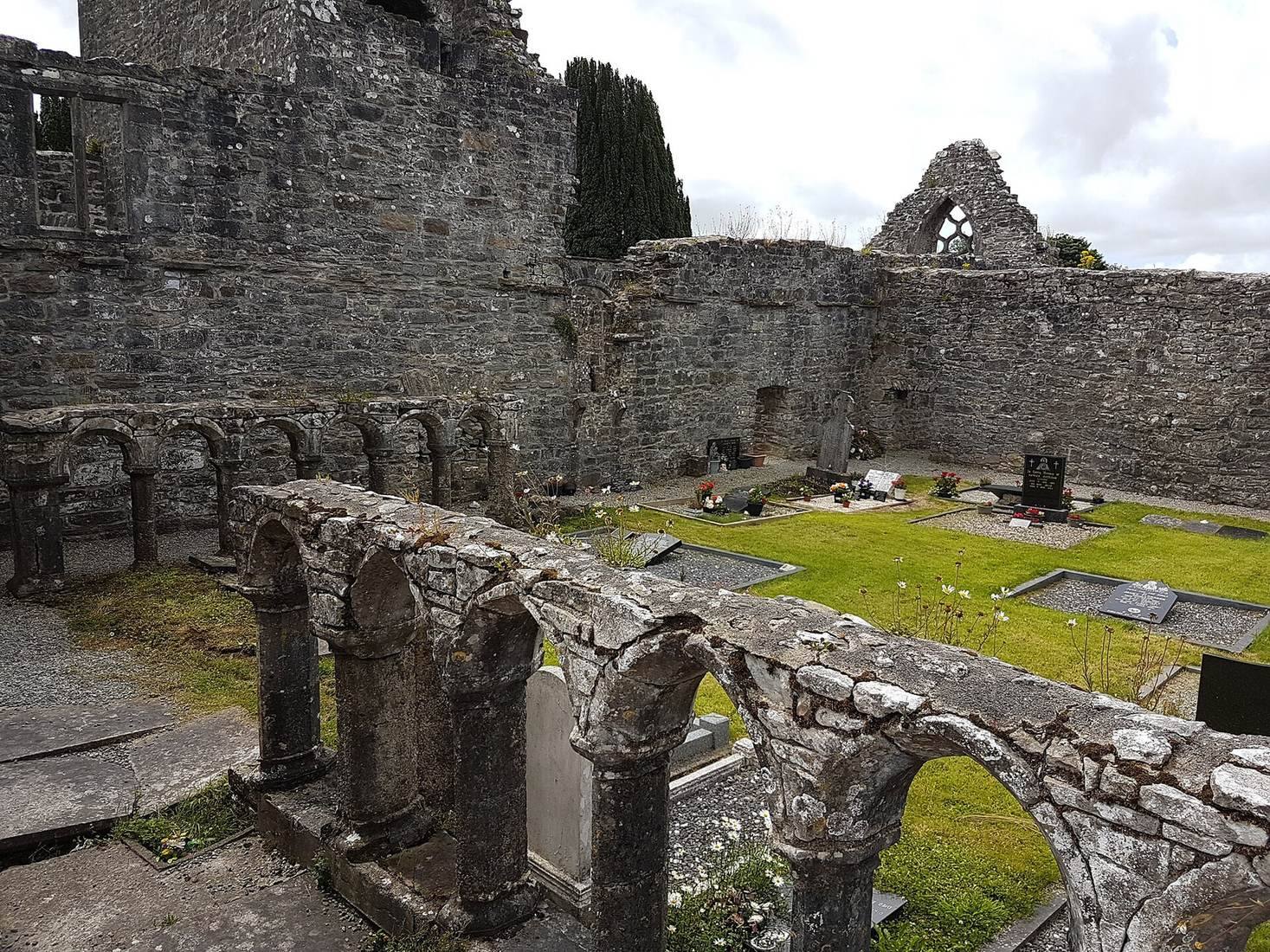
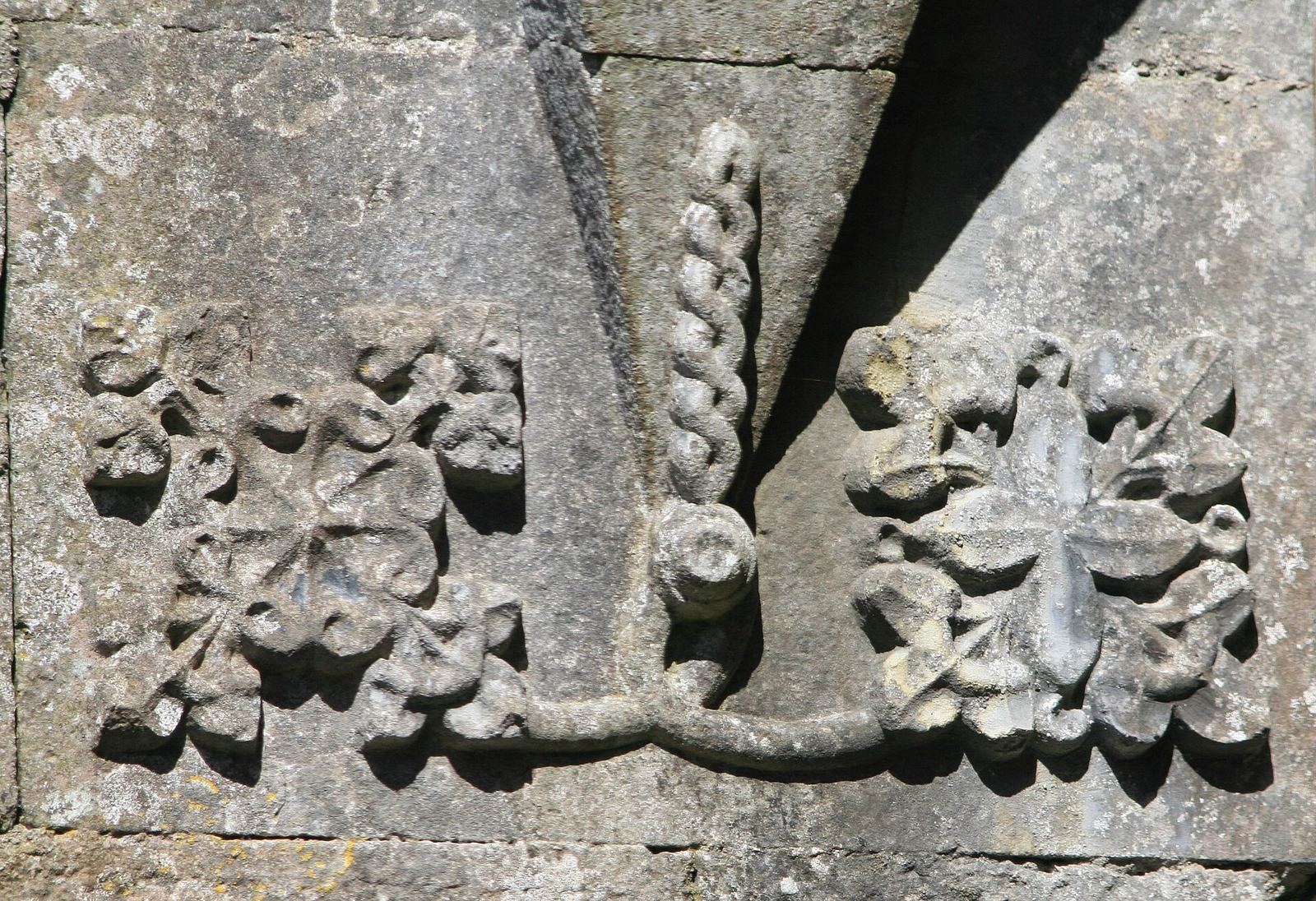
Rows of arches survive along the north, south, and east sides of the garden; the western arcade may have remained unfinished. The arcades are plain, with a small number of simple stone carvings. One depicts Saint Francis of Assisi, founder of the Franciscan order, preaching to birds. The north wing held the refectory, or dining hall, and its kitchen. Some alterations to the domestic buildings appear to have been made after the friary’s dissolution.
Ruins and burial ground
The ruined site retains church walls, a perimeter structure, and one or two unstable stairways. It is also a burial ground. By 1870, it contained numerous stone monuments to members of the local Gaelic nobility.