Diocletianopolis: An Ancient Macedonian City in Greece
Site at a Glance
- Popularity
- Low
- Country
- Greece
- Primary era
- Classical
- Eras represented
- Classical
- Civilizations
- Roman
- Site type
- City
On this page5 sections
History
Diocletianopolis was an ancient Macedonian city at Armenochori in Greece. Its foundation in the third century is attributed to the Roman emperor Diocletian, who ruled from 284 to 305. The settlement is also referred to as Diocletiana in Dardania.
Foundation and early tradition
The earliest mention of the city is associated with Strabo, an ancient Greek geographer and historian. He recounted a foundation myth about Orestes, son of Agamemnon. In the tale, Orestes killed his mother, fled, conquered the region of Orestis, and named it after himself. He was said to have founded a city called Argos Orestikon.
Decline and abandonment
Diocletianopolis declined after attacks by foreign forces. Gothic raids in the fourth century may have damaged the city, including its southwestern defenses. Some damaged religious and secular buildings were rebuilt, but the settlement continued to weaken. Its exposed lowland position offered inadequate security, and residents had begun to leave before a fifth-century incursion by the Ostrogoths, an eastern Gothic people.
In On Buildings, written in 553–555, the sixth-century Byzantine historian Procopius described the once-prosperous city as having been deserted for a long time after repeated attacks. Recent archaeological investigations have identified the settlement and found evidence of fourth-century destruction in its southwestern fortifications, which may be connected with the Gothic raids.
Justinian’s successor city
In the sixth century, the Byzantine emperor Justinian, who ruled from 527 to 565, established a fortified successor city on an island in nearby Lake Kastoria rather than rebuilding at the vulnerable former site. The island had a very high mountain, partly bordered by the lake and partly rising above it. A narrow, dry passage connected the island to the surrounding land and was no more than 15 steps wide. The new city became the region’s leading center for subsequent centuries.
Remains
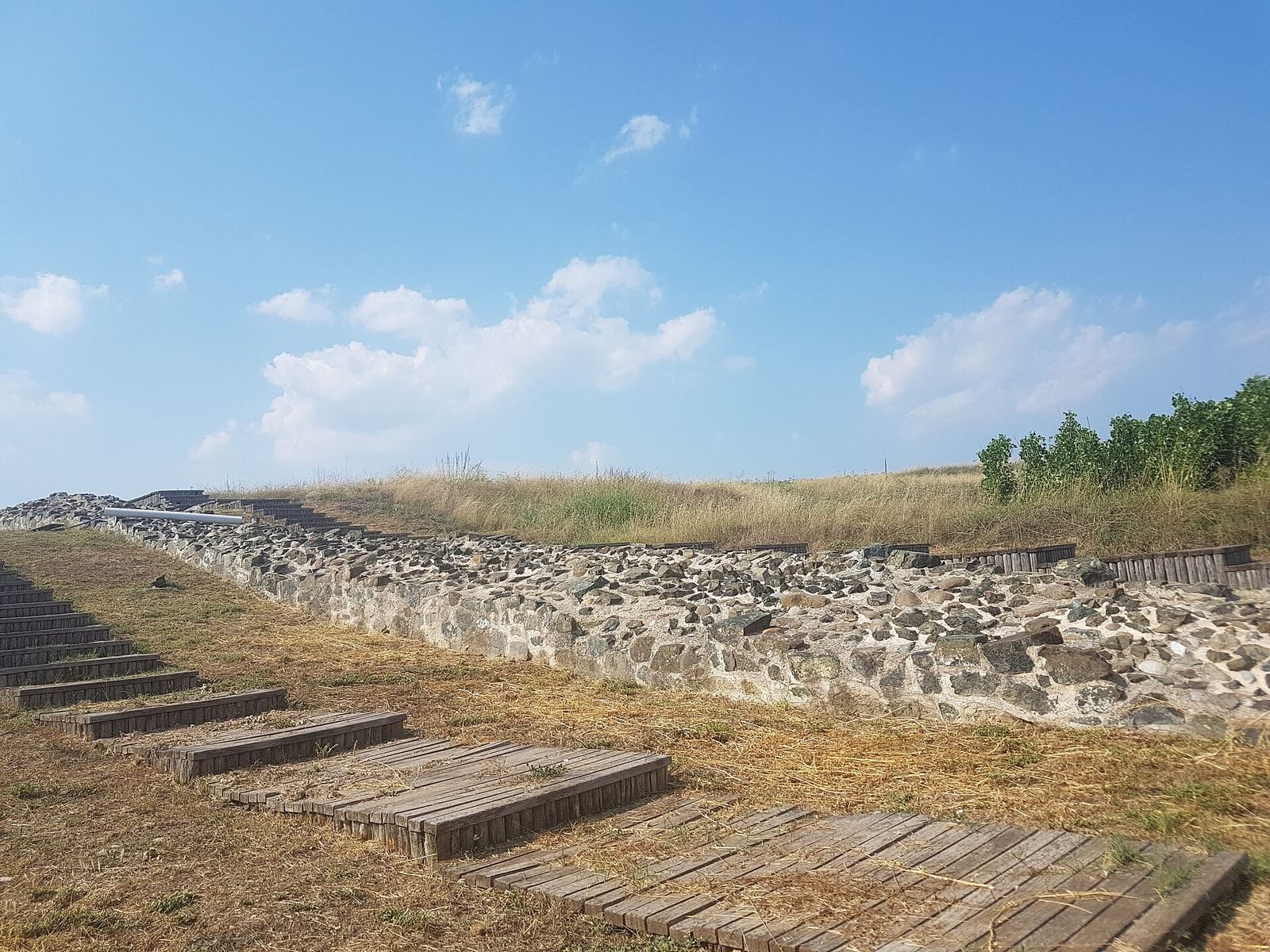
The remains lie on the left bank of the Aliakmonas River, about one kilometre north of Argos Orestiko and four kilometres south of Kastoria. Excavations have uncovered parts of the walls and religious and secular buildings within the fortified settlement.
The southwestern section of the fortification has been conserved and made accessible. Its remains form part of the surviving evidence for the settlement’s defenses.