Holy Trinity Church at Krasnaya Gora: An Orthodox Cathedral in Serpukhov
Site at a Glance
- Popularity
- Medium
- Country
- Russia
- Primary era
- Early Modern
- Eras represented
- Early Modern, Modern
- Civilizations
- Russian
- Site type
- Religious
- Remains
- Cathedral
On this page10 sections
History
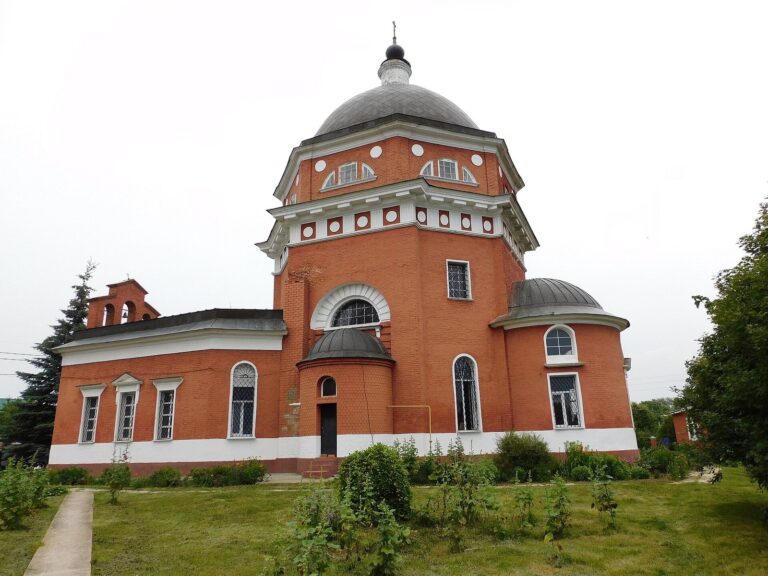
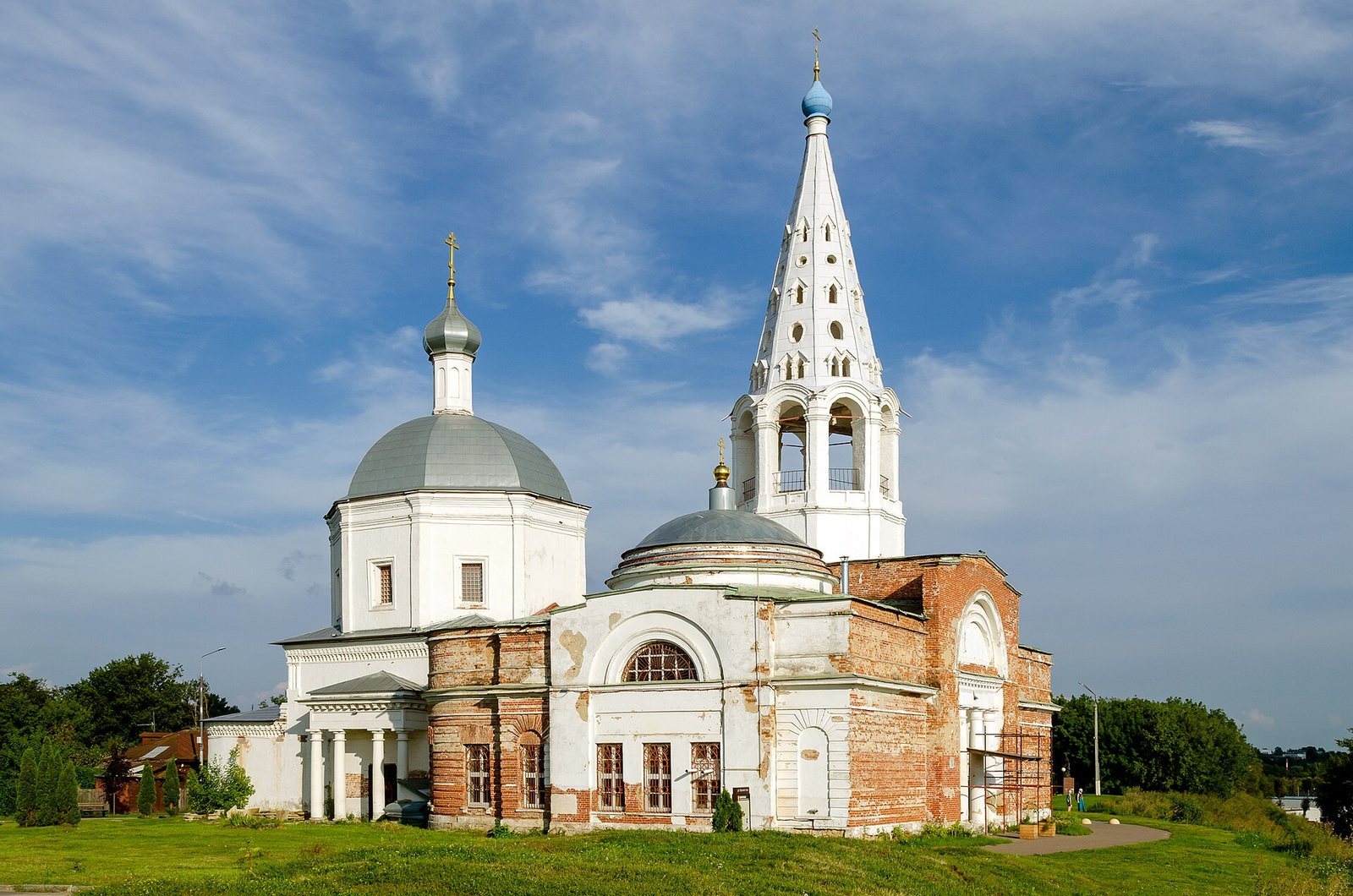
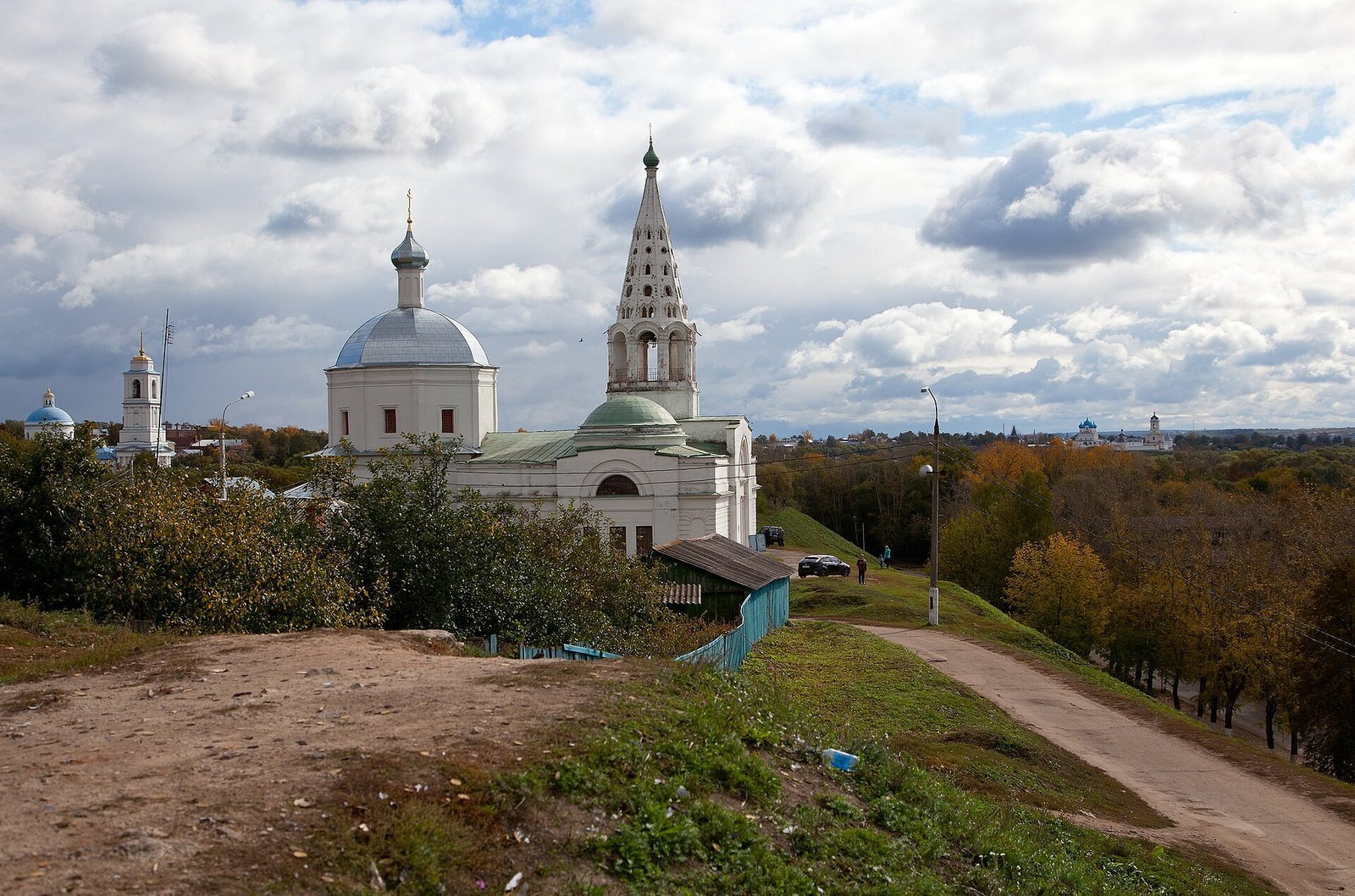
Holy Trinity Church at Krasnaya Gora is an Orthodox cathedral on Cathedral Hill in Serpukhov, Russia. The present cathedral is dated to 1696 and is principally in Moscow Baroque, a Russian architectural style that developed in the late seventeenth and early eighteenth centuries.
Earlier churches and the 1696 cathedral
A wooden church stood at the site by the fourteenth century, with its foundation sometimes dated to 1380. A stone church was built in the sixteenth century and later rebuilt with funds from Theodosius, a former cathedral priest who held the senior Orthodox monastic rank of archimandrite at Moscow’s Spaso-Andronikov Monastery.
The cathedral belonged to the Orthodox Church’s Diocese of Podolsk and the Serpukhov deanery, a subdivision within a diocese.
Nineteenth-century remodelling
From 1837 to 1841, the cathedral was remodelled in a Classical style, changing its architectural form. Two chapels were consecrated in memory of churches that had previously stood in the Kremlin.
Closure and renewed worship
The cathedral closed in the late 1930s. From 1985 to 2011, its building housed a local-history branch of the Serpukhov History and Art Museum. It was transferred to the Russian Orthodox Church in 2011, and services resumed.
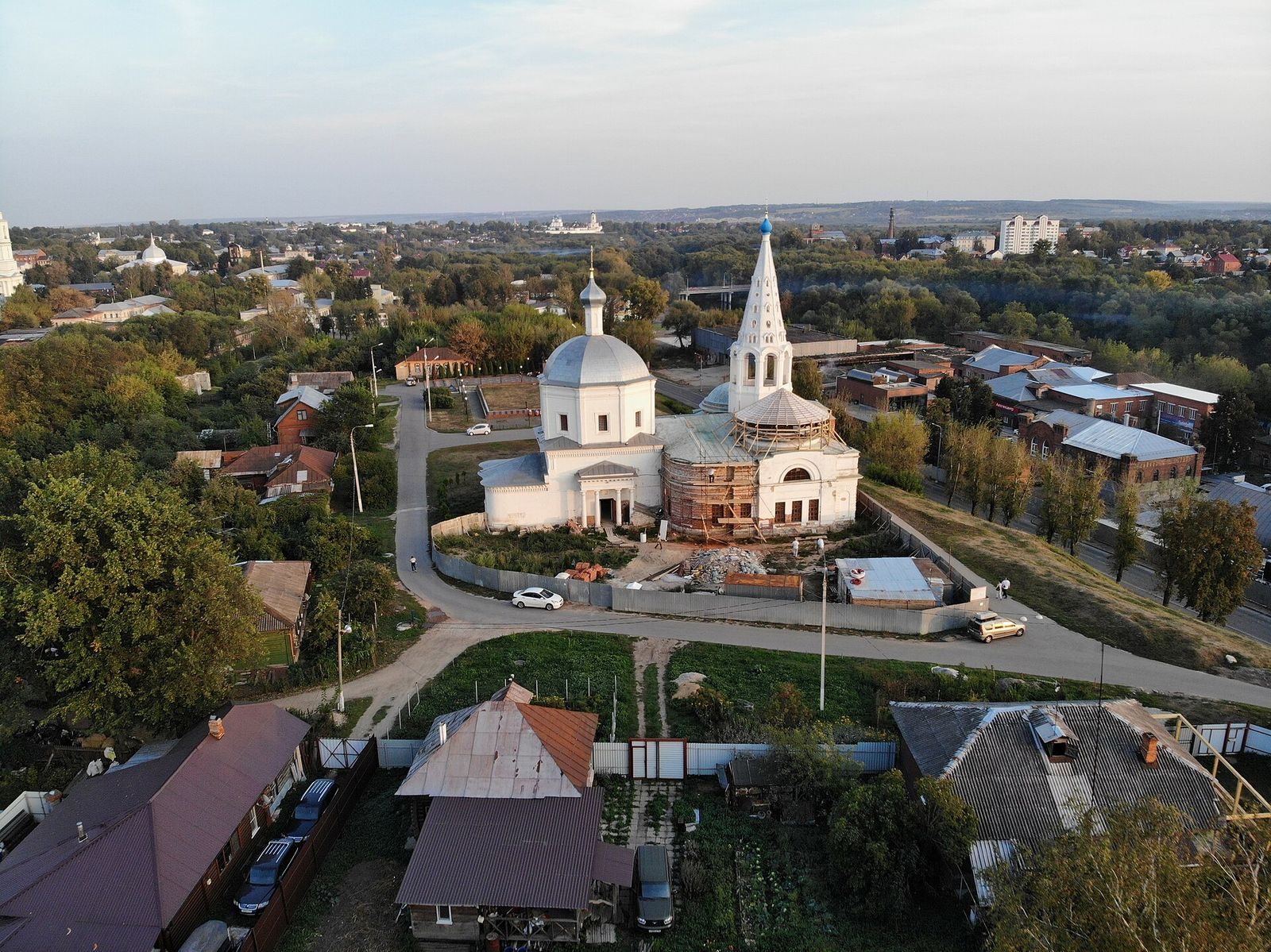
Reconstruction work begun in July 2017 addressed damage and deterioration to the bell tower and facade, while liturgies continued. The cathedral is designated a cultural heritage site of federal significance in Russia.
Remains
Overall form
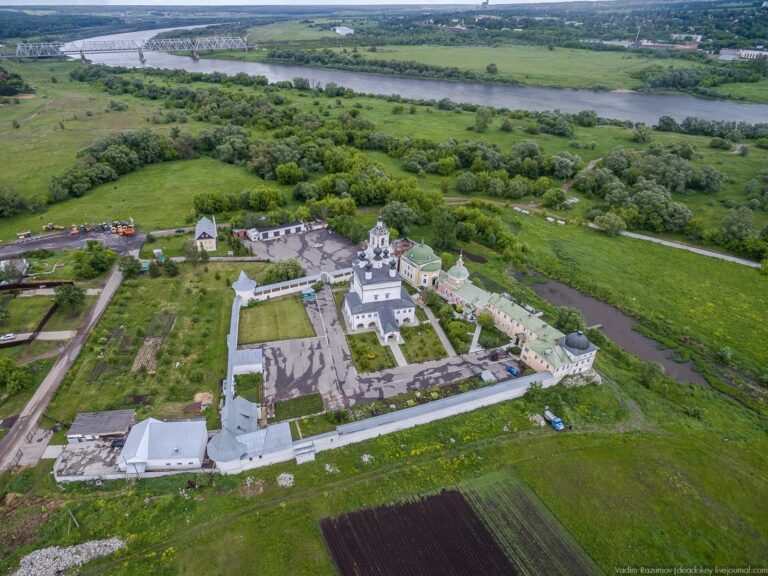
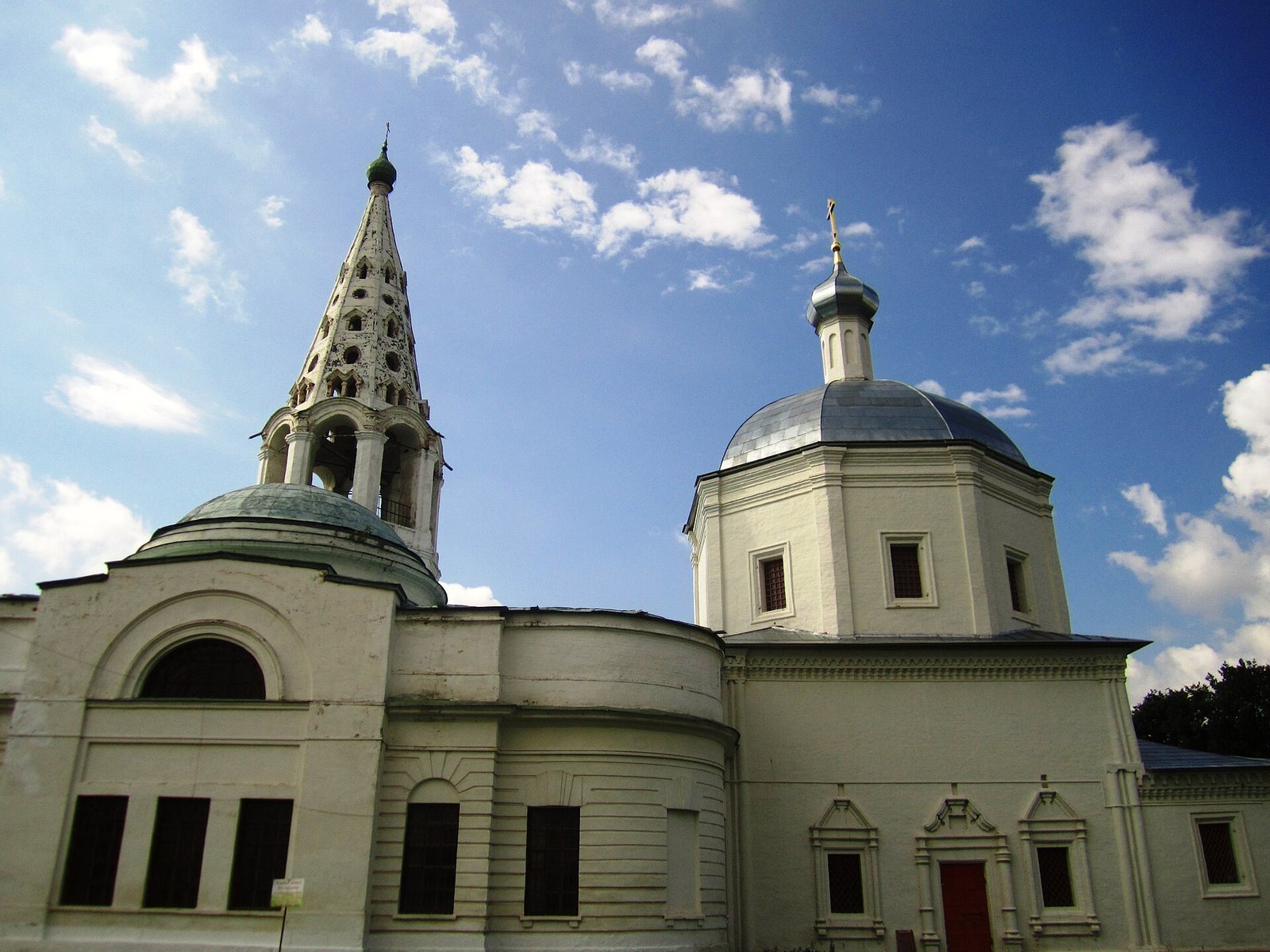
The stone cathedral stands on the former grounds of the Serpukhov Kremlin. Its layout combines a square lower section with an octagonal upper stage, a refectory, meaning an attached hall, and a bell tower capped by a steep, tent-shaped roof. The building also incorporates later Classical features and elements of Empire style, an early nineteenth-century form of Neoclassicism.
Church and chapels
Main church
Some of the cathedral’s masonry incorporates material from the sixteenth-century church. Architectural researcher Nikolai Nikolaevich Sveshnikov’s work indicates that the seventeenth-century building originally had five domes.
Chapels
The chapel of St Demetrius of Thessaloniki is on the north side of the church. It had been dismantled before its restoration from 1837 to 1841. A chapel dedicated to St Nicholas of Myra was added during that remodelling.
Bell tower
The seventeenth-century bell tower survives beneath nineteenth-century cladding and a dome. From 1967 into the 1970s, Sveshnikov exposed the tower’s earlier fabric during architectural work.