Cerro Sechín: An Early Andean Administrative and Ceremonial Center
Site at a Glance
- Popularity
- High
- Country
- Peru
- Primary era
- Bronze Age
- Eras represented
- Bronze Age
- Civilizations
- Unclassified
- Site type
- Religious
- Remains
- Sanctuary
On this page8 sections
History
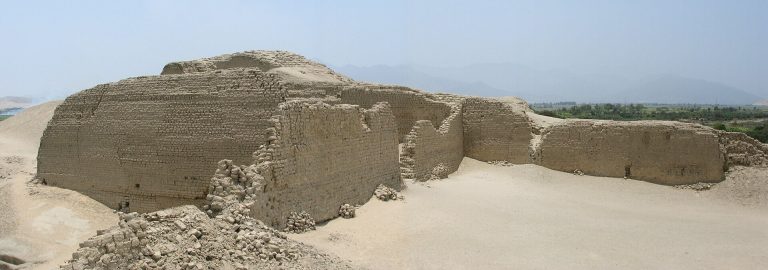
Cerro Sechín is an archaeological complex in Peru’s Casma Valley, associated with the Casma/Sechín culture and active during the Late Archaic and early Initial Formative, two broad periods of Andean prehistory. Its older building of sun-dried mud brick was remodeled in three phases around 2400–2300 BC. The stone building that enclosed it was completed before 2000 BC and remained in use until about 1500 BC. The site predates Chavín, a later Andean culture.
Cerro Sechín served as an administrative center for production, distribution, and food storage, as well as a place for ceremonies and worship. Peruvian archaeologist Julio César Tello regarded it as the capital of what is now called the Casma/Sechín culture.
Discovery and interpretations
Tello and fellow archaeologist Toribio Mejía Xesspe found the site in 1937. Tello interpreted its carvings as scenes commemorating a battle victory at Cerro Sechín, a reading also supported by Arturo Jiménez Borja. Other interpretations propose that the figures relate to human offerings intended to win favor and avert famine caused by drought or other hardship, or that they represent anatomical study or a popular uprising violently suppressed by the ruling elite. One version of the battle interpretation depicts foreign victors defeating Casma people.
Excavation and heritage
Jiménez Borja and archaeologist Lorenzo Samaniego excavated at Cerro Sechín from 1967 to 1974. A new excavation season began in August 2019, and work in 2019 and 2020 included conservation assessments and workshops with local communities. Peru designates the site Cultural Heritage of the Nation.
The associated Max Uhle Regional Museum, inaugurated in 1984, presents information about the region’s early pre-Columbian cultures and Cerro Sechín’s history. Its ceramics include objects associated with the Chavín, Huari, and Chimú cultures.
Remains
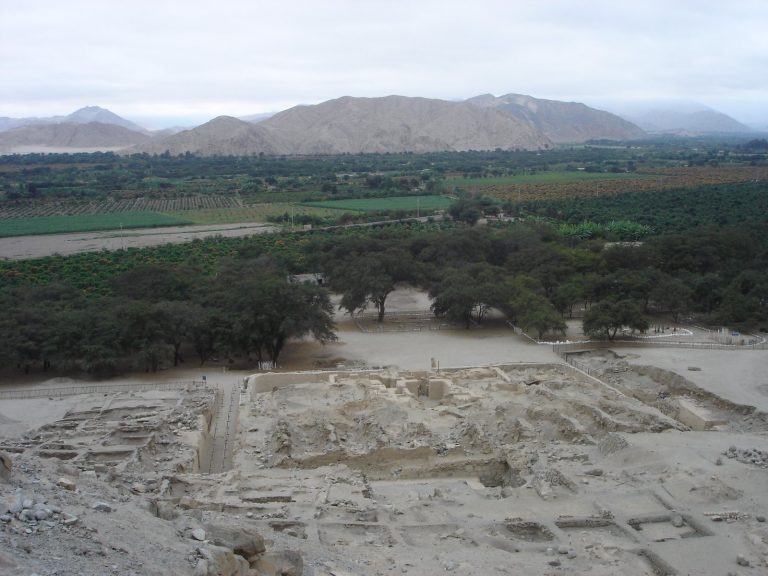
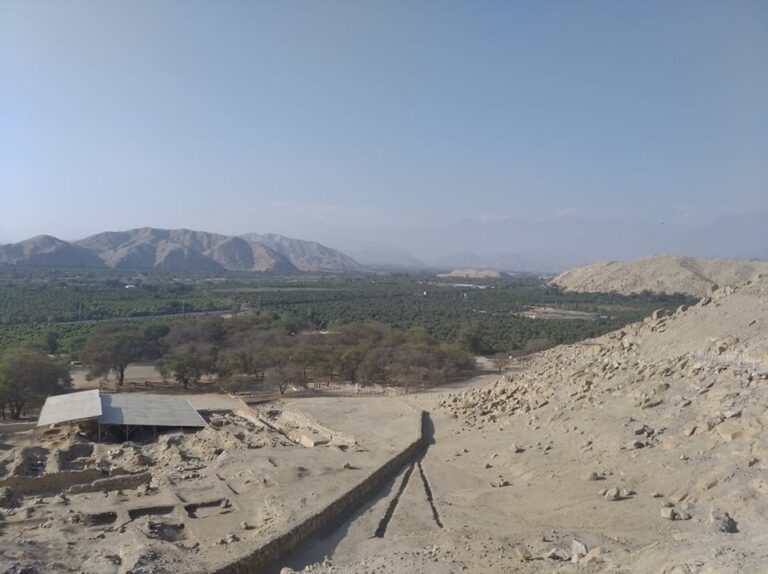
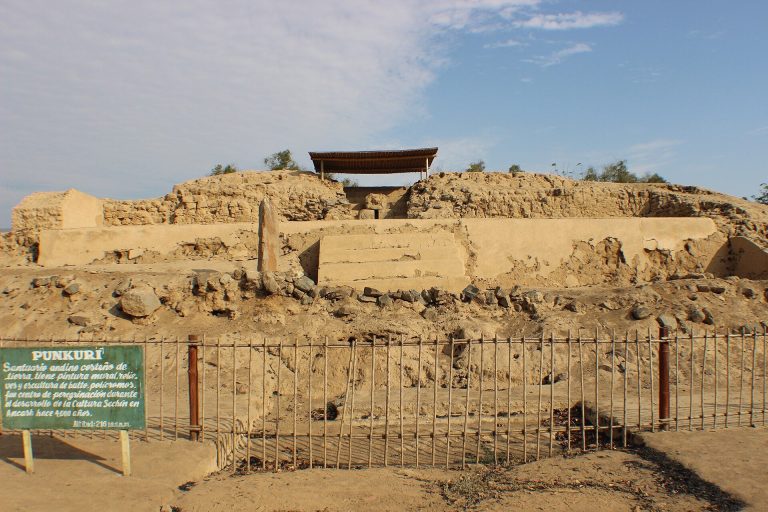
The complex stands on a granitic hill about 90 metres above sea level, near the meeting point of the Sechín and Casma rivers. It covers about five hectares, while its monuments are grouped within roughly one hectare. The main complex centers on a stone building enclosing an older mud-brick structure. Building A and Building C flank the central group, along with the Julio César Tello and Rafael Larco platforms. Sechín Alto is a separate complex northeast of Cerro Sechín on the same bank of the Sechín River; Sechín Bajo is closer, across the river.
Central stone building
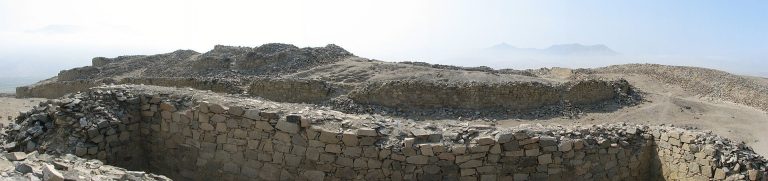
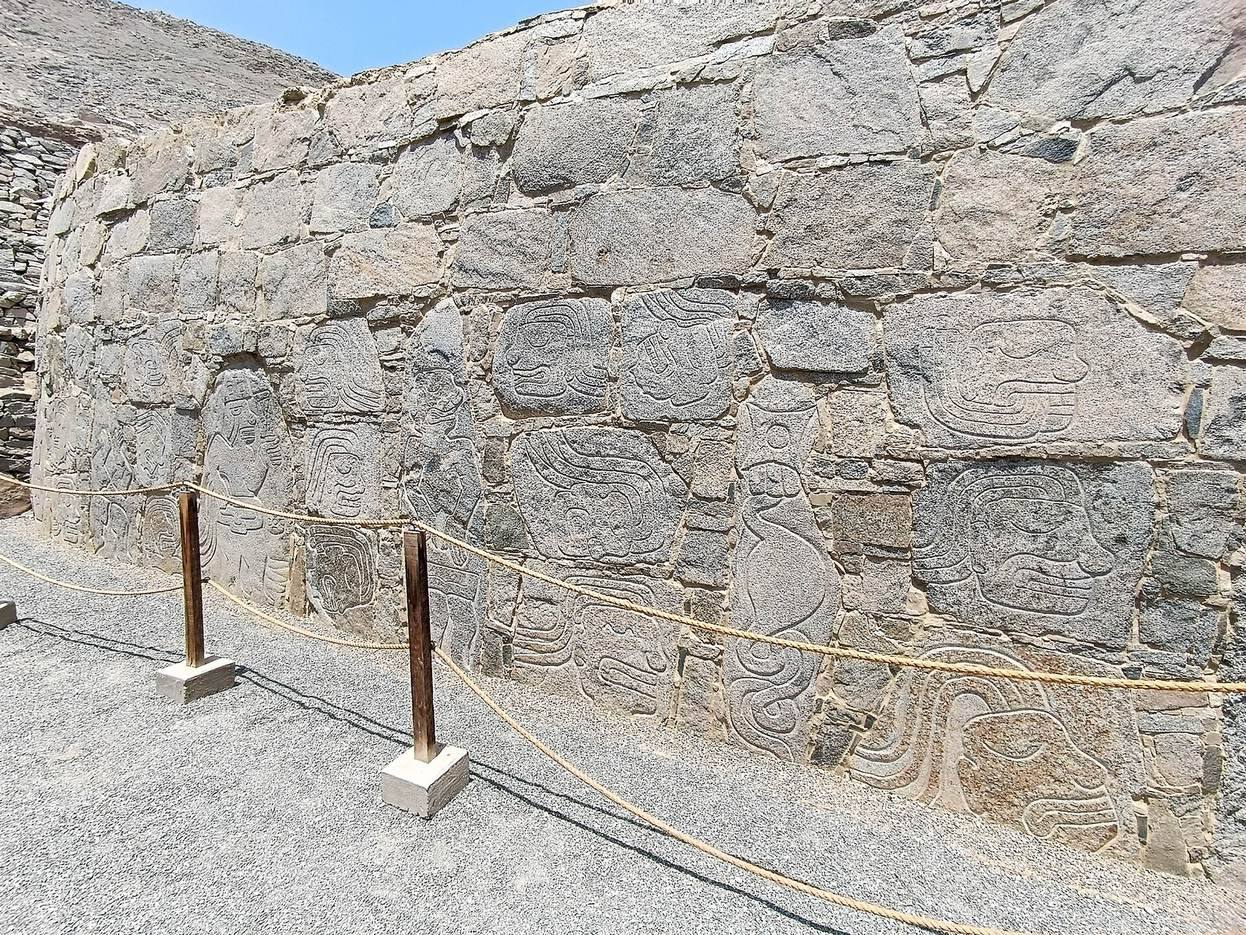
The central building is rectangular with rounded corners, about four metres high and 51 square metres in area. Its walls use roughly fitted stones on both faces, clay mortar, and a core of loose rubble; they slope slightly inward for stability. The largest stones reach about nine feet in height. A double staircase led to the summit, where buildings were swept away by floods carrying sediment. The building’s earlier perimeter wall consists of carved single-stone blocks. Much of the enclosure has been reconstructed using stones found scattered around the site.
Carved stone façade
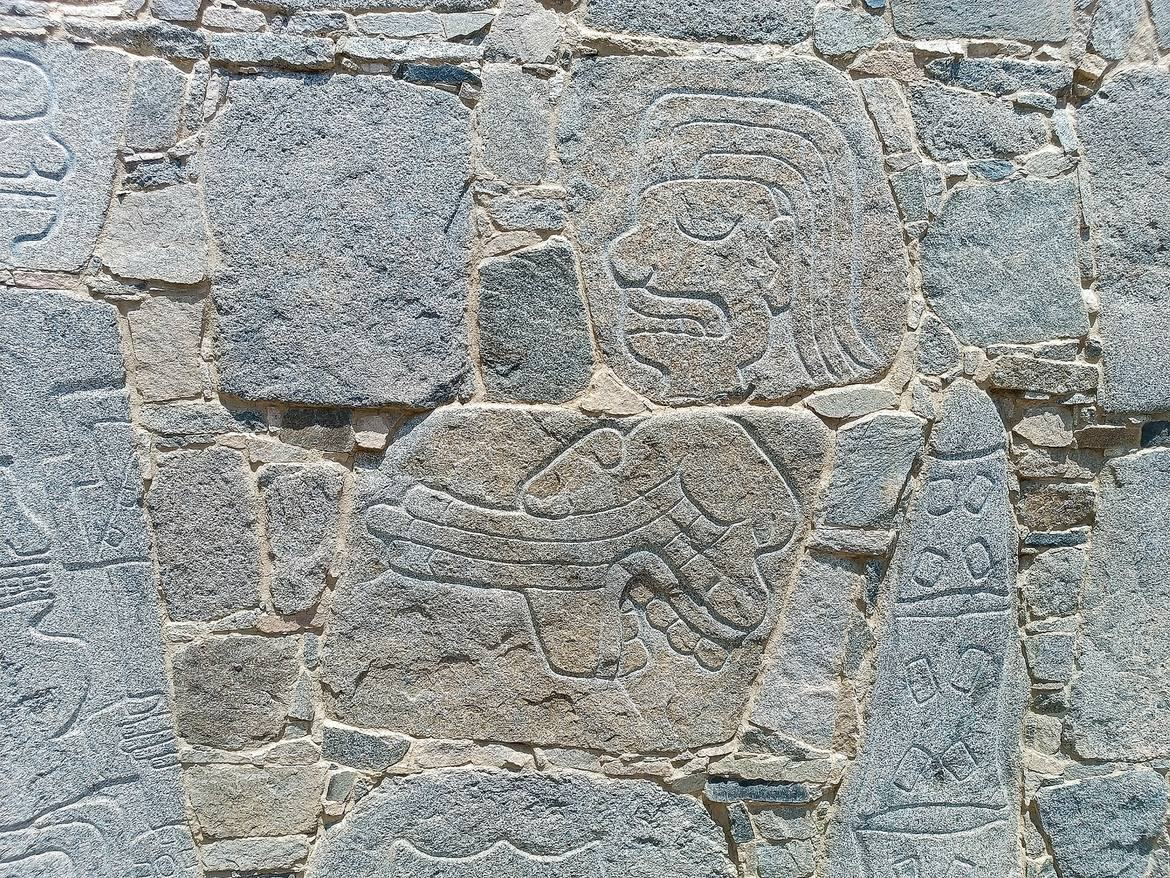
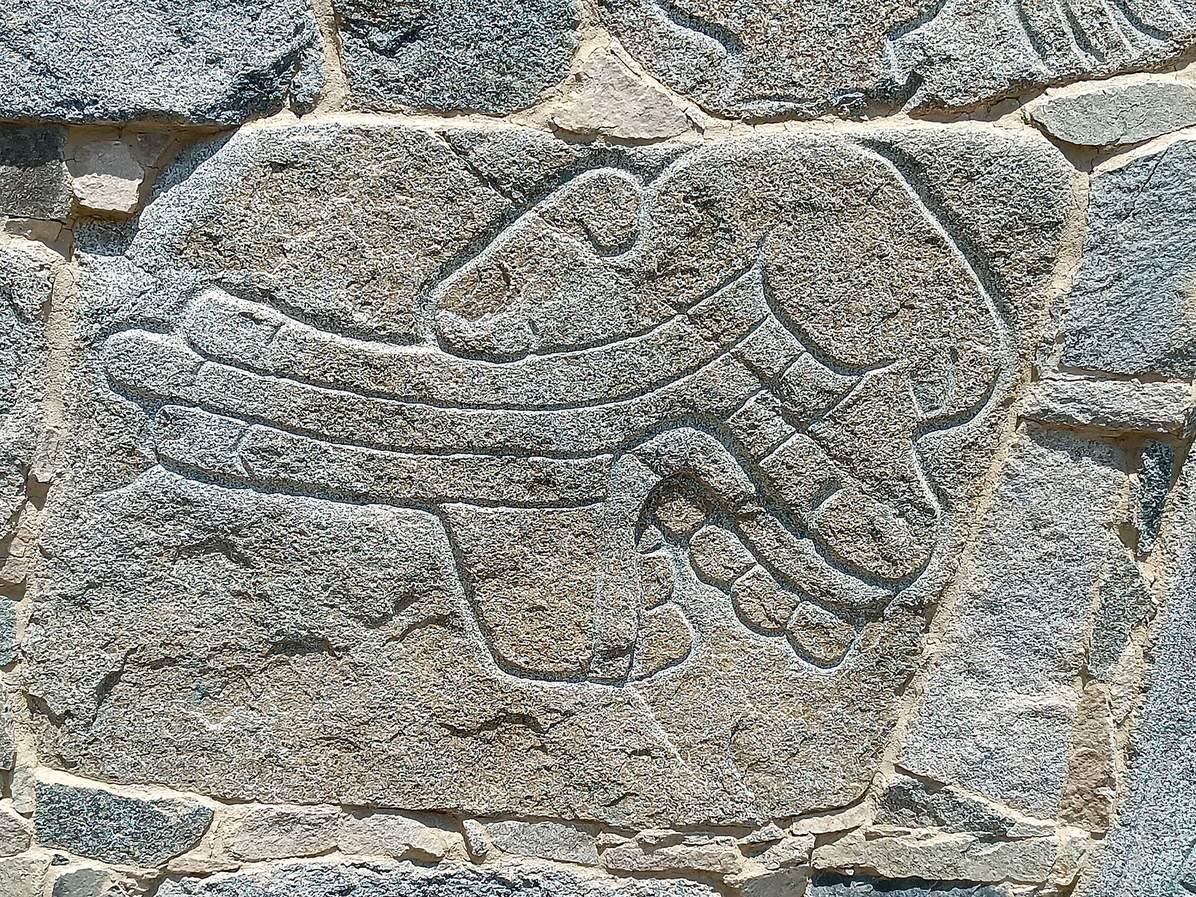
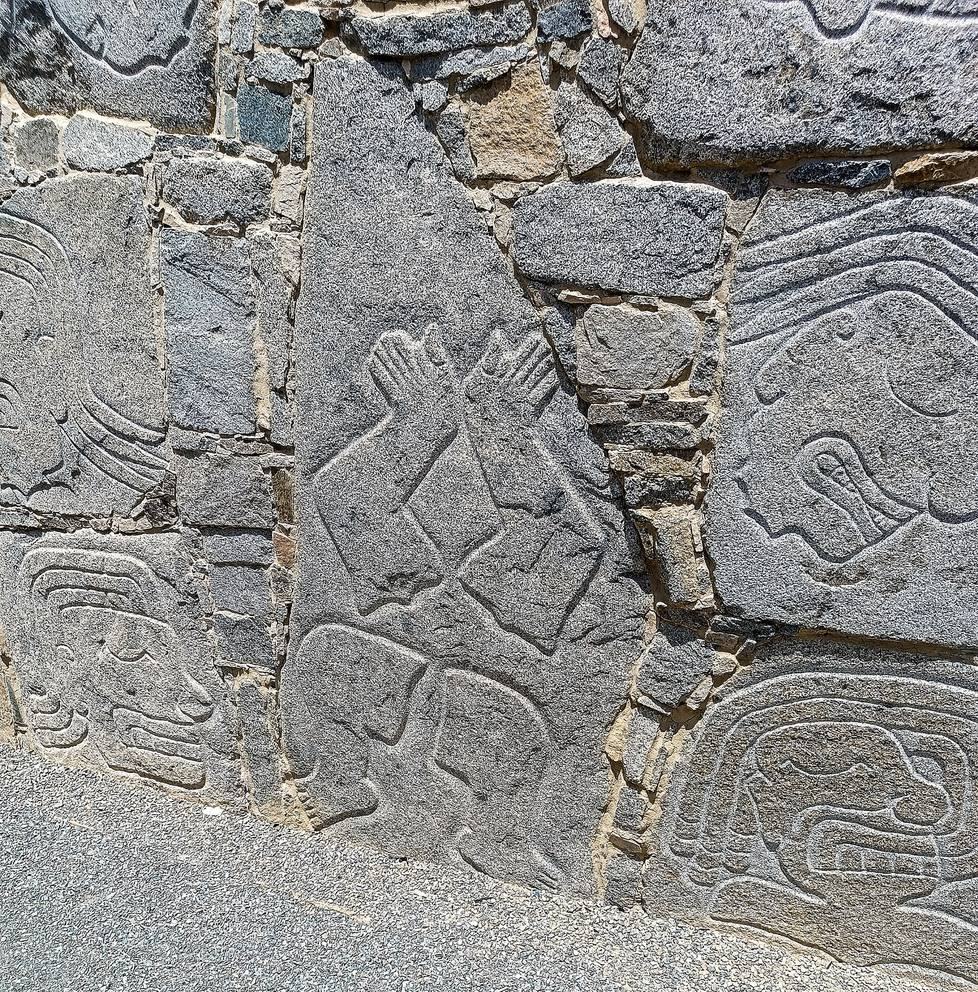
The stone façade bears about 300 bas-reliefs, images carved to project slightly from a background surface. They show warrior-priests carrying weapons or sceptres alongside dismembered victims and body parts, including heads, limbs, pierced eyes, intestines, vertebrae, and other viscera. The carvers used angled cuts to trace bodies and shallow lines for details such as eyelids and lips. About 200 of the roughly 300 carved stones remain in their original positions.
Older mud-brick building
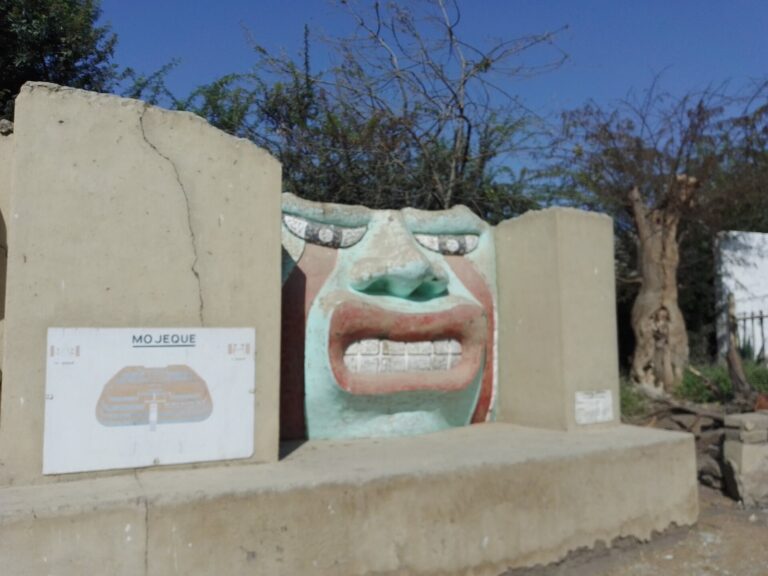
The earlier structure has at least two building phases. In its first phase, two felines shown in profile, painted in several colours, stood on either side of an entrance to a sacred chamber. Their upper portions have eroded, while their clawed feet survive; the style closely resembles a feline relief at nearby Mesapatac. The building also has two fish figures cut into damp clay and an image of a man lying face down and bleeding. Pottery vessels show the design of the building’s roofs.
Excavated evidence
Excavation of an upper level from a late occupation phase recovered a well-preserved canid, an animal from the dog family. The work also identified architectural evidence in mud more than 5,000 years old.