Ventarrón: A Preceramic Temple Complex in Peru
Site at a Glance
- Popularity
- Medium
- Country
- Peru
- Primary era
- Stone Age
- Eras represented
- Stone Age, Bronze Age, Modern
- Civilizations
- Chavín
- Site type
- Religious
- Remains
- Temple
On this page10 sections
History
Ventarrón is an ancient temple complex in Pomalca District, Lambayeque Region, northern Peru. Its temple and murals date to the third millennium BC, within the Andean Preceramic, or Archaic, period, a time before pottery was used in the region. The murals may be the oldest discovered in the Americas.
Early use and later occupation
The temple was deliberately buried after it ceased to be used, a practice that helped preserve it for thousands of years. Layers at the site indicate repeated occupation by people associated with Early Cupisnique, Cupisnique, Chavín, and Moche cultures. Cupisnique and Moche were cultures of Peru’s northern coast; Chavín was an Andean culture centered in the north-central highlands.
Nearby Collud has a Cupisnique temple, discovered in 2008, and a Chavín temple built beside it about 300 years later. Together with Ventarrón, the temples form one archaeological site and share features. The Collud-Zarpán complex served as the valley’s theocratic capital during the Formative Period, an early phase of developing complex Andean societies, probably beginning in the Initial Period. A theocratic capital was a center where religious authority shaped civic or political organization.
Excavation, damage, and protection
Local people removed blocks from Ventarrón for building material, and much of the site was looted in 1990 and 1992. The temple was not found during those episodes. In 2007, Peruvian archaeologist Walter Alva and his son Ignacio led the excavation that brought it to light. Walter’s team worked for three months, and Ignacio has directed subsequent excavations since that year.
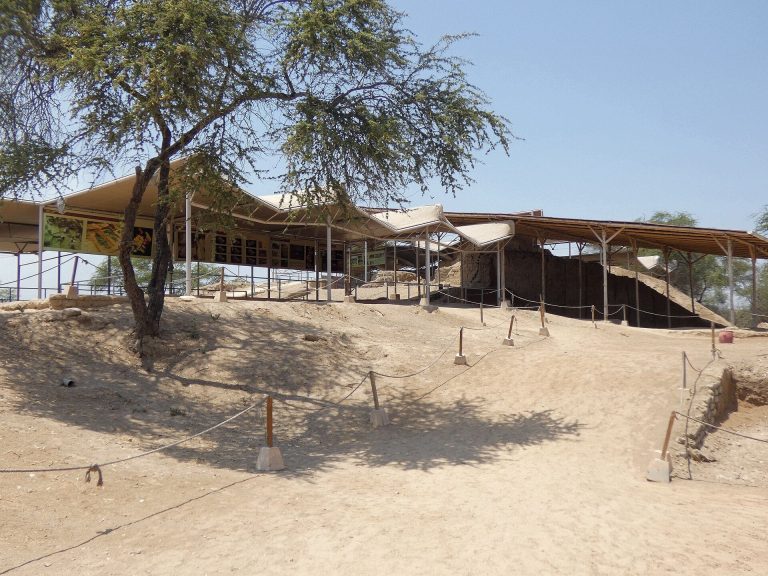
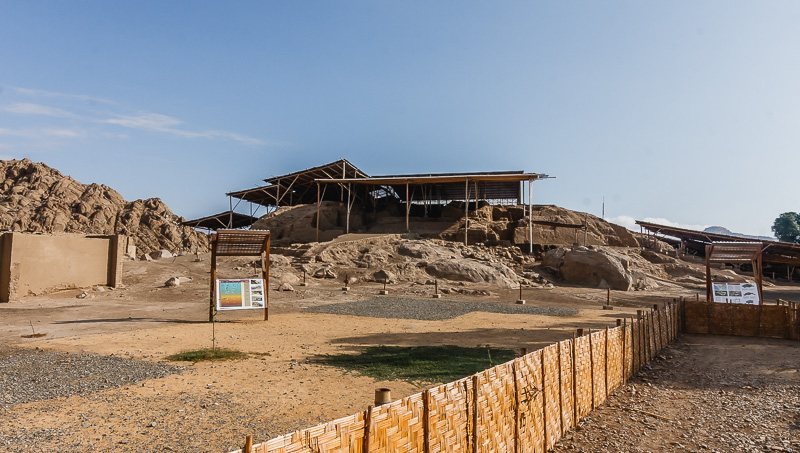
On 12 November 2017, a fire spread toward the main platform from an area thought to include its point of origin. It also destroyed a storage area holding tools, archaeological material, and records from investigations carried out between 2011 and 2013. An emergency committee led by archaeologist Alfredo Narváez arranged for debris to be cleared, murals to be temporarily protected, and exposed archaeological material to be collected. Emergency roofing was installed in parts of the affected area later that year. Ventarrón is designated Cultural Heritage of the Nation of Peru.
Remains
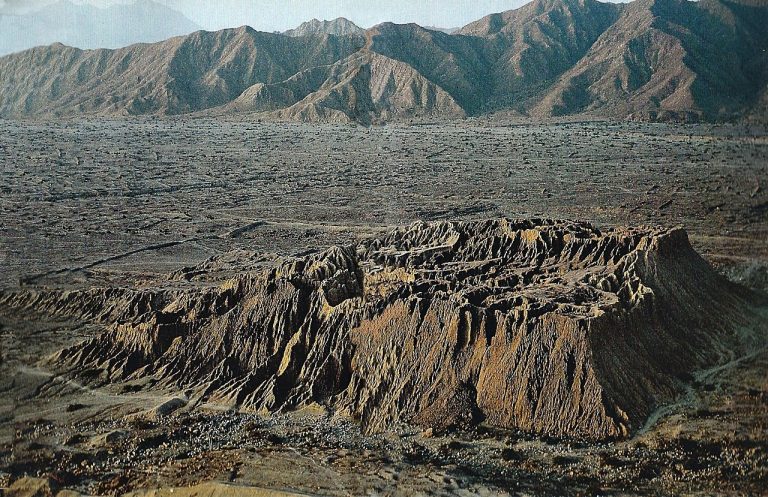
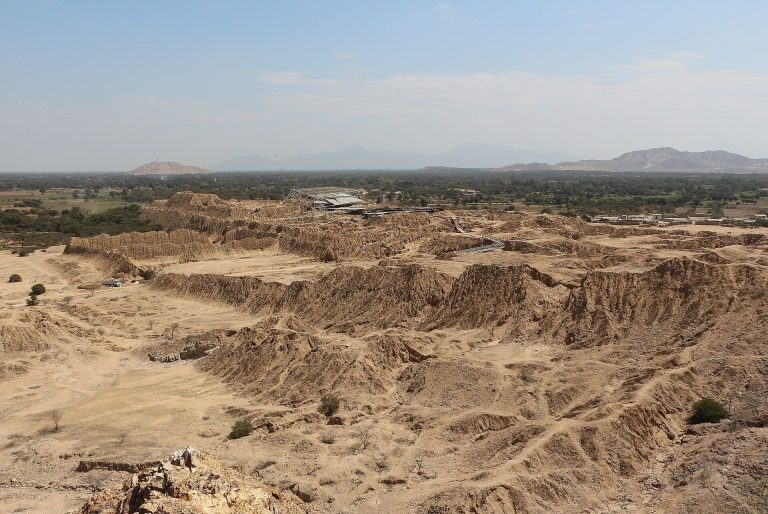
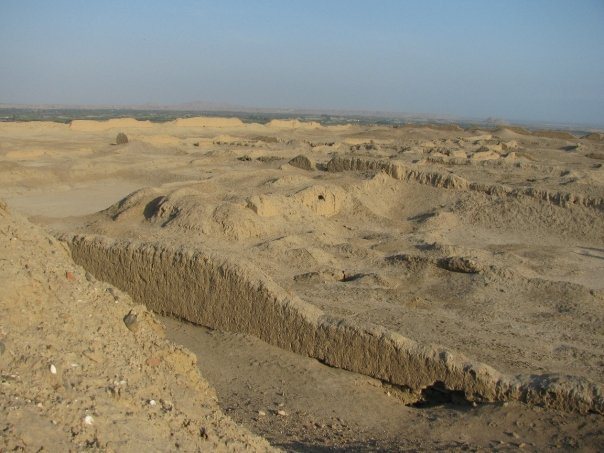
The archaeological complex occupies the western foothills of Ventarrón hill in a valley, about one kilometre from the Reque River. Its elevation is given as 51 to 88 metres, and the complex covers about 2,500 square metres. Arenal lies on a hillside to the northeast, while Collud-Zarpán is at the complex’s northwest end. The ceremonial architecture at Collud-Zarpán extends across more than two square kilometres and occupies two mounds aligned from east to west.
Temple construction
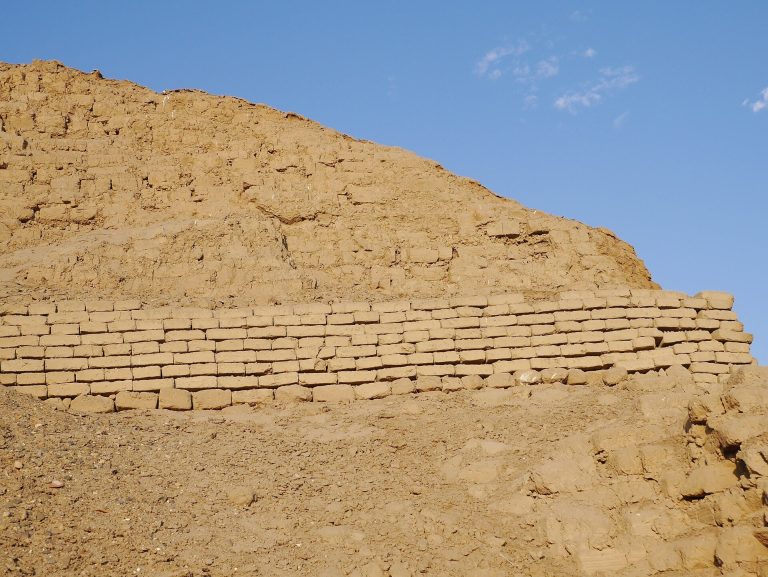
The temple was built from irregular blocks of mud made with river sediment, rather than stone or the sun-dried earth bricks traditionally used later in the area. This construction is described as unique on Peru’s northern coast. A staircase leads to a fire altar, an altar used for ritual burning. The temple contains three principal archaeological layers.
Painted layers and altar
Middle-layer murals
A mural in the middle layer shows a deer caught in a net and extends across two walls. The wall paintings also include red-and-white zigzag patterns, while another mural has an abstract design in the same colors.
Lowest-layer altar
The lowest layer contains a circular altar. Paintings of fish cover its wall, with the fish shown facing both upward and downward.
Frieze and offerings
An ancient high-relief frieze, a sculpted band whose figures project strongly from the background, retains its original colors and has imagery associated with Cupisnique culture. Probable ceremonial offerings included parrot and monkey remains, thought to have come from jungle regions, and shells characteristic of coastal Ecuador.
Fire damage and coverings
The 2017 fire damaged murals and ceramic vessels, consumed timber and plant-fiber roofing, and affected the metal covering over the central area with exposed murals. Some archaeological structures detached or fractured; surfaces were blackened and calcined, and melted roofing material adhered to murals. Late in 2017, galvanized corrugated metal sheets were placed over one mural area, and another section of roofing was erected over an area with similar features.